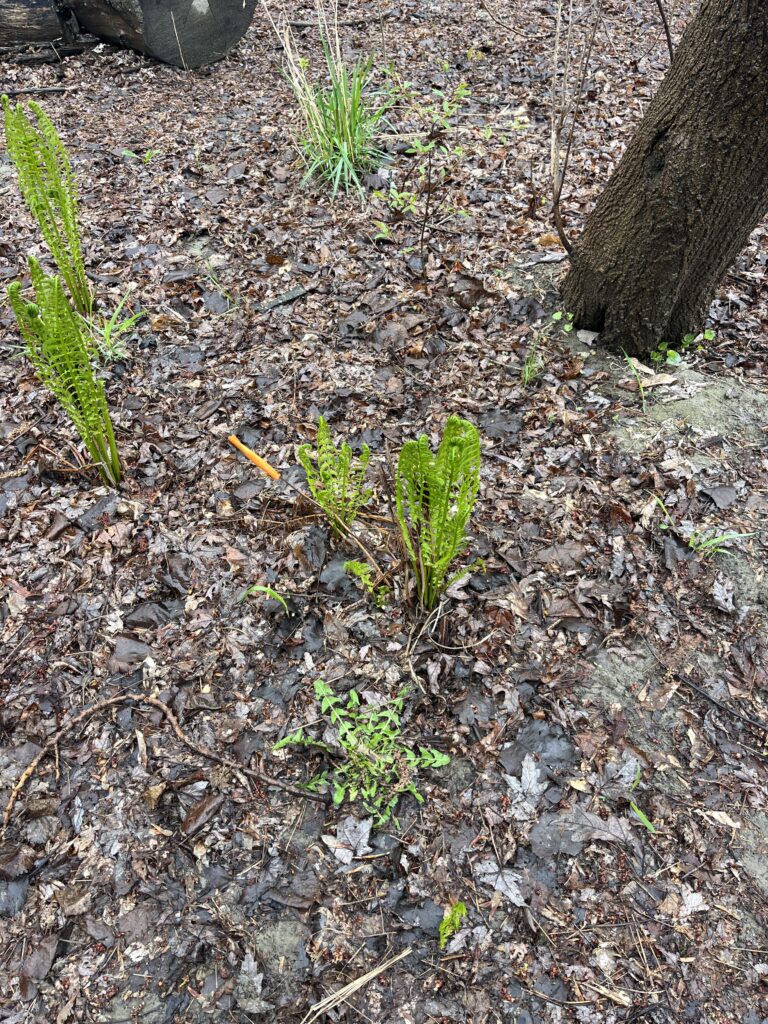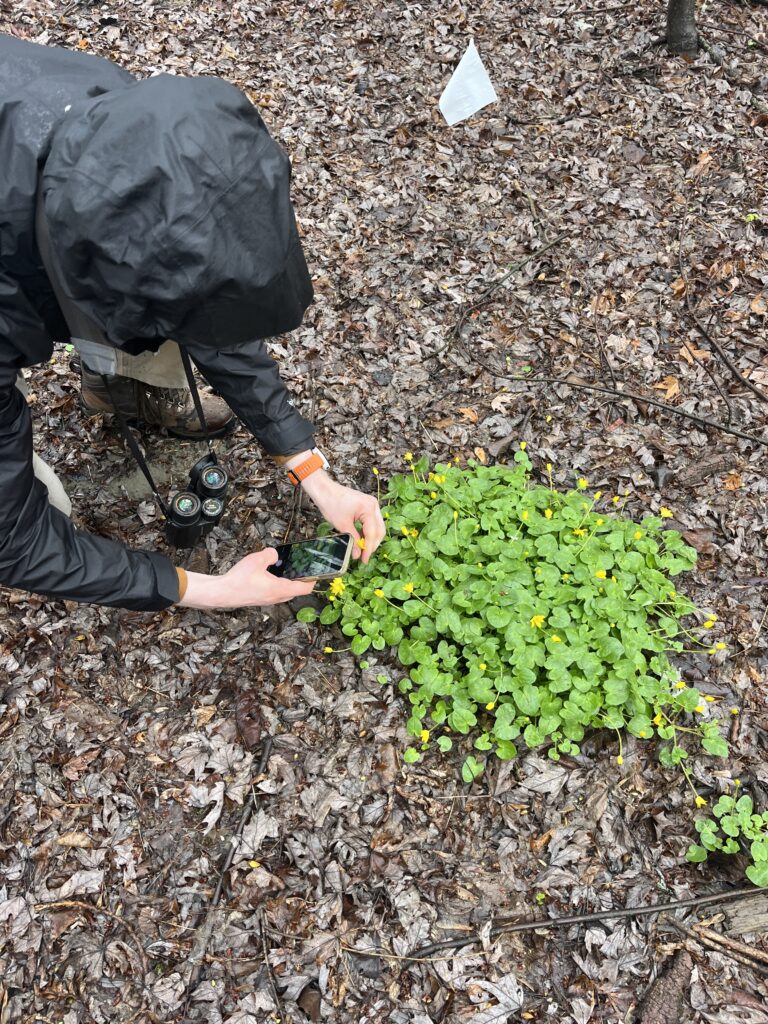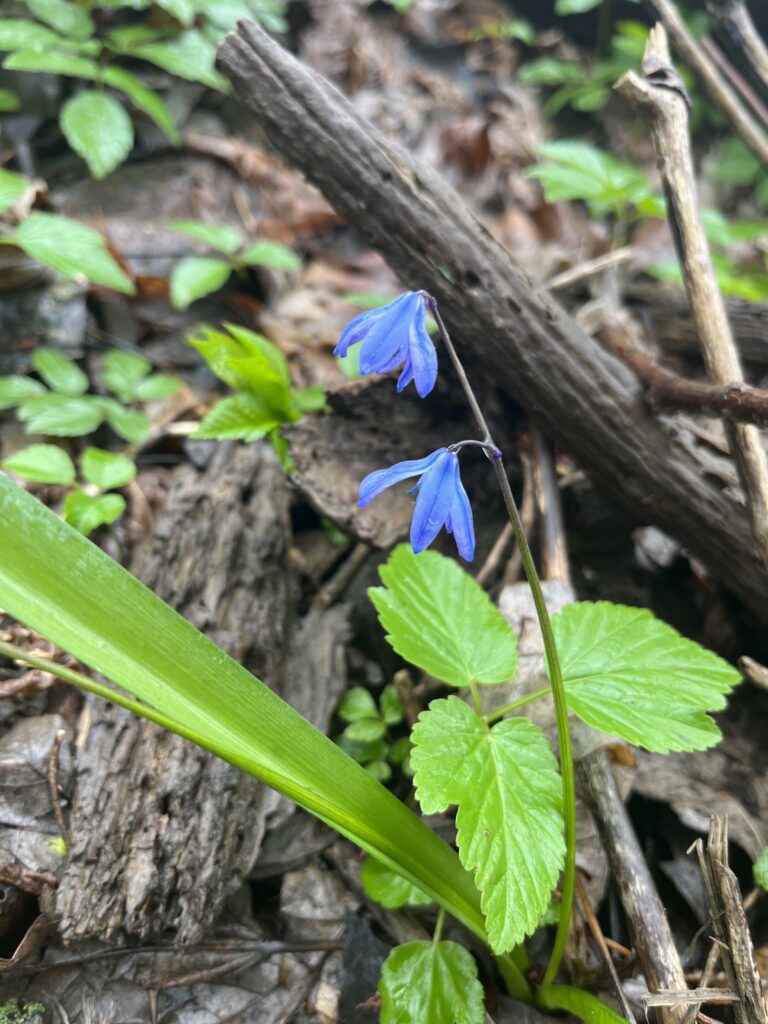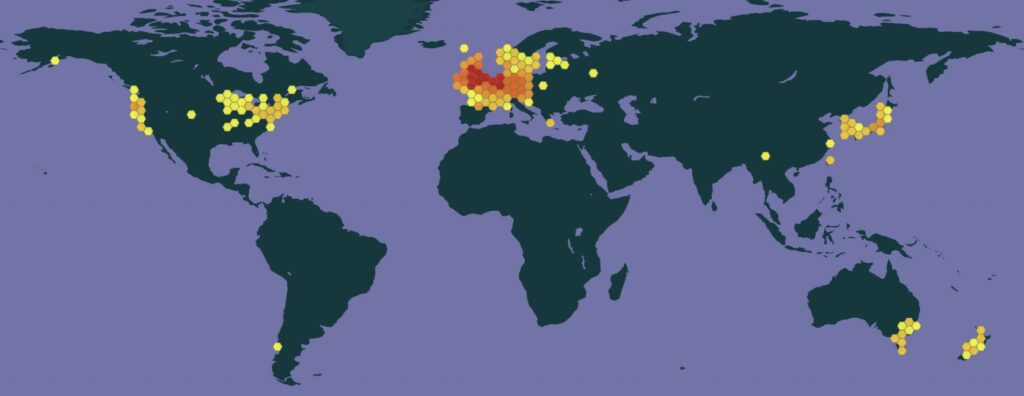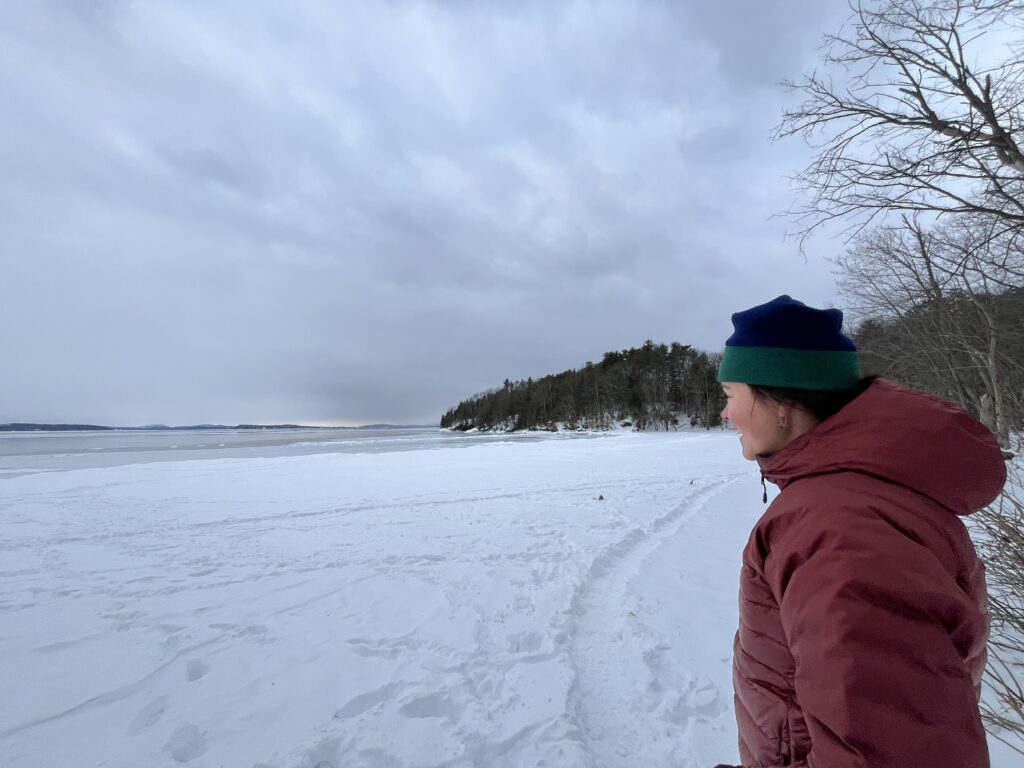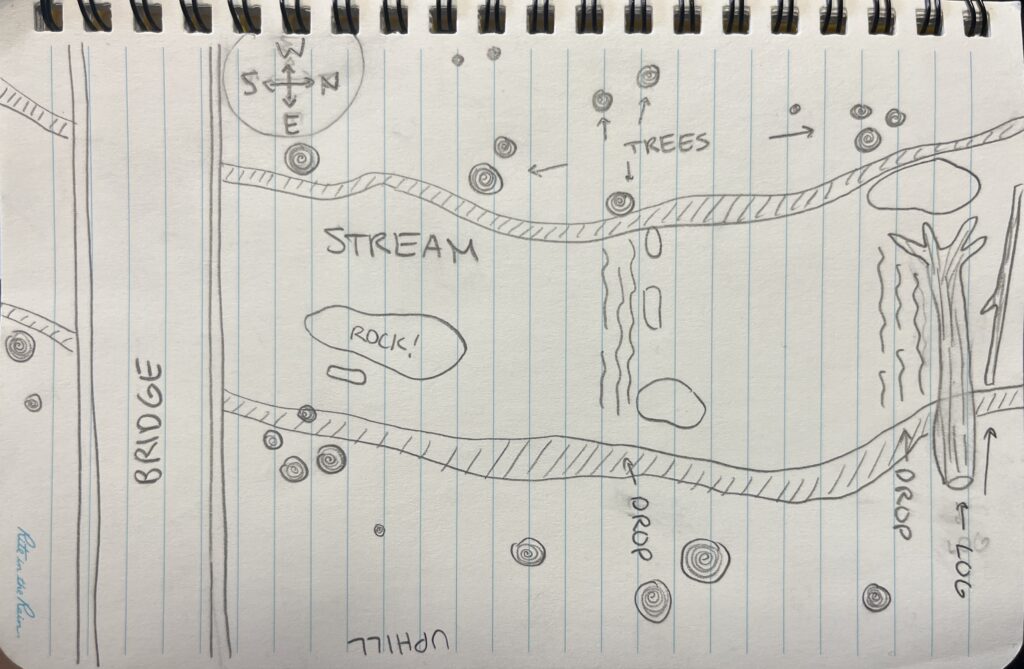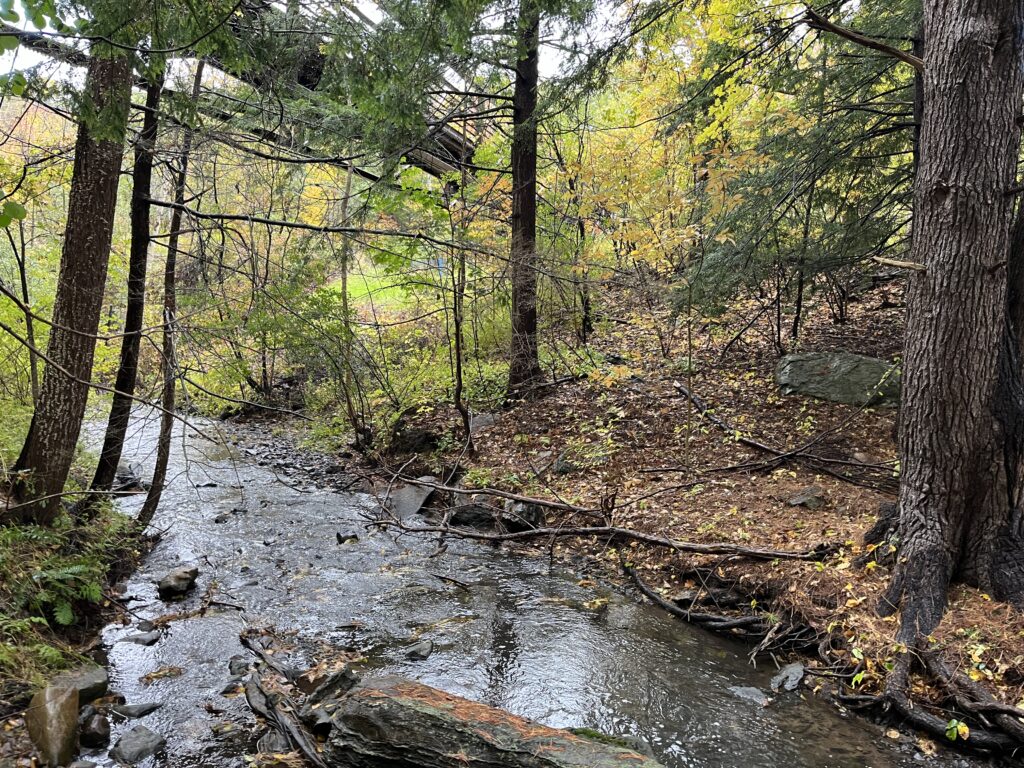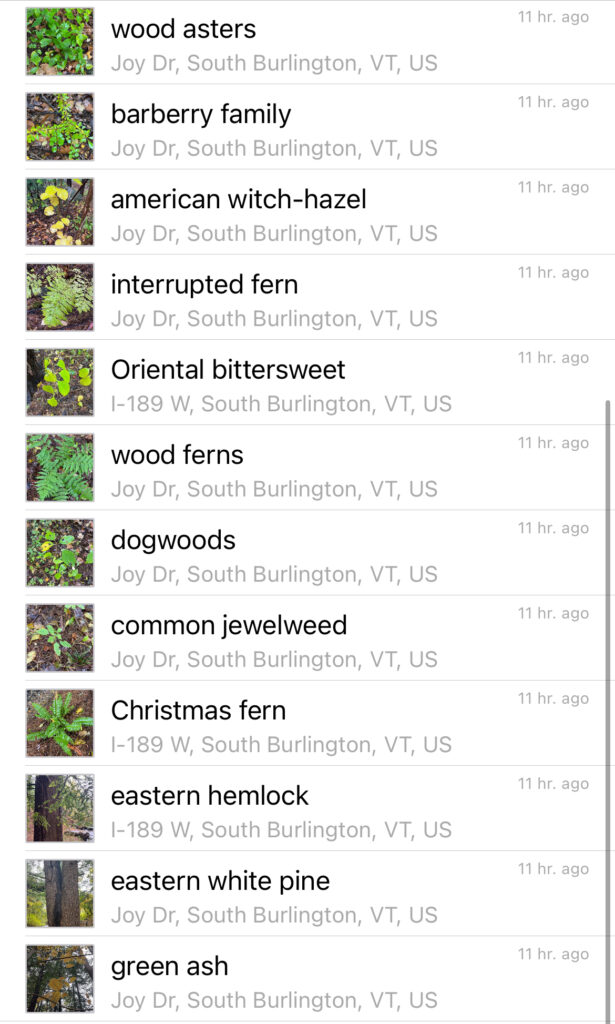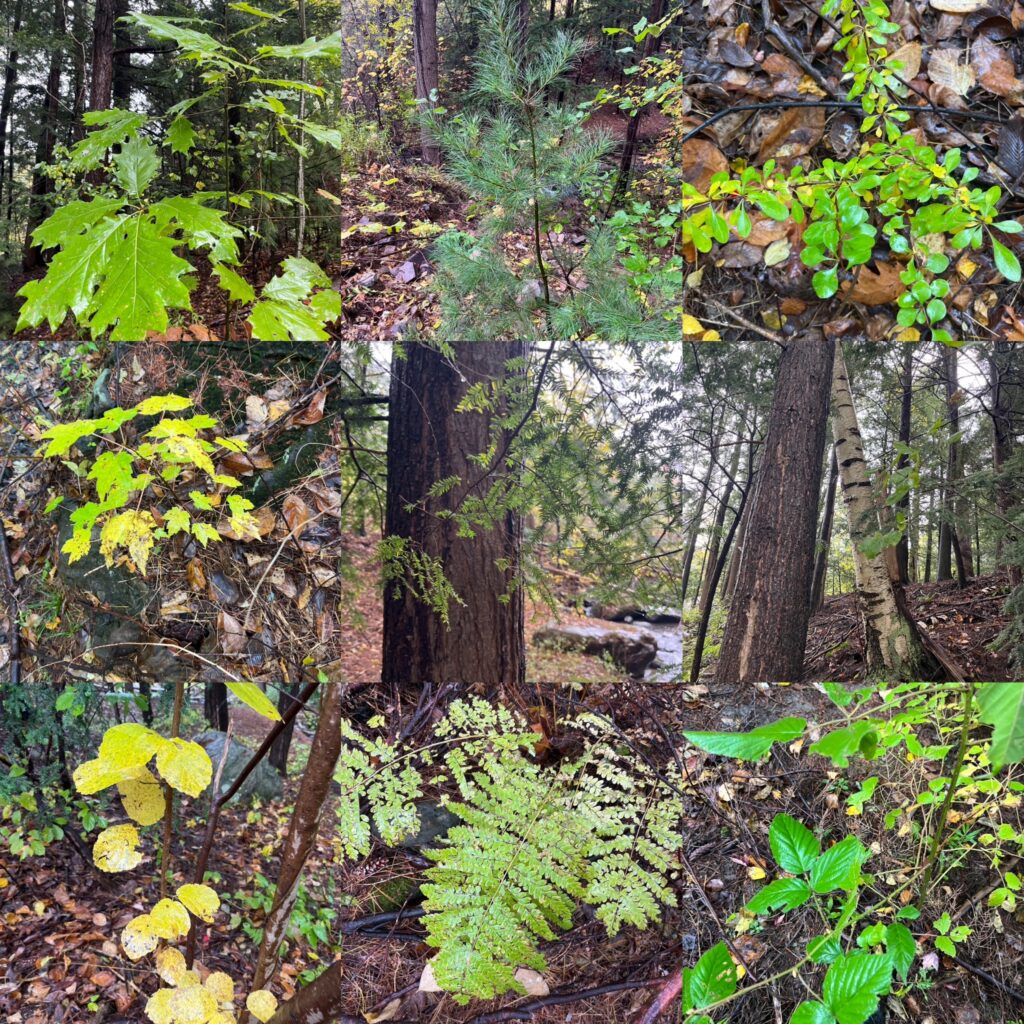

Today, Sunday May 5th, 2025, I visited my phenology spot for the final time this year. Over the course of the past two semesters, my phenology spot along the UVM bike path (and underneath the wooden bridge) has become more than familiar to me, and I truly have enjoyed every single time I have visited it. On this particular visit, I biked over to my spot from WDW around 11:25 a.m., and left around 12:30 p.m. It was raining very lightly throughout the duration of my time spent there, and it was around 52 degrees Fahrenheit outside. I started off by using iNaturalist to identify some of the new plant growth up along the top of the hill, including:
- Dandelions
- Alternate-Leaved Dogwood
- Virginia Creeper
- Japanese Barberry
- Sensitive Ferns
- Goldenrods
- Greater Celandine
- Eastern White Pine
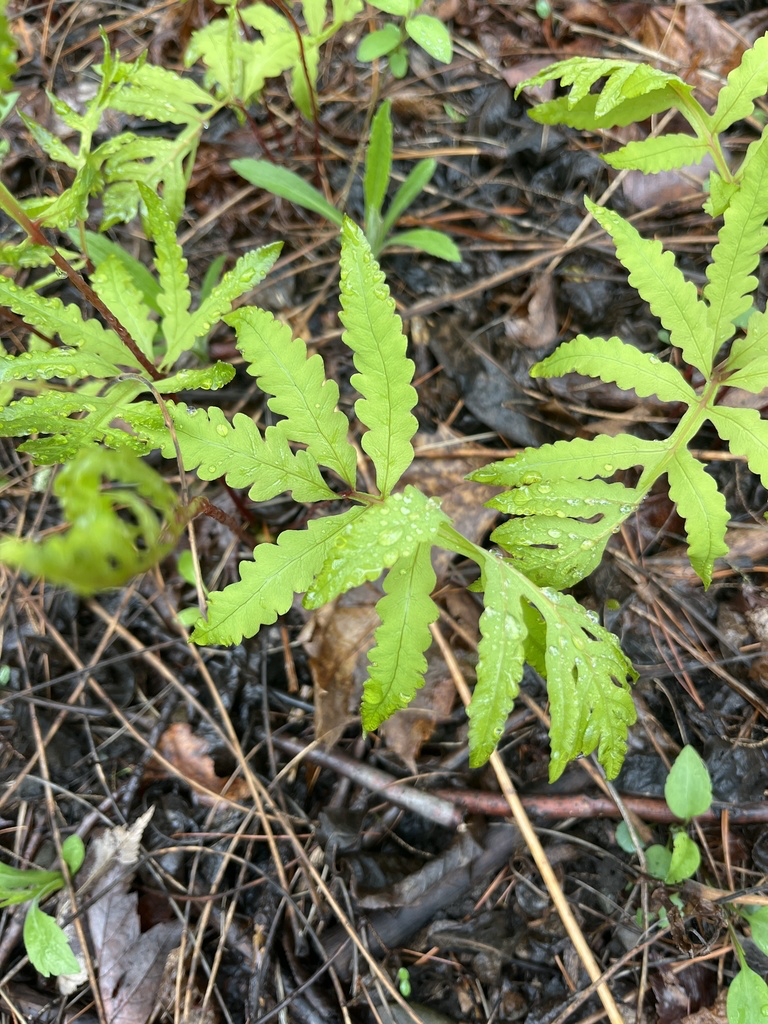
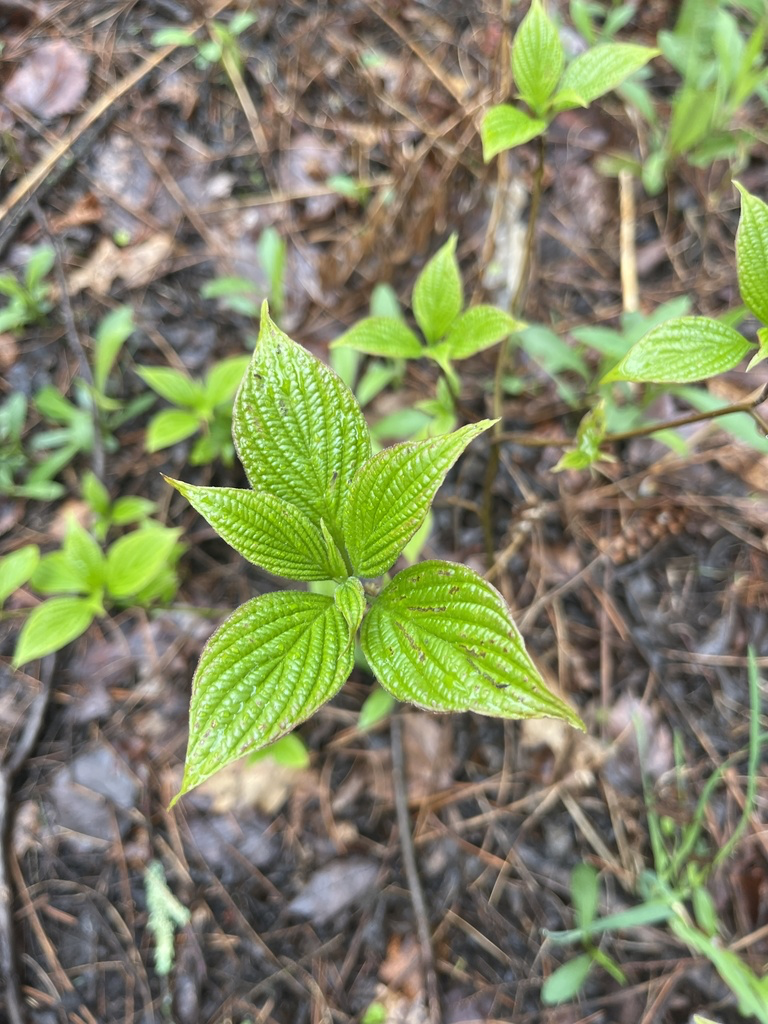
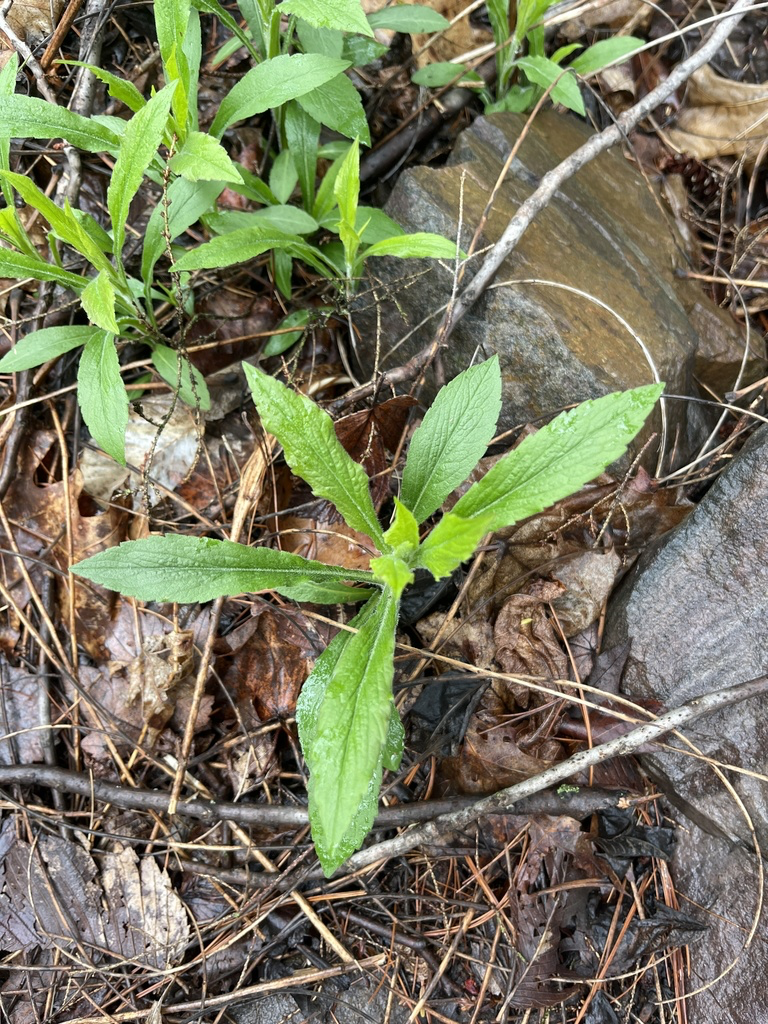
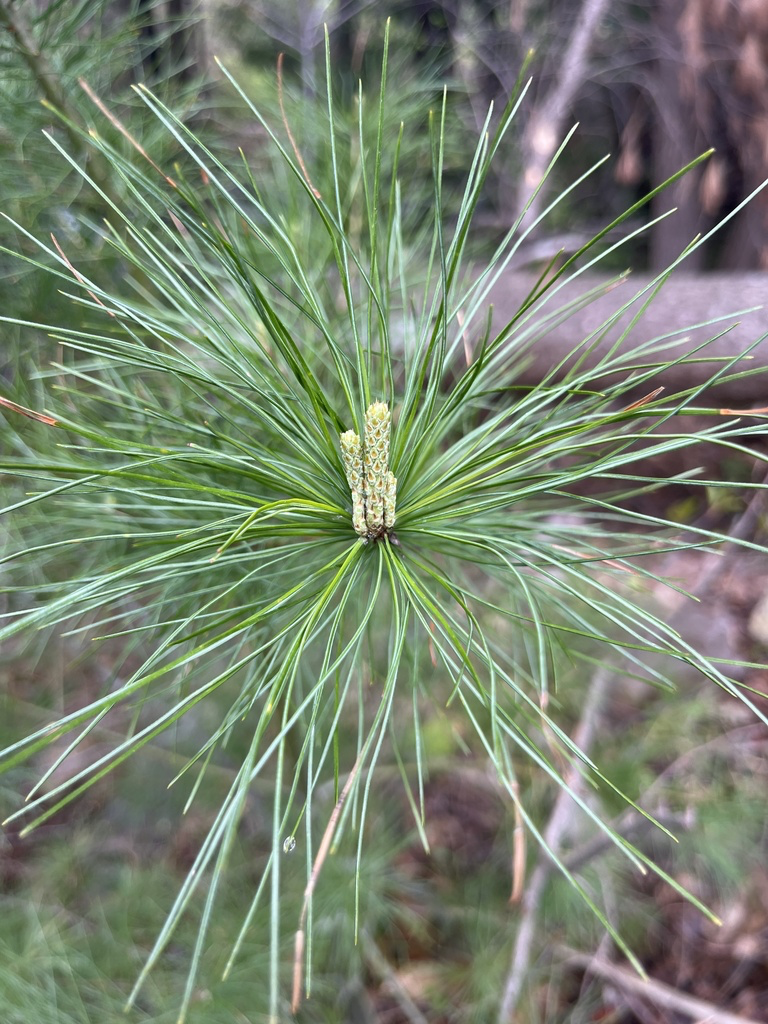
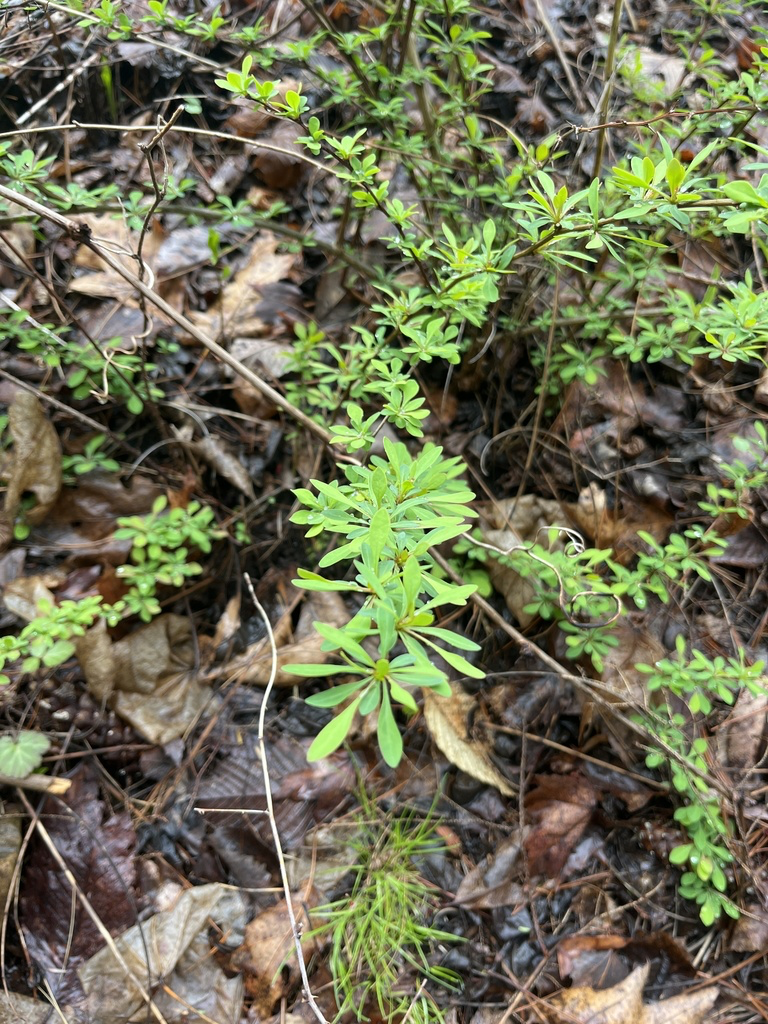
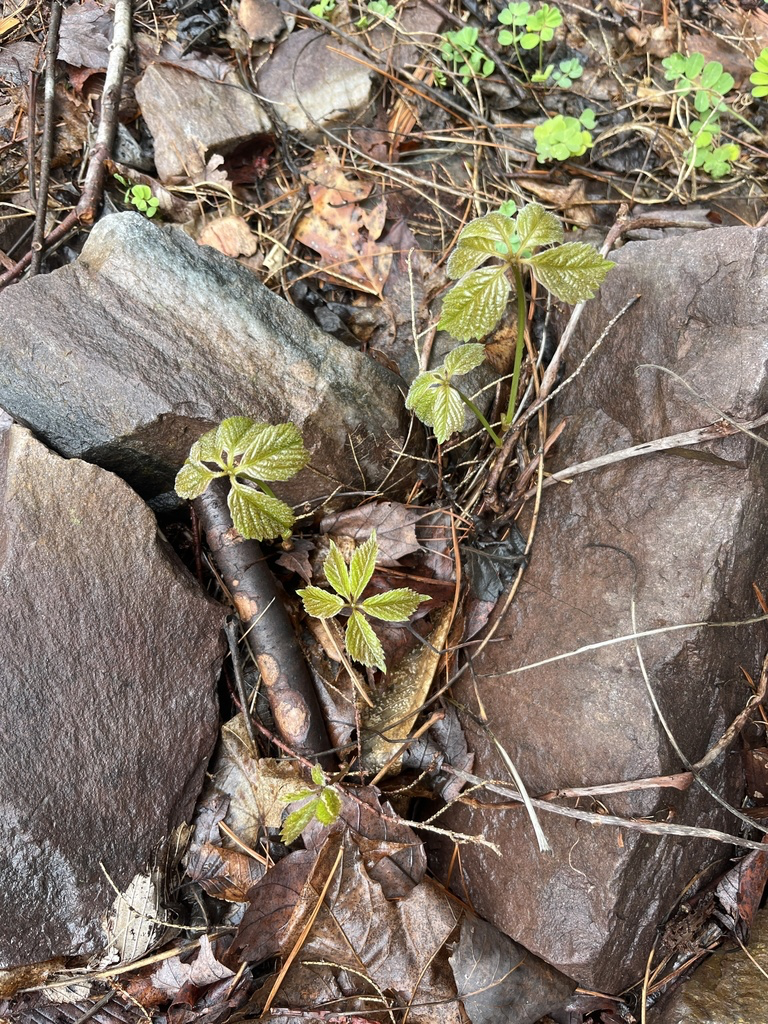
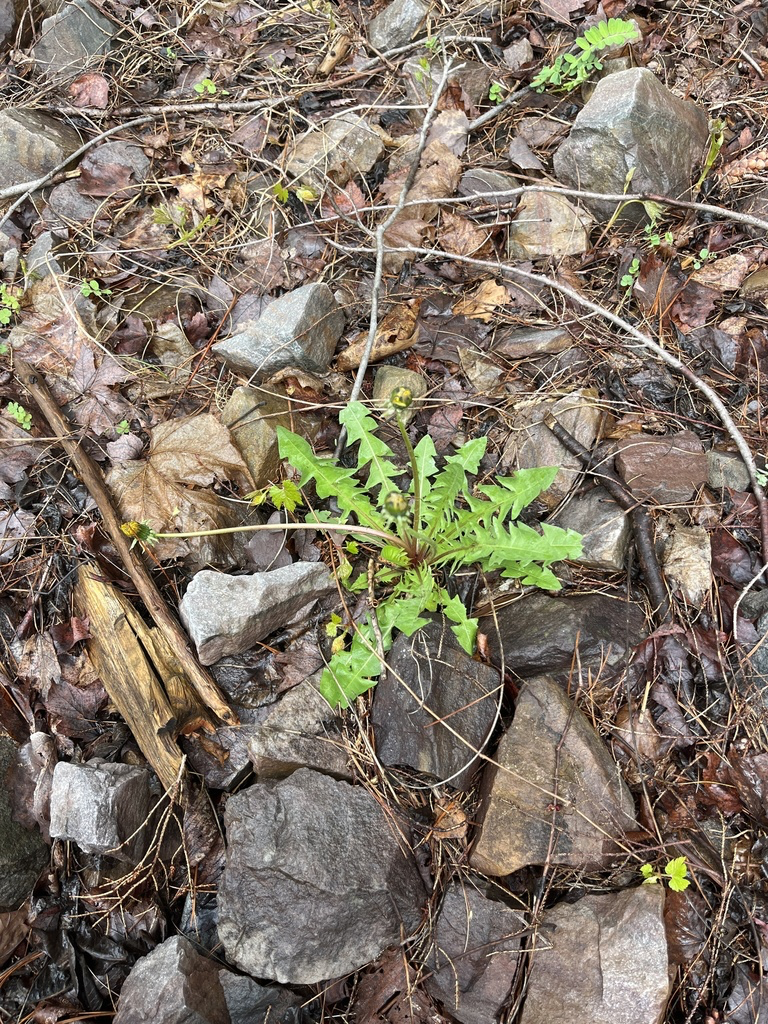
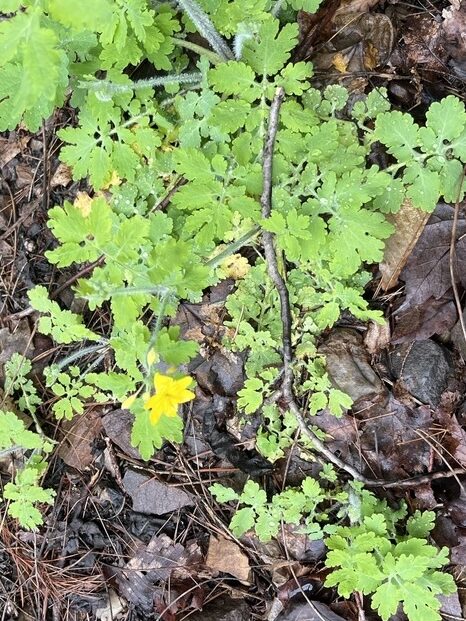
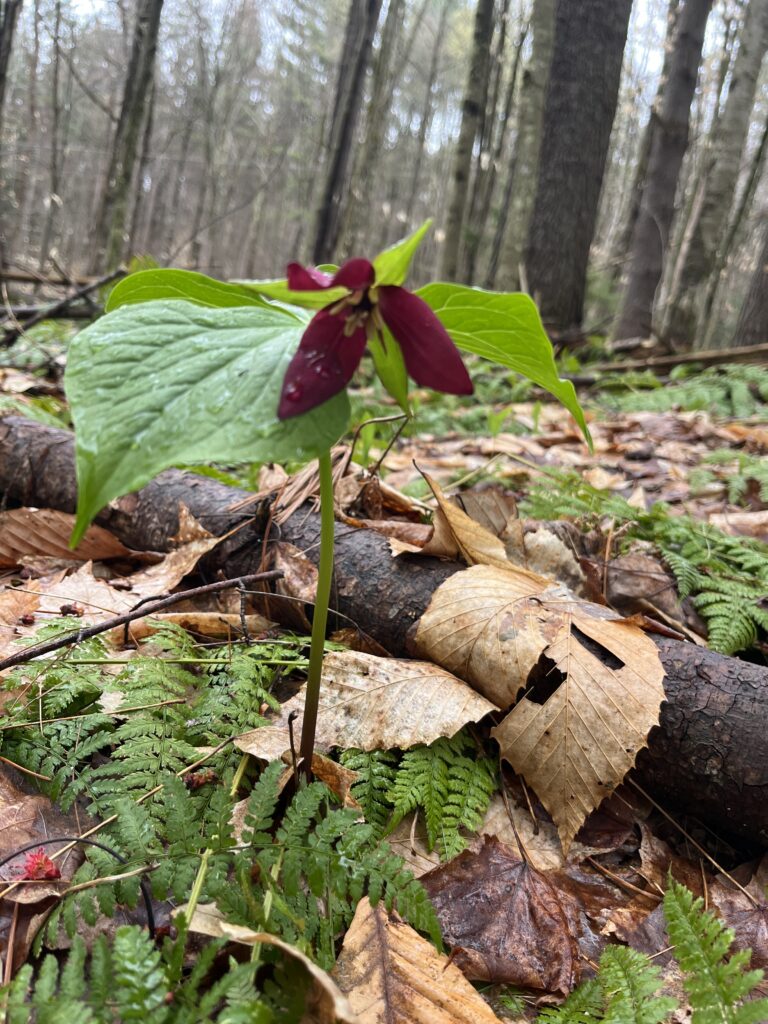
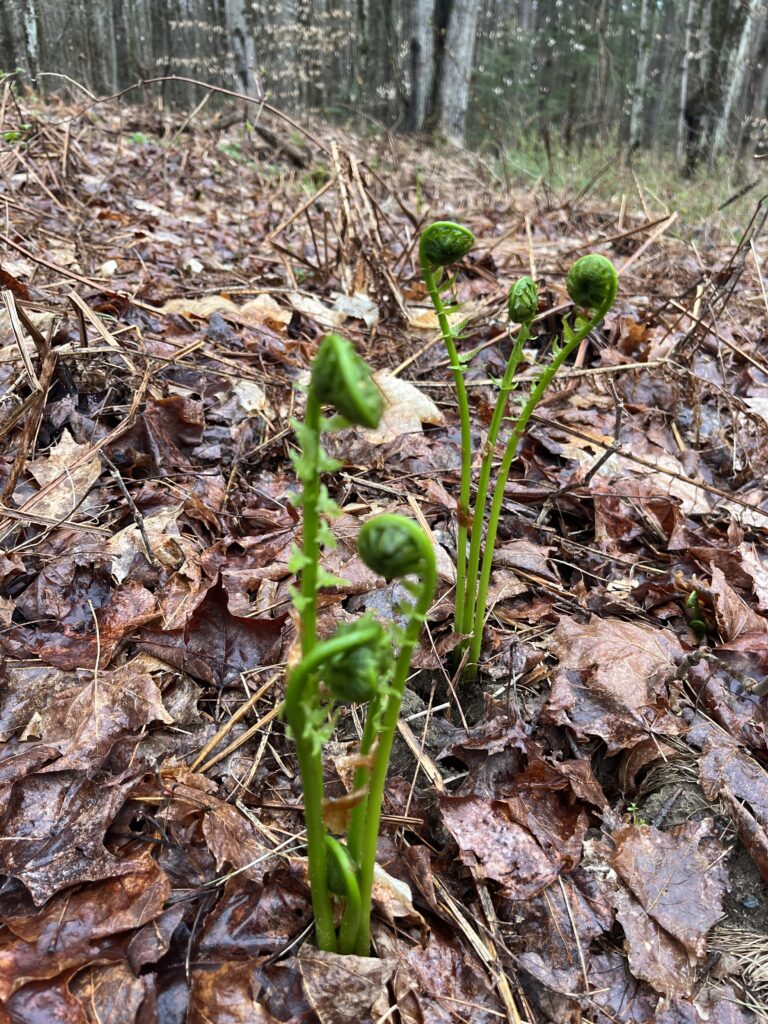
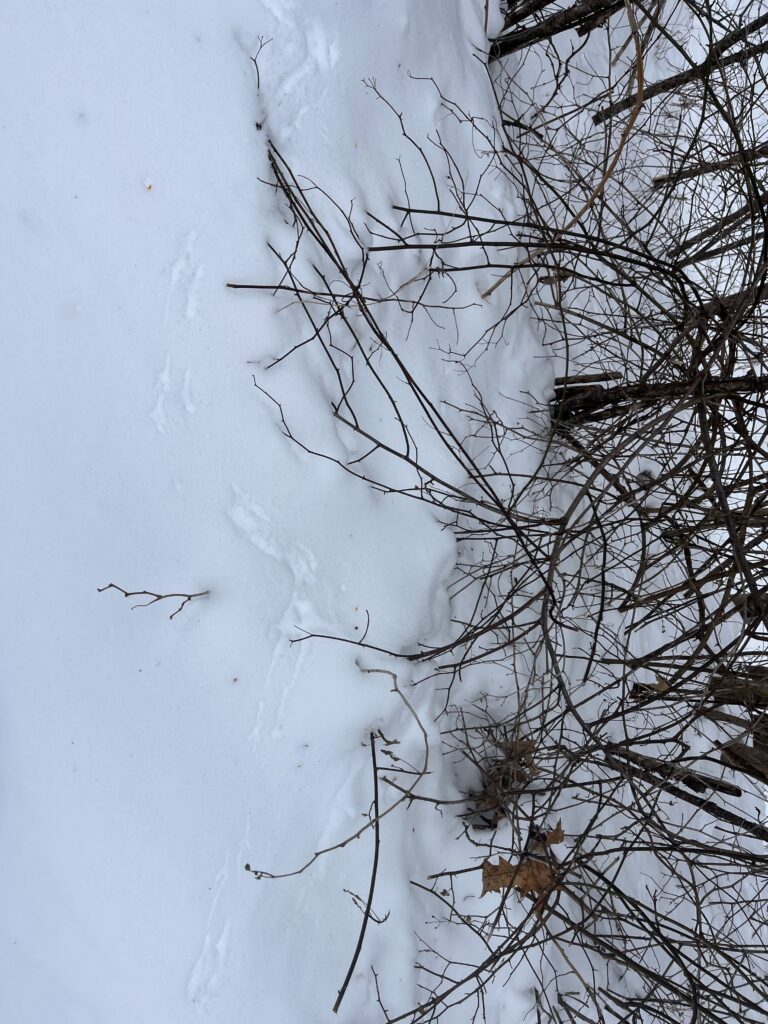
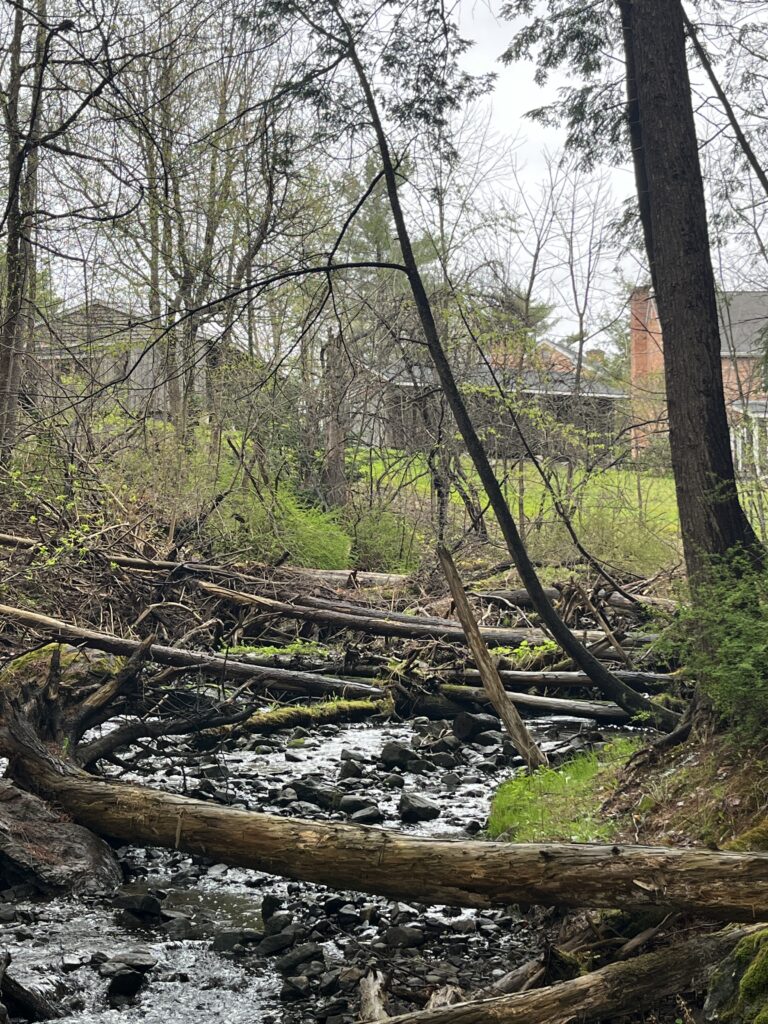
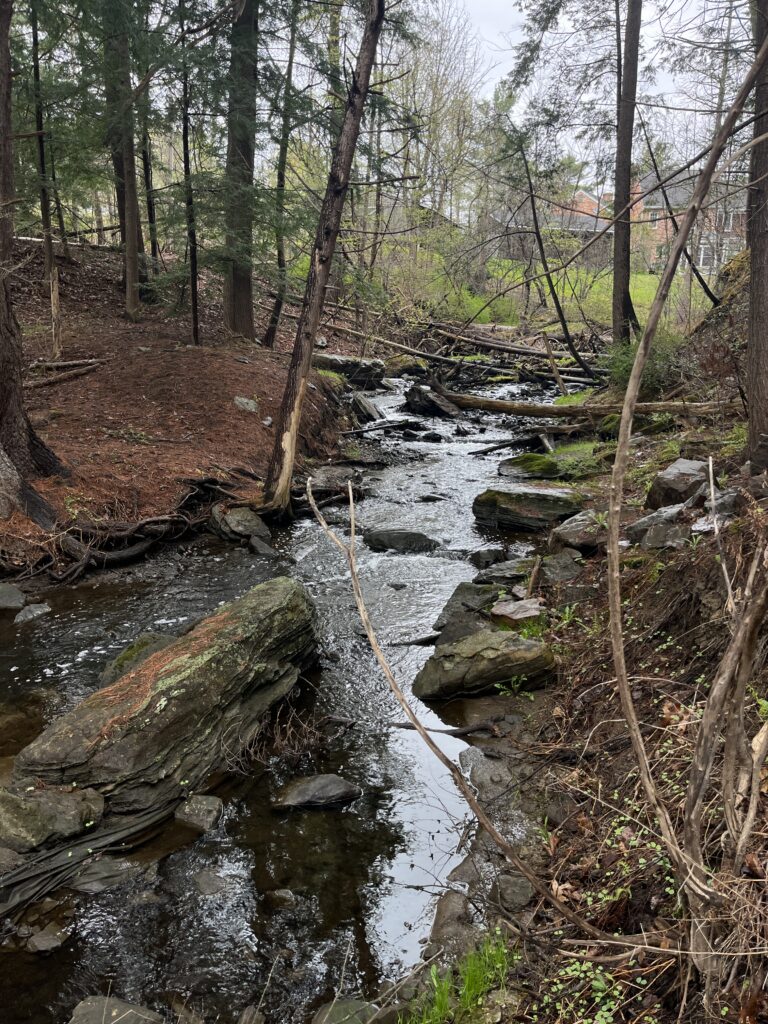
Almost none of this new growth was there the last time I visited my spot, although I believe the Eastern White Pine sapling has been there since before this past fall. It was exciting to see flowers (on the Greater Celandine) and buds (on the Barberry bush) beginning to grow, and the forest floor was covered in more green than I had seen there since October. There was also a lot of moss growing on the rocks in the river, and ferns/grasses growing on the river’s banks. Besides that new plant growth, there were also new fallen branches scattered around the forest floor, likely due to the recent rain and wind storms. These storms have also likely contributed to the recent increase in the river’s flow, and while I was there today it was especially noisy. There is also clear evidence of water flow carving a path down the hill, and the soil was very wet and muddy.
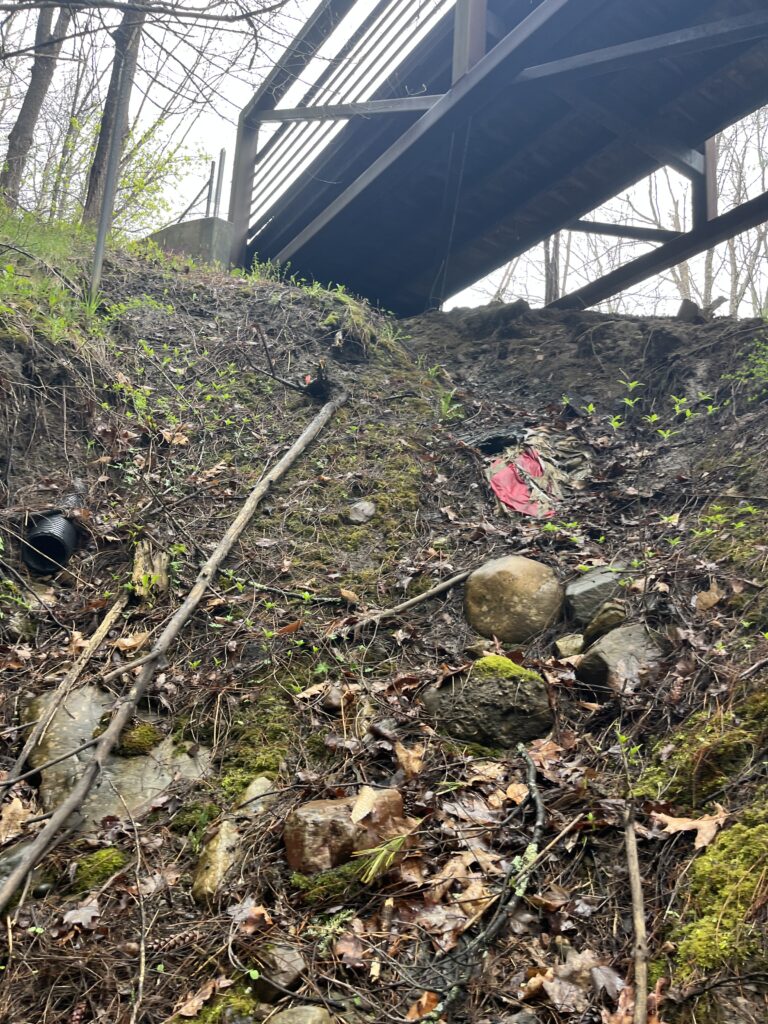

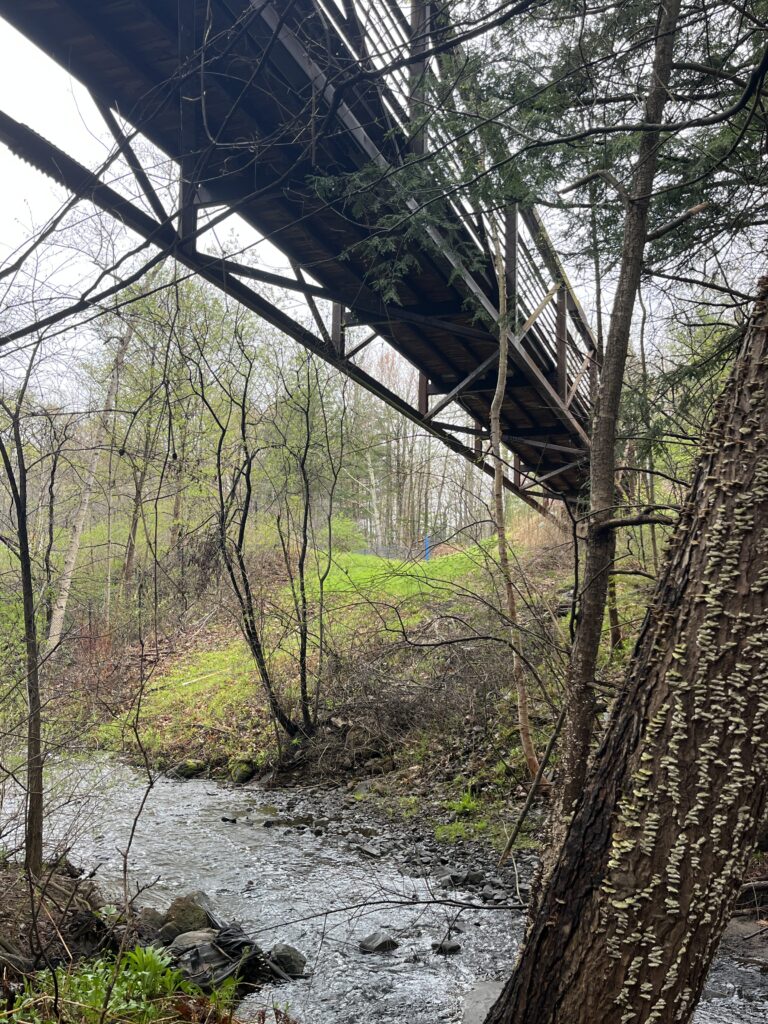
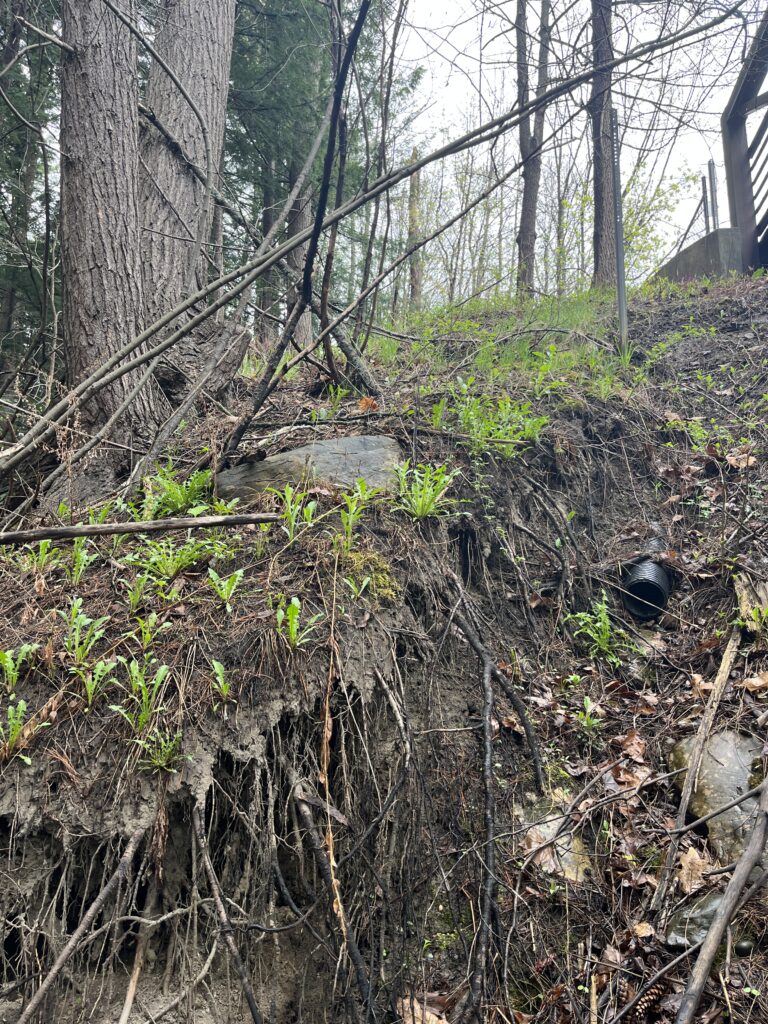
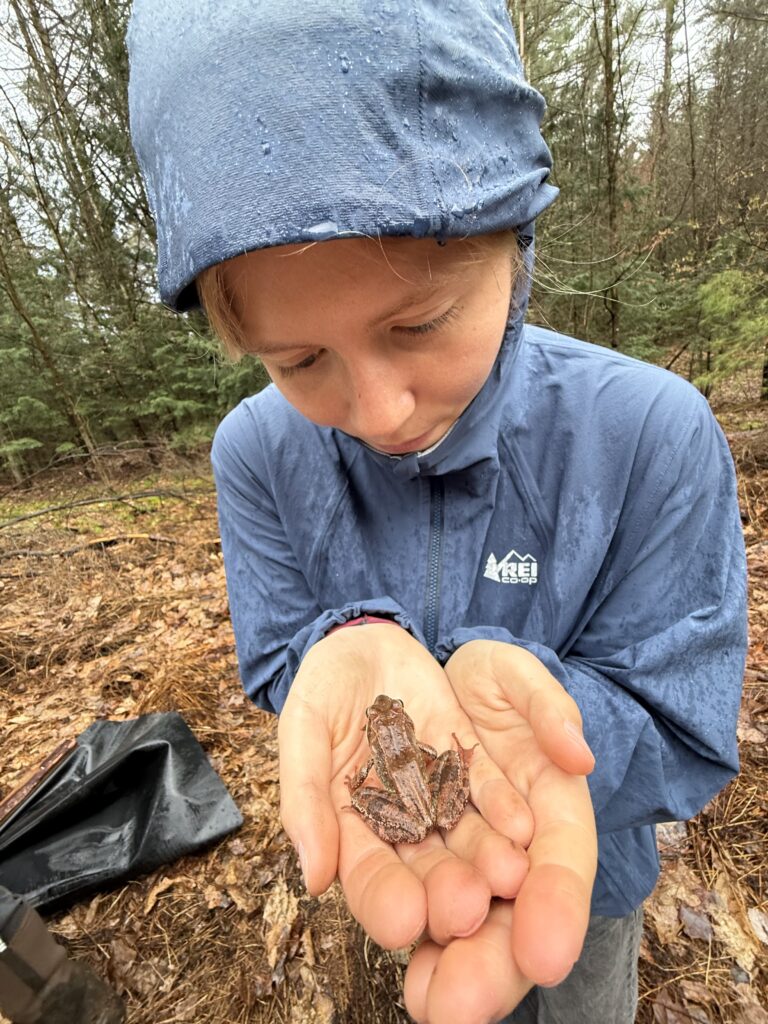
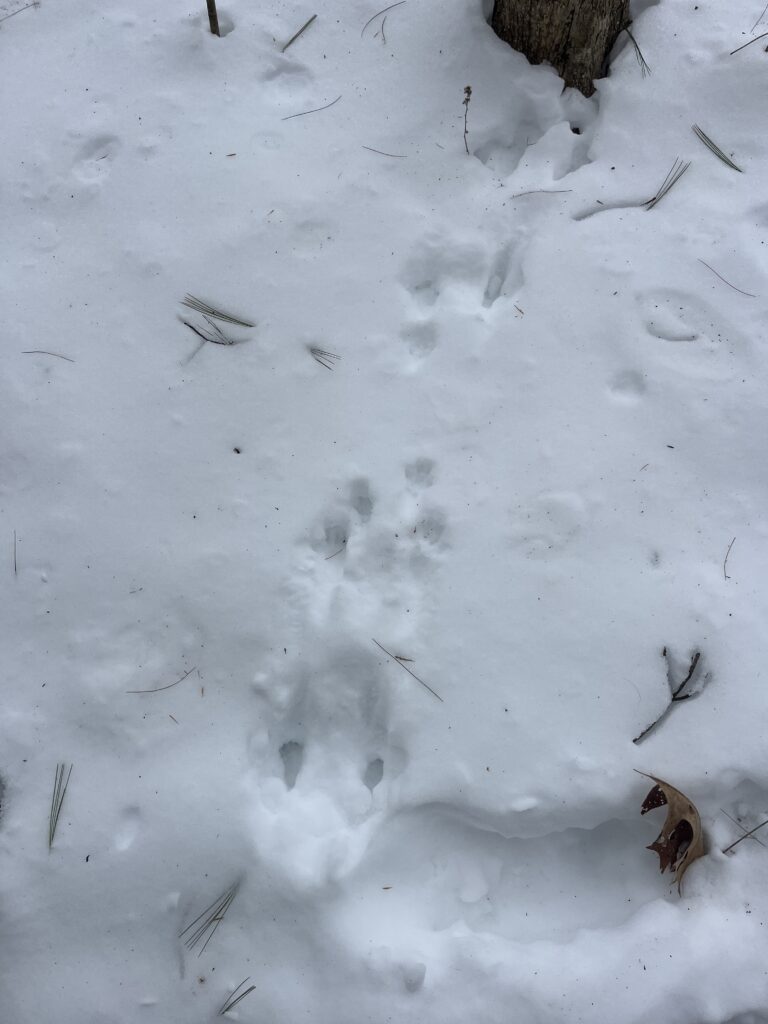
Besides the new plant life present at my phenology spot, I also noticed an increase in animal presence and activity there today. Flying around in clusters near the river were small gnats, and I used Merlin ID to identify several species of birds, two of which I saw (which I elaborate on below). The birds that I ID-ed included:
- Tufted Titmouse
- Black-Capped Chickadee
- Song Sparrow
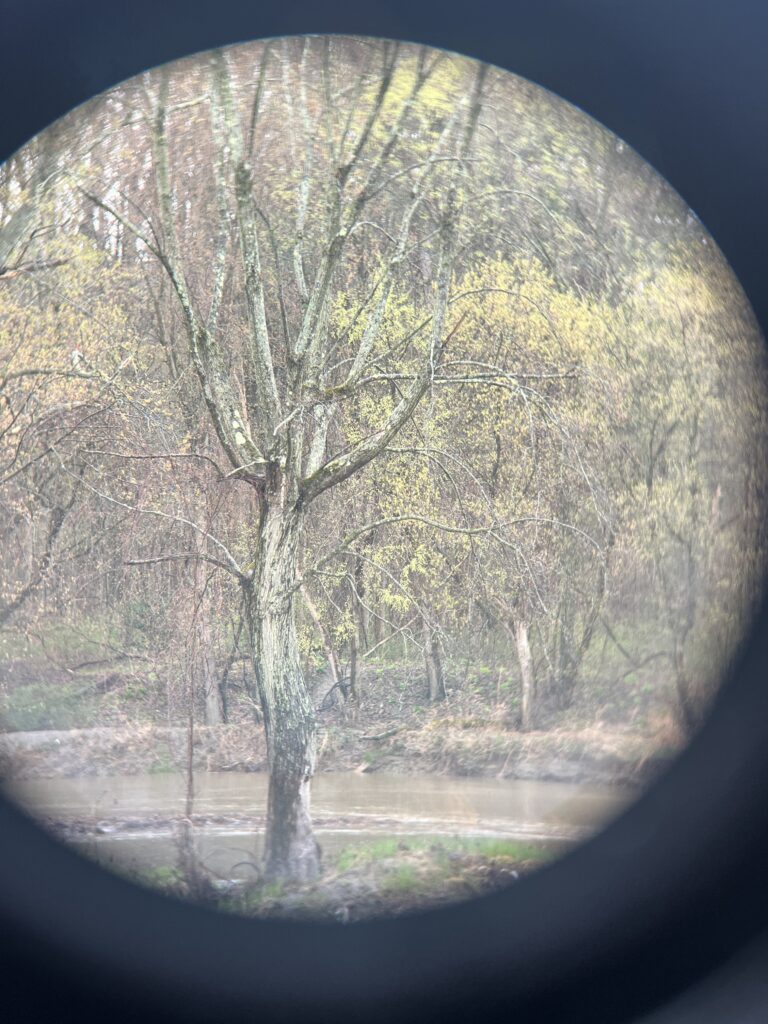
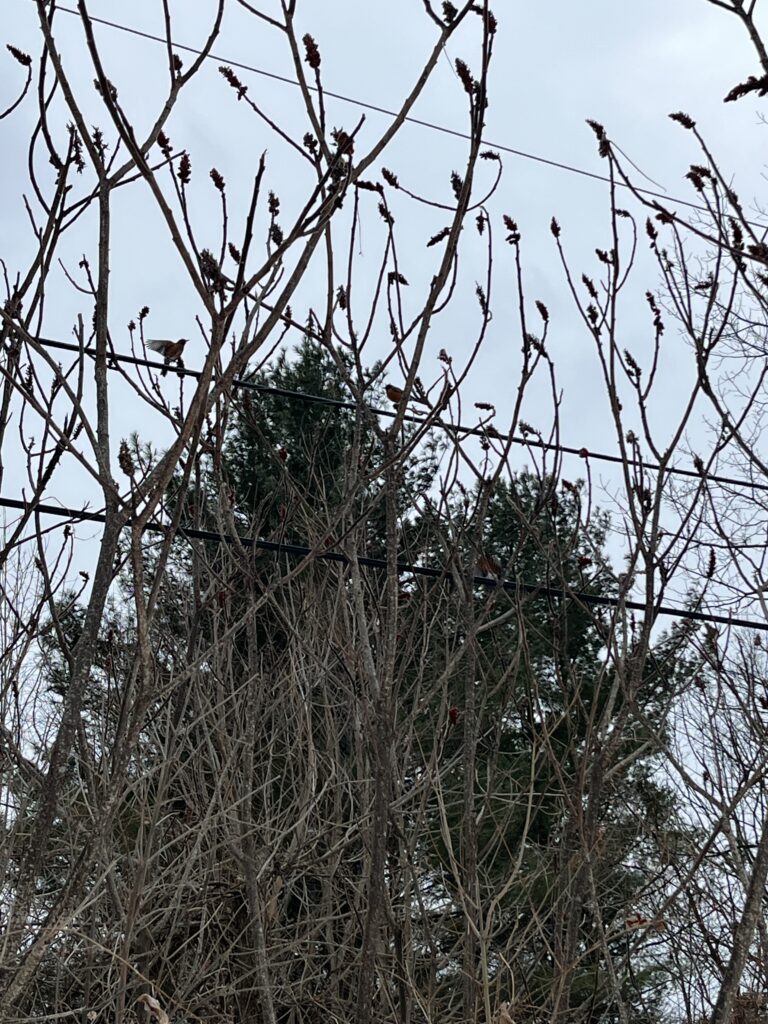
When I first arrived down by the river, I noticed that there were a few birds flitting in and out of a small dead standing tree on the opposite bank, but I was unable to identify them from that distance. At first, I sat down in my Crazy Creek on a rock and watched them fly back and forth from the dead standing tree to branches on the surrounding Eastern White Pines, but eventually my curiosity got the better of me. I journeyed across the river to the other bank (in order to get closer), and although I scared the birds away at first, after sitting still for another 25 minutes they eventually came back. There were about five Black-Capped Chickadees by the time that I left, and they continuously dived into the hollow center of the dead tree and repeatedly emerged clutching piece of wood (and potentially bugs) in their beaks. The time I spent watching those birds this morning was the most peaceful hour I have spent on my own in a while, and being that close to them felt very special.
I feel like I have learned a lot from my phenology spot over the course of this year, and I am grateful that it has taught me to be more observant and patient. If someone had asked me this past fall whether I would intentionally go birdwatching, I most likely would have laughed and said no. But, I have now gone several times and will absolutely go again in the future.
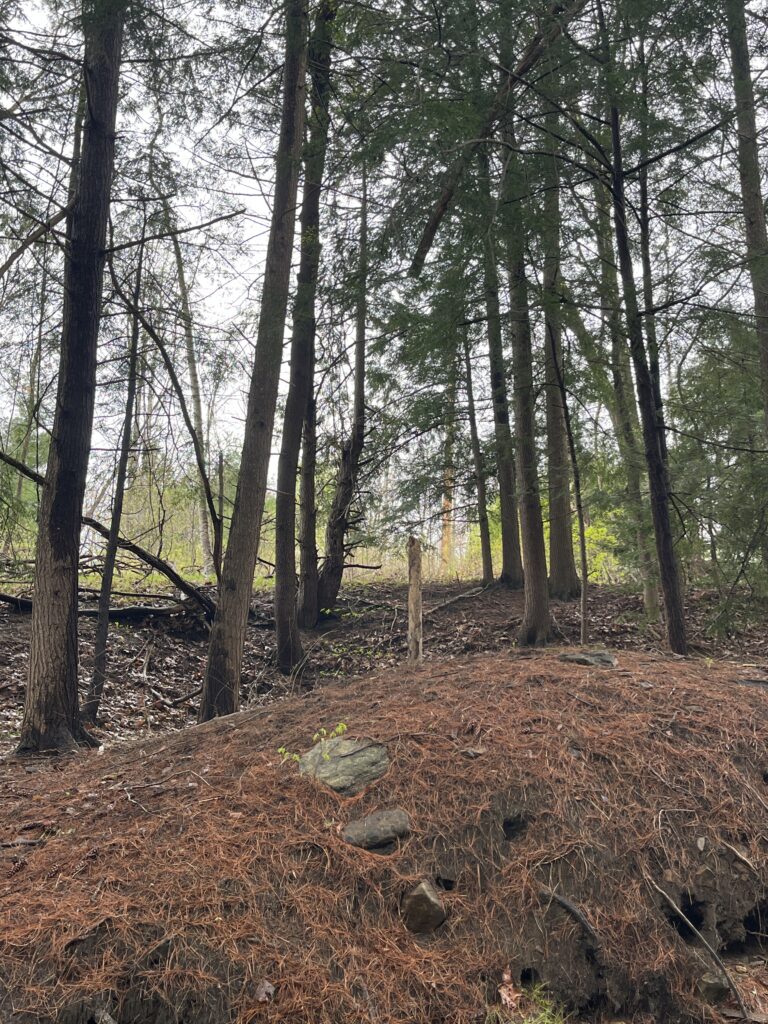
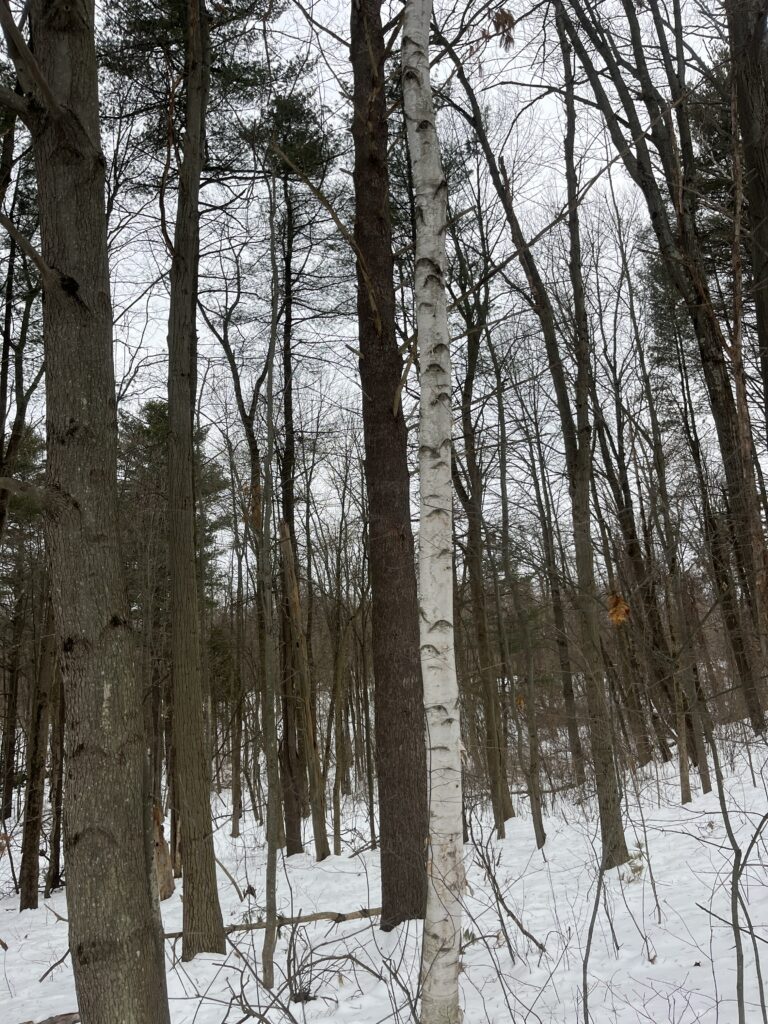
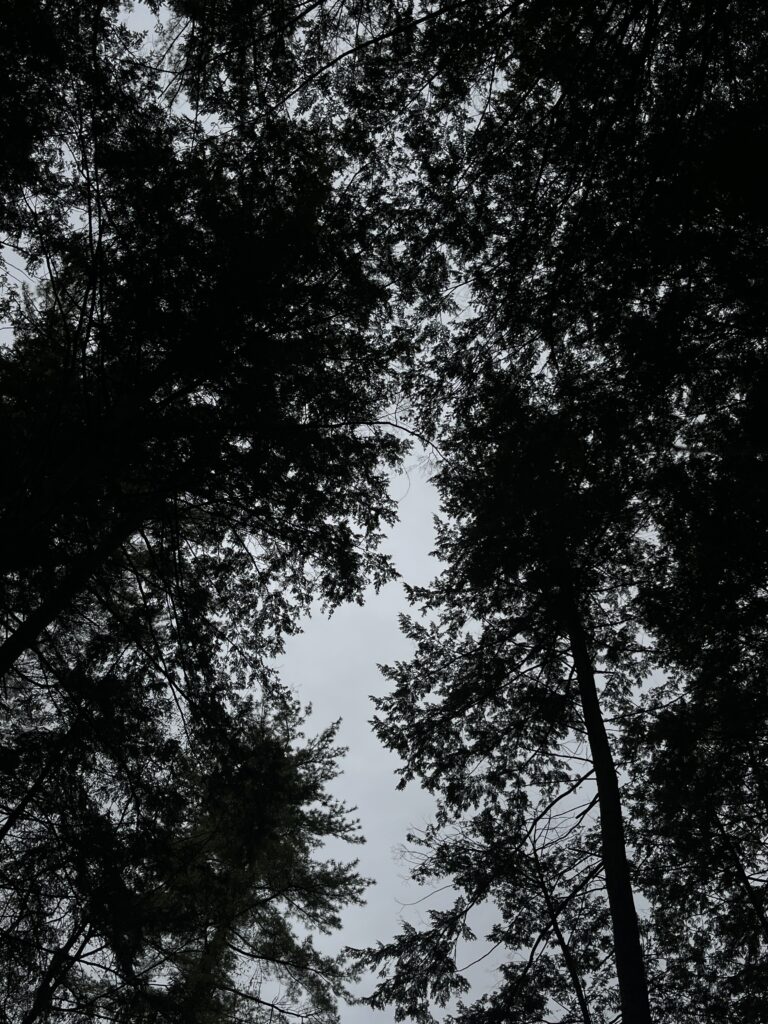
I’ve become familiar with the giant hill that stretches from the bike path down to the river, the large flat boulder on the southern bank (where I often sit), and the open patch in the canopy above the river. I’ve become familiar with the never-ending sound of cars driving by, the rustle of the pine needles that coat the forest floor no matter what the season, and the easiest way to cross the river. I’ve become familiar with the birds that flit between the branches of the trees, the heavy quiet of snowfall, and the smell of wet earthy soil after it rains. Although I do not know my phenology spot like the back of my hand, I do know it better than most places on this Earth, and for that I will always truly be grateful.

I do believe that I am a part of my place, and over the course of the past few months I am sure that I have stepped on (and killed) plants, become a somewhat recognizable visitor to the birds that live there, and the sweat and oils of my hands have washed away in the river water. The impact that this place has left on me is far greater than the impact that I have had on it, but I do believe that nonetheless I have left an impression on my phenology spot. We are also interrelated and connected because we both occupy the same watershed, and at the very least we will remain connected through the water that lives under ground, deep below my feet.
This place is also not just my own, and is most likely a landmark for many of the people that live, work, and play in the surrounding areas. The runners, bikers, and pedestrians that use the bike path frequently must also certainly know it, and although they might not be fully conscious of the fact that they too are a part of my phenology spot, it is the truth. Outdoor recreation connects the people of Burlington to this place, and it will hopefully be that way for many years to come.
Although this may be my last official phenology spot blog post, I am sure that I will be back there in the future. I hope that I remain connected to this place and remember the time that I spent there for many years to come, and I am thankful that I was forced by this project to learn more about the natural world of my new home. Thank you, and I want to end this blog with Mary Oliver’s “When I am Among the Trees”.
When I am among the trees, especially the willows and the honey locust, equally the beech, the oaks and the pines, they give off such hints of gladness. I would almost say that they save me, and daily. I am so distant from the hope of myself, in which I have goodness, and discernment, and never hurry through the world but walk slowly, and bow often. Around me the trees stir in their leaves and call out, ”Stay awhile.” The light flows from their branches. And they call again, ”It’s simple,” they say, ”and you too have come into the world to do this, to go easy, to be filled with light, and to shine.”
– Mary Oliver