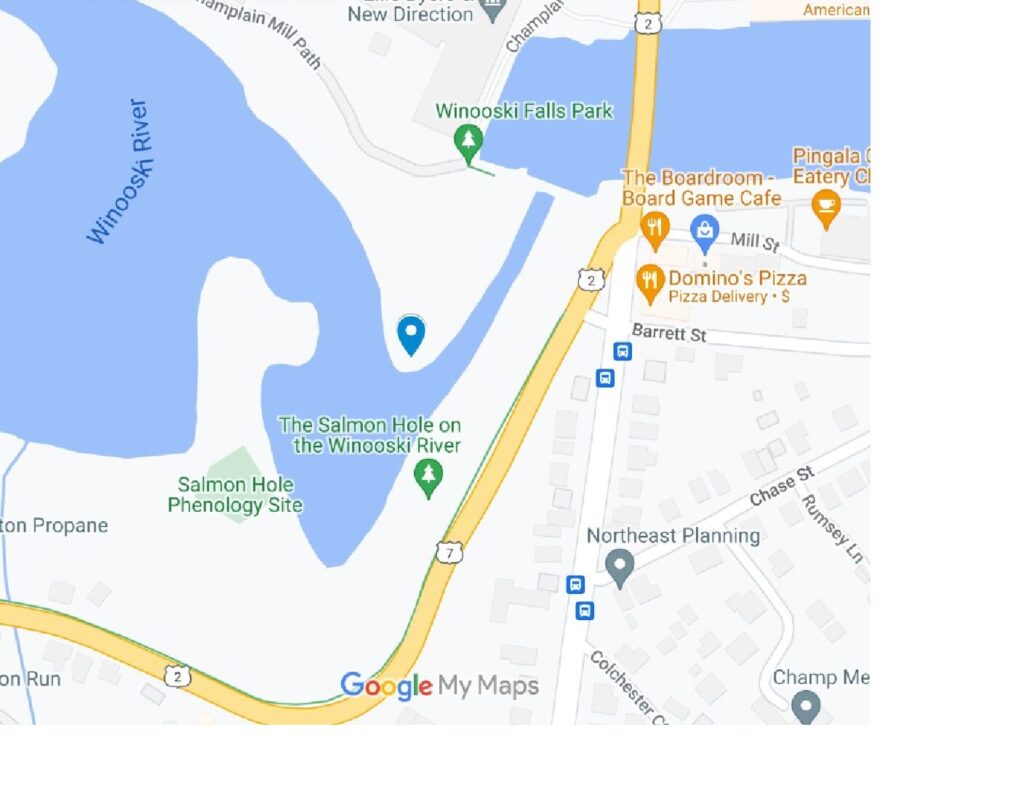
Salmon Hole is a part of the Winooski River in Winooski, Vermont. Living on the Redstone campus makes it hard to reach this area, so to get here, I use the bus. Now, in the general vicinity to get to the plot you need to cross the bridge from the Burlington side to the Winooski side. Go left at the end of the bridge and climb down the rocks. Keep walking forward to an area with an open view of the water and trees surrounding it. I visited this area at sunset and, therefore, could not explore the site as much as I wanted to.
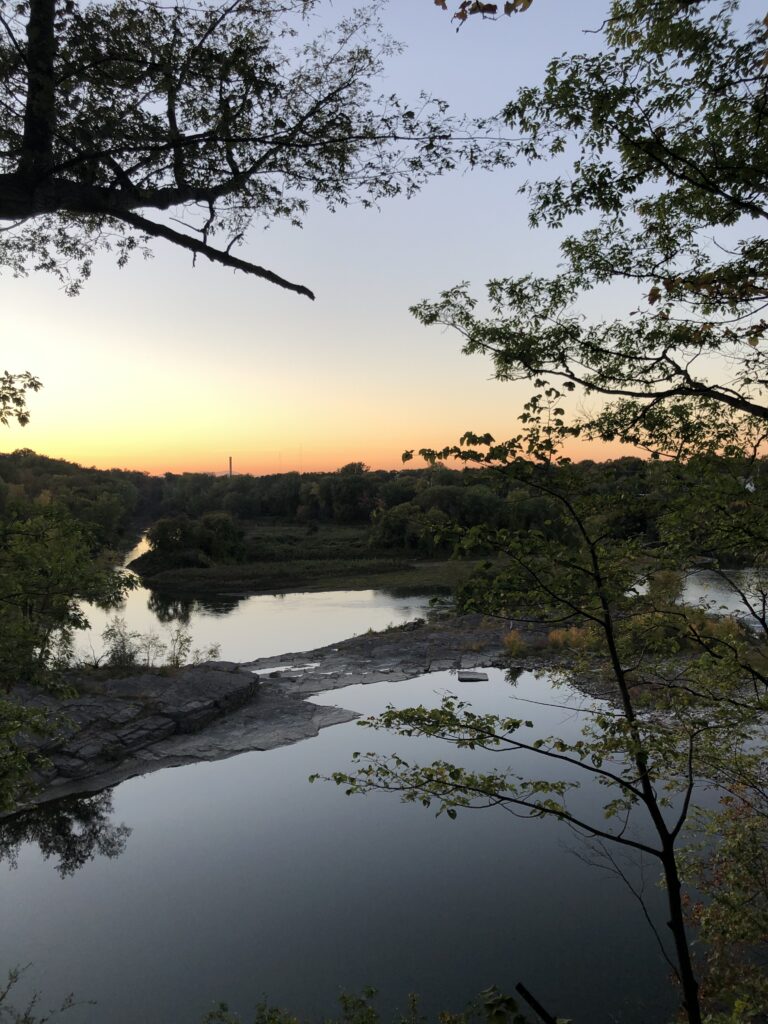
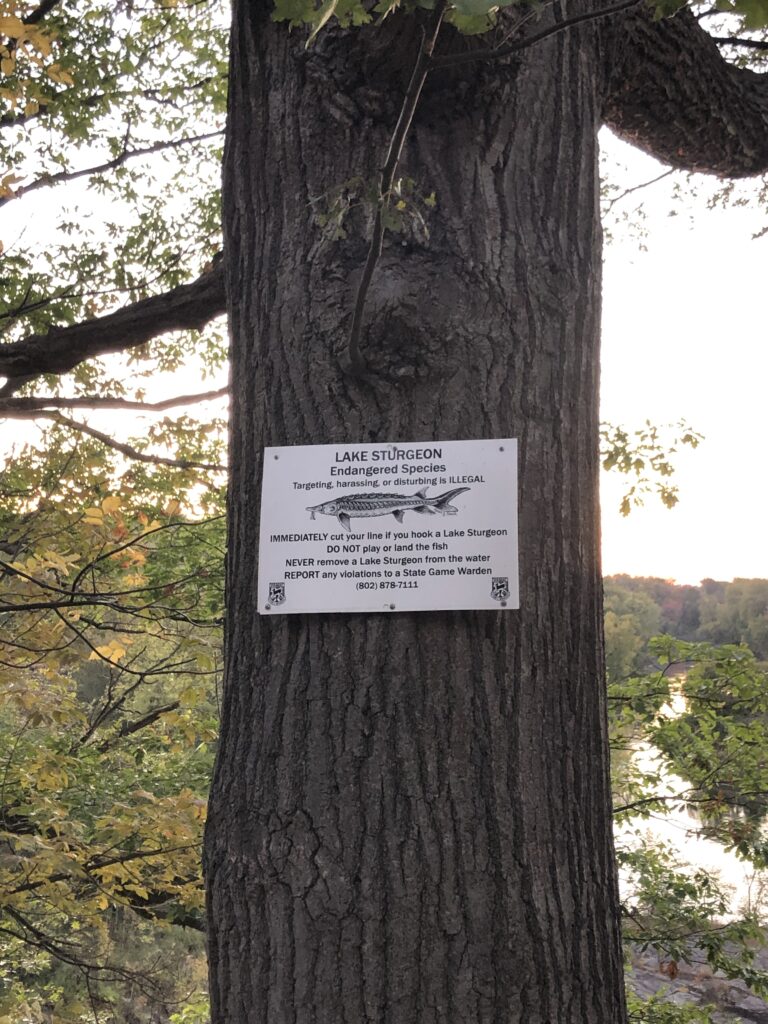
Mainly I chose this area because of the fish that live there. The name itself comes from the salmon that spawn below the dam. This makes the area’s habitat even more important as key species live in this area as it provides perfect foraging grounds for the fish. Some common fish in the area are trout, bass, salmon, and even some pike. An interesting attribute of the land here is the rock formations which create channels and holes for these fish to hide in. When observing these, it can be seen the rocks have ripples in them. This is caused by erosion and the current that this river has. Around the plot is the dam, which creates a higher water flow rate. It also adds a direct human aspect to this area. People created that dam and it affects the flow of the water and the habitats in it. Salmon hole, in general, is caught right in the center of the town, so people have a more predominant effect on it than, say, a river hidden in the woods. All the litter from people sweeps right into these waters. Not only that, but all the runoff from the town can go straight into these waters.
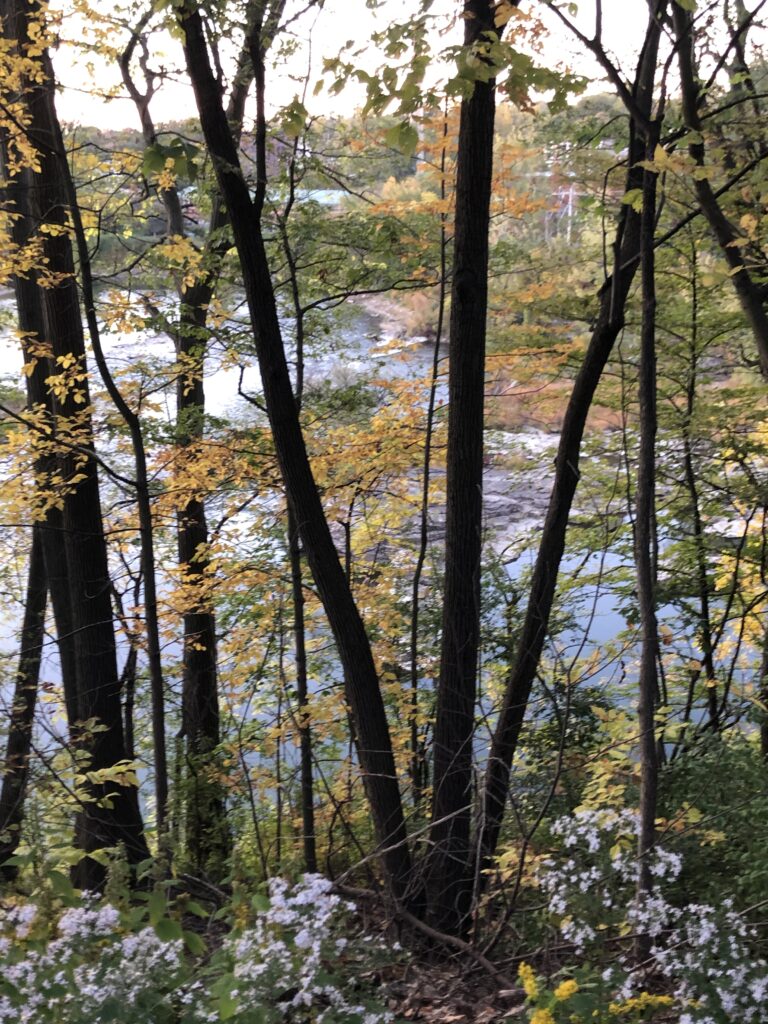
In the plot the most common tree seen was the northern red oak along with a variation of red maples and sugar maples, which at this time have an orange tint to the leaves and probably will fall off in around a week. On a smaller scale there were some glossy buckthorn and honeysuckle. In the rocks there were a lot of grasses and moss growing in the cracks. On the high part of the walking trail there were mainly eastern white pines, but none located in the plot. It just shows that the pines grow away from the rock and higher up on the bank, which likely affects the soil, in which pine needles that fall off making the soil acidic.
One Comment (+add yours?)