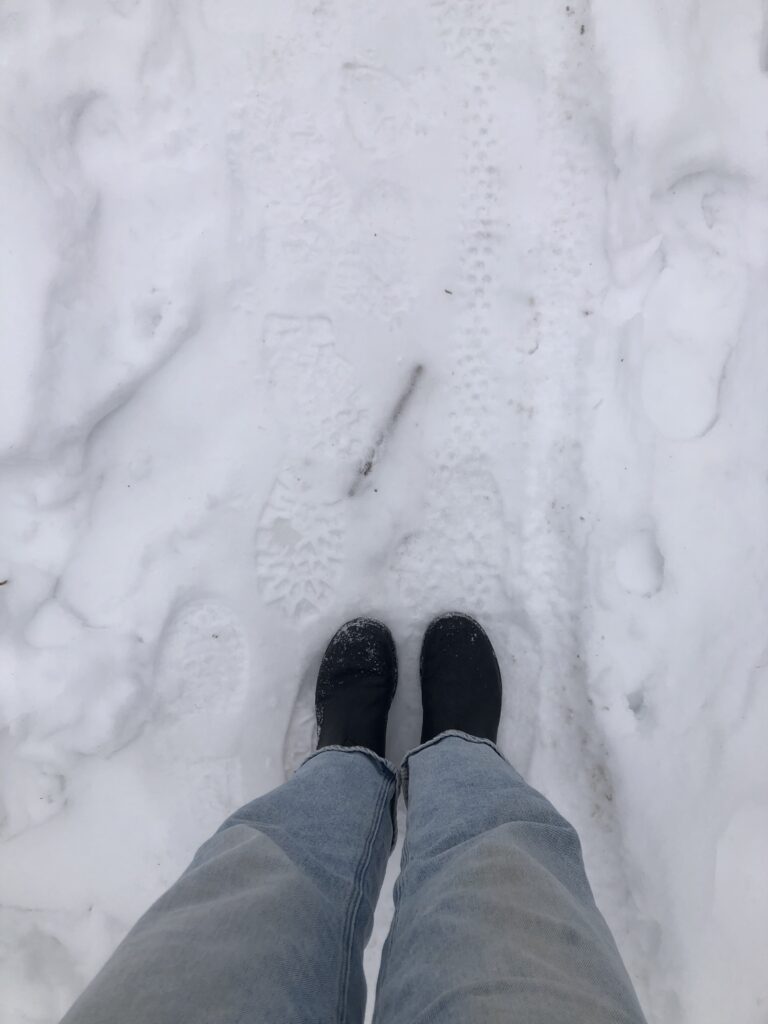
I started my trek to Salmon Hole on a chilly Monday morning. The way there leads to a slight drizzle of snow, prepping for the week of freezing temperatures. One of my first observations of Salmon Hole was how icy the trail is. This is due to the popularity of the area, which I was shown by the packed-down snow on the trail, almost making it feel like I was walking on an ice slide. I had just come from class when visiting and sadly forgot my ice spikes.
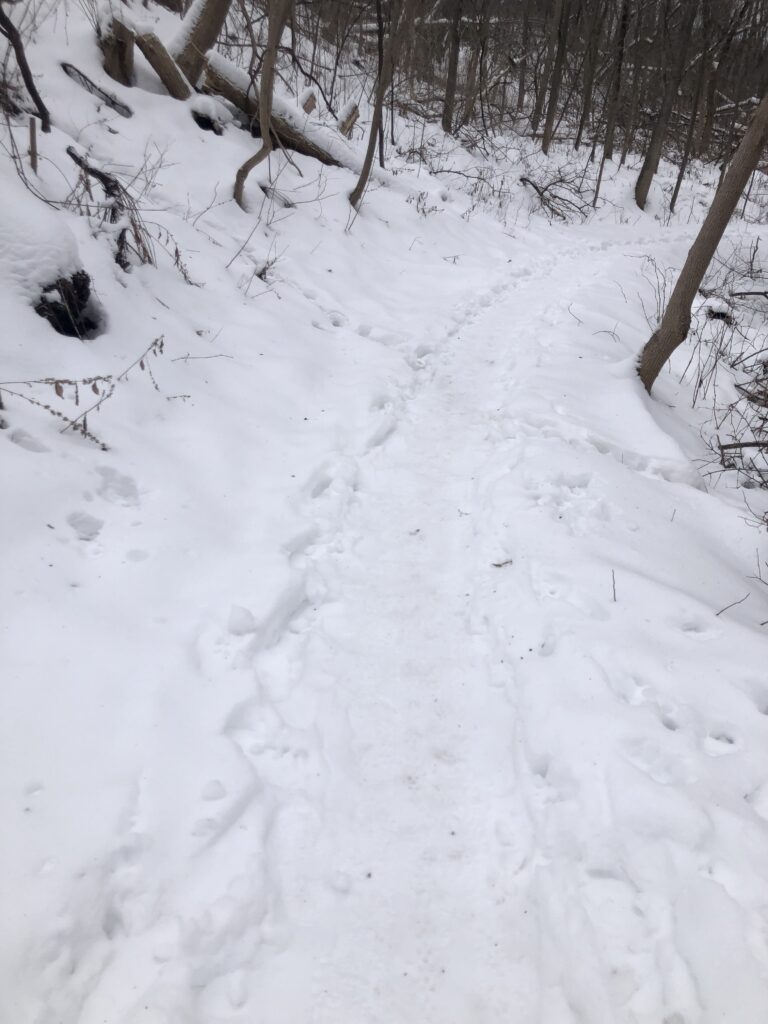
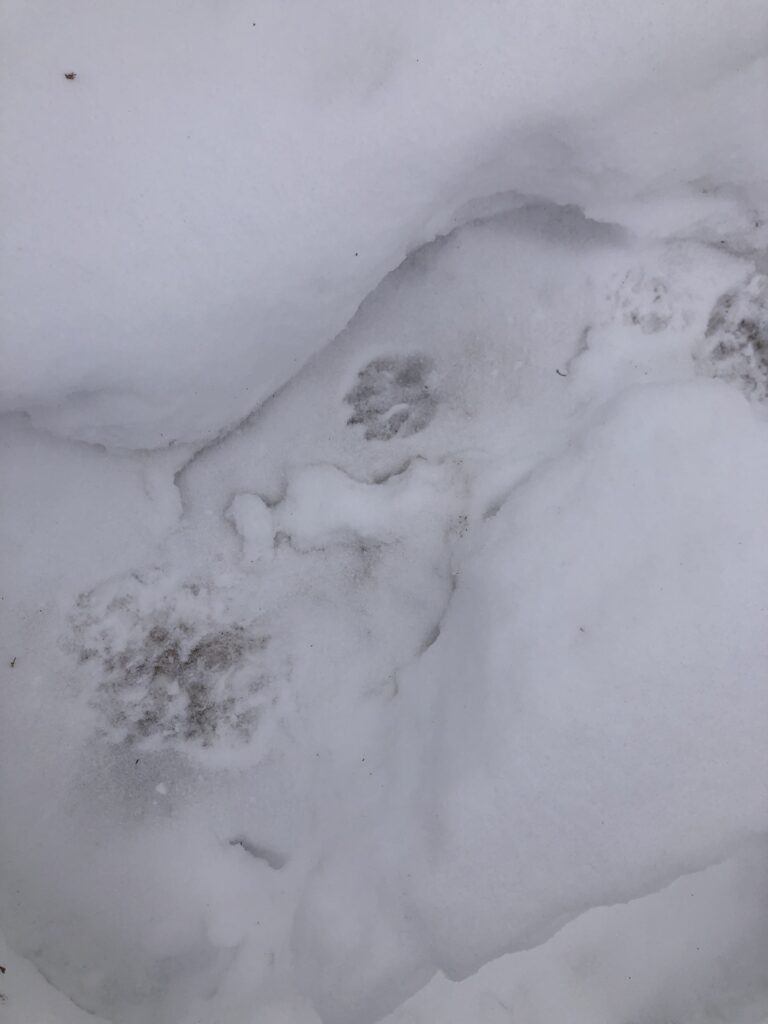
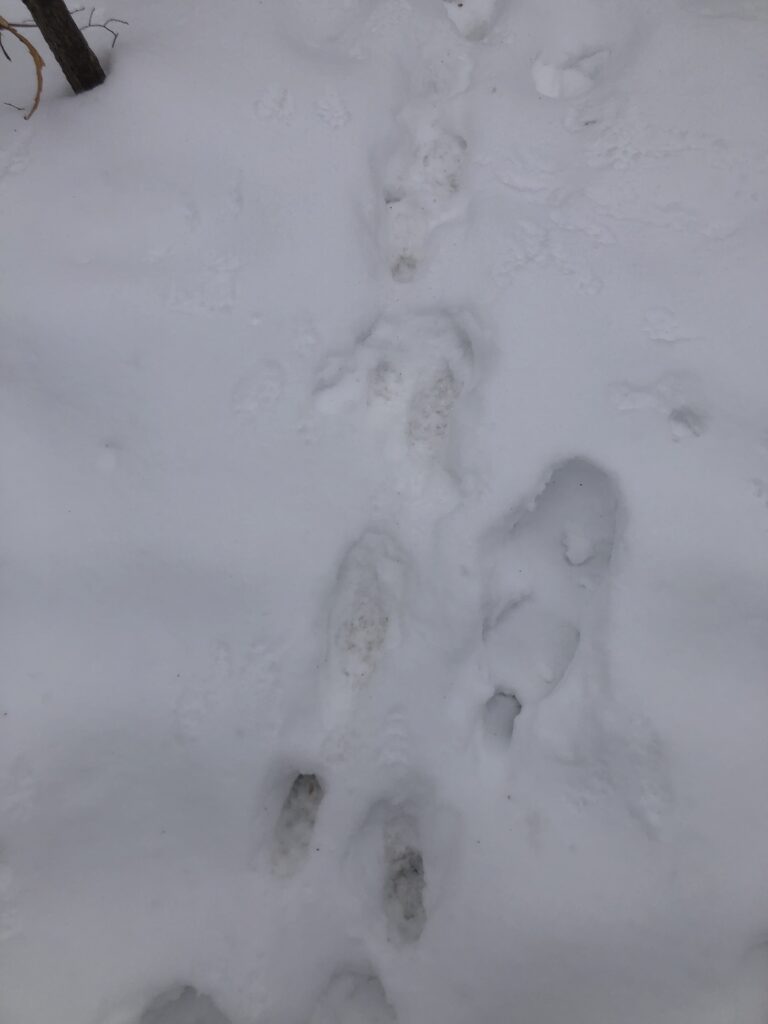
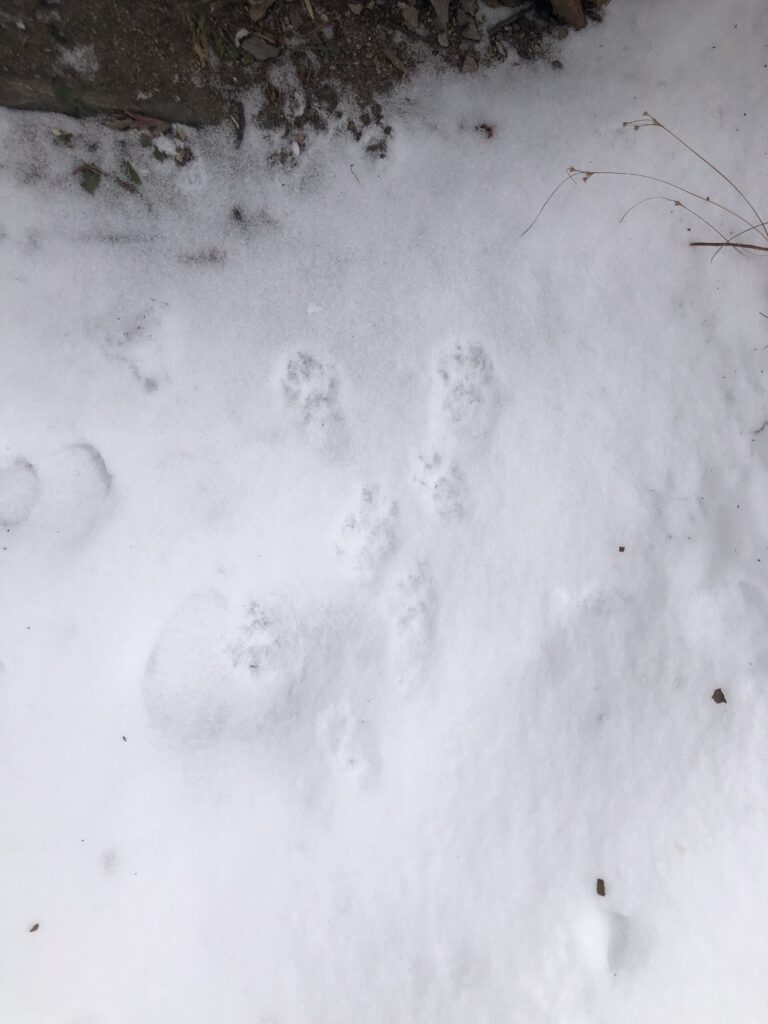
Along with the tracks of people, I saw many animal tracks, most of which were from dogs. The snow revealed the number of dogs owners bring on these trails and which ones walk off-leash. I found the most interesting track right before an oak tree (Image 3: Animal Track). This was one of the only tracks I found that did not appear to be from a dog but instead from a wild animal. My guess is a squirrel, as the tracks start and end in front of the tree. Leading to the conclusion that the animal must have climbed the tree and run away. The prints were also tiny, eliminating the majority of animals that could be around. Besides these tracks, there was a lack of animal signs, such as fur or eaten berries.
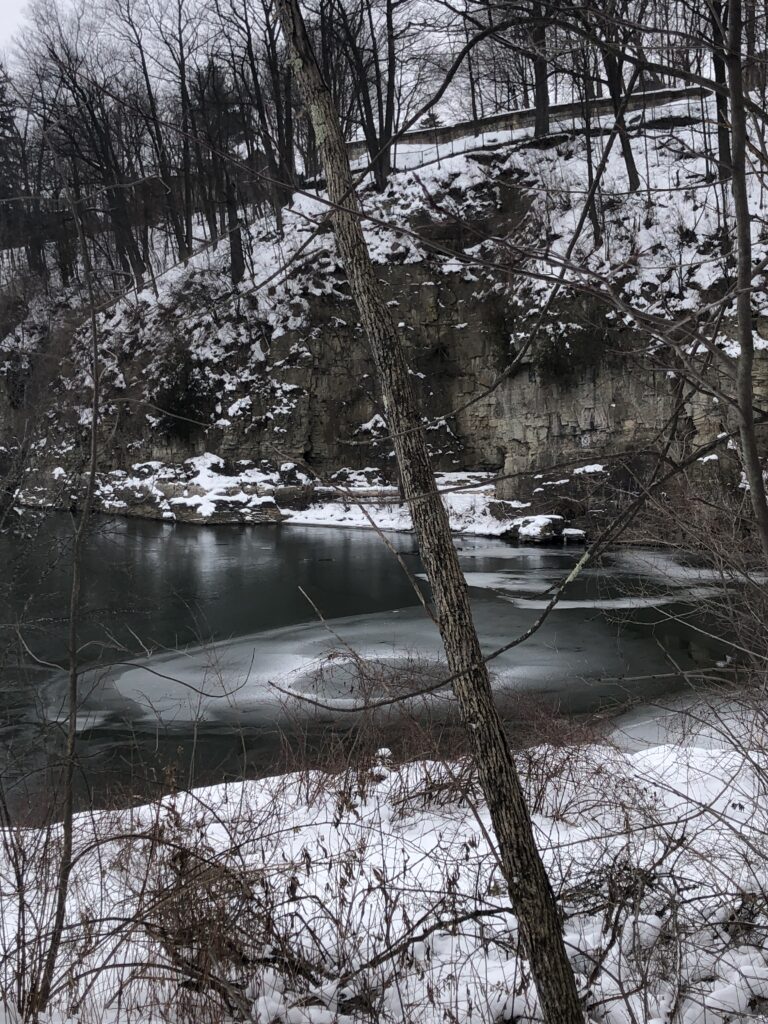
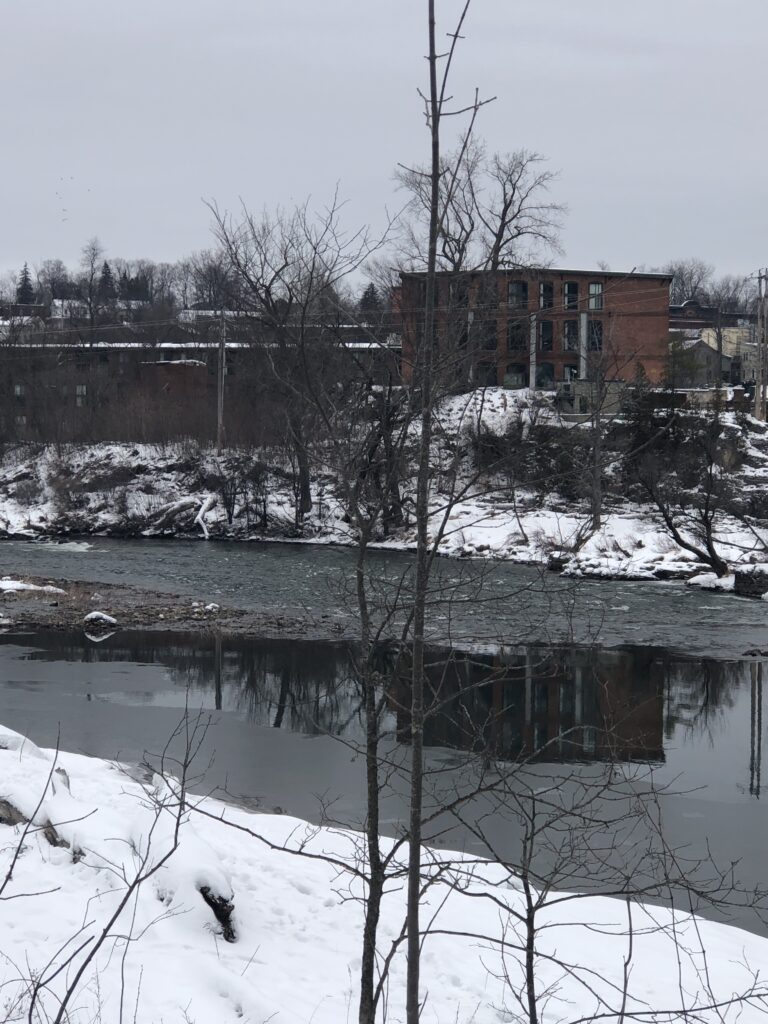
The last component of Salmon Hole that caught my attention on this visit was the river. The area closest to the rocks I visit has begun to freeze by the edge. This makes sense as the area’s water is slower, making it easier to ice over. As the temperature drops this week, I want to see how much of the river freezes over, especially in these sections. The rest of the river was running fiercely and moving faster than the last time I visited. This could be from the recent snowfall.