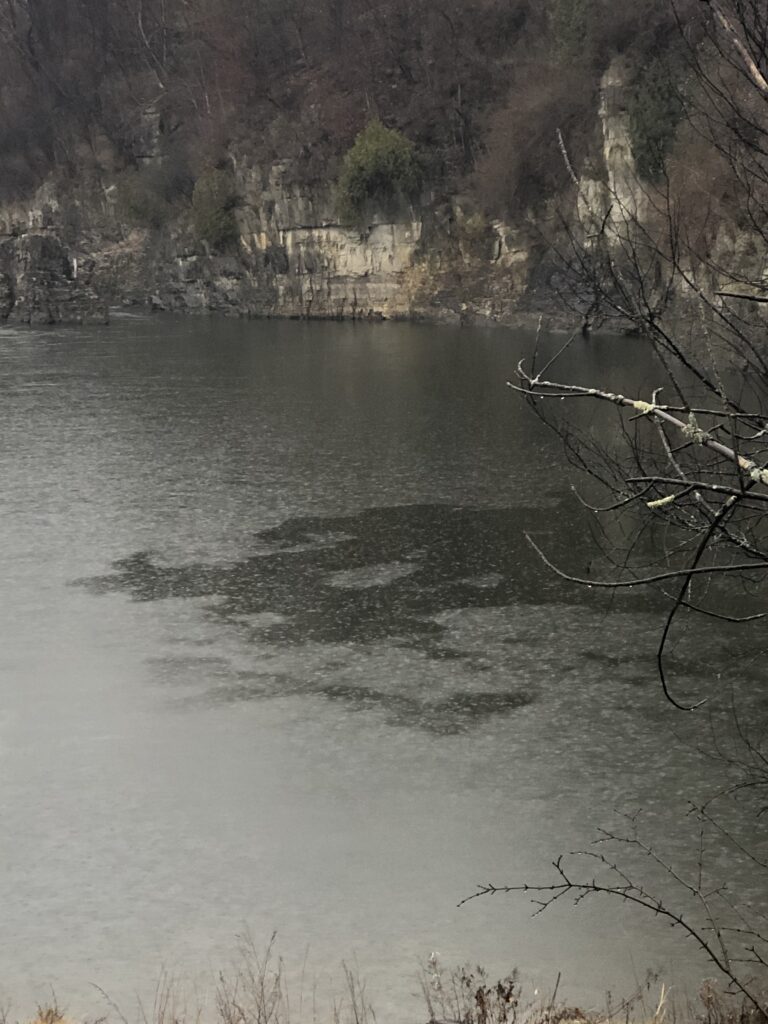
On Tuesday, December 6, 2022, I made my final trek of the semester to my phonology spot. The weather for today was on the colder side and had constant rain showers. It was around 40-50 degrees out during this visit, which is shocking to have such warm temperatures in the winter, especially in Vermont.
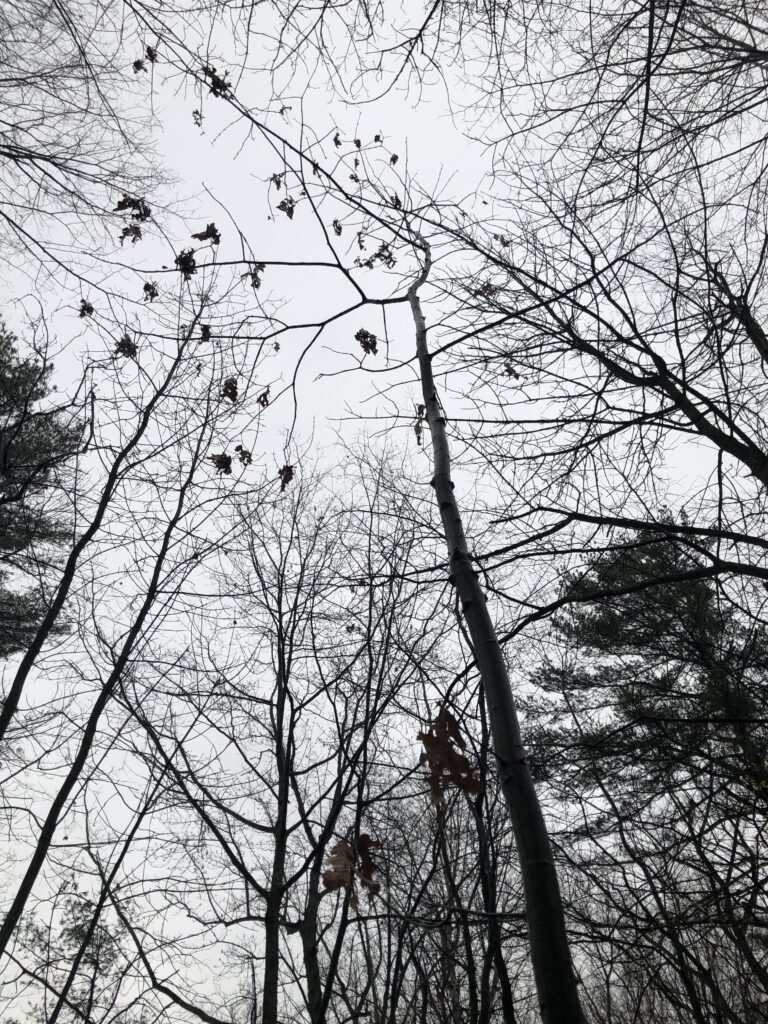
On my initial visit to Salmon Hole, I mainly took note of the trees, like the northern red oaks and red maples. These trees lay bare as their leaves scattered across the forest floor. However, when reviewing photos from my November visit to my site, I saw a drastic change in just a month. When I visited the site at that point, I said a lot of the area lacked leaves and less vegetation on the ground. Looking at these old photos, however, I still see a lot of life on the site. Smaller grasses on the big rock were still green, and to the understory plants that still kept their leaves, a good amount was left.
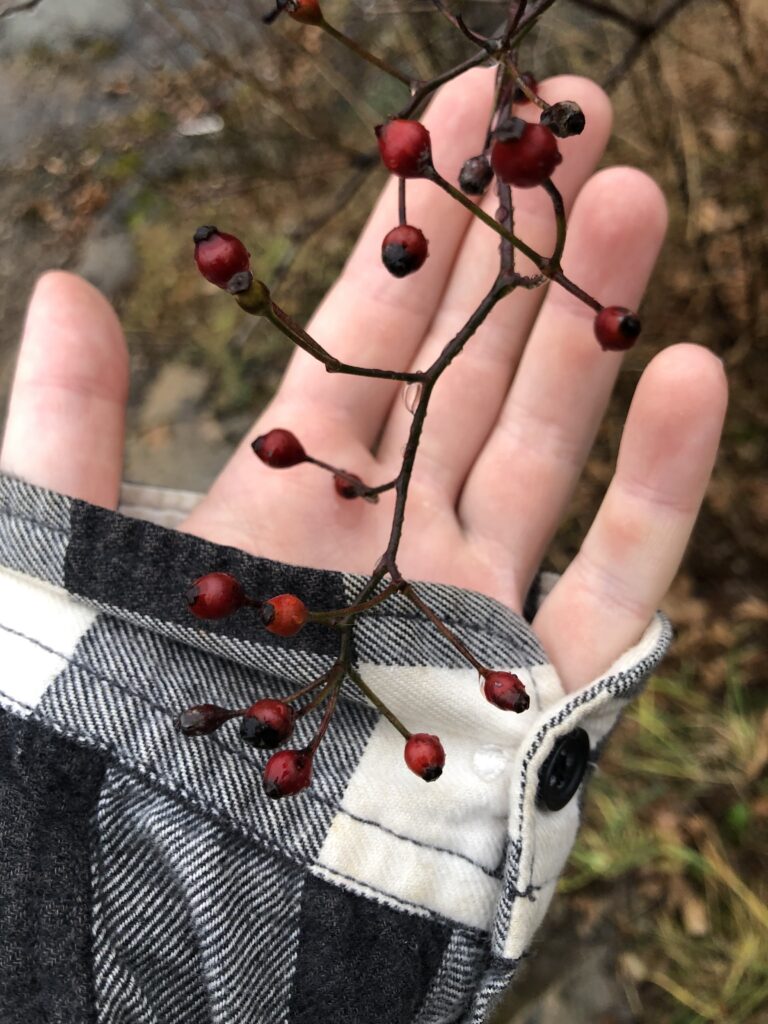
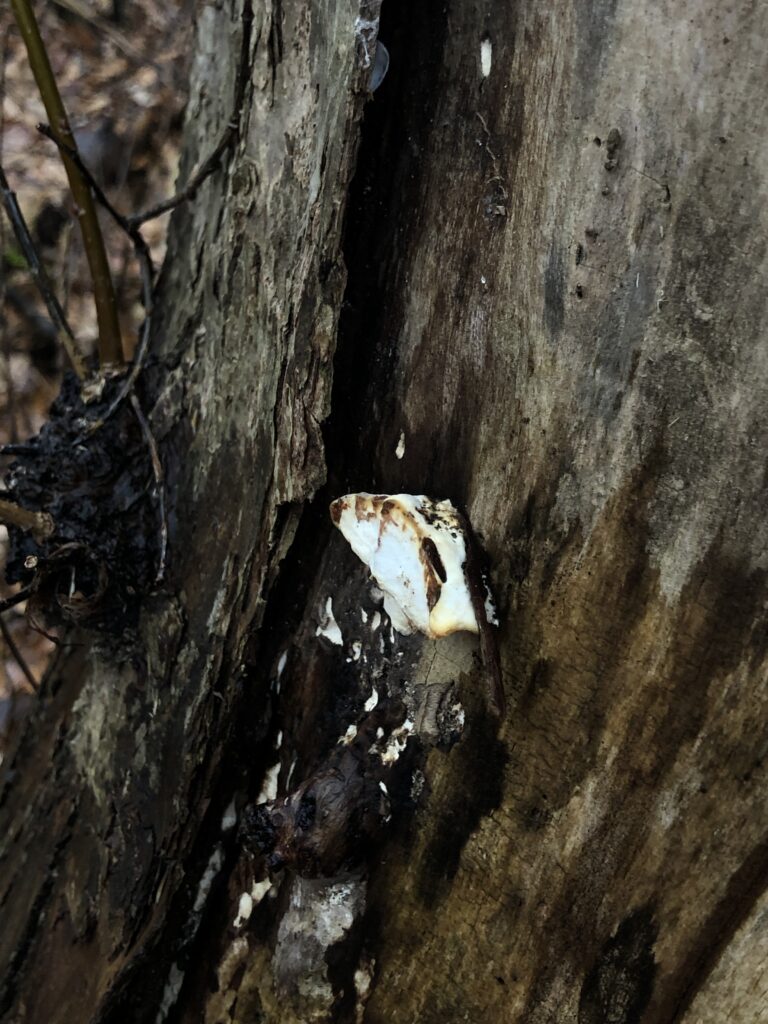
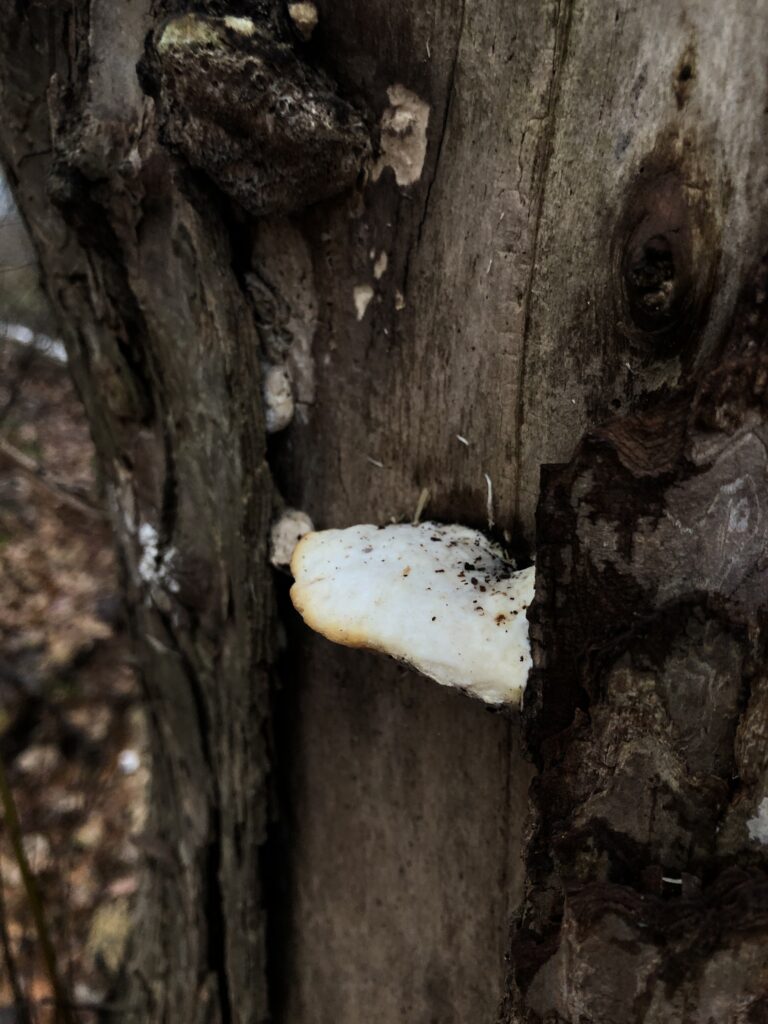
The only tree in the area still contained its leaves was a red oak in the understory. These leaves were all extremely brown and still stuck on the tree. Due to the recent rain, most leaves fell entirely off the trees. In Naturally Curious by Mary Holland, the December section begins to talk about the animals and plants found in this time frame. I could not find any animals or tracks of them; I even looked at trees to see if a porcupine had been around. Potential evidence of an animal being around was an eaten mushroom on the tree. Mushrooms generally grow 1-2 days after rain, and the mushrooms on the tree were tiny, so they grew from the recent rain. This means there must still be animals out and about to eat these mushrooms. One fruit I saw was the rose hips, which come from the wild rose plant, a plant I identified earlier in the phenology spot. The wild rose plant was one of the only plants that still had a majority of green leaves, which I found interesting.
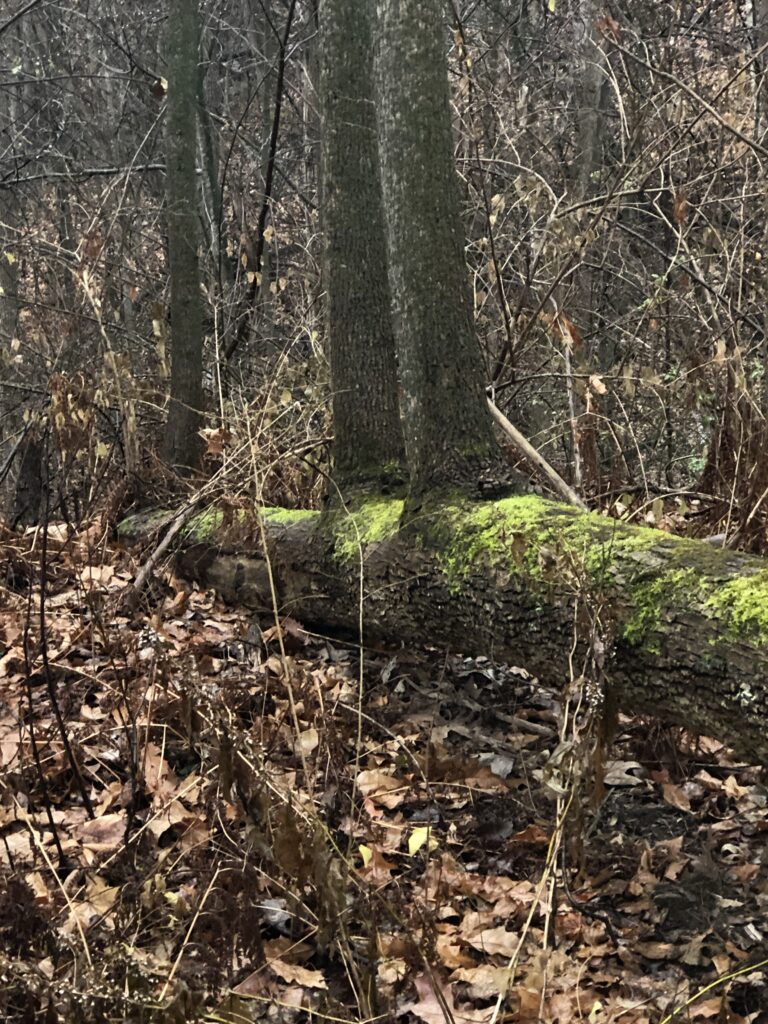
When wandering deeper into the woods, I saw a fallen tree, with its base covered in soil and roots still in contact. Growing from this were two healthy trees with their branches and systems. It’s amazing how trees can continue to grow even when put in these unconventional situations. Even when this tree fell, it stayed healthy and grew.
During my time on my phenology project, I was left with one last question, which was about the Winooski River. When I looked into a still part of the river, I noticed that the water was a darker color than the rest of the river (as pictured below), which made me question why the river appeared to be two different colors. At this point, I could only think of one potential. My idea is that from the winter cycle, many sediments settled to the bottoms of the river. But as the rain hit recently and the river looked more powerful than last time, some of that settled sediment began to rise. It could cause that color change.