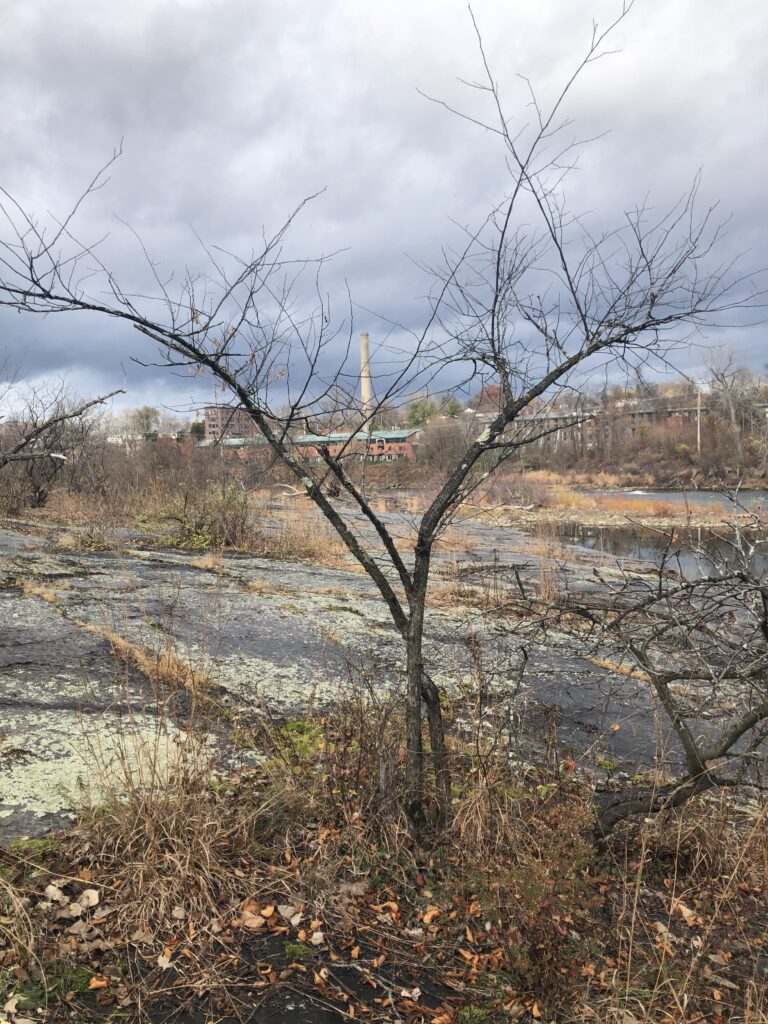
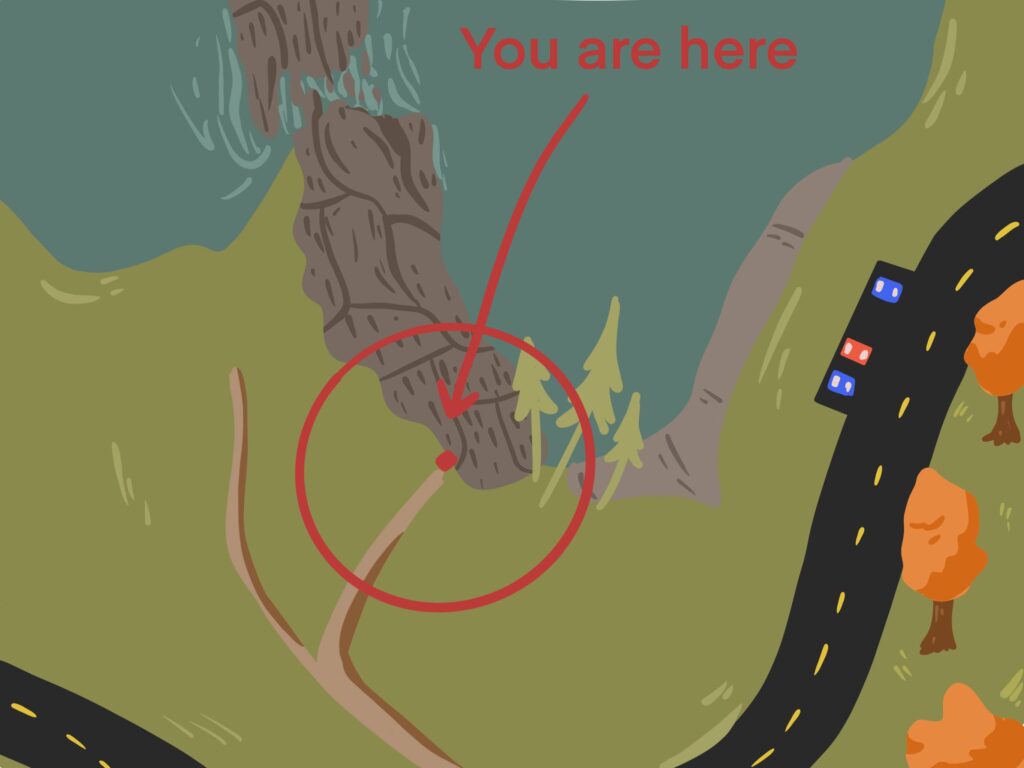
I went to Salmon hole on Sunday, the sixth of November. The weather during this time was explicitly interesting for November, as it was around 70 degrees outside. Not only this, but as I reached my spot, it started to drizzle out. This was enjoyable because there was no one at Salmon Hole; I got to fully enjoy the area without many human disturbances besides a fisherman who was leaving. However, the impact of humans was still there, as the ground was scattered with litter that people left in the area. The majority were cans, so they were purposely left instead of accidentally left.
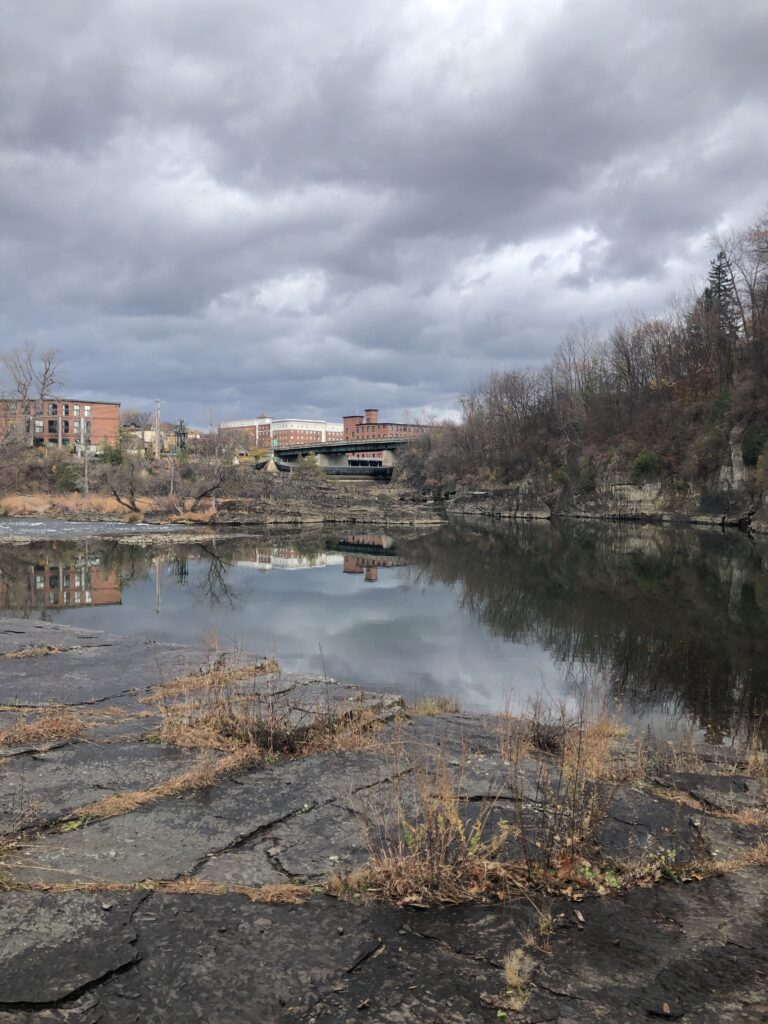
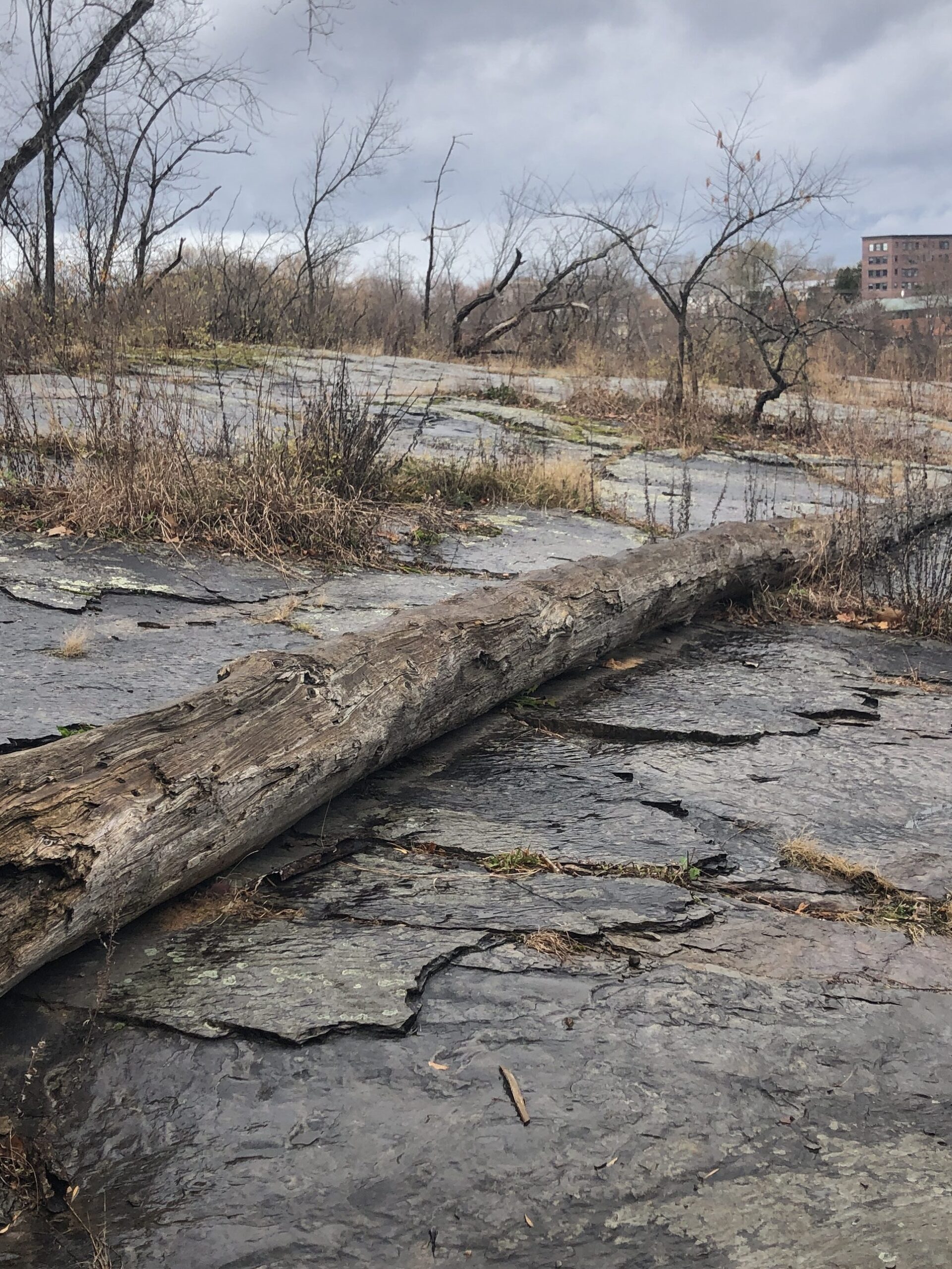
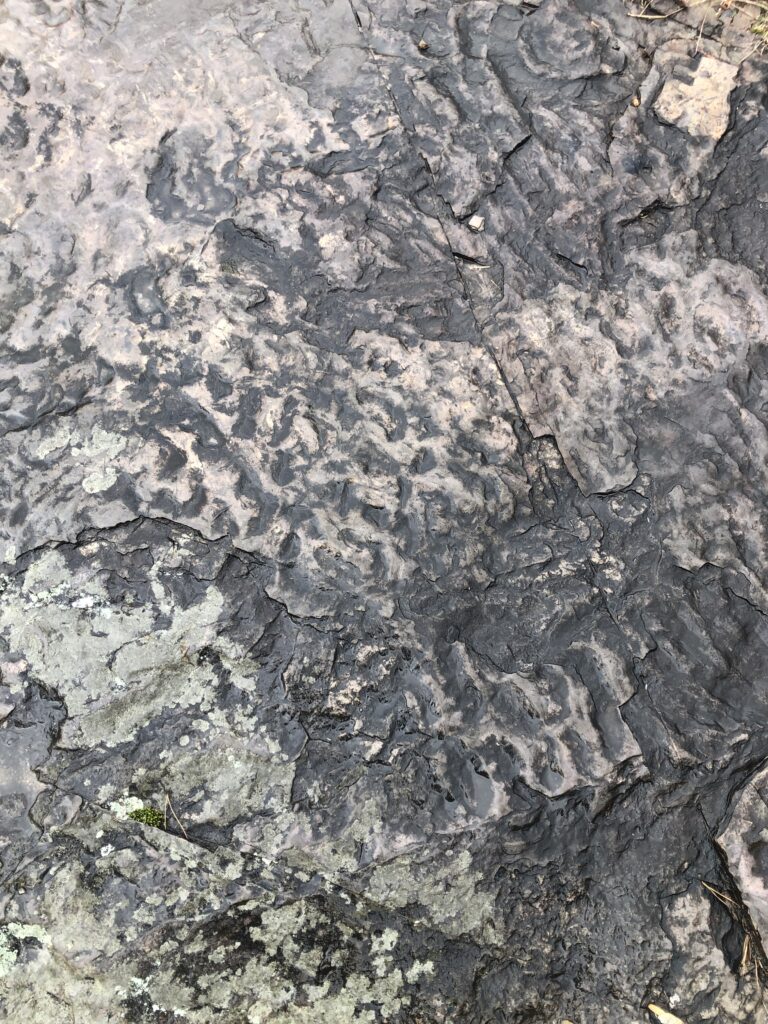
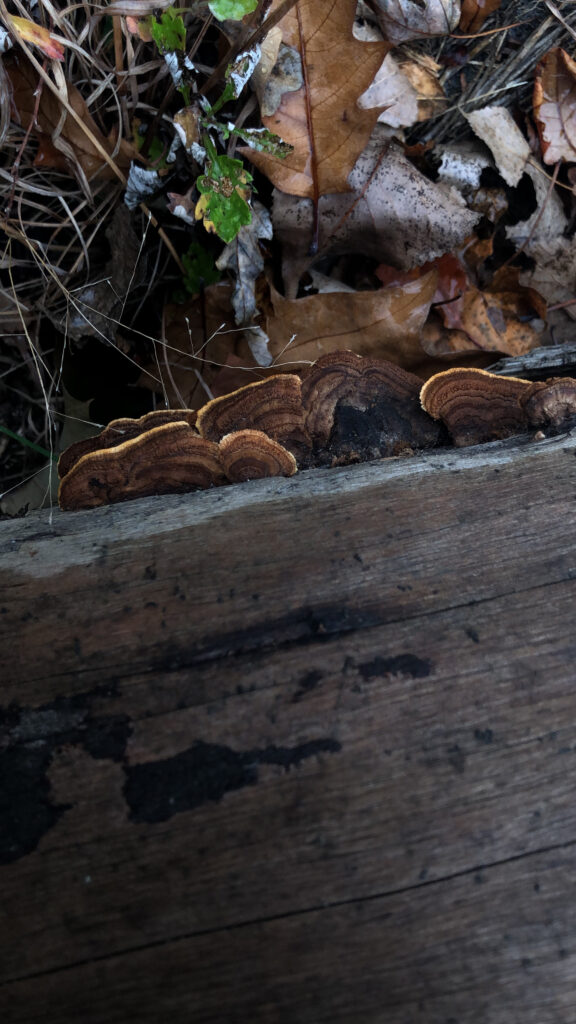
Now, when sitting on a fallen tree for 15 minutes, I first noticed the noise. Salmon hole is a beautiful natural area, but it is also directly next to a busy road. Sitting there, all I could hear was the cars going by. This perfectly illustrates a conserved natural area placed in an urban setting. The influences of Winooski and Burlington directly affect the site and, more importantly, the water. Salmon Hole is at a lower elevation than the towns surrounding it, so all the pollutants from these areas go into this water. While sitting, I got bored and decided to walk around instead. As I walked across the rock, I slipped and fell entirely on my side. At first, I was embarrassed to have dropped on the rock, but it gave me two new observations. The first was that some algae or bacteria grew on the rock, which became highly slippery because of the rain. It brought my attention to what could be potentially growing on this rock that I would not have noticed if I had not fallen. The second is that it emphasizes the texture of the stone. The rock was extremely smooth and had smooth lines like divots in it. This was most likely caused by erosion.
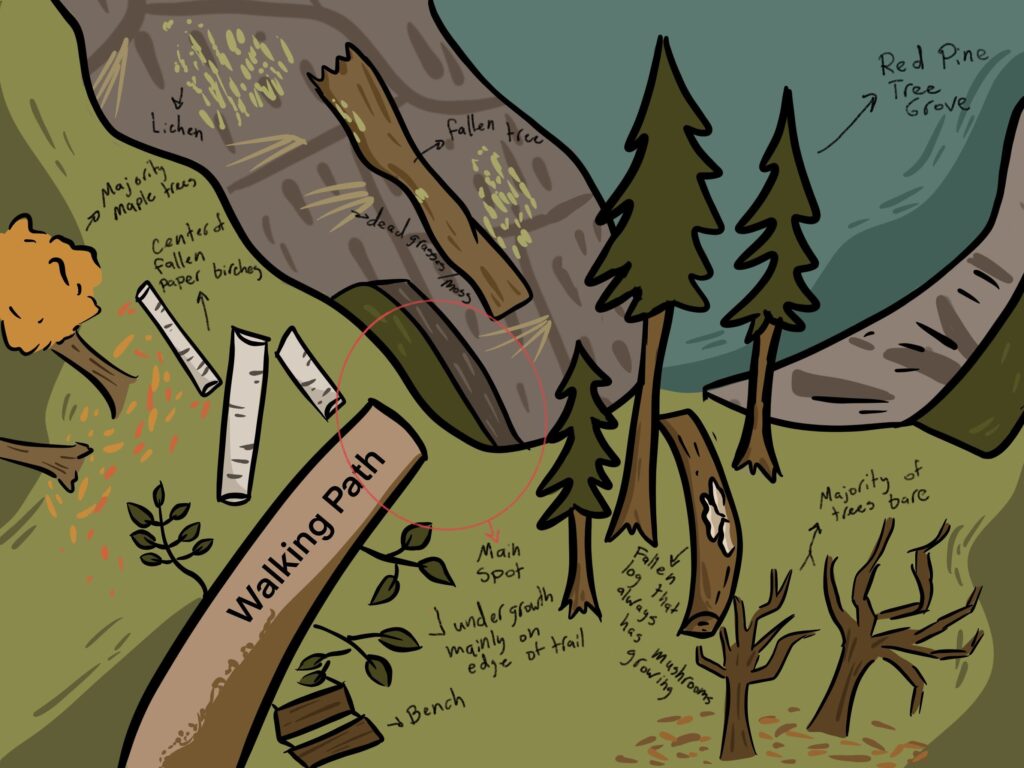
The main change was the overstory. Last time at this spot majority of the trees still had their leaves and were starting to change color. Now walking in, the trees were bare, and their leaves covered the forest floor. There was less vegetation on the forest floor as the leaves covered it. The undergrowth still had some green leaves, or they were starting to turn yellow, such as the Alder Buckthorn. The American aster still had some open flowers, but most were closed.