Event Map

November 12th, 2021

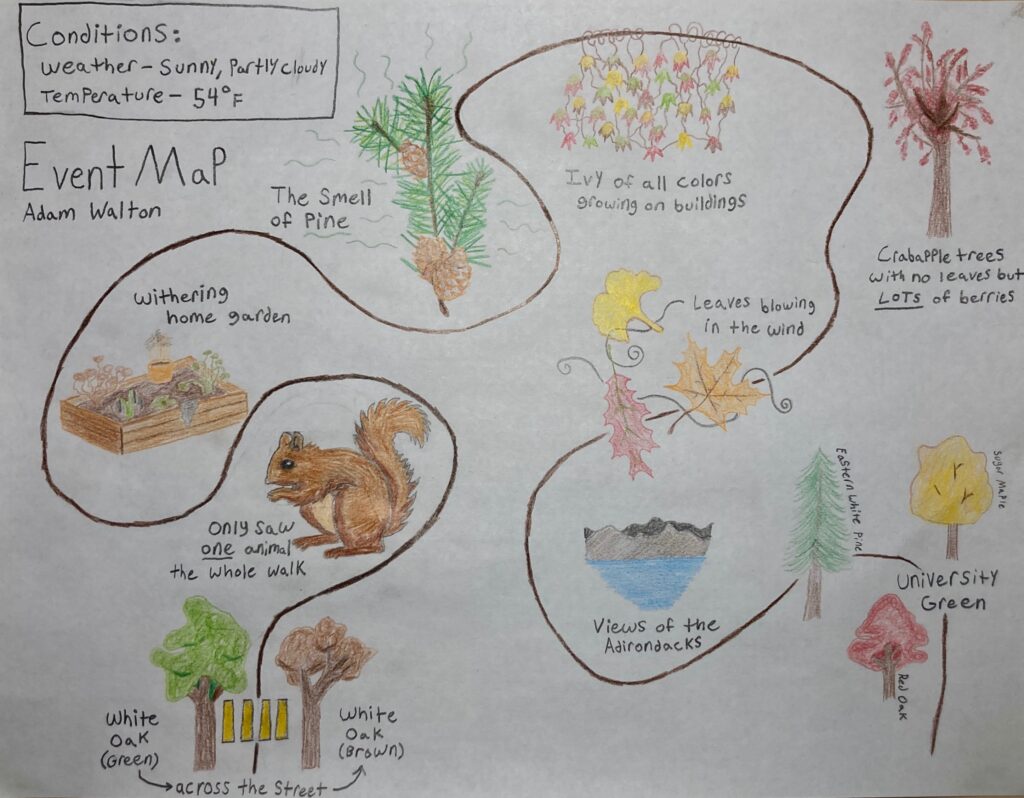
Today, I went for a phenological exploration within the City of Burlington, Vermont. My journey started as I left UVM’s academic campus, onto the University Green. There were presentable trees of all different colors placed within the tamed grassy area. As I started declining in elevation on Pearl Street I had an amazing view, straight through downtown, across our beloved Lake Champlain, and into the upstate New York Adirondack landscape. Today was warm yet windy, causing a downpour of leaves to fall from their branches. After I took a left onto South Willard Street, a predominantly residential neighborhood, it became clear to me that Crabapple was the main common street tree. These trees had certainly been affected by fall with no leaves left to shed, yet they still bore their plump ruby-red fruits. Similar to many buildings in Burlington, most of the homes on Soth Willard had ivy along their outside surfaces. Due to the time of year, the ivy presented itself in many different colors ranging from green to yellow to orange to red to brown; an organic fall canopy. I noticed some homemade gardens were struggling as a result of the recent cold weather. I took my last left onto Main Street, with the westward wind on my back carrying smells of autumn and pine. Along with looking at the plants and landscape, for the entirety of the walk I was searching for animals. I saw no signs of birds, chipmunks, or insects; It wasn’t until the very end of my trek that I saw a squirrel collecting acorns. It became obvious to me that animals local to Burlington have either started migrating or begun hibernation to battle the harshness of the winter to come. I came to the end of my expedition as I waited for the crosswalk light on South Prospect Street. But as cars blew past me, I took one last look around and witnessed a flawless White Oak that held perfectly green leaves. When I finally crossed the street I found another White Oak, just as tall and mighty, but with withered brown leaves, one that was evidently struggling with the season upon us. These natural conflictions continue to leave me puzzled, yet drive my passion to learn their rhyme and reason. Overall a beautiful day to enjoy the peaceful presence of fall within our city.
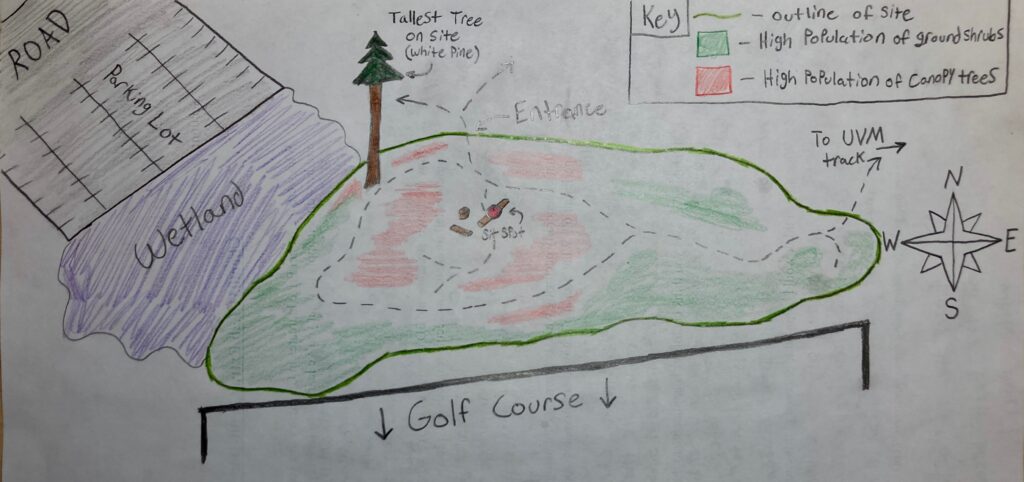
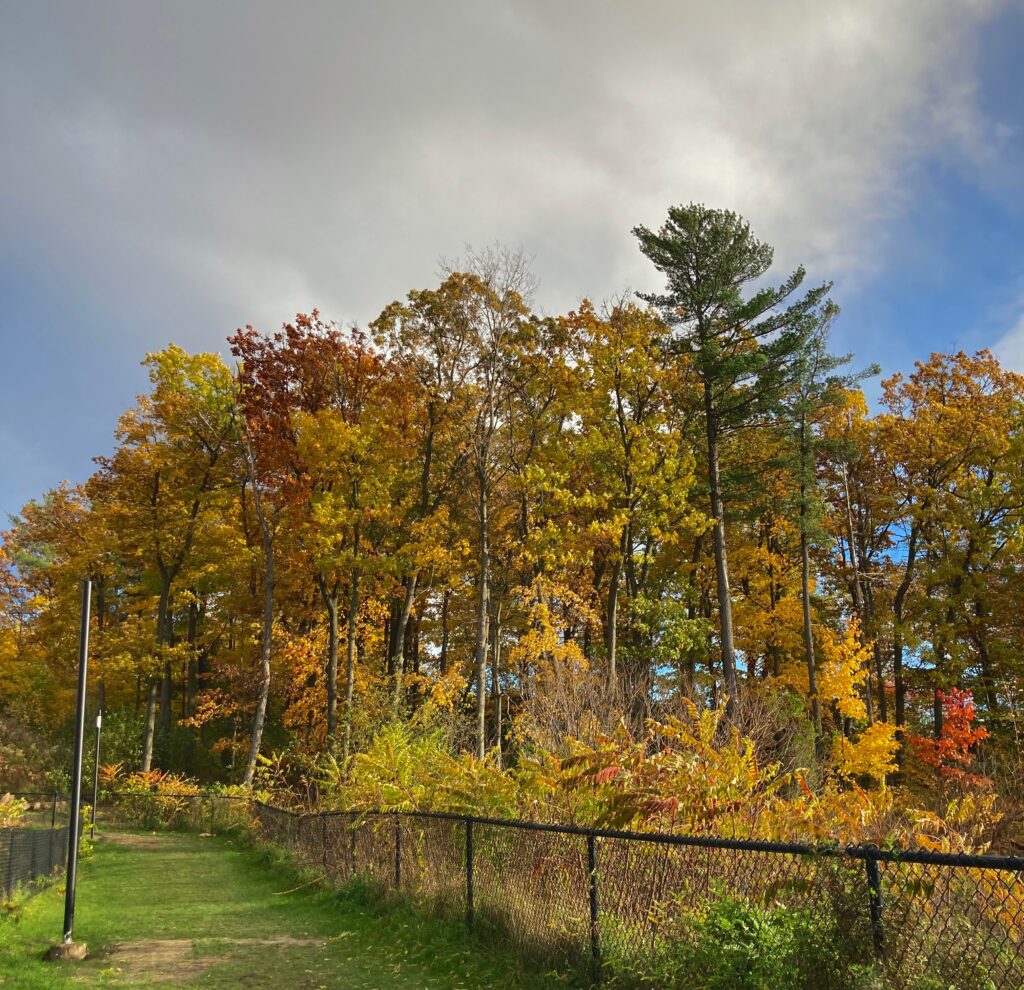
Phenology Blog #2

November 1st, 2021 (51°)

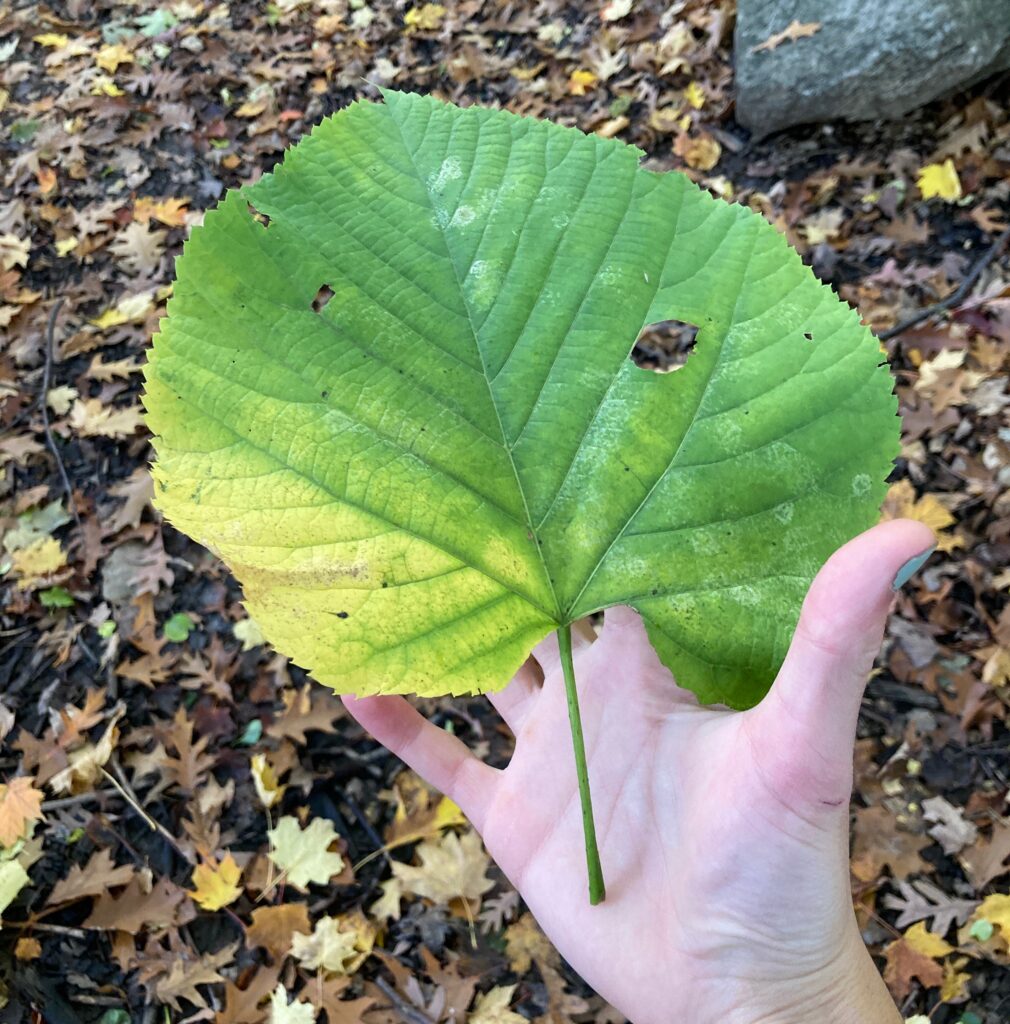
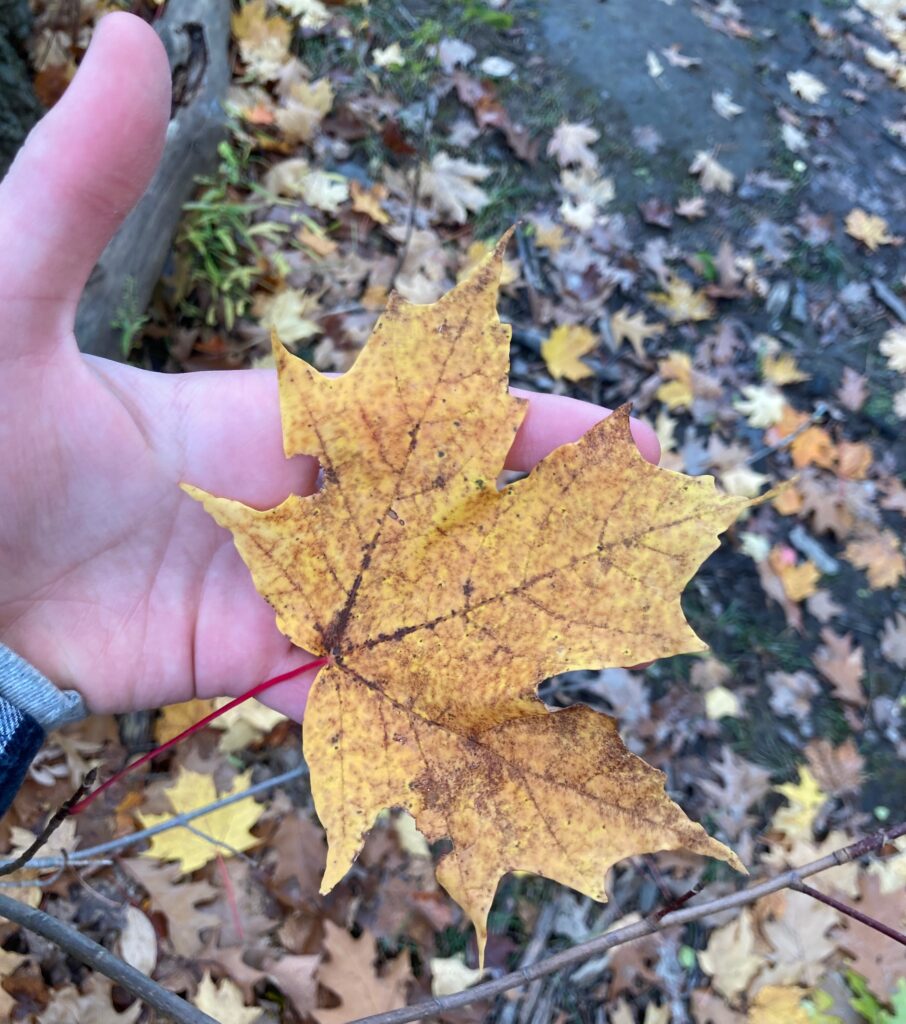
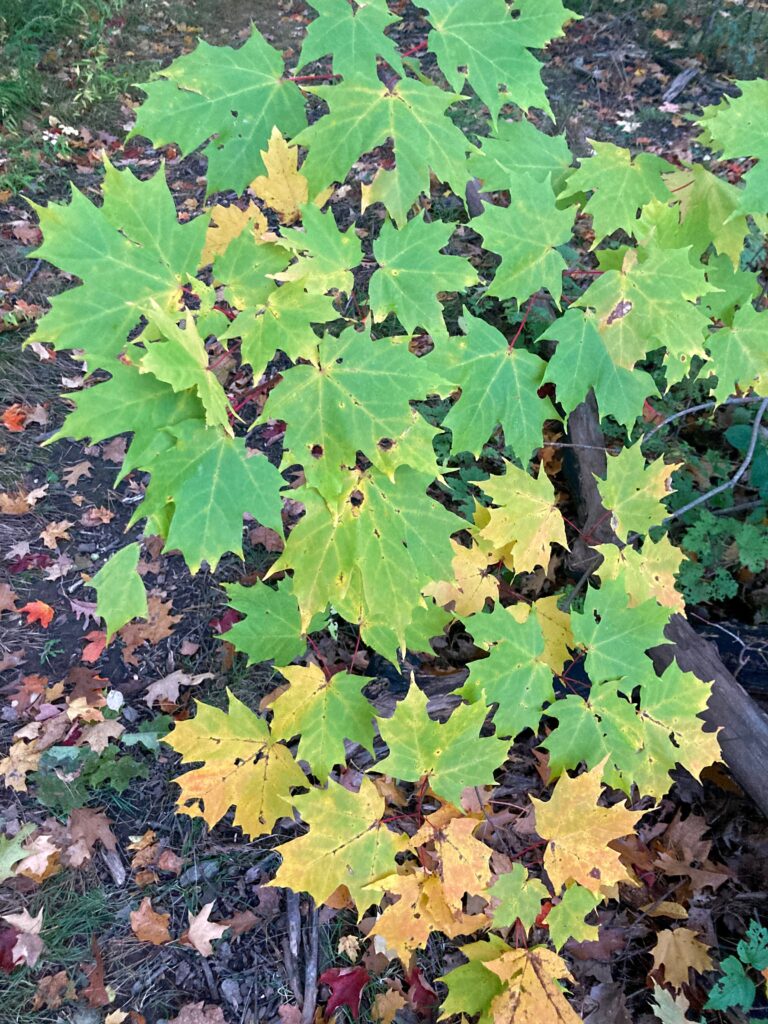
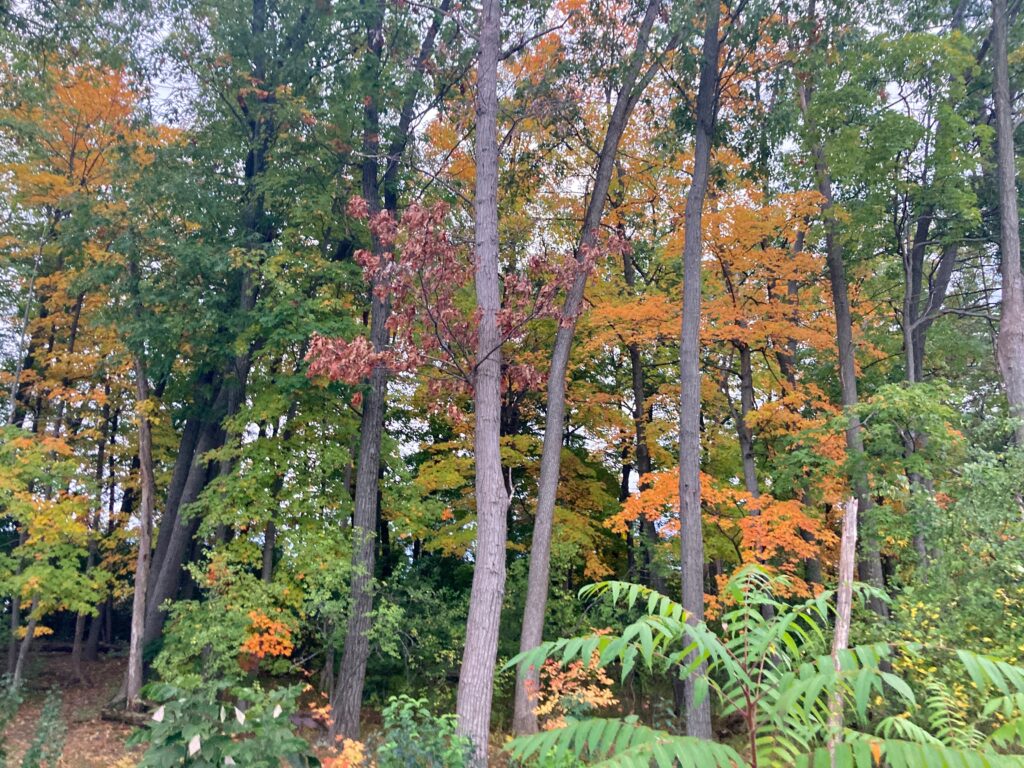
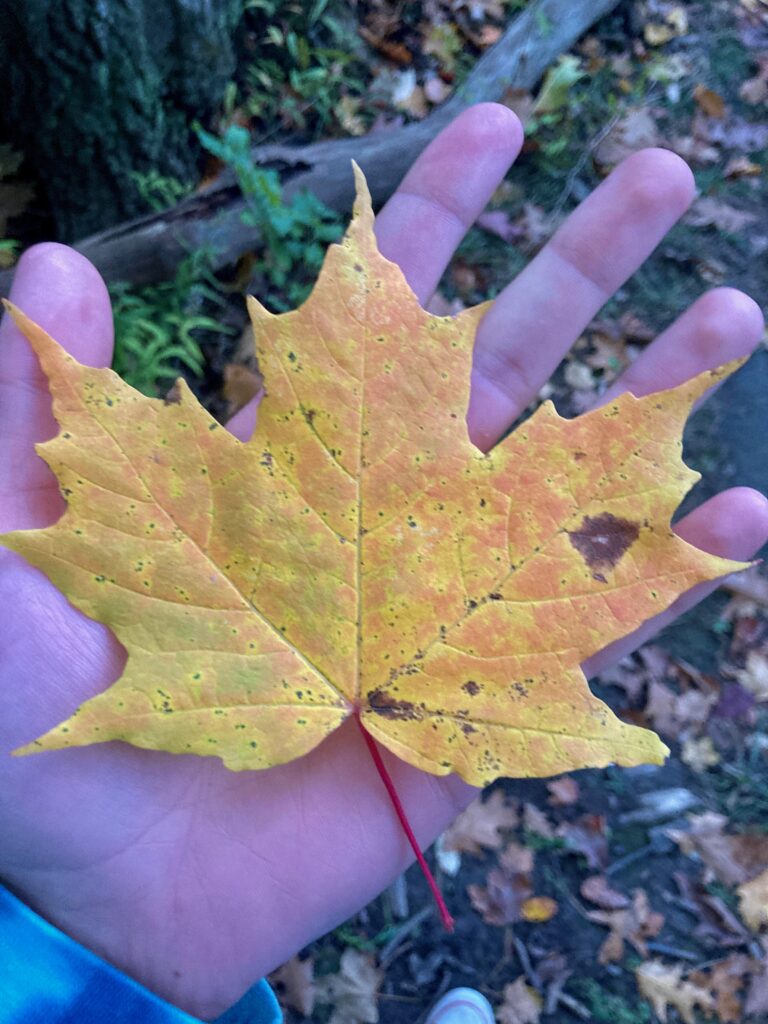
Yet another beautiful day to observe my phenology site! I can feel the temperature slowly decreasing these past few weeks but that’s Vermont! And along with this colder weather comes the shedding of leaves from the trees. Just within the time span of two weeks, my site has lost almost all of its green. Almost every tree is yellow, orange, red, brown, or even barren. I examined my site in more detail today, trying to discover new species I have not seen yet. Although I still saw the common Sugar Maples, Red Oaks, White Pines, and Buckthorn, I discovered Barberry, Green Ash, and a Basswood with the biggest Basswood leaves I have ever seen (view below). I also found an area in the understory that had an abundance of a species I was unaware of. After researching I confirmed it to be a type of Goldenrod. It is an amazing time to witness my site as each plant is at a different stage. This creates quite the color pallet for fall!

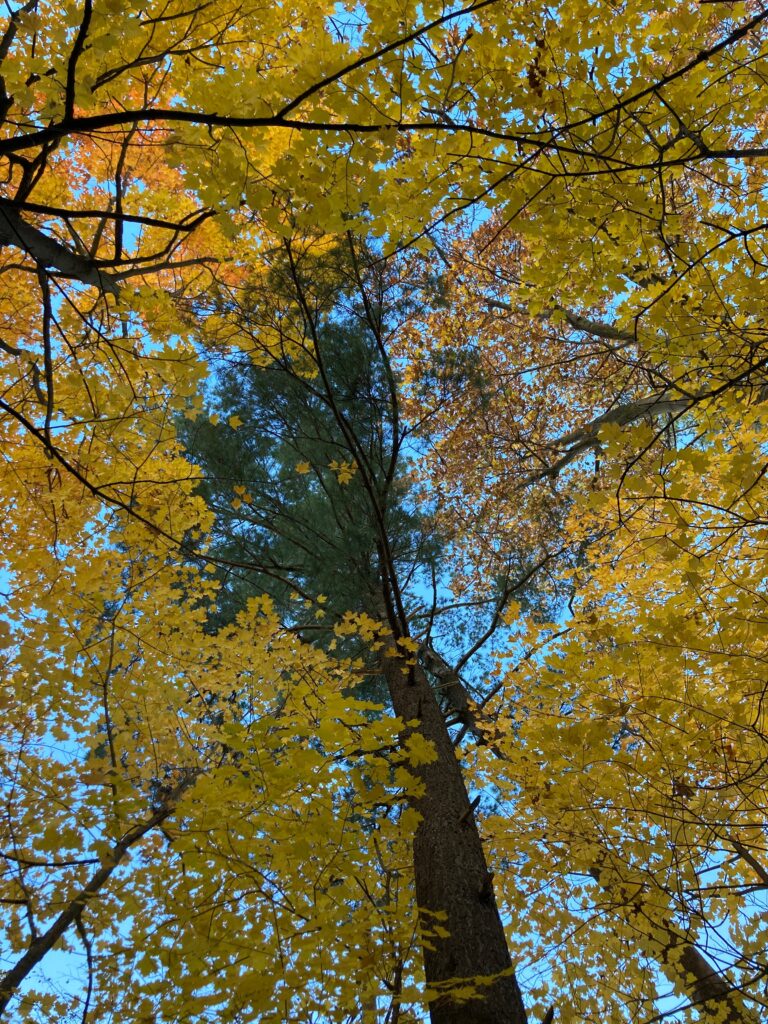
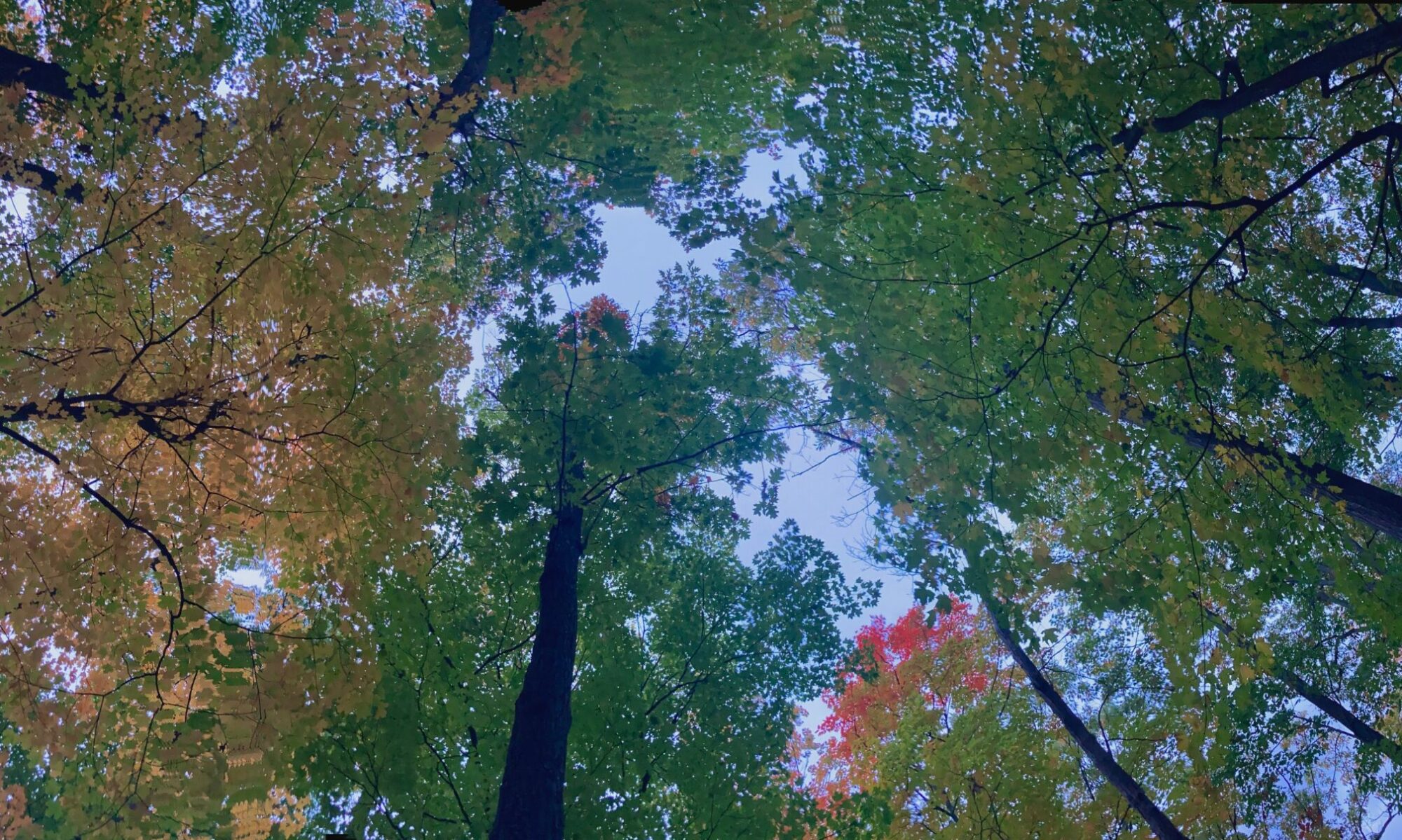
Today, I chose a spot in the center of my site to sit and observe. Because of this experience, along with my patience, I was able to observe aspects of my site that I had not considered before. As I sat there silently, I could hear the breeze running through the trunks of the tall trees along with the shake of their leaves. As I breathed in the fresh and brisk air, I could smell the Earthy outdoors scent. I would look straight upwards to witness a collidoscope-like view of the canopy: yellow Sugar Maple, orange/brown Red Oak, and finally dark green Eastern White Pine. It was a natural masterpiece.

Phenology Blog #1

October 18th, 2021 (57°)

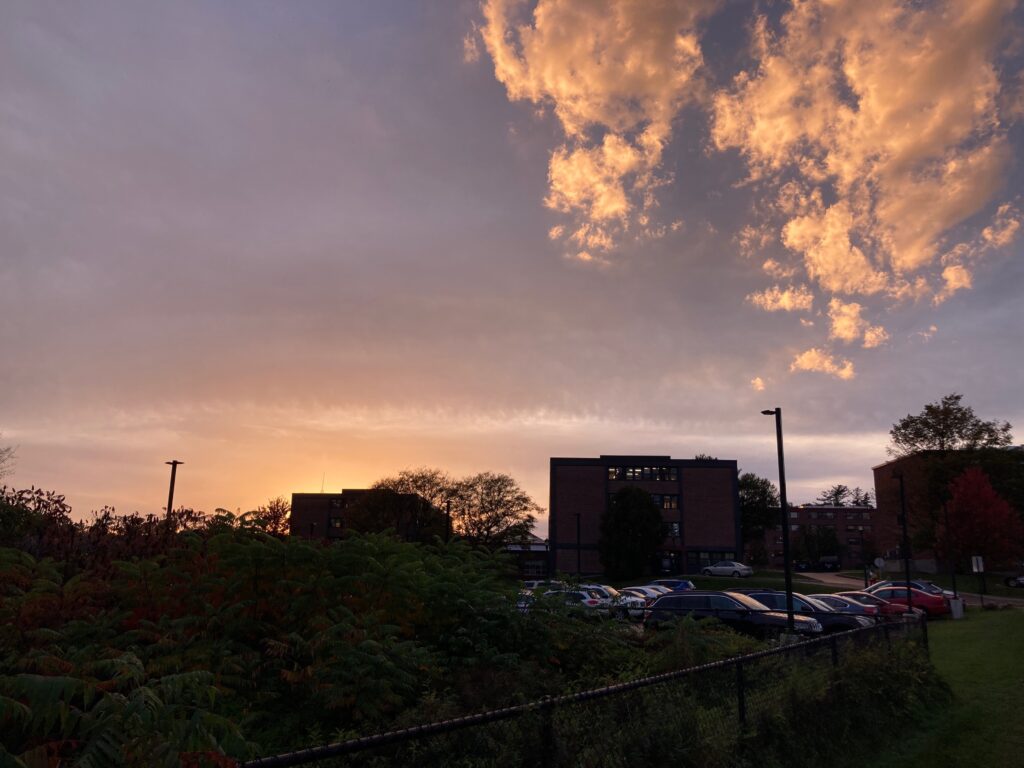
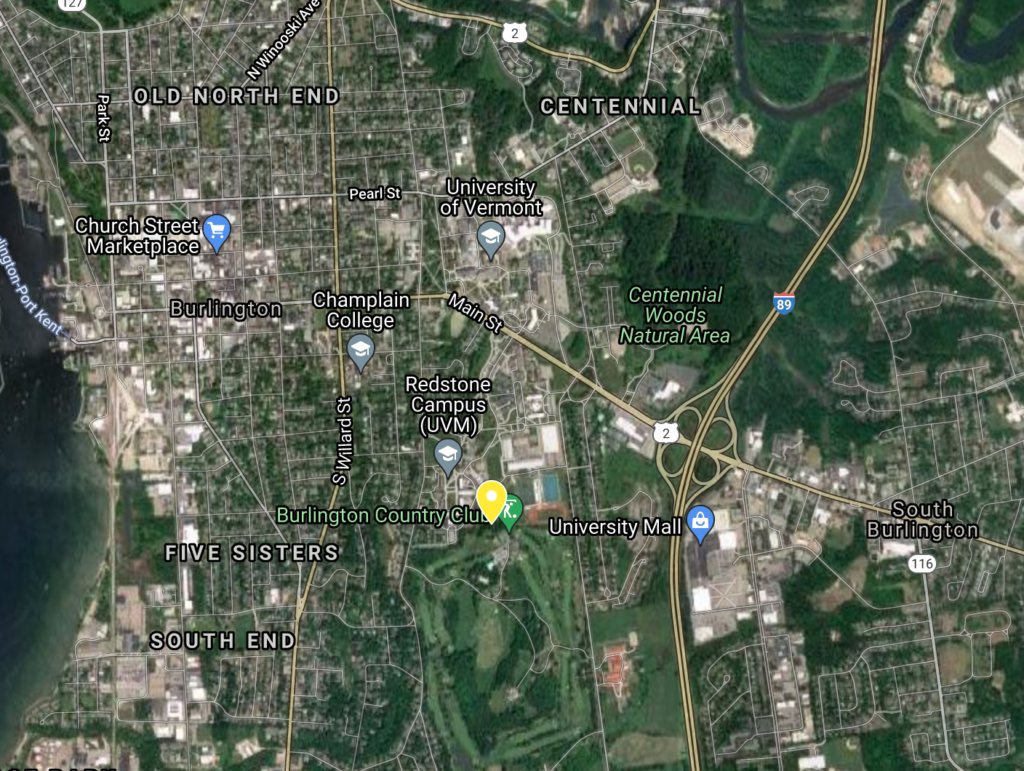
To start off, the location of my lab is near UVM campus on a 1.25 acre natural area.

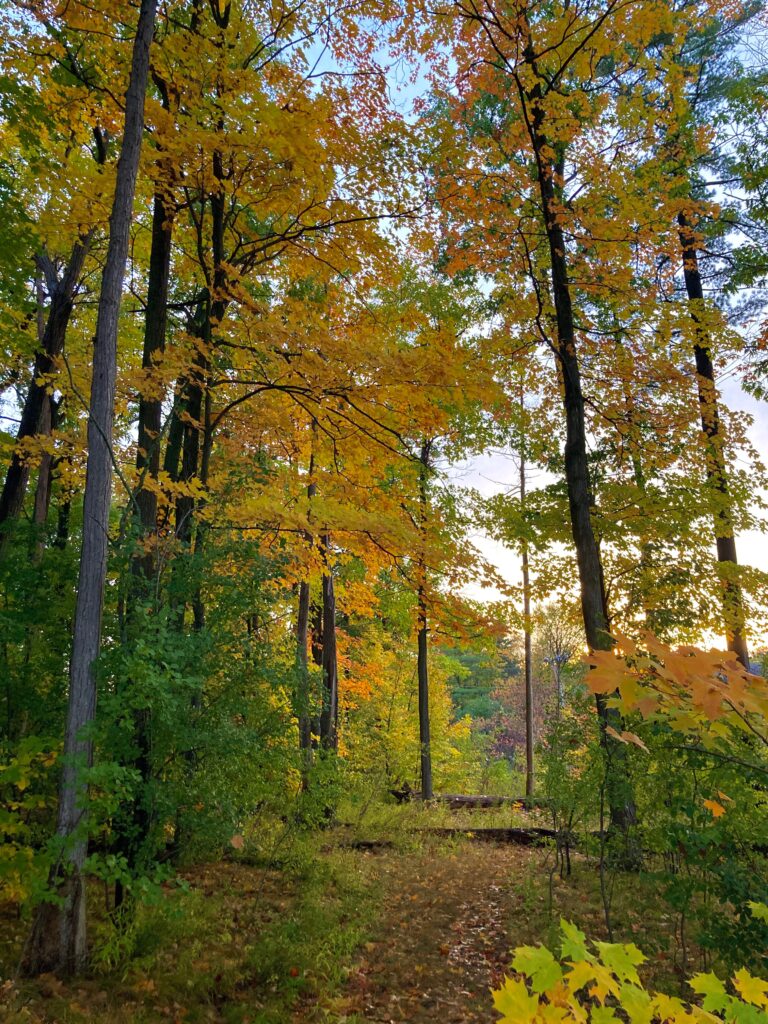
Fall is finally upon us! I am very happy to be experiencing autumn within the beautiful state of Vermont. I really enjoy my spot and feel like I will continue to bond with it as the year goes on. It is in close proximity to my dorm so I intend to be going there quite often to check in on it and allow myself to record more accurate data. My spot is the perfect place to observe the changing of colors as we enter the bitter winter. Although most trees still bare rich green leaves, today I noticed some trees starting to turn to a yellow or even red hue of leaves.

My phenology site’s canopy is primarily populated by Sugar Maples and Red Oaks. Underneath, Buckthorn is very populous, along with White Pine saplings here and there. The bottom composition is mostly packed dirt and soil along with ground vegetation and fallen trees. I am excited to watch my area change and grow as I grow with it!