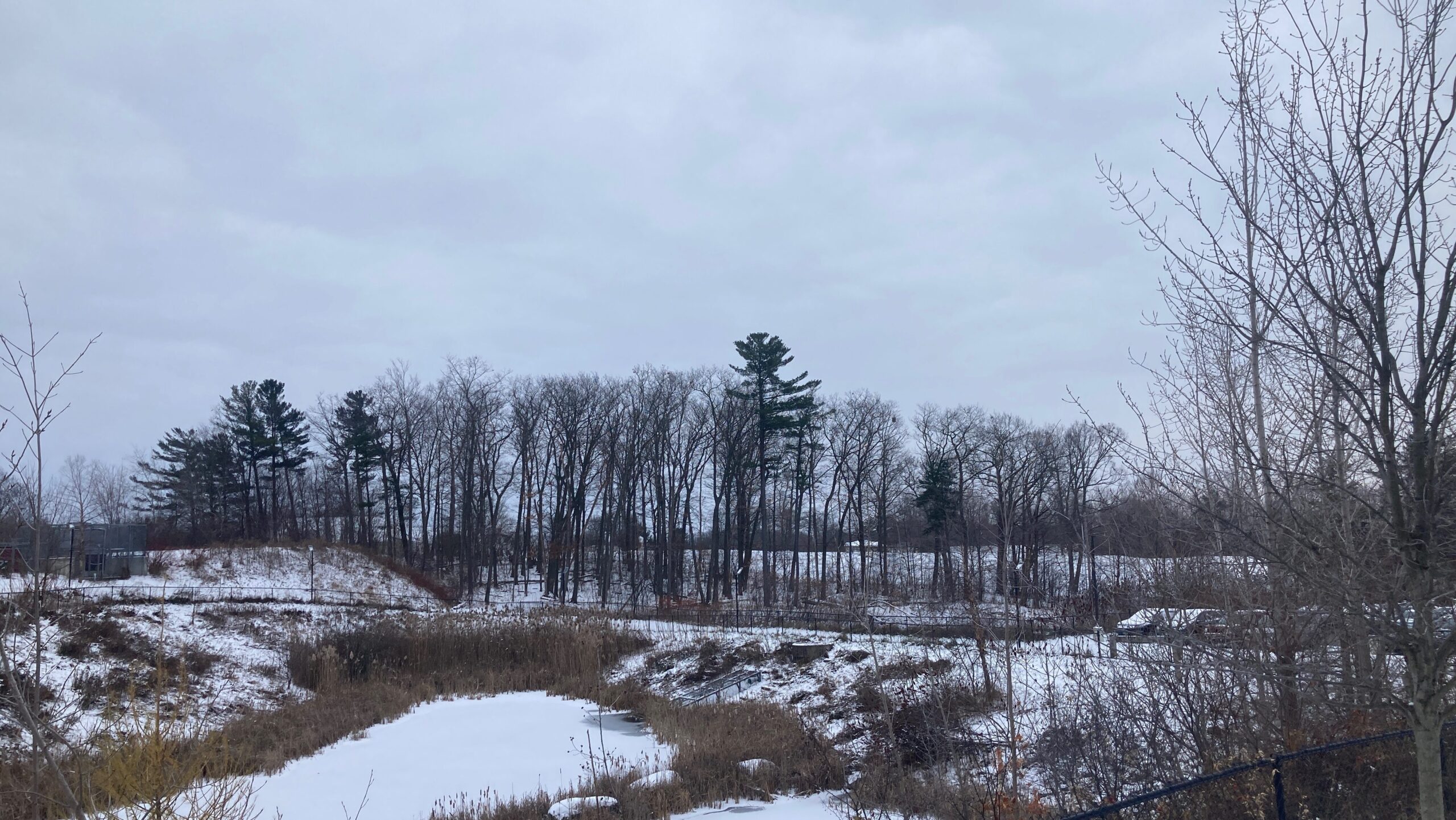
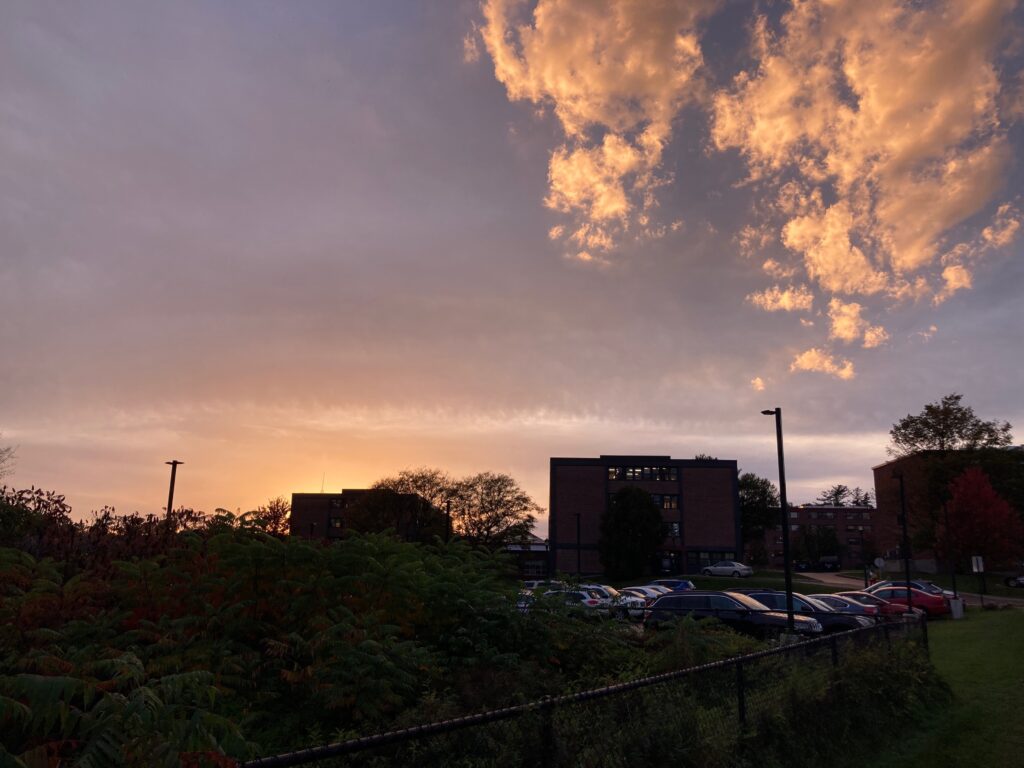
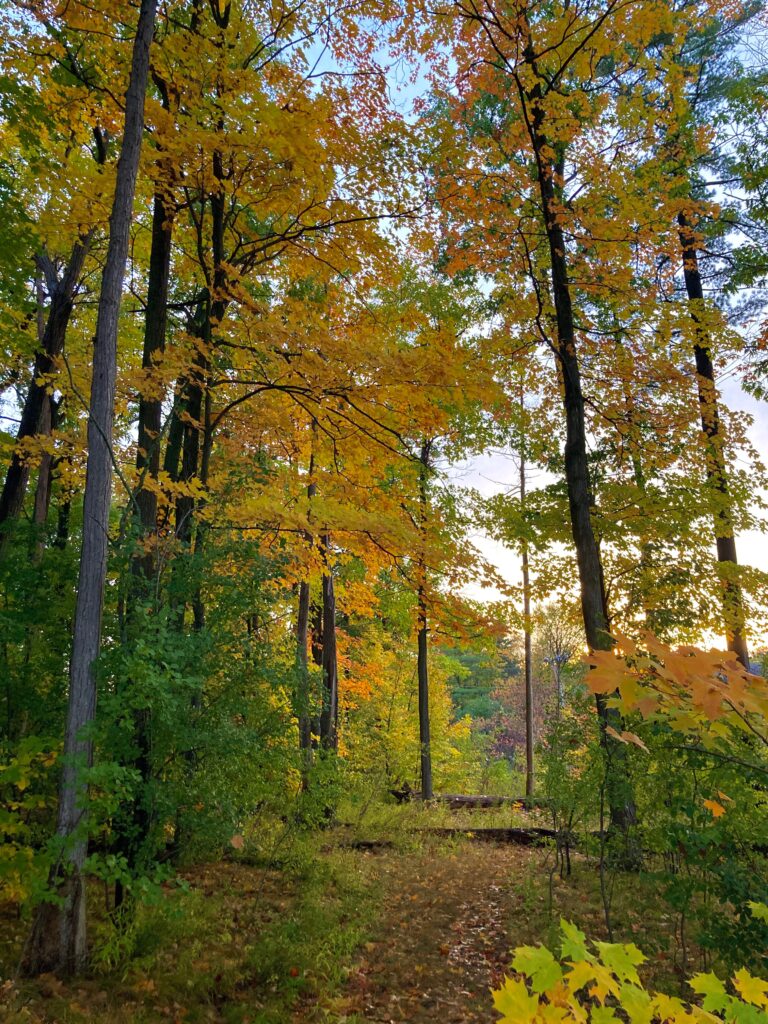
I walked to my phenology site today, knowing it would be the last time I observe it for the purpose of my phenology blog. This is unfortunately my last blog post for my phenology site.
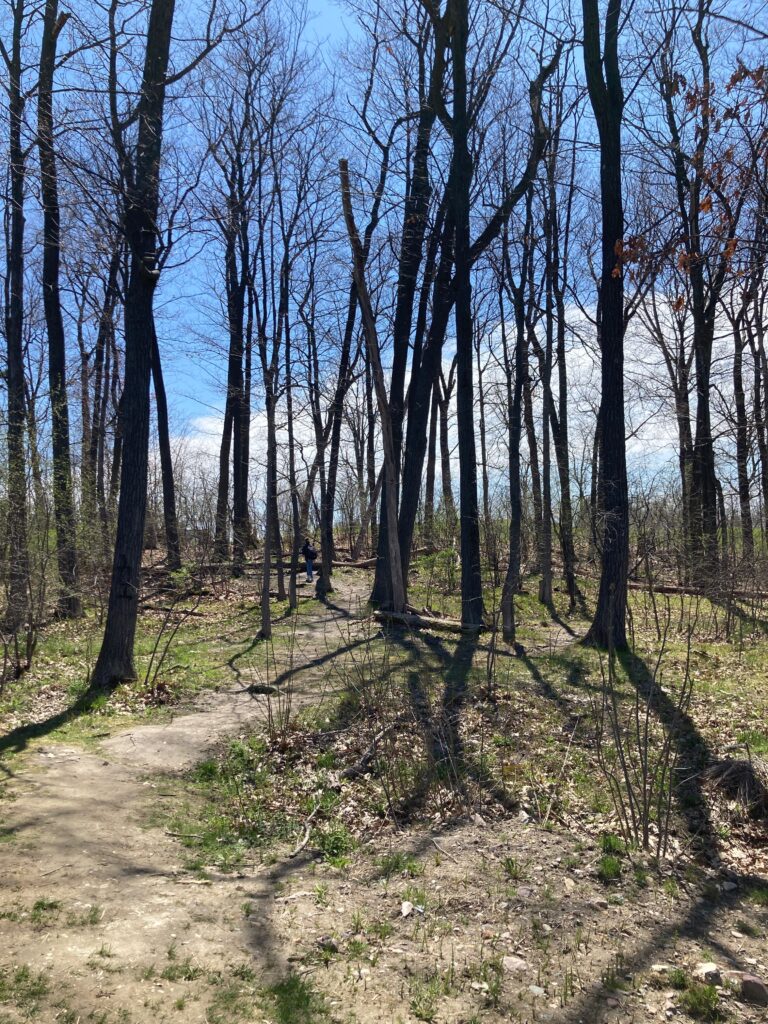
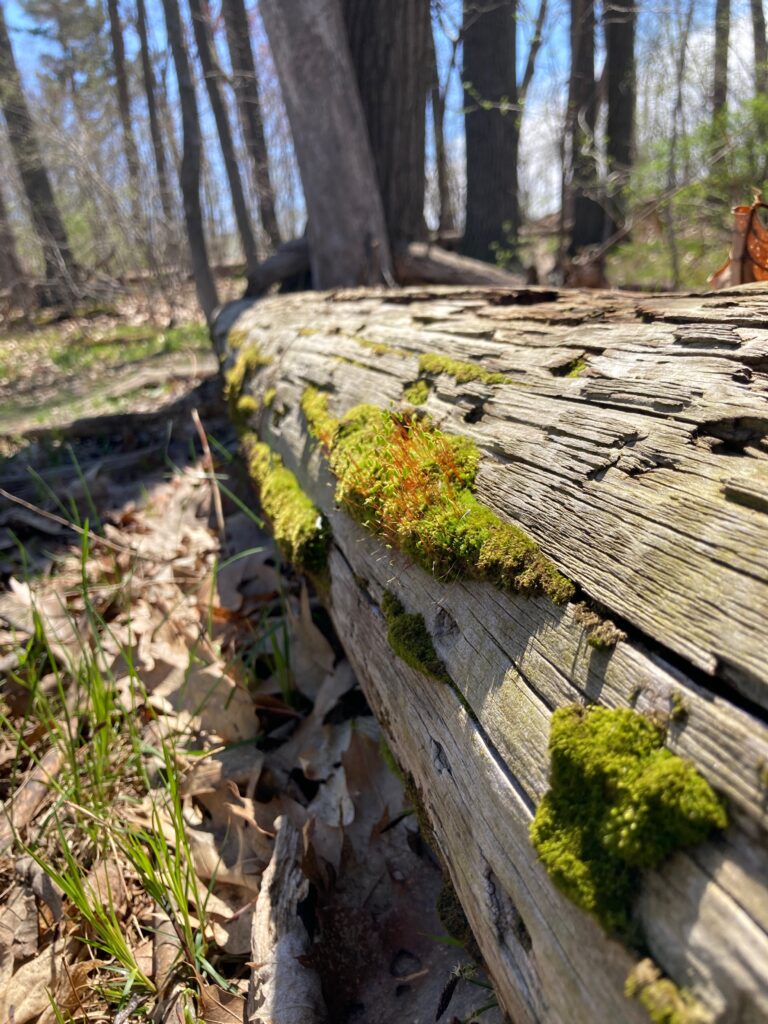
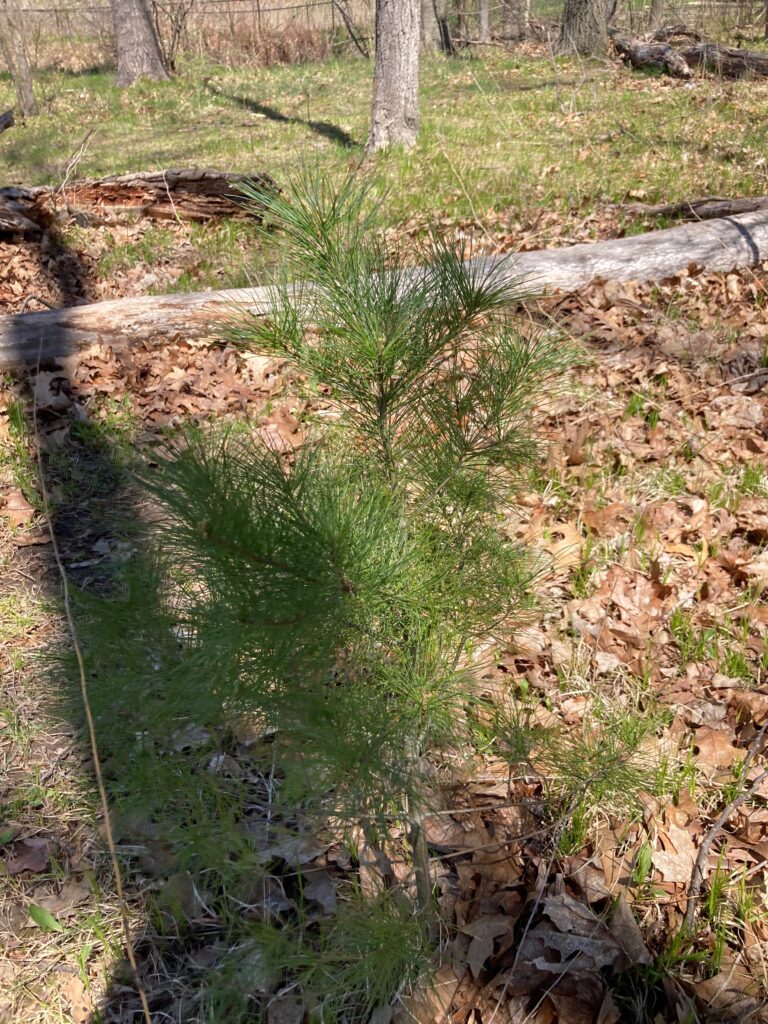
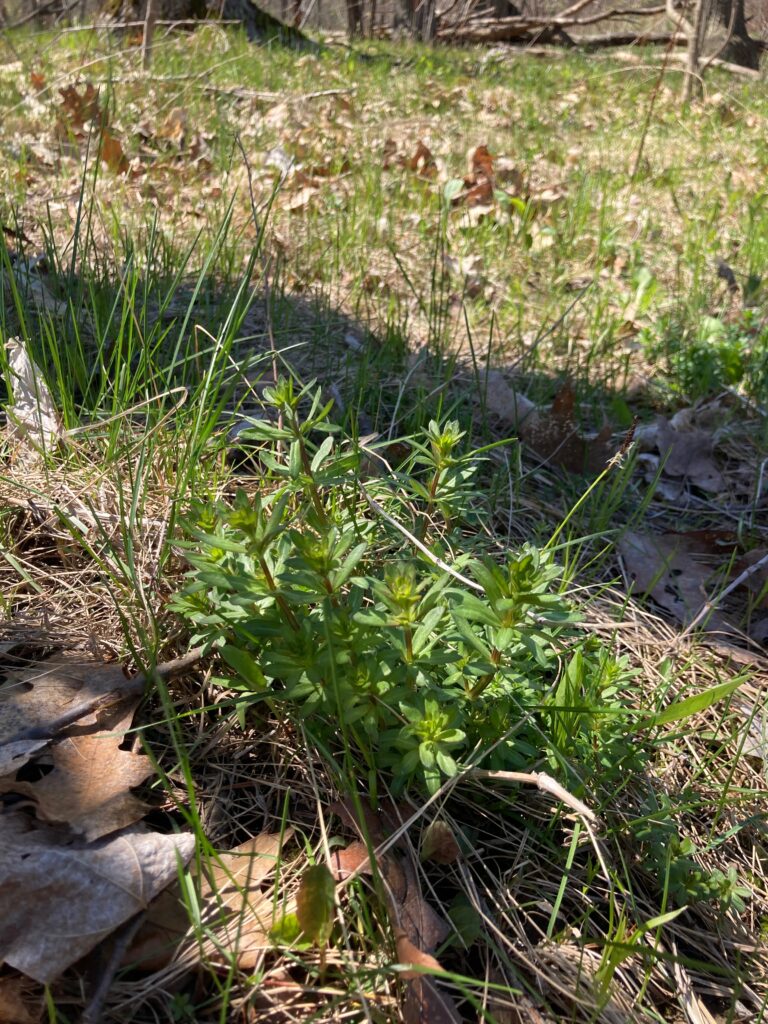
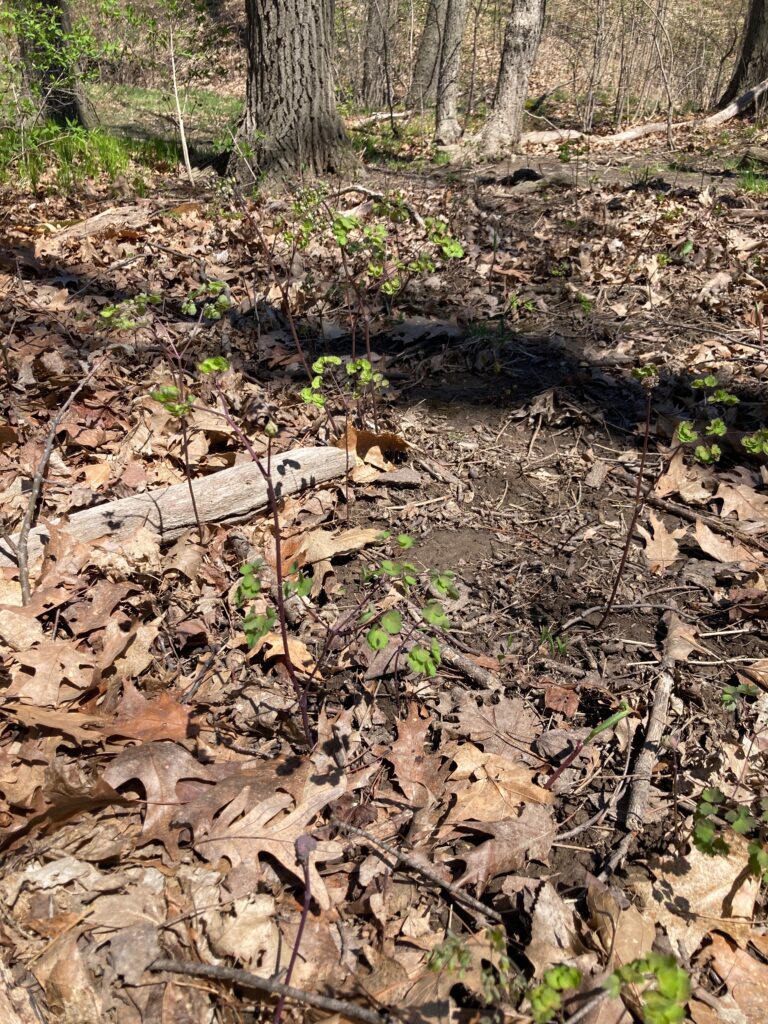
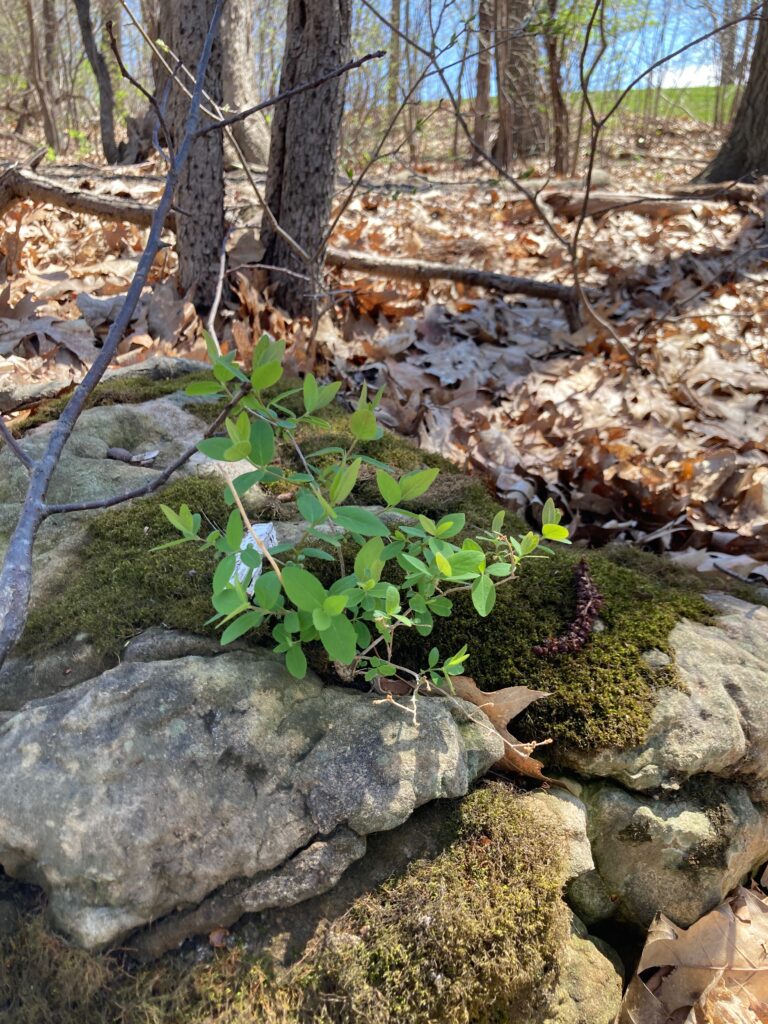
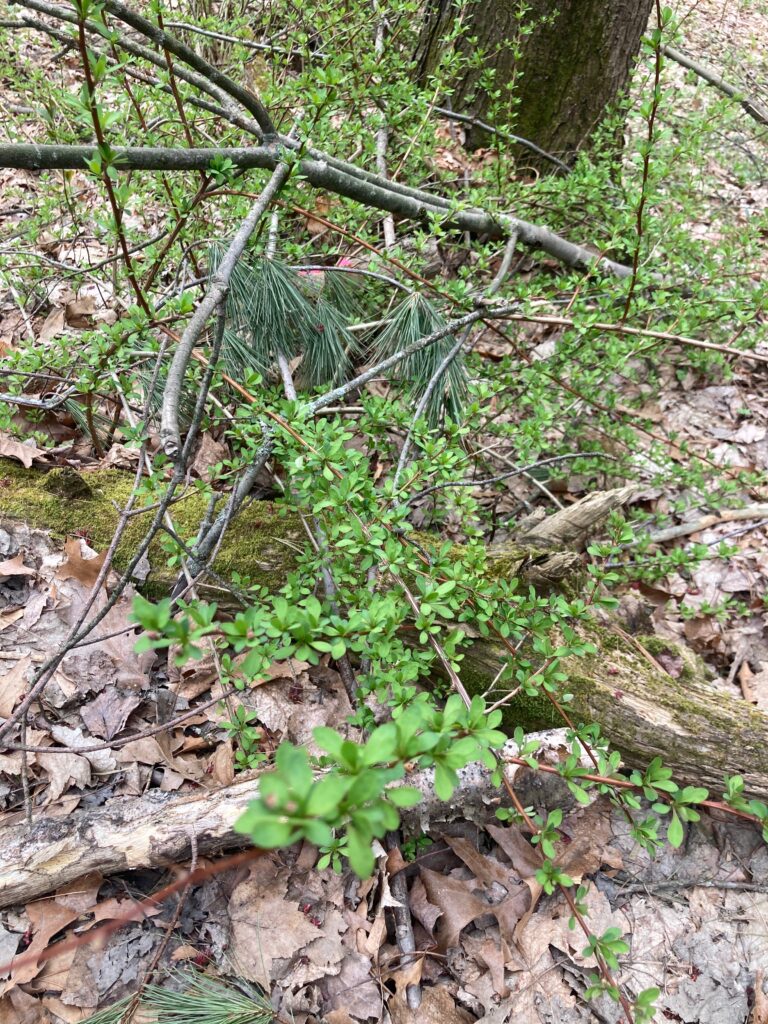
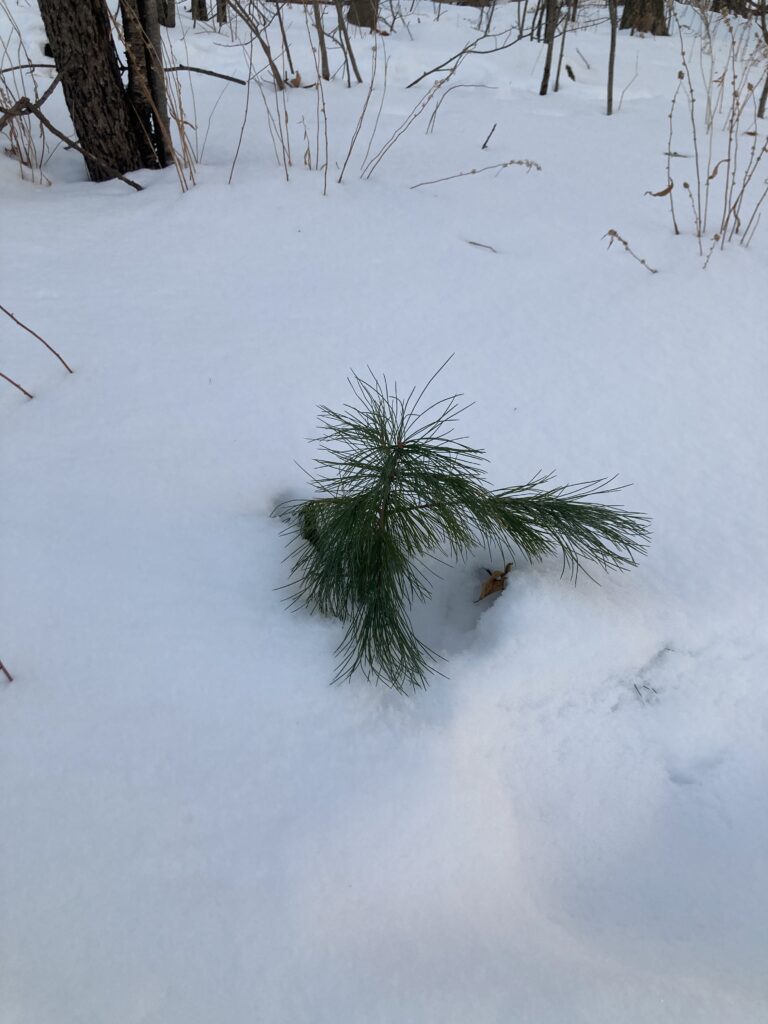
There are signs of spring all around. Unfortunatly, the leaves on the deciduous trees have not yet grown yet, but there are plenty of other things that are growing. There are plenty of samplings and new growings sprouting. I saw young Eastern White Pines, Early Meadow Rue, and Buckthorn. The dirt was firm, and grass was starting to grow.
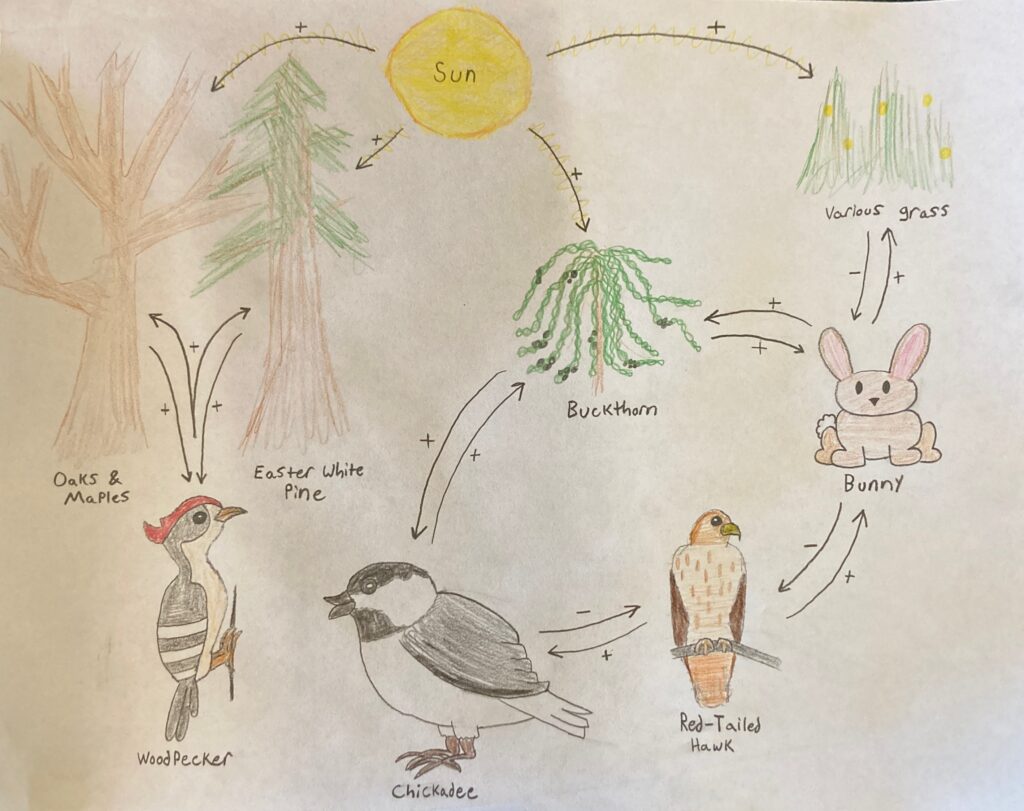
There were a few bird calls happening but overall a very minimal amount of wildlife exposure. I drew a Species Interaction Diagram to depict an example of the interations in my site.
It is hearthwarming to finally feel the sun after persistant months of cloudy coldness. With the heat bring new signs of wildlife which is always enjoyable to witness. I love my phenology site and am excited to come back to it futher on into the future.
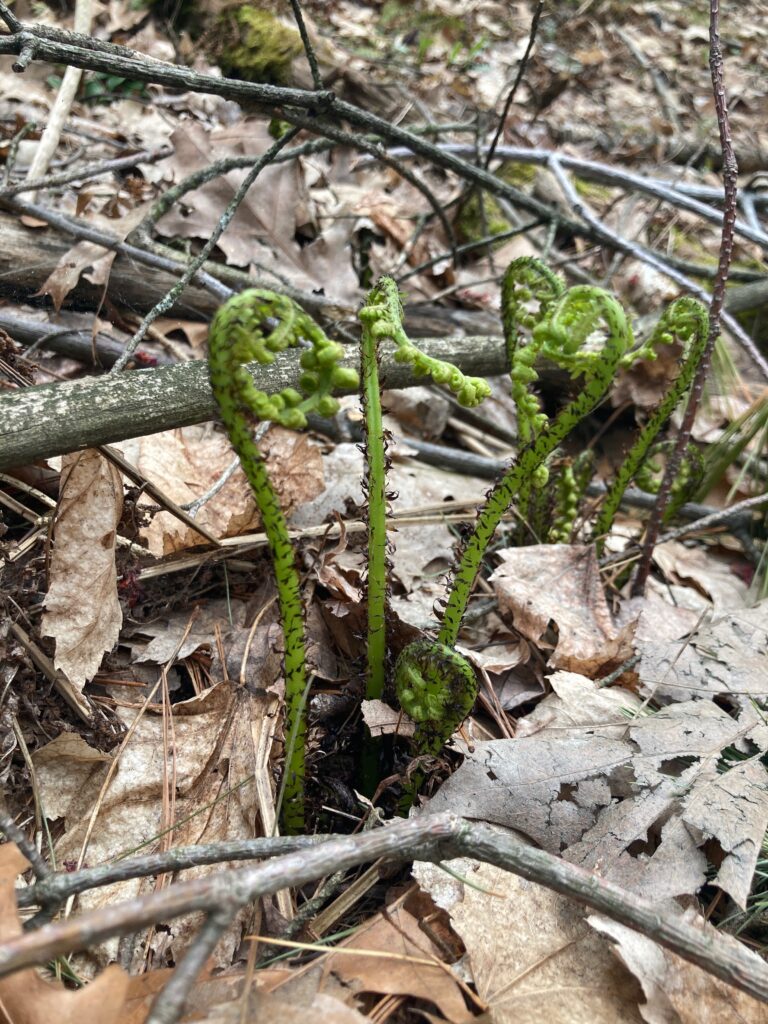
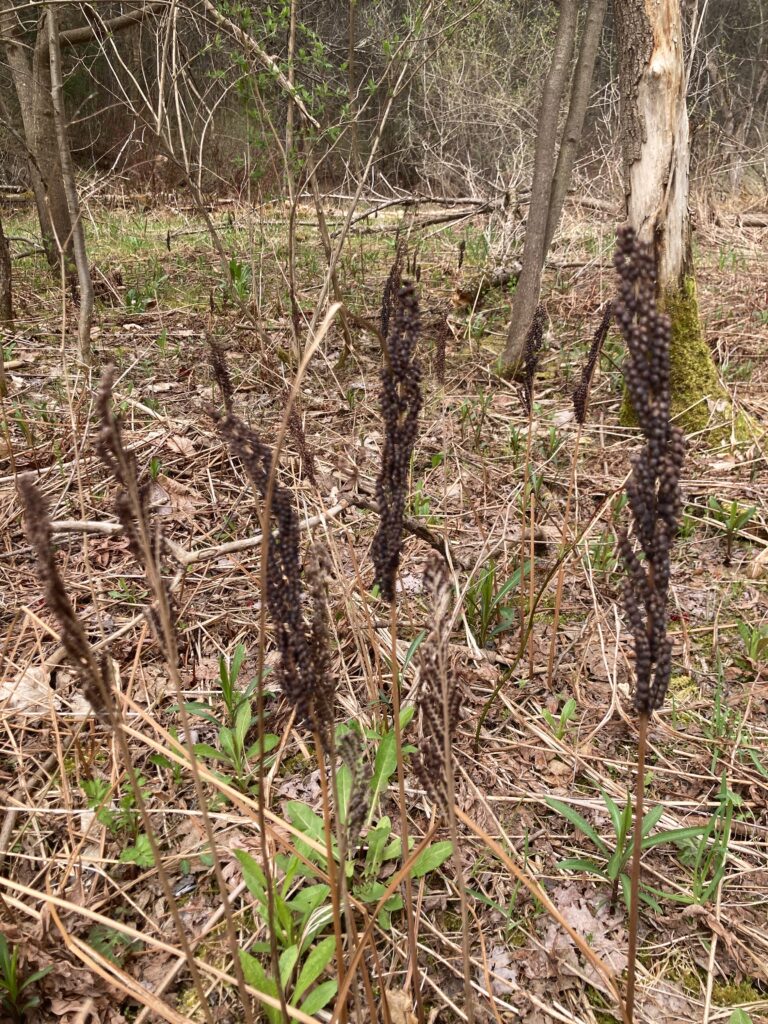
During this year’s BioBlitz in the Greater Burlington Area, I spent my time in our well-known, local Centennial Woods. Centennial is a great natural area near the UVM campus that a wide variety of plant, animal, and fungal species call home. When I was exploring Centennial on this sunny afternoon I encountered many species of plants and animals. I could identify some, and iNaturalist helped with the rest. iNaturalist is a great tool that helps people identify species, along with connecting with others who enjoy nature. During my trip, I spotted plant species such as Barberry, Ostrich Fern, Sensitive Fern, and Honeysuckle.
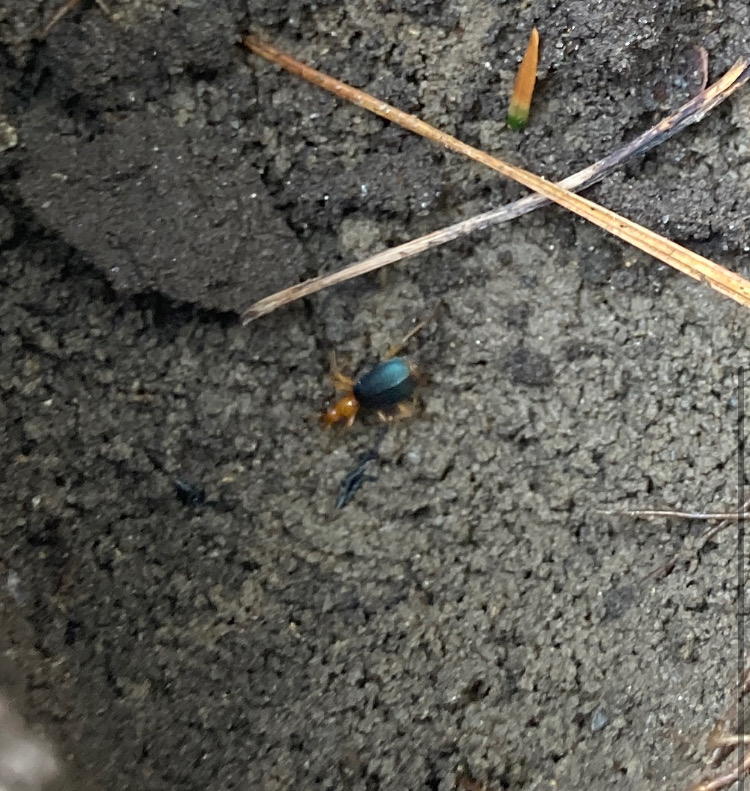
As far as animal wildlife goes, I had a little less luck. I spotted a few birds such as Yellow Finch, Bluejay, and Chickadee gathering around a bird feeder. I tried to get close enough to take a picture but every time I got within camera’s distance, they would become skittish and fly away. I also spotted some small fish in the Centennial Brook. I couldn’t quite identify them and neither could iNaturalist because they were too small to photograph. I had a fun time feeding these fish with small worms and insects I found on the ground and under rocks. I was able to identify one of the insects I found: a Bombardier Beetle. This beetle did not like its disturbance and sprayed liquid out of its rear. I’m glad it did not end up on my skin because when I researched the beetle when I got home, I found out that was its defense mechanism (spraying hot acid – YIKES!)
Overall I had a great time going outside and enjoying the nice day in Burlington. The BioBlitz is a fun sight to see and I am eager to continue observing the Burlington area as the weather slowly becomes warmer.
The assignment for our newest phenology post was to explore a new natural area. What better natural area to examine than Bolton Valley.
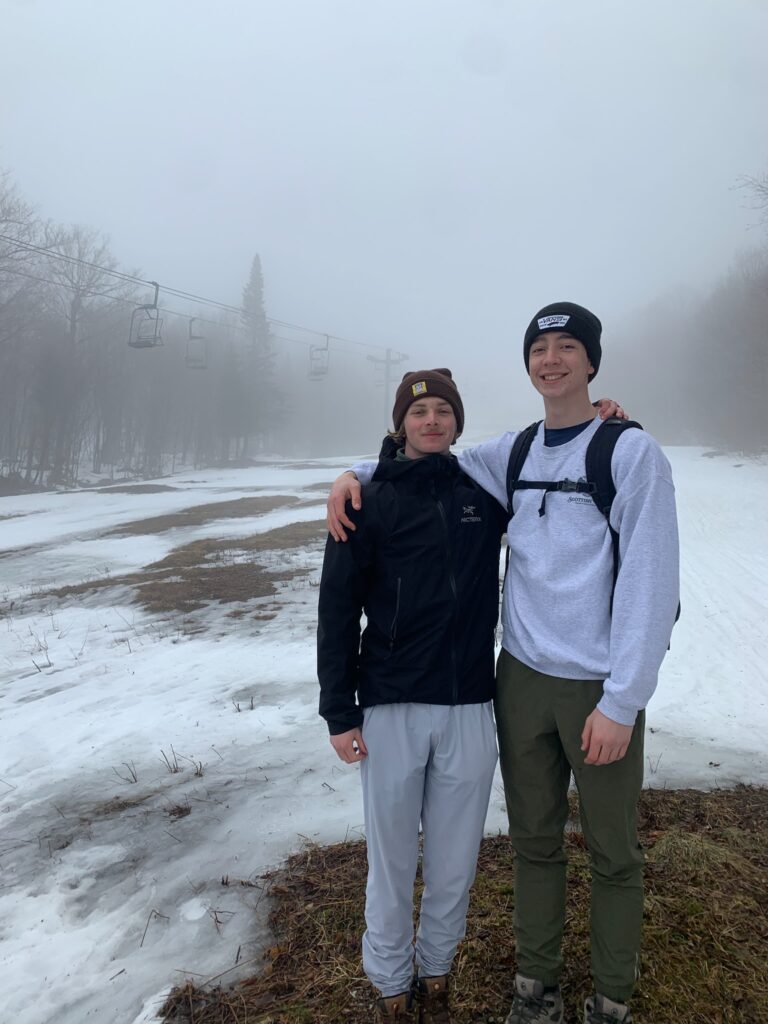
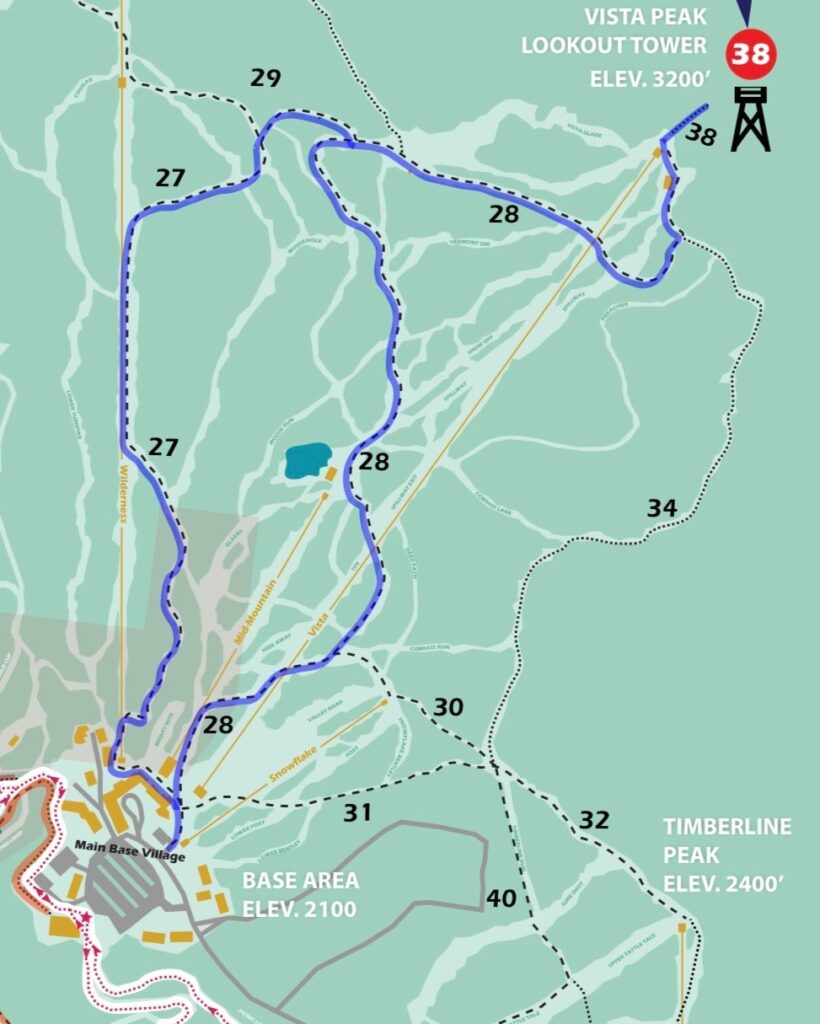
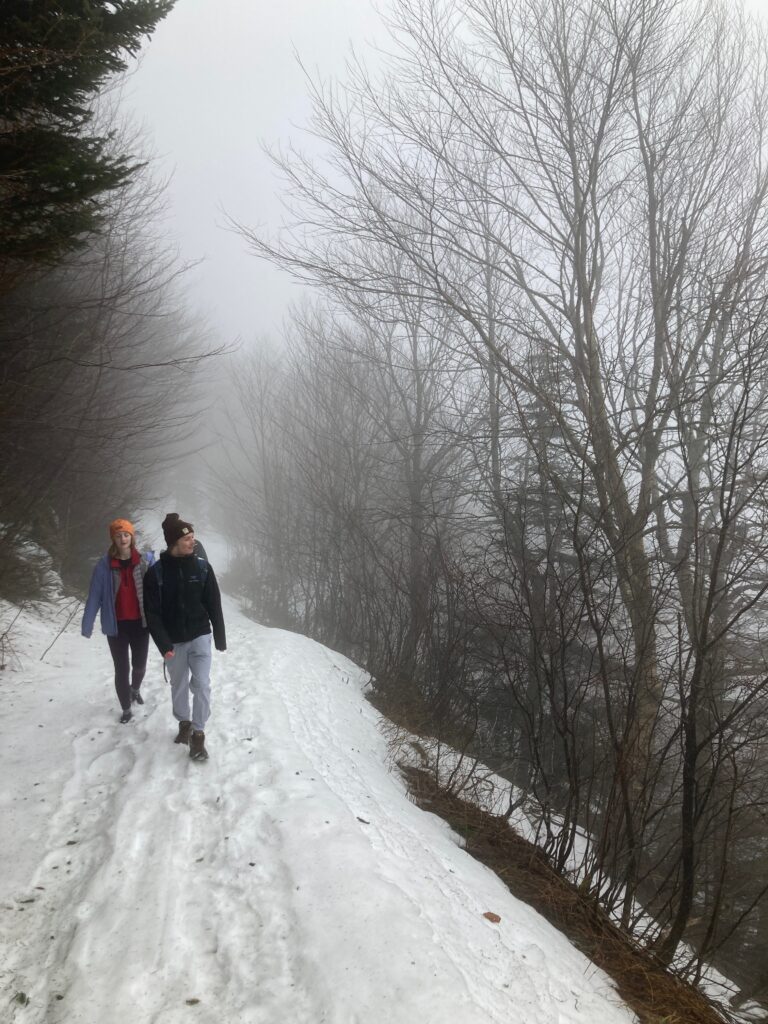
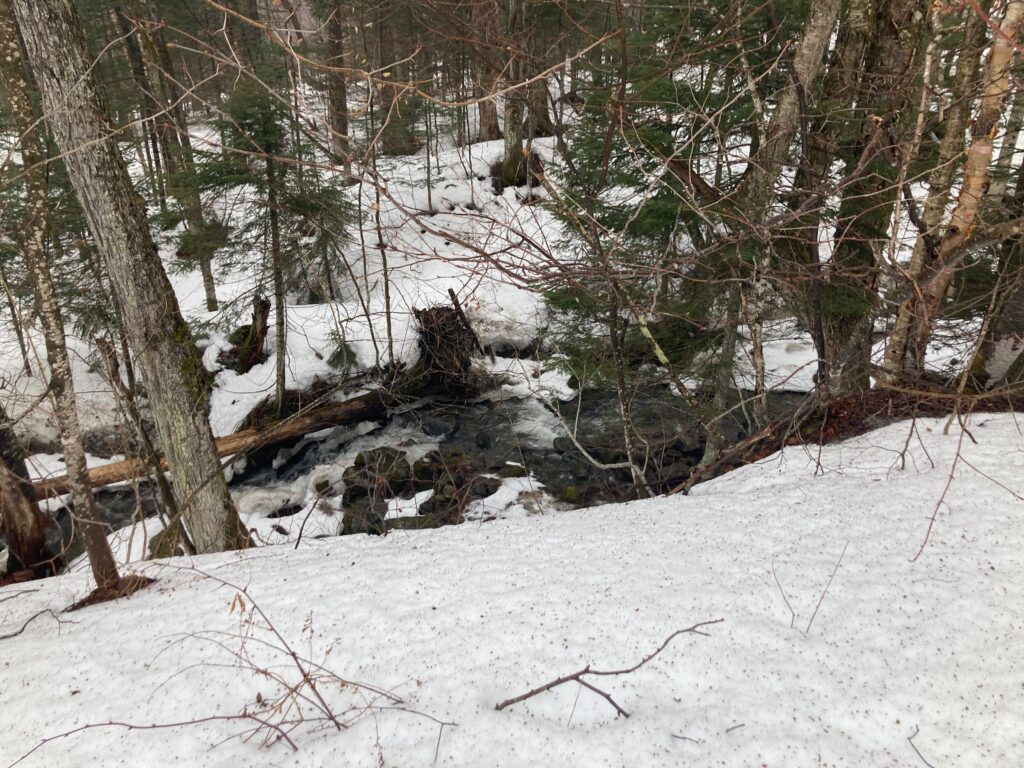
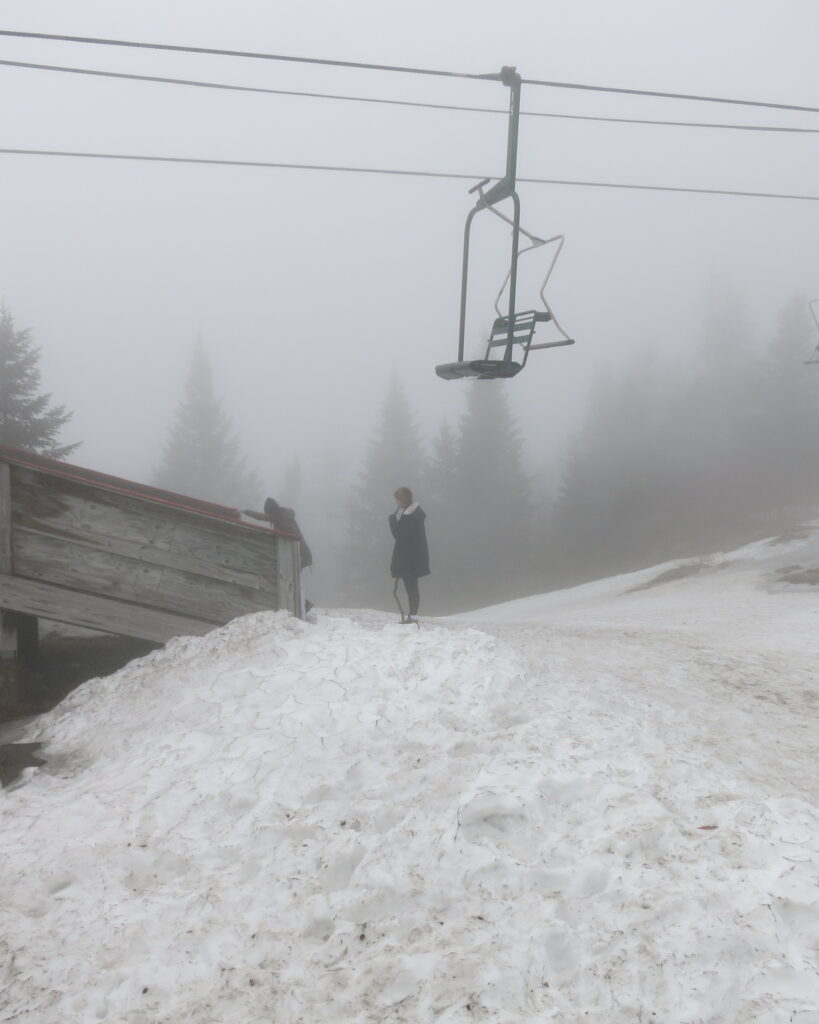
My friends and I started our hike at the base of Bolton. The first thing I noticed when we arrived was the large amounts of fog. There was still snow on the ground, but mostly mud in places where there wasn’t. As much as I love seeing the weather get warmer, it is always a shame to see the ski season leave us. As we trekked upwards I was observant of the phenology alongside me. Although some of the deciduous trees were difficult to identify due to the lack of leaves, I was easily able to spot a large population of American Beech, Yellow Birch, and Paper Birch. Some of the leaves on the ground also showed signs of Sugar Maple. There was plenty of natural forest, but the area of Bolton is obviously commercialized for the purpose of human recreation. There were many paths through the woods, glades, groomed trails, and mountain biking trails within the resort’s property; all of these directly impacting the natural community – both plant and animal. I saw little animal life but I did hear birds chirping for the first time in a long time. Despite the lack of animal sightings, it seemed as though the plants were ready to burst into full bloom and growth because of the warm weather and rain.
As we climbed higher in altitude I noticed two things: 1. The fog’s desnisty increased. 2. The population density of coniferous tree increased. I assumed the weather changed due to our higher elevation. Because of this we were closer to the elevation of evaporated water (clouds). I was not surprised by the increase in conifers. We had discussed this occurrence in lab when we went to Mount Mansfield and saw the same thing. In areas of higher elevation, there are more harsh conditions. These conditions suit species that typically use less energy – coniferous trees.
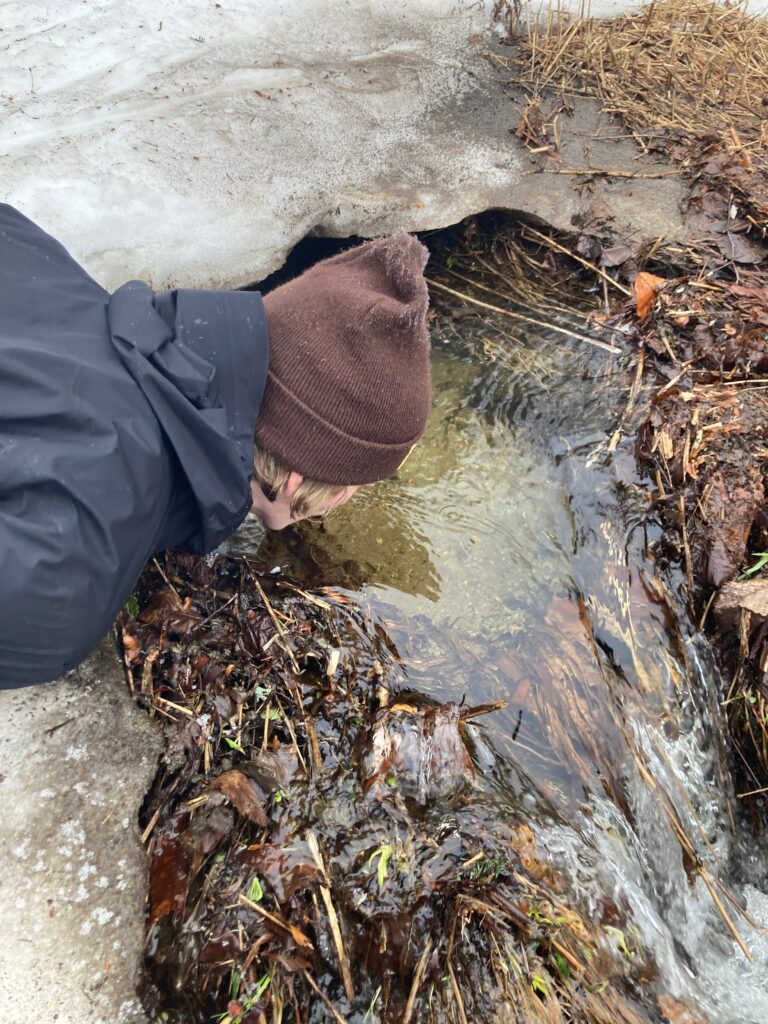
Overall, I had a great time on the hike, drinking cold stream water, getting some fulfilling exercise, and exploring all this new natural area had to offer.
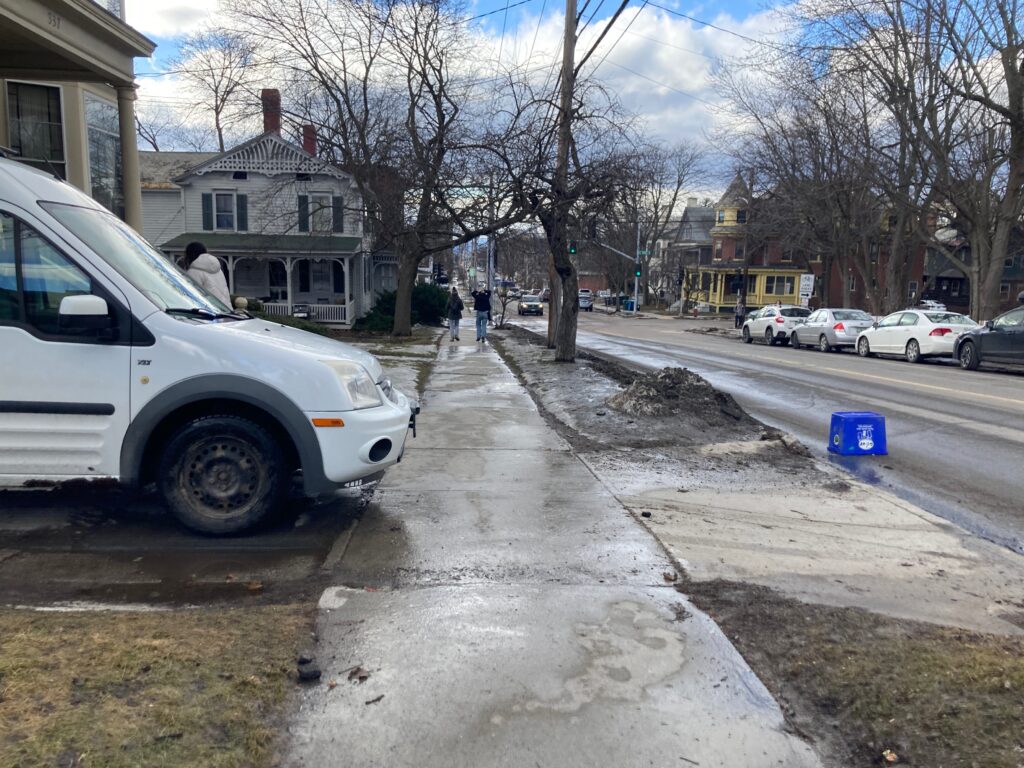
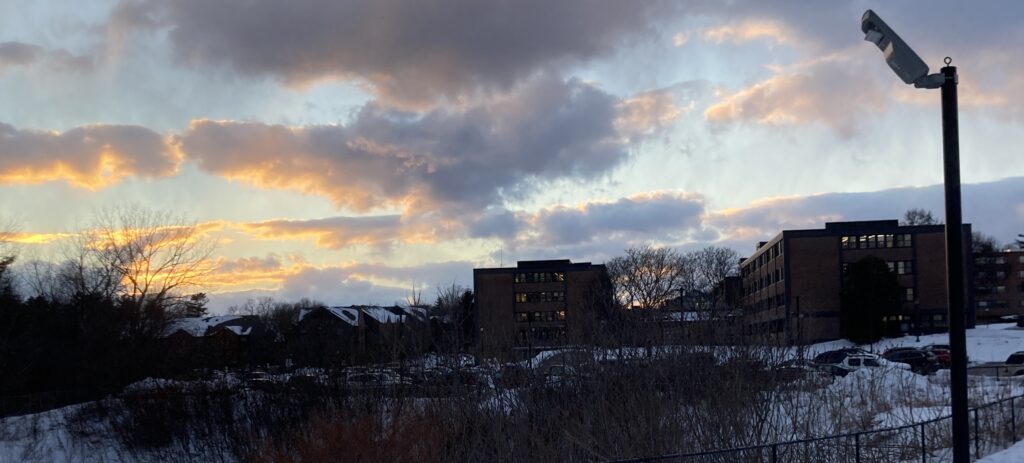
Today I took a walk within the city of Burlington and my phenology site. It has certainly been an odd week temperature-wise. Recently we’ve seen temperatures up to 54° in February! Now that’s alarming, to say the least. As I went out into the wild to look for signs of animal tracks I was unfortunately met with minimal dirty snow. But just like any other good naturalist, I carried on and used other tactics to uncover signs of life.
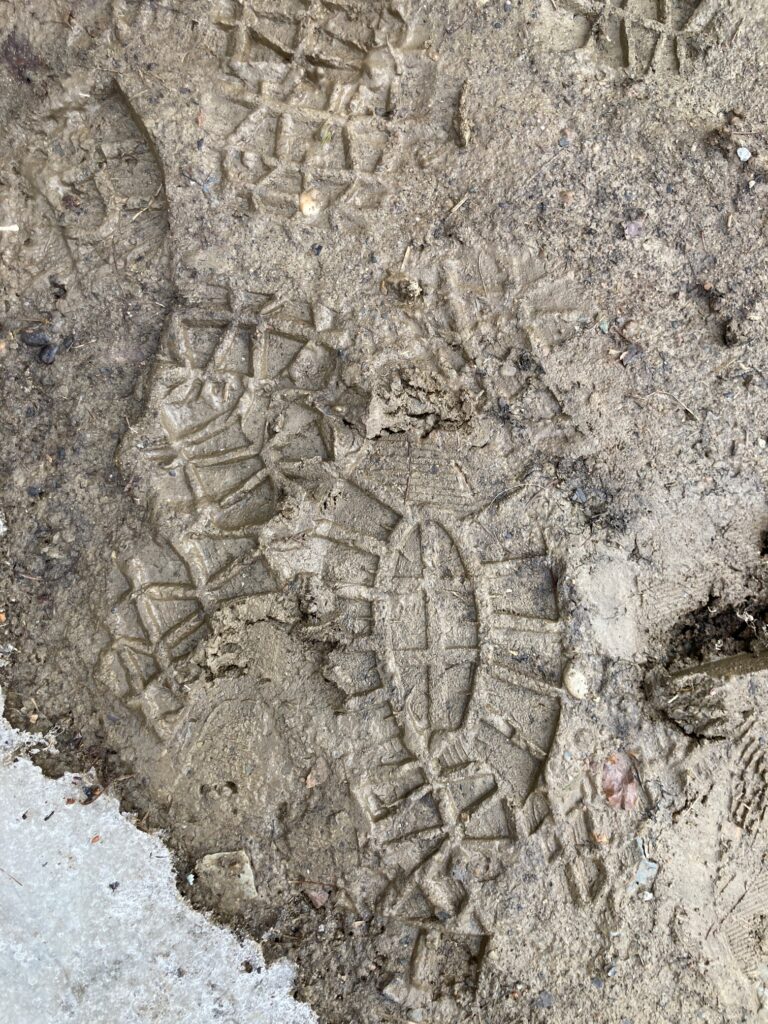
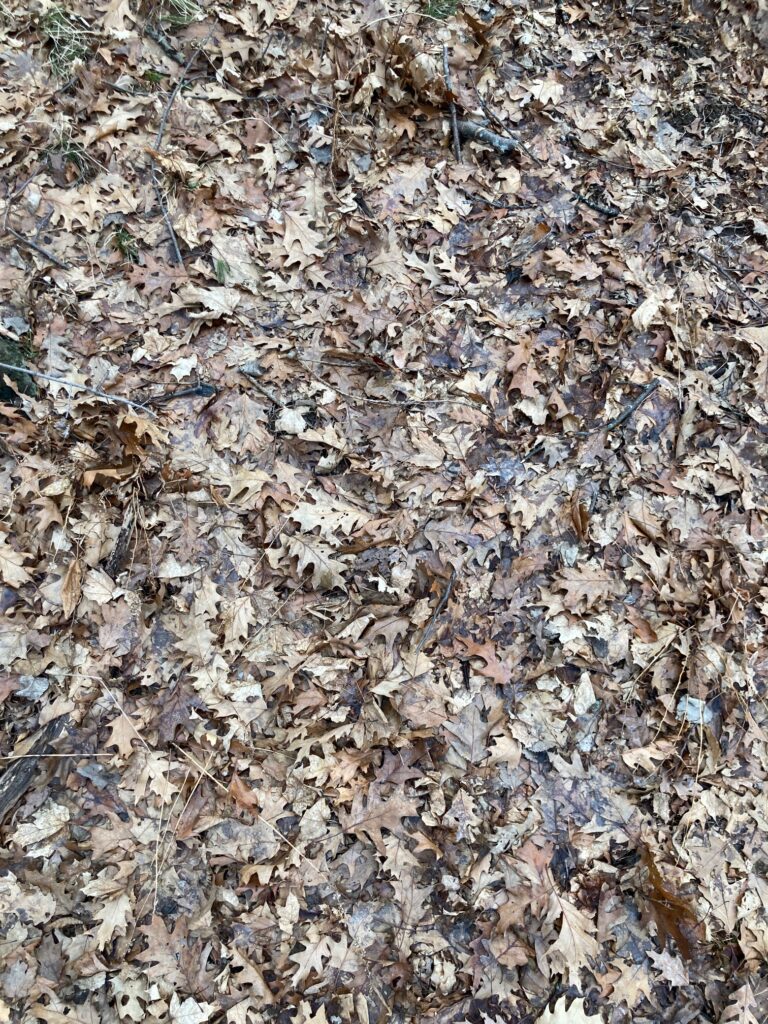
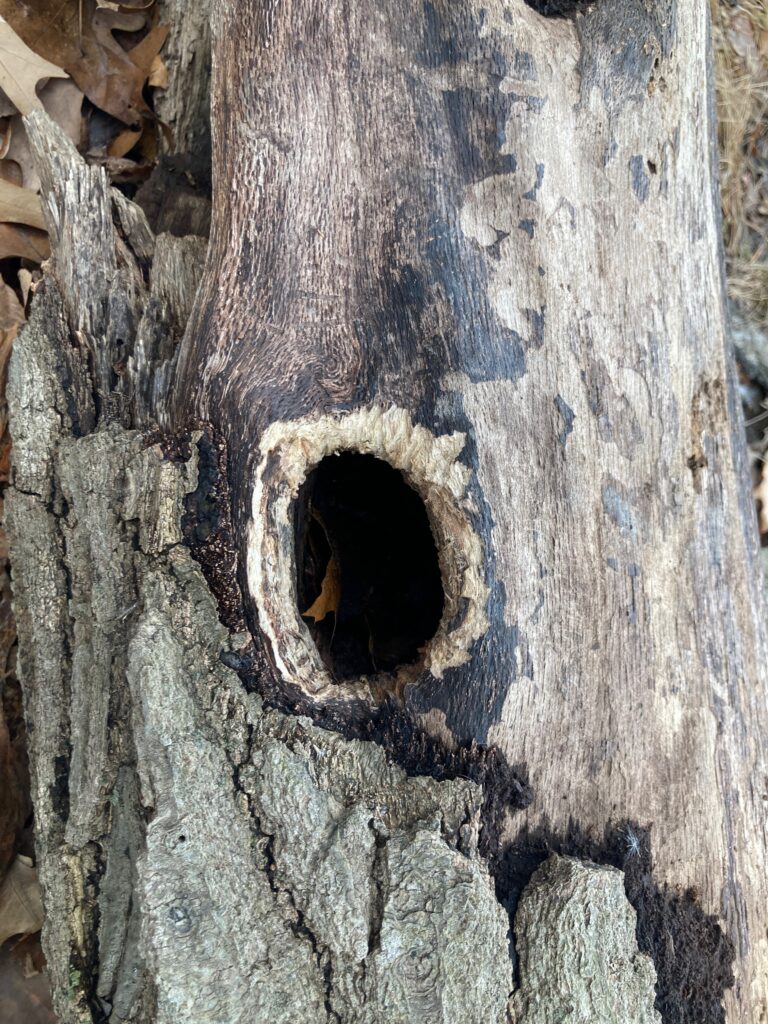
The entirety of my walk downtown consisted of finding zero animal sightings or tracks. Thankfully it was a nice day out and I enjoyed the spring-like walk. It wasn’t until I got to my phenology site that I found signs of life. In the mud, I saw many human-made footsteps, along with domestic dog prints. Although I expected these to be here, as the site is a frequently used passing through path, it was still interesting to see how detailed the prints stayed in the mud. There was a collage of monochromed brown leaves on the forest floor that were most likely fossiled by the snow from the previous fall. As I continued to walk I came across a hole in a fallen tree that was obviously burrowed by some sort of animal.
Things are weirdly starting to warm up in Burlington. This may be strange, but at least the warm weather will bring more lushous life along with it.
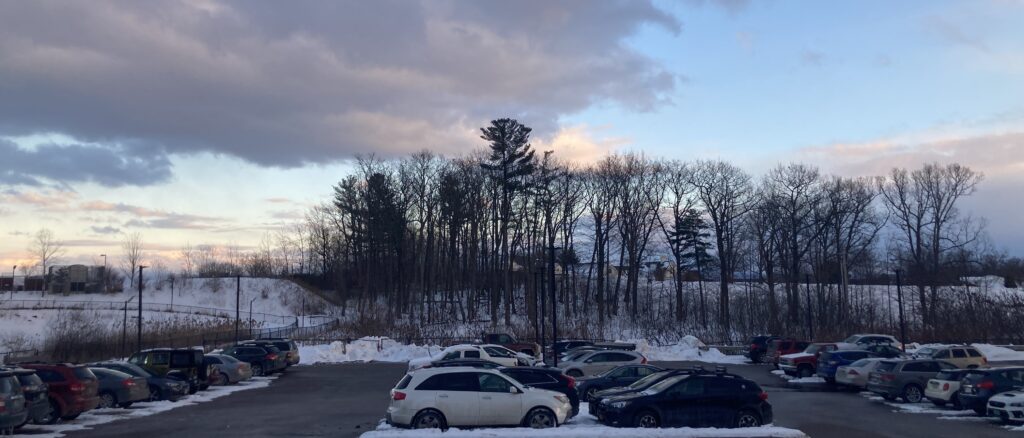
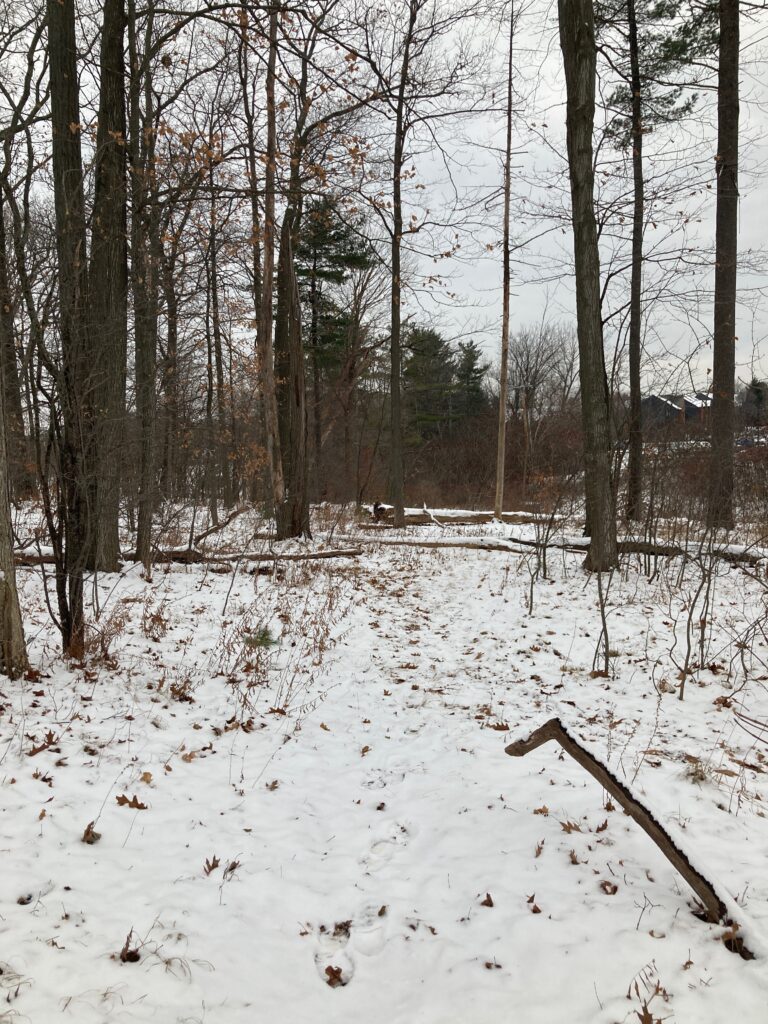
It was quite the thrill to hear Walt announce that we would continue to blog about our phenology sites within the second semester. It was refreshing, entering my beloved site that I had previously said my goodbyes to. This was the first time I could view my site with decent amounts of snow on the ground. The past few weeks have been bitterly cold with temperatures constantly dropping below 0°F at night. It is easy to tell my piece of research land has reaped the consequences presented by this relentless gelid weather. I reached the border of my area and observed the forest before me. Predictably, very little had changed since I had last visited.
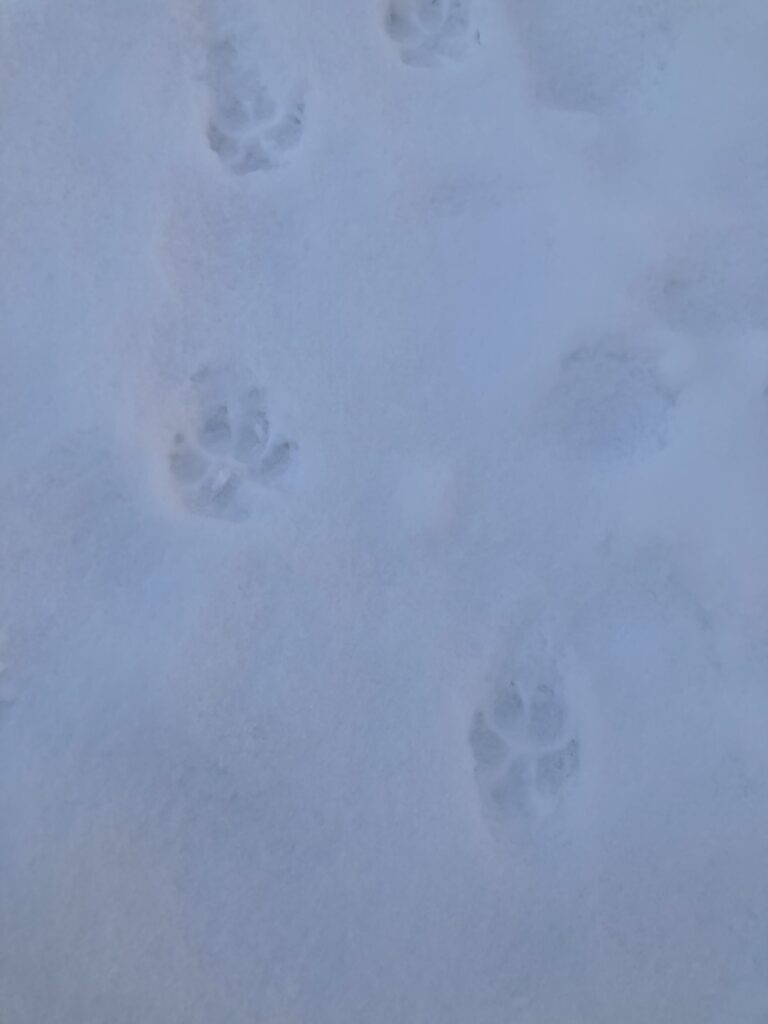
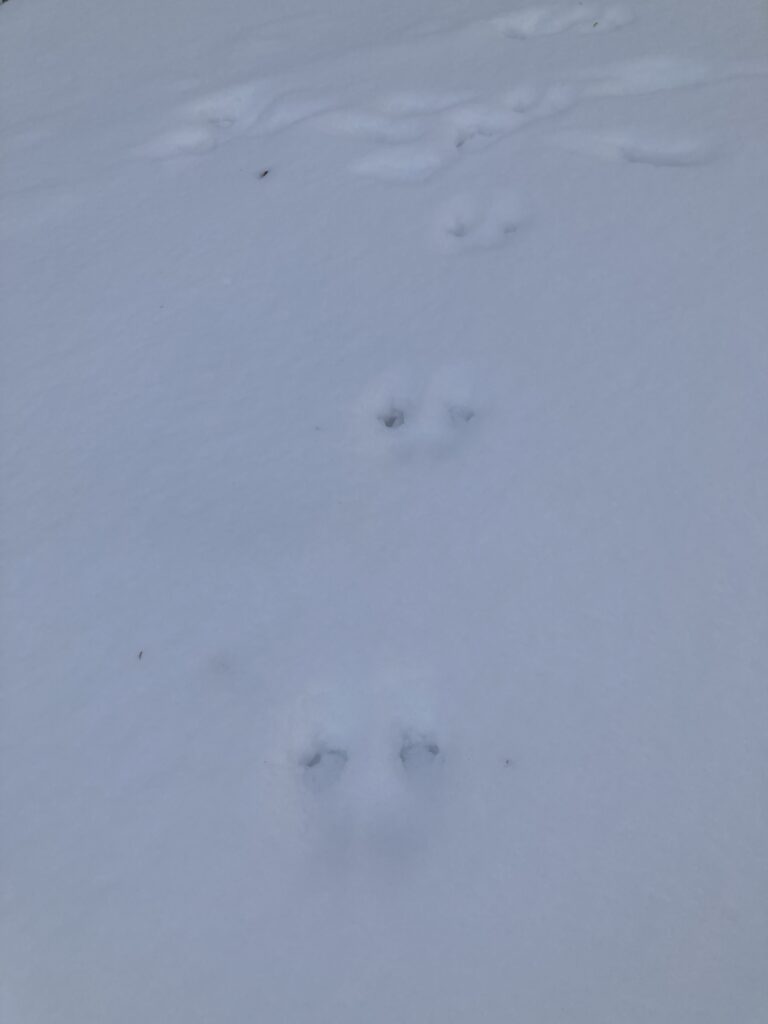
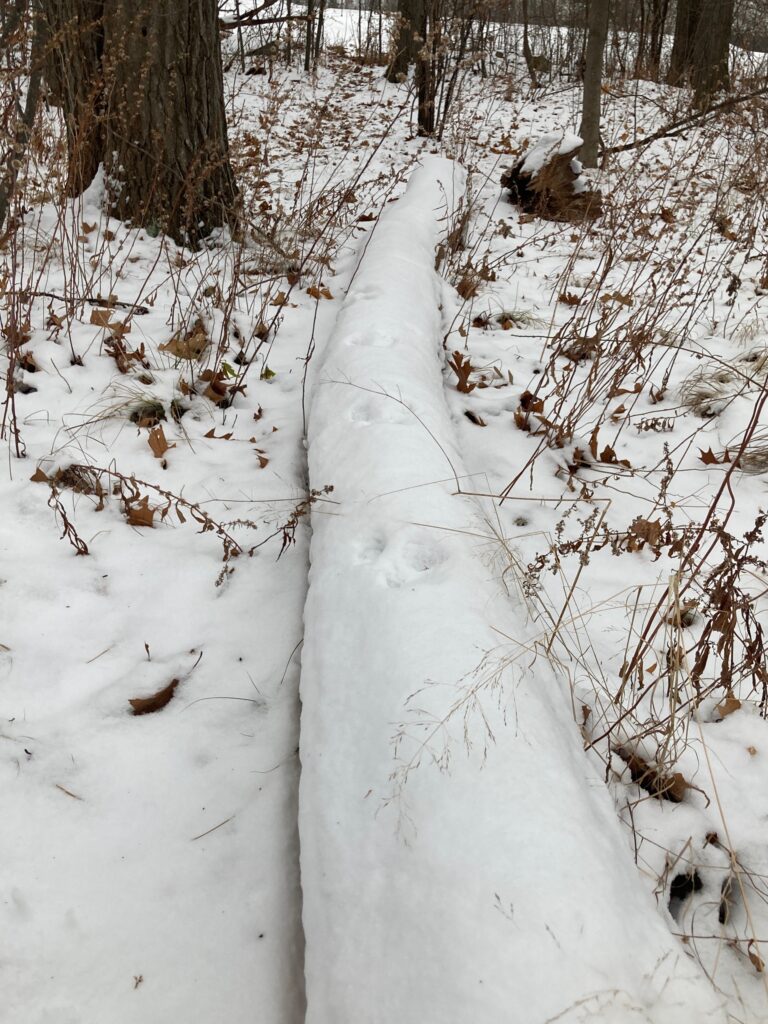
Nature slows down during this time of year. Organisms grow, move, and reproduce in a lethargic manner. Although my walk around my site was vacant of animals, there were still other ways to recognize life. Snow, the opaque sheet of powder that causes drastic changes in the seasonal biodiversity, is a great tool to spot wild tracks and attacks. Although I saw no attack imprints today (I do wish to witness one soon), I was able to discover many tracks on my site. The expected tracks of humans were by far the most populated within the site’s parameters. I could also spot tracks of dogs (see above – top left). Lastly, I came across a track of which I did not know of its origin (see above – top right). It was presented as a synchronized, hopping-like pattern, of two imprints at a time; maybe a rabbit.
My site, which is most likely overlooked by its common pedestrians, is a masterpiece. Even in the depths of frost, its inconspicuous saplings stand strong, and its large oaks hold true. It creates a natural area that can be used for recreation and hospitality among all sorts of organisms. I am delighted to know I will revisit my spot once again in the future, and examine all of the pulchritude it has to offer.
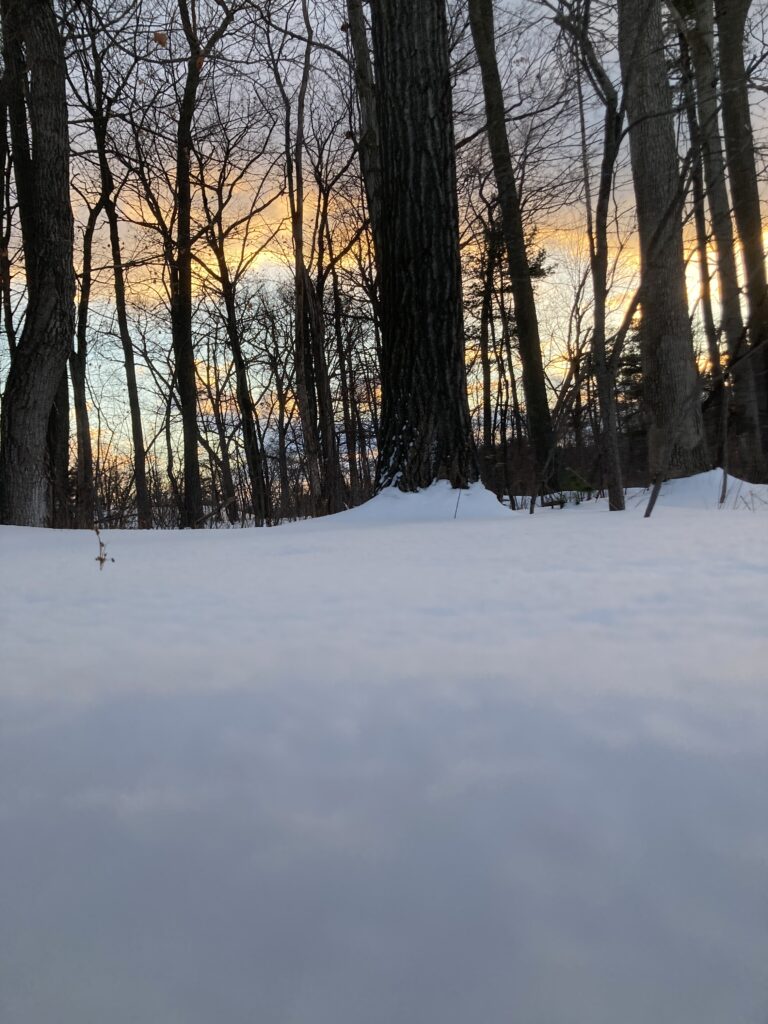
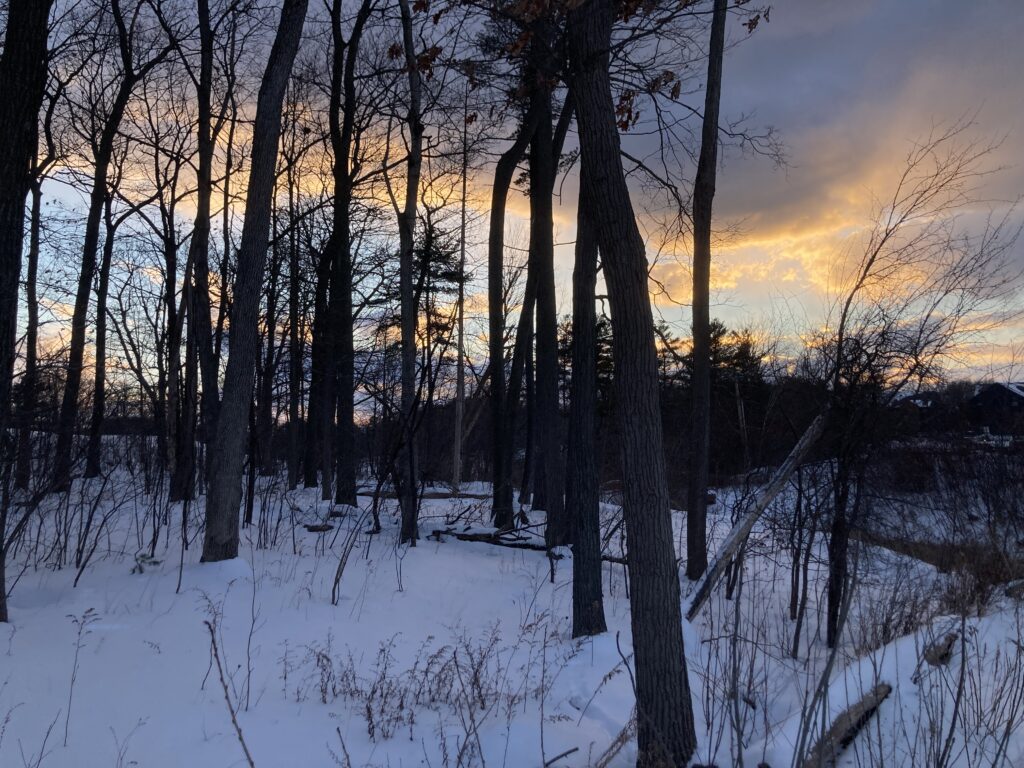
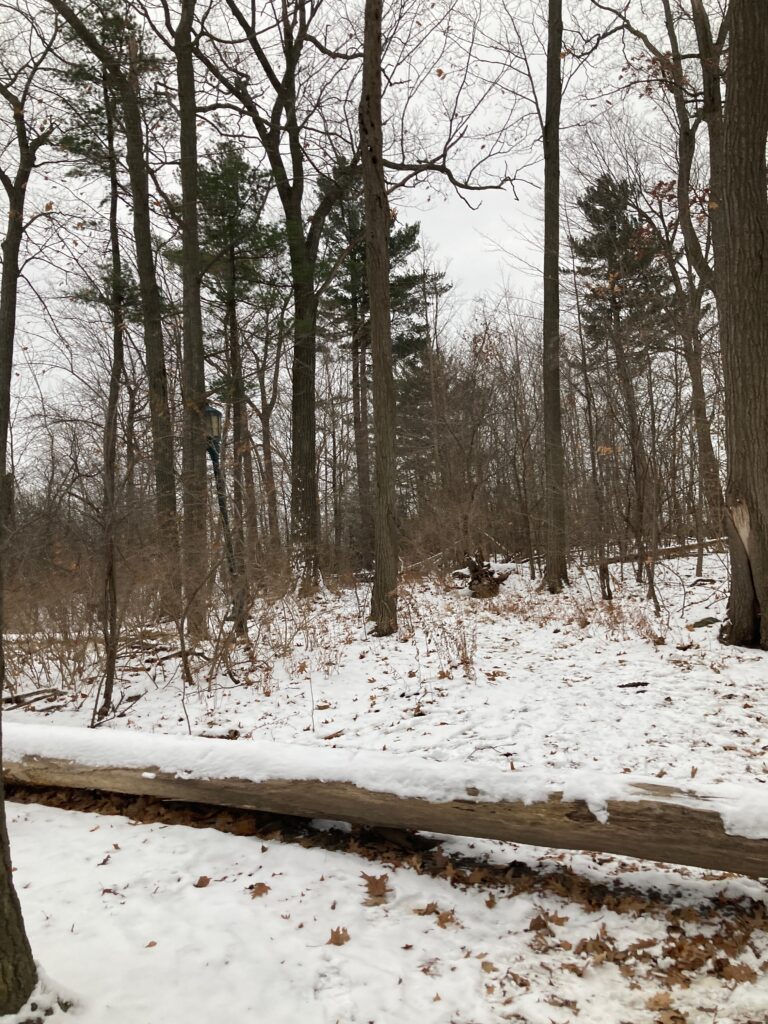
Today, with a hat and gloves on, I walked to my phenology site with a crunch of snow under each step. Winter is finally upon us. As I gazed at my site from afar, I was presented with the raw skeleton of my forest. An x-rayed version of the same sight from just two months prior during my first blog post. It is crazy to see how much a place can change over a brief duration of time.
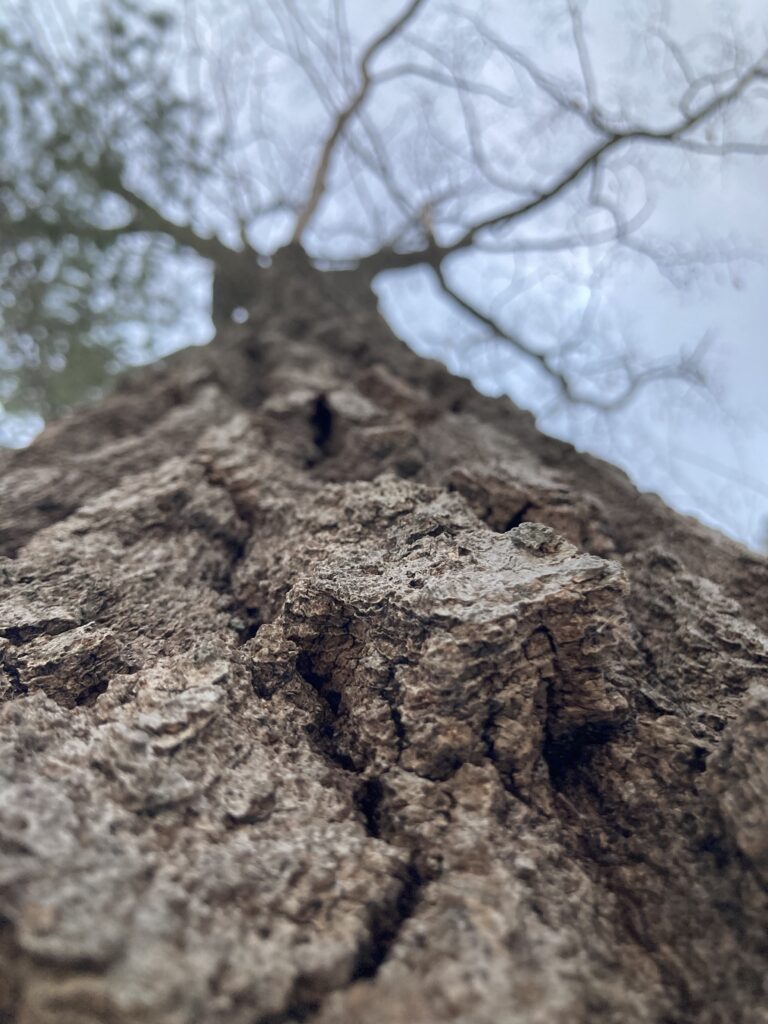
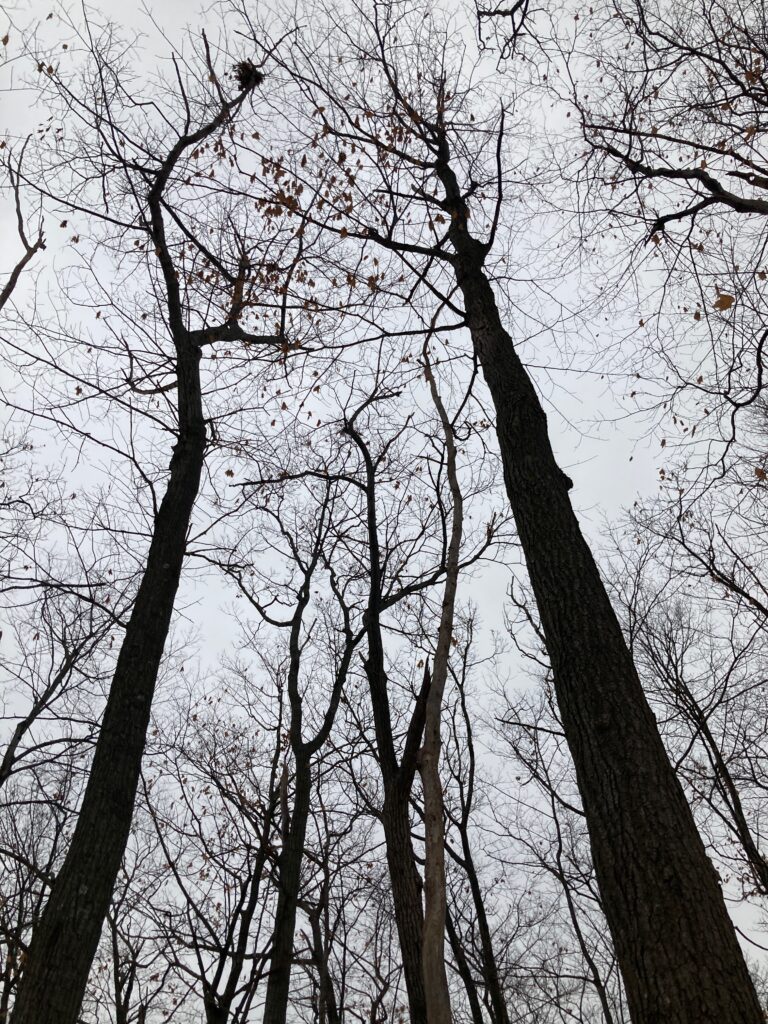
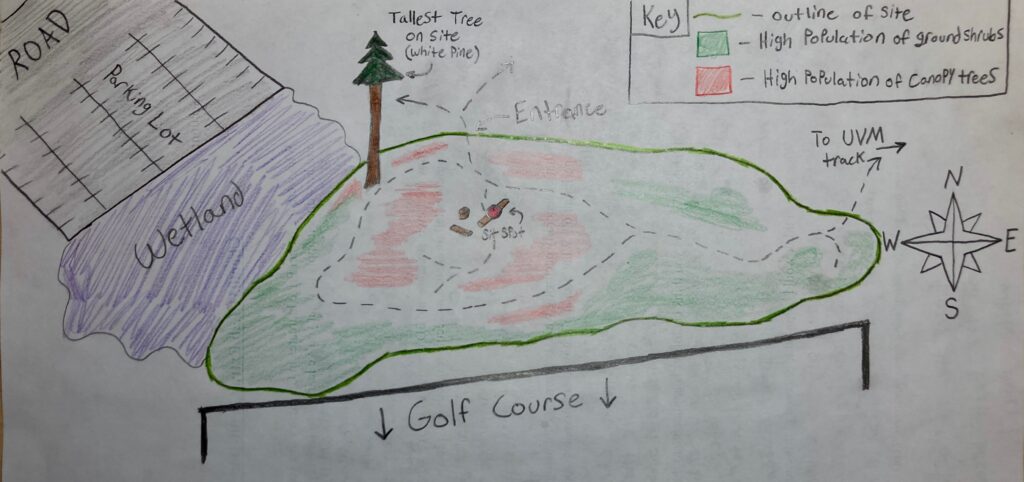
As I entered my area, the snow was firm due to others’ steps before me. It was compelling to witness all of the human-made tracks within the limits of my area. I never knew it had received that much traffic, whether it was recreational use or simply to walk through. Sitting at my “sit spot” and looking up allowed me to view a spiderweb canopy of dark synchronized branches contrasting the light gray sky of the day. The recently cold climate has presented me with new areas within eyeshot. Through the natural framework of the overstory, I spotted a few large nests. I assume they hold no life, but I was fortunate I was given the opportunity to see my site from a new point of view.
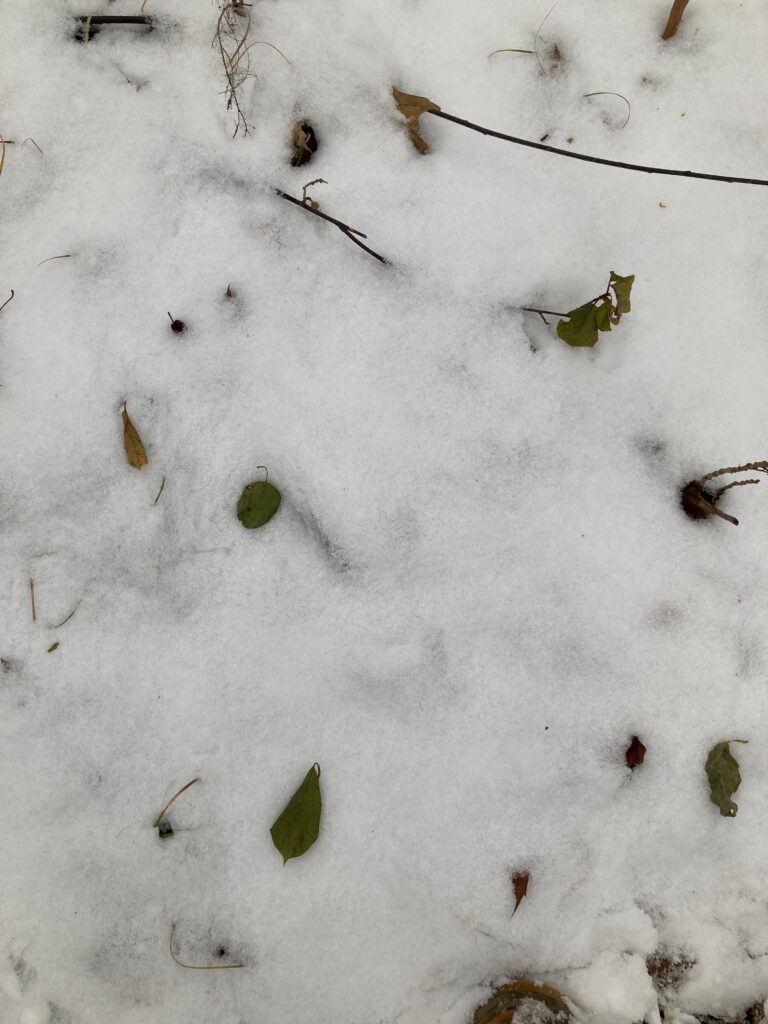
The only signs of color came from the Eastern White Pines, still bearing their dark green needles; these trees few and far between. Animal tracks were unfortunately scarce other than the occasion domestic animal print within the snow. I did observe an organized set of tracks of which I could not associate with a species (view below.) The majority of the understory stood barren with the exception of a few surprisingly green leaves grown by the invasive Buckthorn. It is obvious that things have slowed down within my phenology site. The environment is cold. Life is primarily dormant. But that is just winter in Vermont. I walked out of my phenology site content, knowing it is healthy and will one day flourish yet again with color and welcoming branches for all life to inhabit. But for now, all we can do is appreciate the pristine winterscape that is given before us.
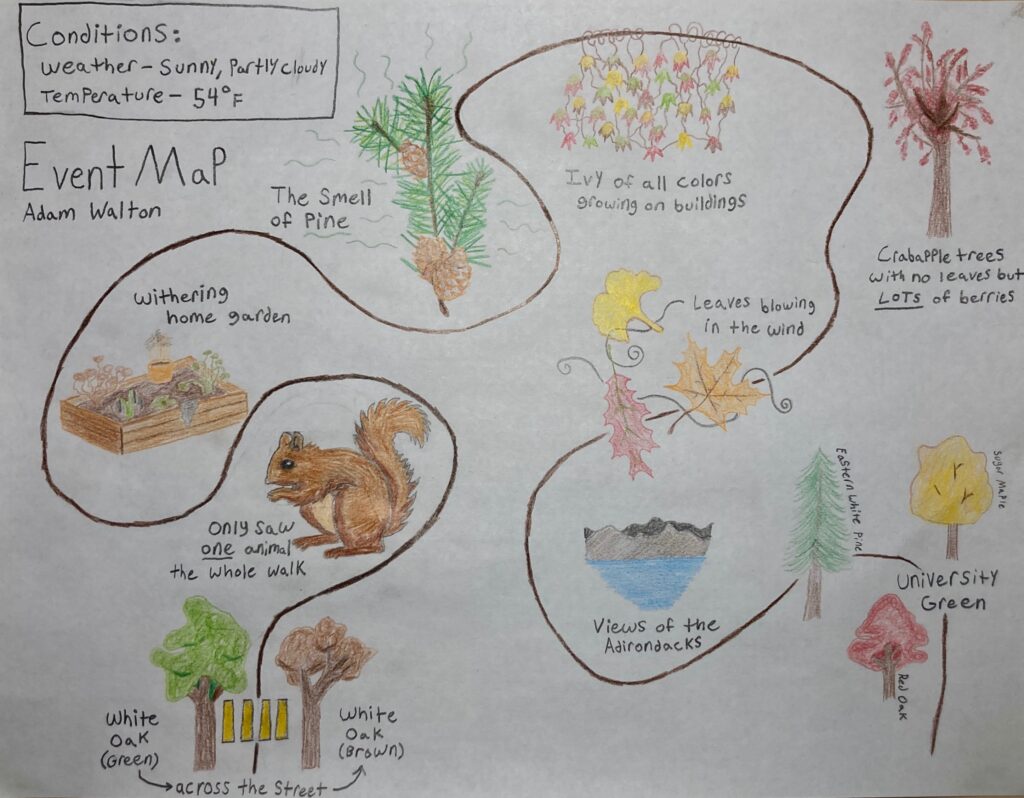
Today, I went for a phenological exploration within the City of Burlington, Vermont. My journey started as I left UVM’s academic campus, onto the University Green. There were presentable trees of all different colors placed within the tamed grassy area. As I started declining in elevation on Pearl Street I had an amazing view, straight through downtown, across our beloved Lake Champlain, and into the upstate New York Adirondack landscape. Today was warm yet windy, causing a downpour of leaves to fall from their branches. After I took a left onto South Willard Street, a predominantly residential neighborhood, it became clear to me that Crabapple was the main common street tree. These trees had certainly been affected by fall with no leaves left to shed, yet they still bore their plump ruby-red fruits. Similar to many buildings in Burlington, most of the homes on Soth Willard had ivy along their outside surfaces. Due to the time of year, the ivy presented itself in many different colors ranging from green to yellow to orange to red to brown; an organic fall canopy. I noticed some homemade gardens were struggling as a result of the recent cold weather. I took my last left onto Main Street, with the westward wind on my back carrying smells of autumn and pine. Along with looking at the plants and landscape, for the entirety of the walk I was searching for animals. I saw no signs of birds, chipmunks, or insects; It wasn’t until the very end of my trek that I saw a squirrel collecting acorns. It became obvious to me that animals local to Burlington have either started migrating or begun hibernation to battle the harshness of the winter to come. I came to the end of my expedition as I waited for the crosswalk light on South Prospect Street. But as cars blew past me, I took one last look around and witnessed a flawless White Oak that held perfectly green leaves. When I finally crossed the street I found another White Oak, just as tall and mighty, but with withered brown leaves, one that was evidently struggling with the season upon us. These natural conflictions continue to leave me puzzled, yet drive my passion to learn their rhyme and reason. Overall a beautiful day to enjoy the peaceful presence of fall within our city.
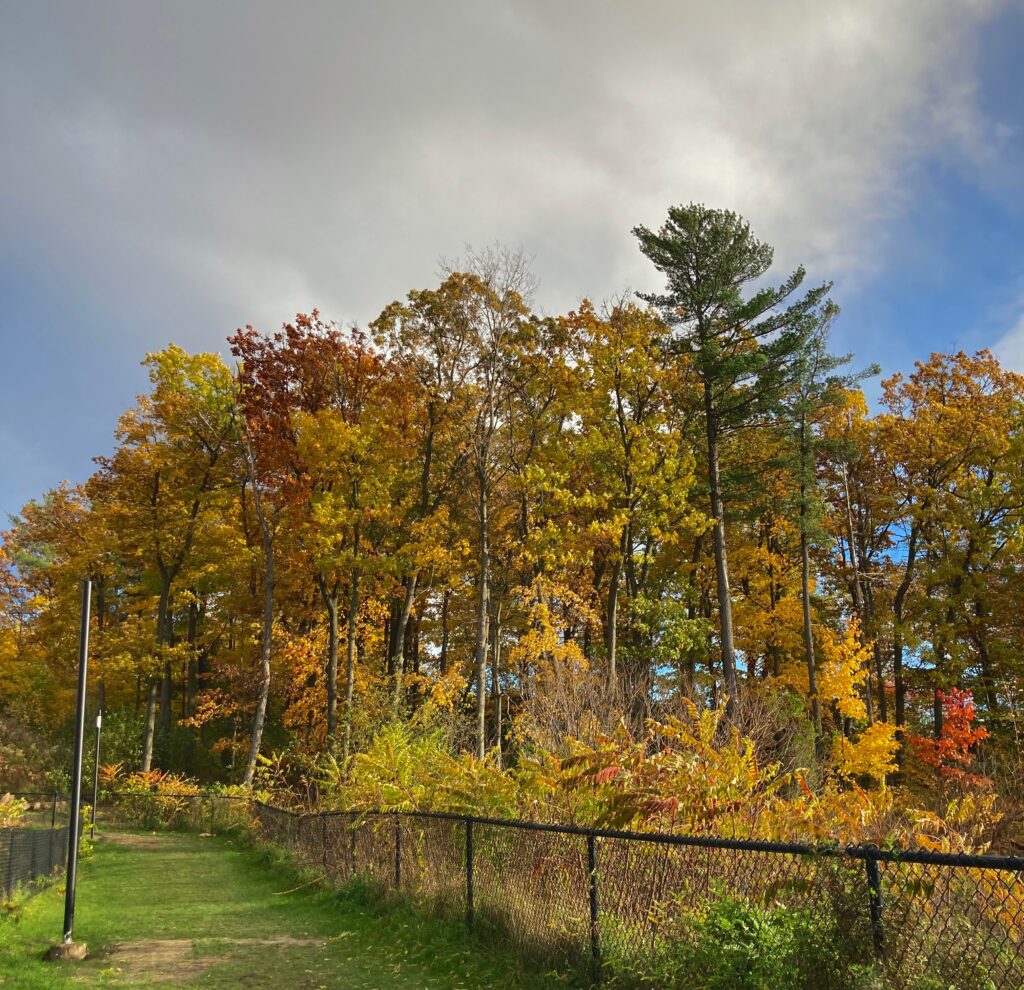
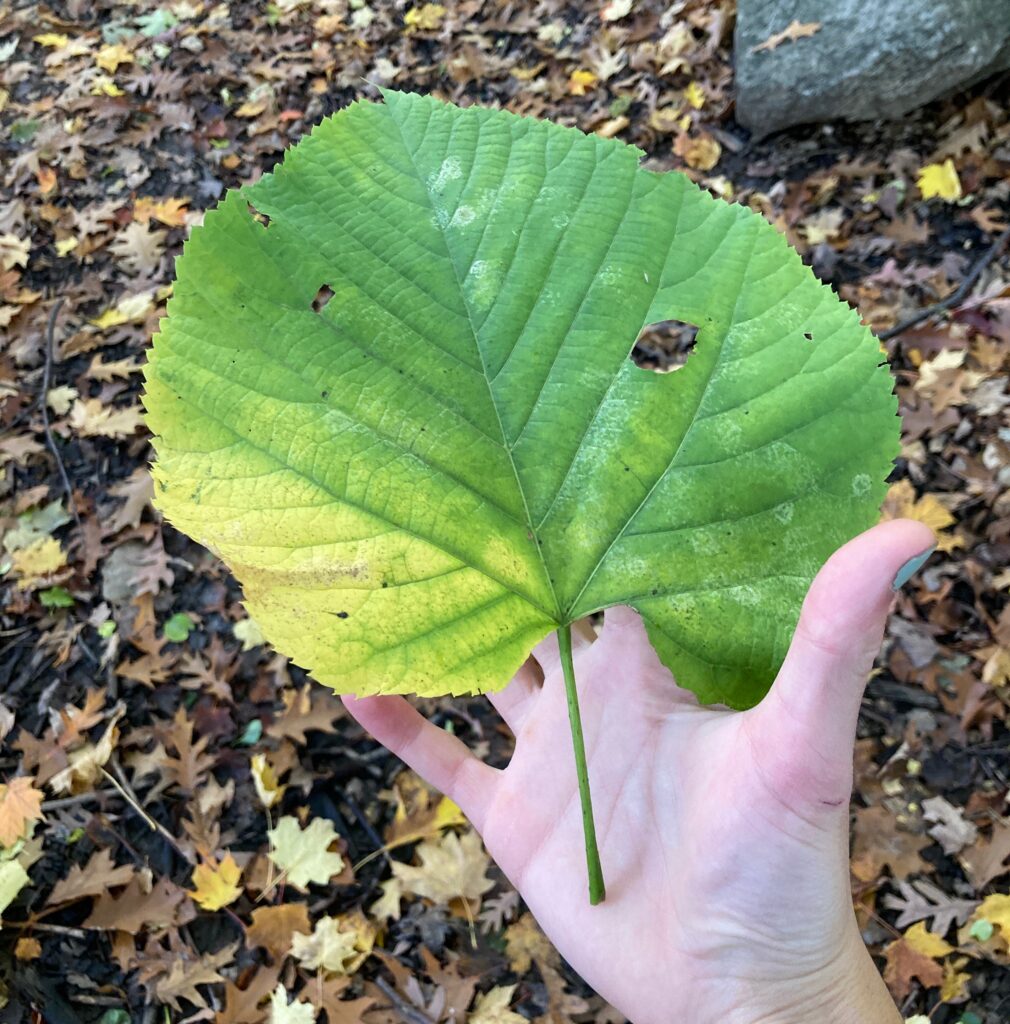
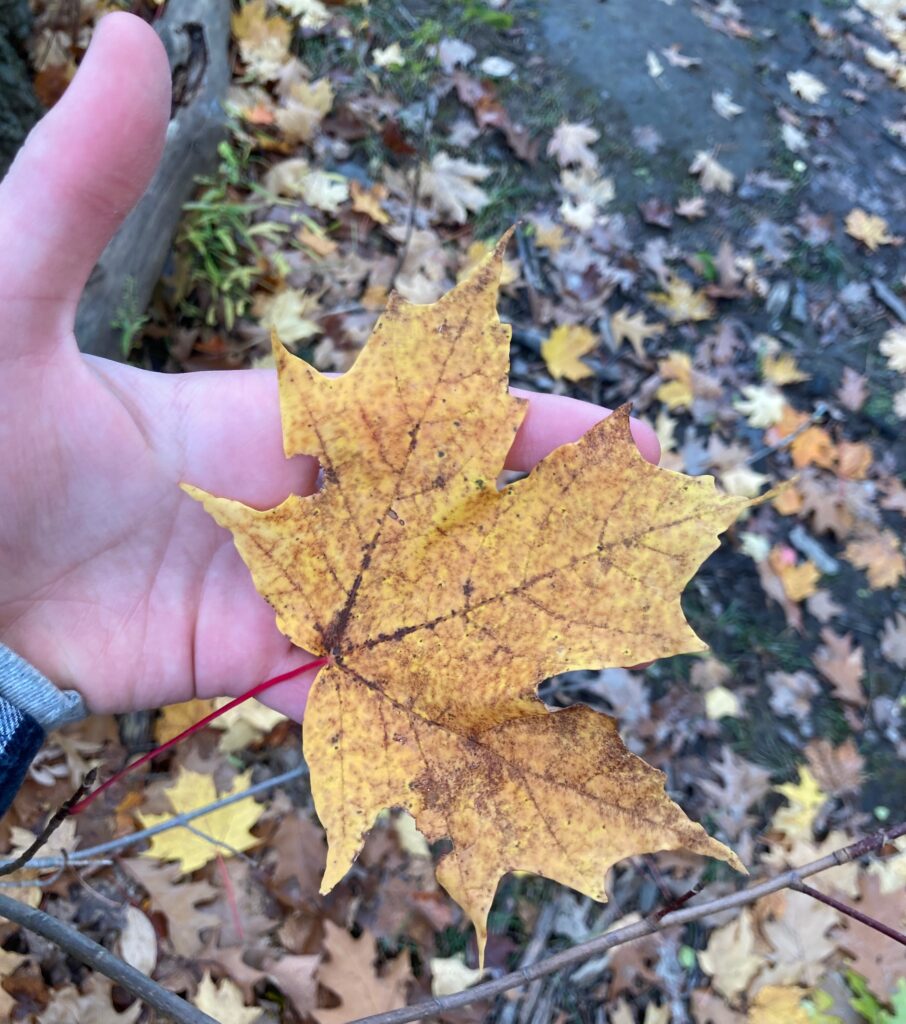
Yet another beautiful day to observe my phenology site! I can feel the temperature slowly decreasing these past few weeks but that’s Vermont! And along with this colder weather comes the shedding of leaves from the trees. Just within the time span of two weeks, my site has lost almost all of its green. Almost every tree is yellow, orange, red, brown, or even barren. I examined my site in more detail today, trying to discover new species I have not seen yet. Although I still saw the common Sugar Maples, Red Oaks, White Pines, and Buckthorn, I discovered Barberry, Green Ash, and a Basswood with the biggest Basswood leaves I have ever seen (view below). I also found an area in the understory that had an abundance of a species I was unaware of. After researching I confirmed it to be a type of Goldenrod. It is an amazing time to witness my site as each plant is at a different stage. This creates quite the color pallet for fall!
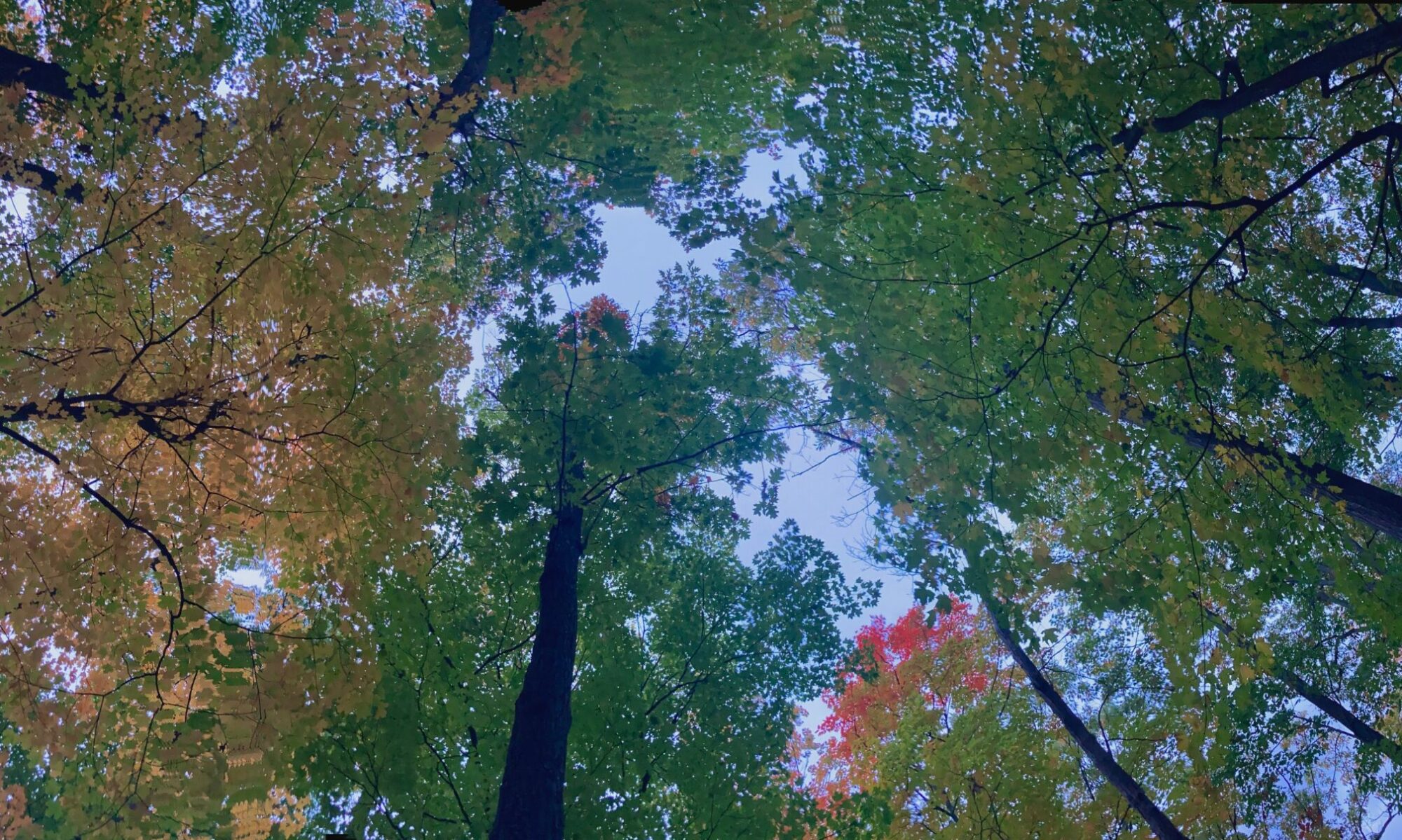
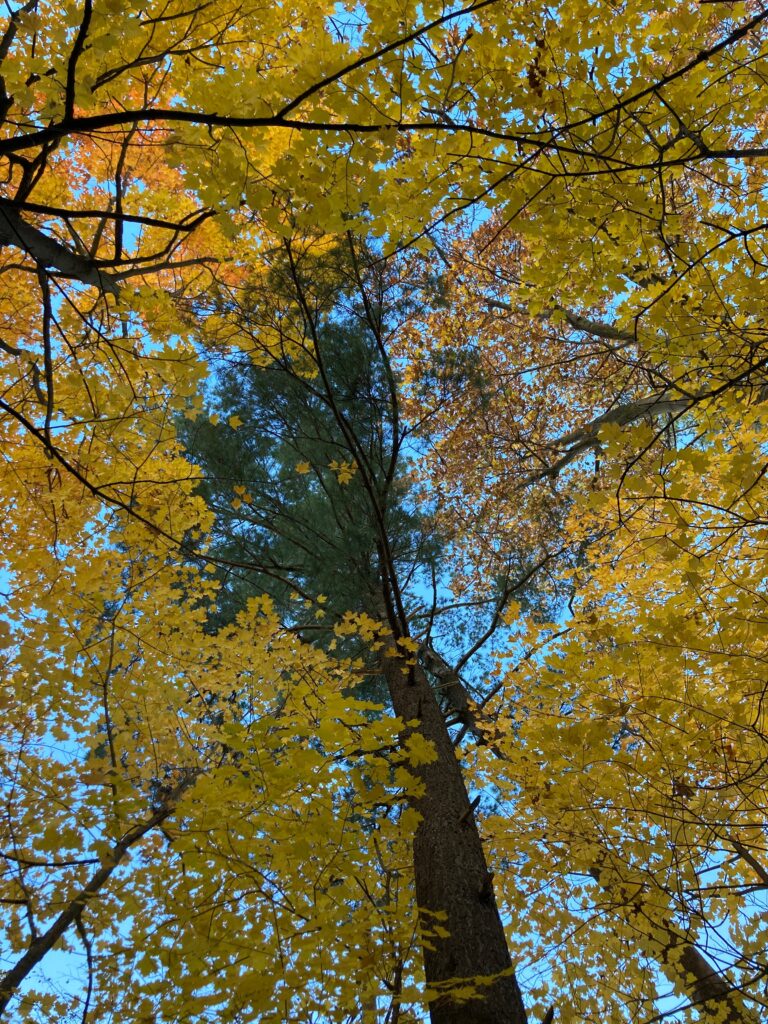
Today, I chose a spot in the center of my site to sit and observe. Because of this experience, along with my patience, I was able to observe aspects of my site that I had not considered before. As I sat there silently, I could hear the breeze running through the trunks of the tall trees along with the shake of their leaves. As I breathed in the fresh and brisk air, I could smell the Earthy outdoors scent. I would look straight upwards to witness a collidoscope-like view of the canopy: yellow Sugar Maple, orange/brown Red Oak, and finally dark green Eastern White Pine. It was a natural masterpiece.