
Though this will be my last entry for this blog, it certainly won’t be marking my last visit to Beaver Way. I’ve spent hours sitting on the trail, taking photos and sketching the woods around me, watching the water rush by, listening to the birds, and taking in the changes through the seasons. It’s also been the quiet background for my friendships with other Rubenstein students, and for that I could truly never forget it.
It’s undeniable to me that Beaver Way has become a part of me and my experiences. But I don’t think it’s quite right to say that I am a part of it. I may flit in and out of it every few weeks, and will continue to do so, but I don’t leave much of myself behind. I know the bridge and the brook, but it has no reason to know me.
I’ve slowly become very familiar with the muddy bank of the brook and the footpath that keeps my feet from sinking in, the dry reeds that burst out of the mud, and the line between the deciduous and coniferous trees in the distance. Though the climate and the cover may have changed, the foundation remains the same, and remains a solid memory in my mind.
That’s why I immediately noticed a few new changes, things that sprung up from the ground or zipped past me in the river, or chirped a little differently than I remember.
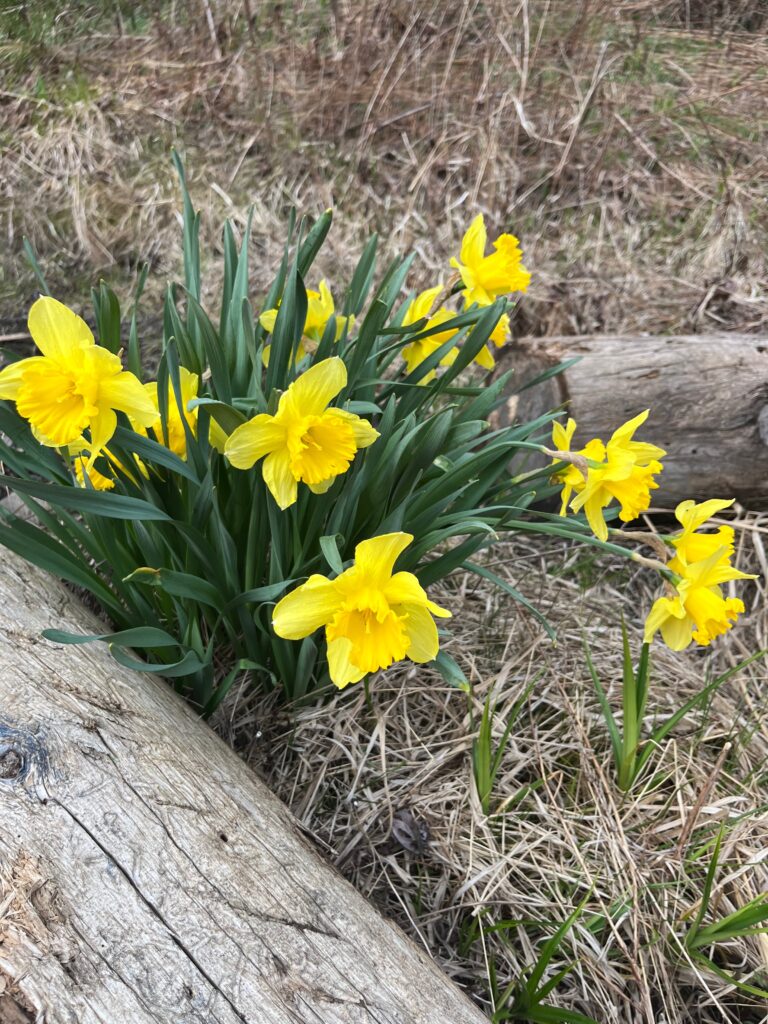
Most noticeably was the emergence of a small patch of Daffodils not too far from the water, bright yellow and demanding attention from the otherwise brown and green landscape.
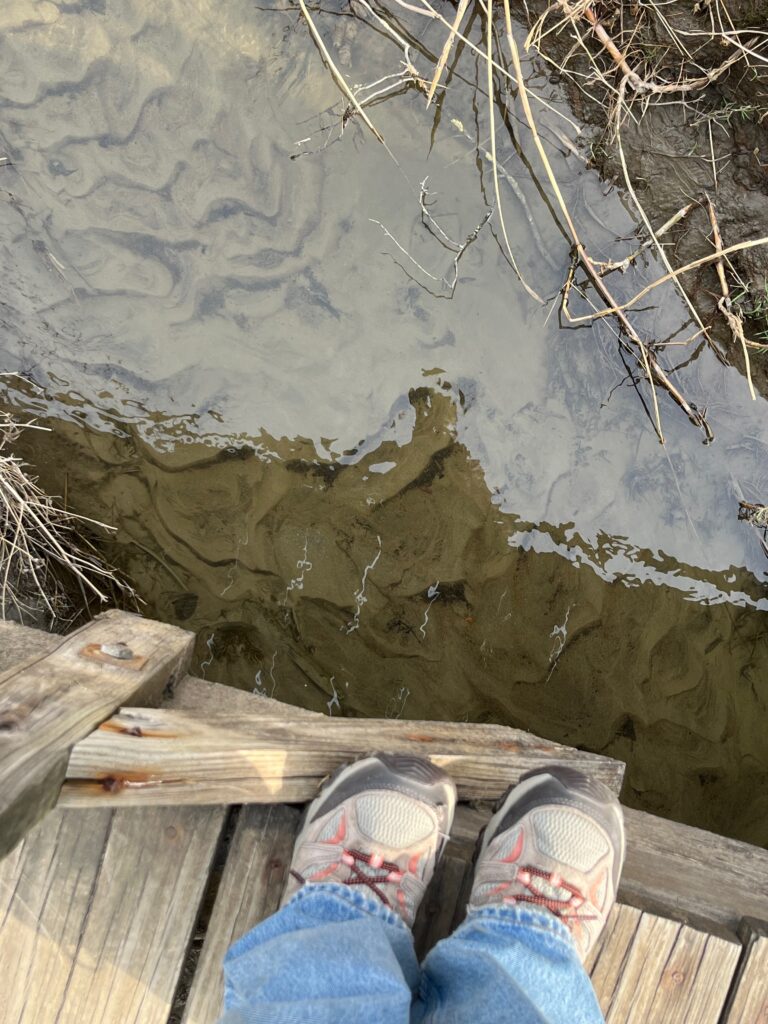
Shown here was a really exciting observation for me! A small shoal of fish were swimming in the brook, flitting around and slightly fighting the stream’s direction. Though I don’t know fish ID (really at all), a quick search of small fish in Northern Vermont streams in early spring indicates that these may be young Brook Trout.
Above is a clip of a Black-capped Chickadee (and my keys jingling). I’ve heard these birds around the woods before, but this was a new sound. As it turns out, this distinct two-note high-low song is specific to male birds in the spring and late winter, sometimes used to charm females.
This discovery reminded me of all the birds that I’d heard way back in October and been unable to identify. The three birds I’d heard then were actually a White-throated Sparrow, a Blue Jay, and another Black-capped Chickadee, according to the Merlin Bird ID app.
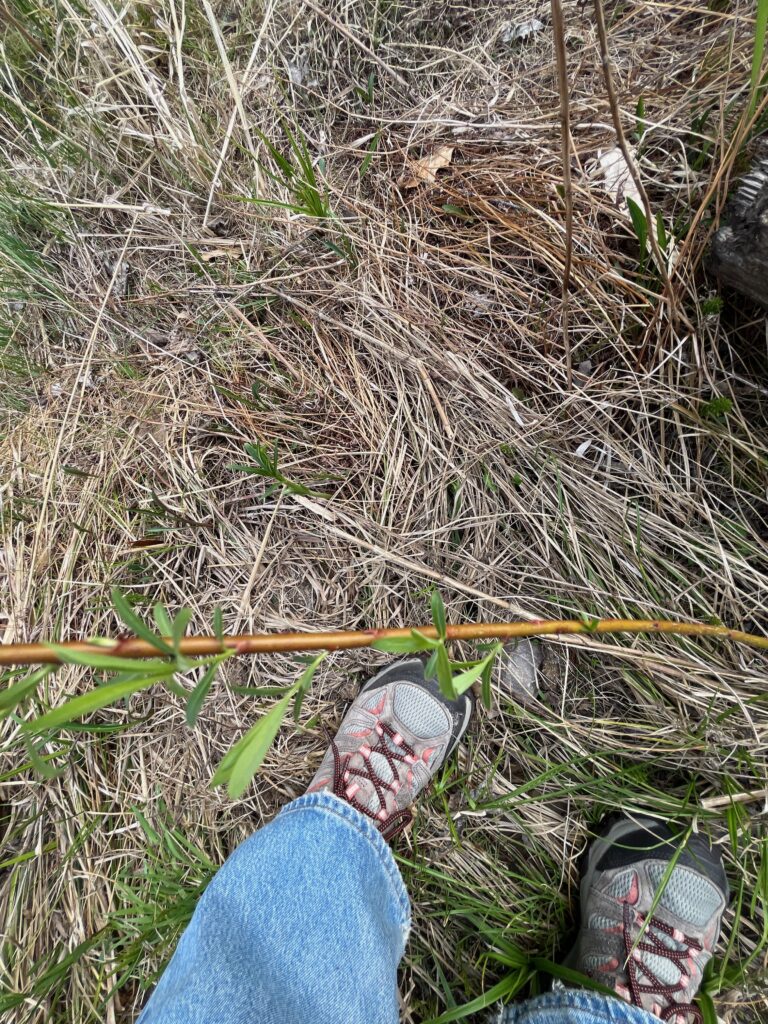
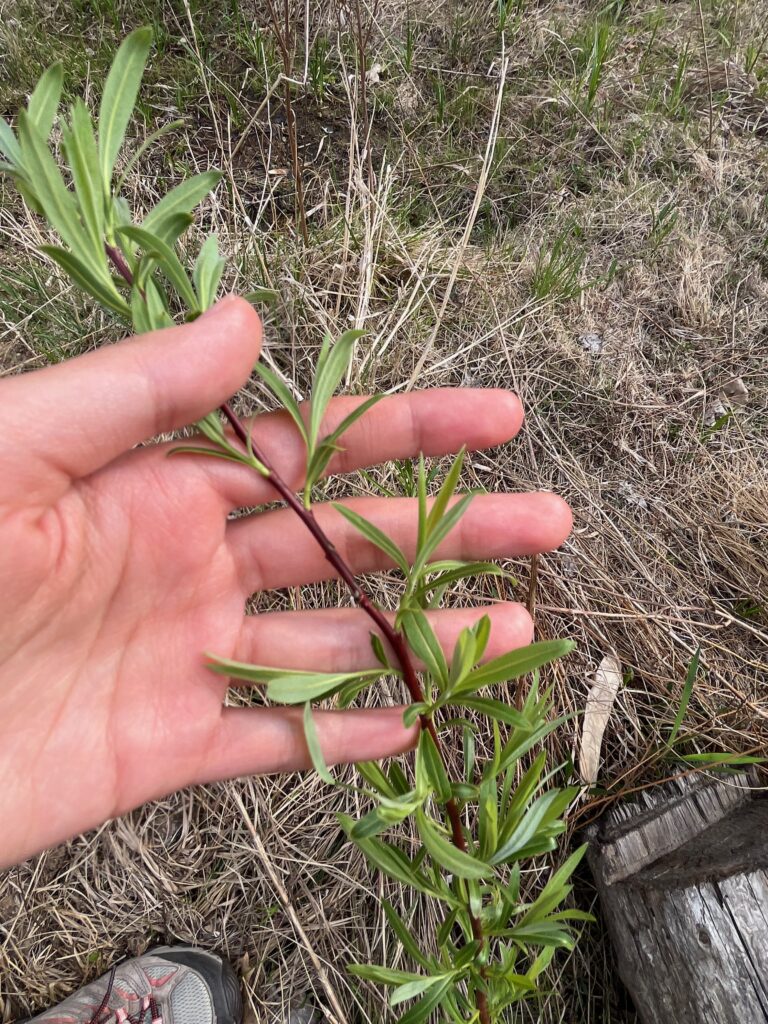
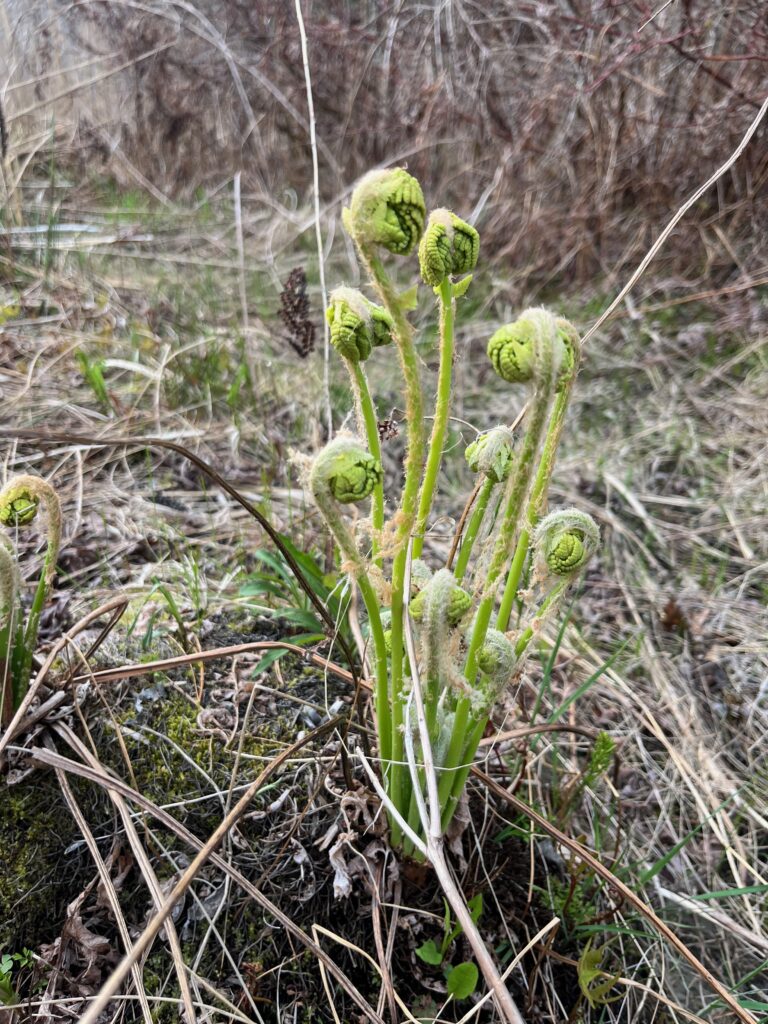
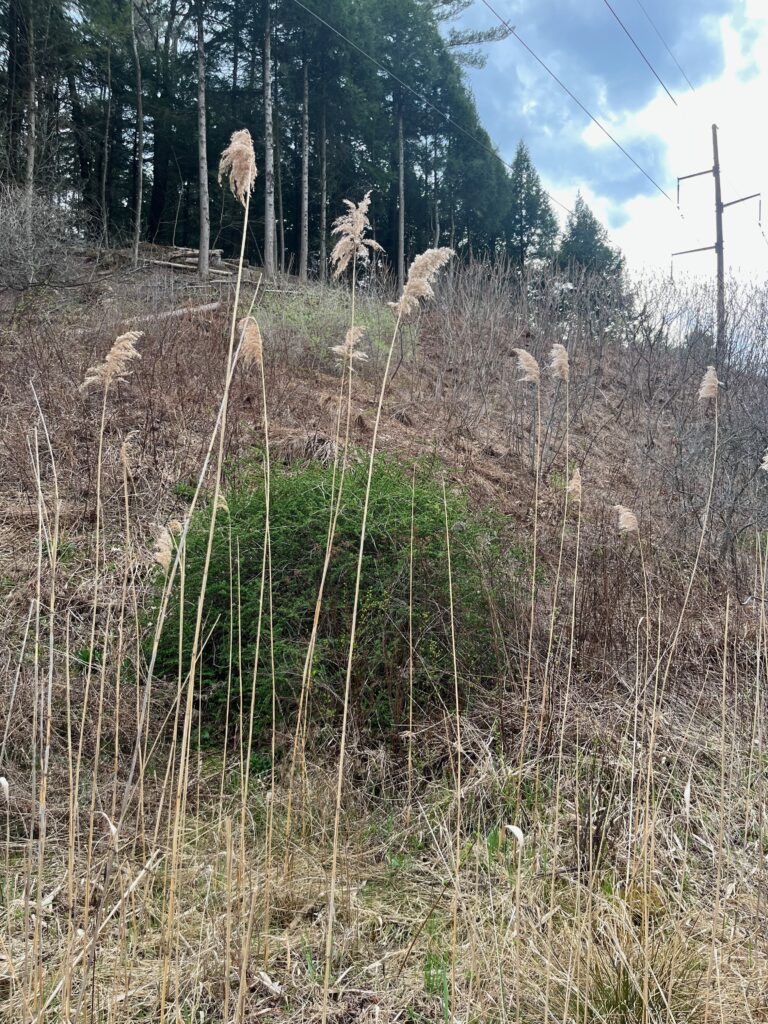
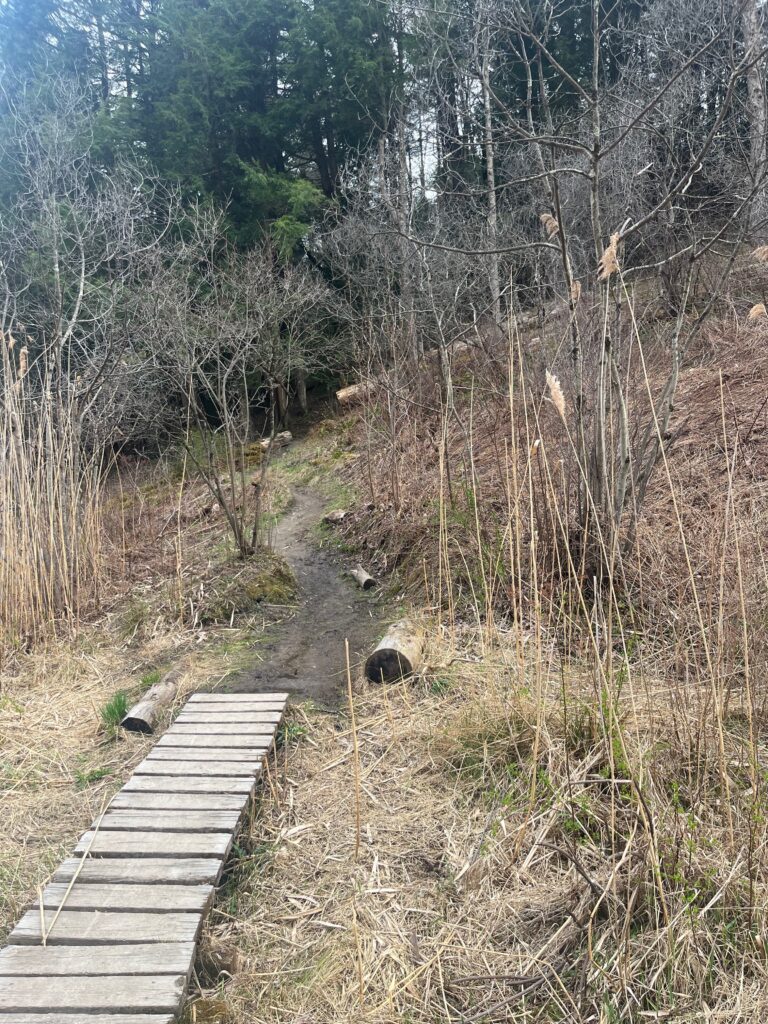
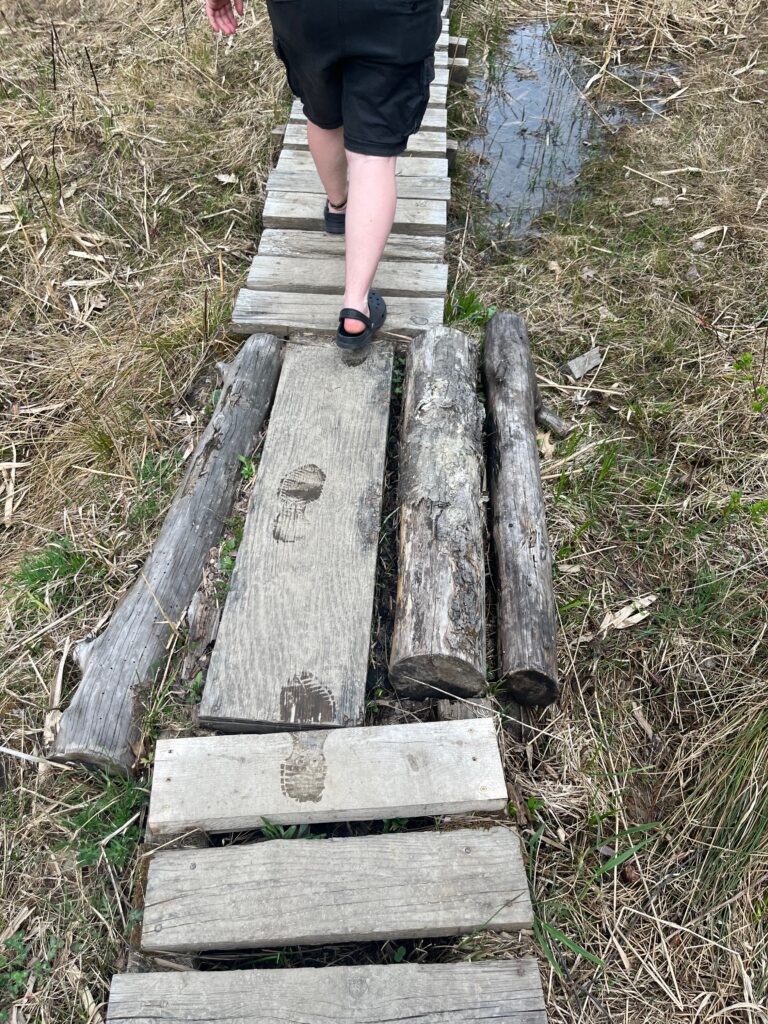
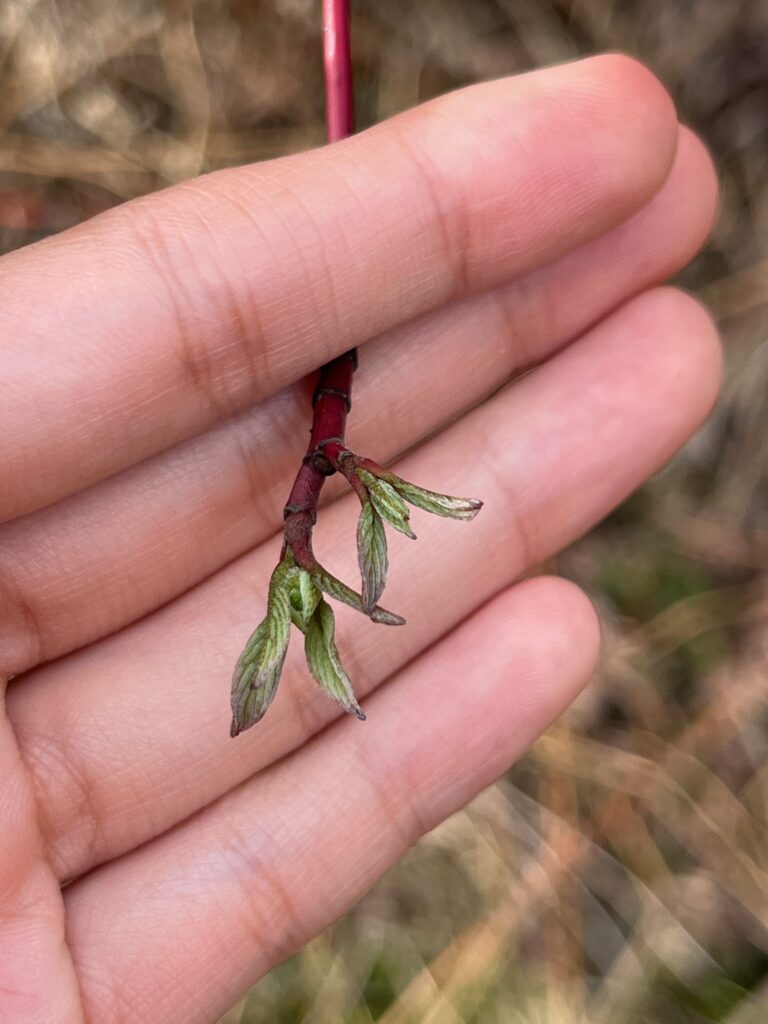
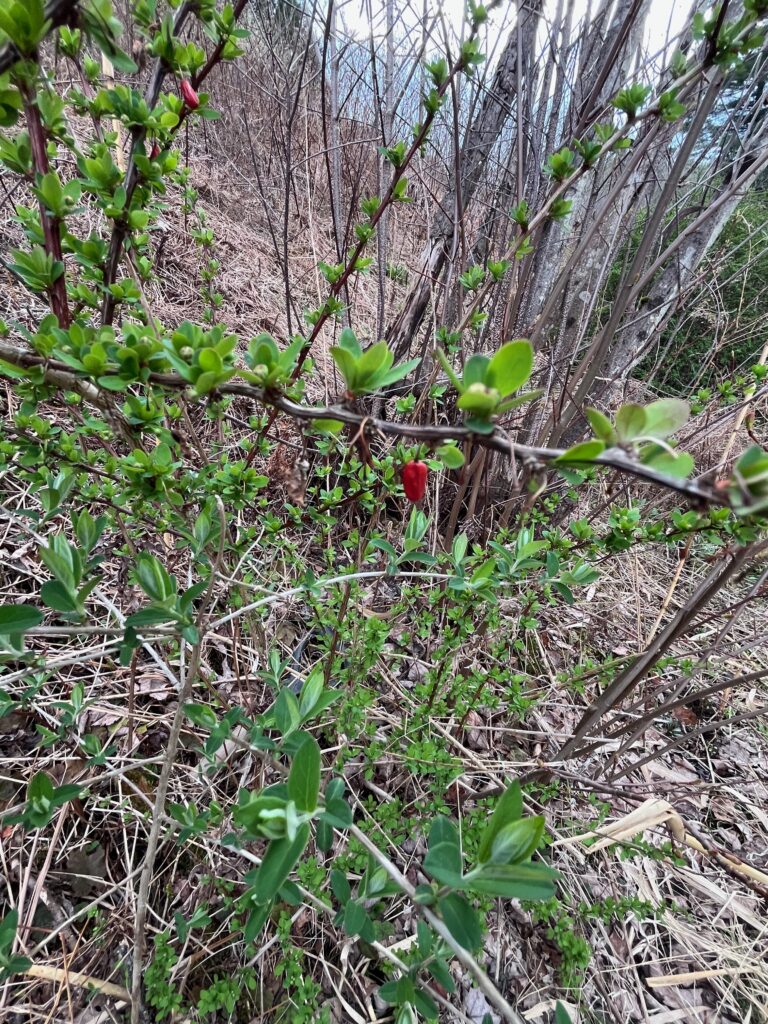
Some final photos as a little farewell to the comfort of Beaver Way (for now!). You can see some Ferns peeking through the soil, the young leaves of a Dogwood, and the branches of a Japanese Barberry and Willow plant.
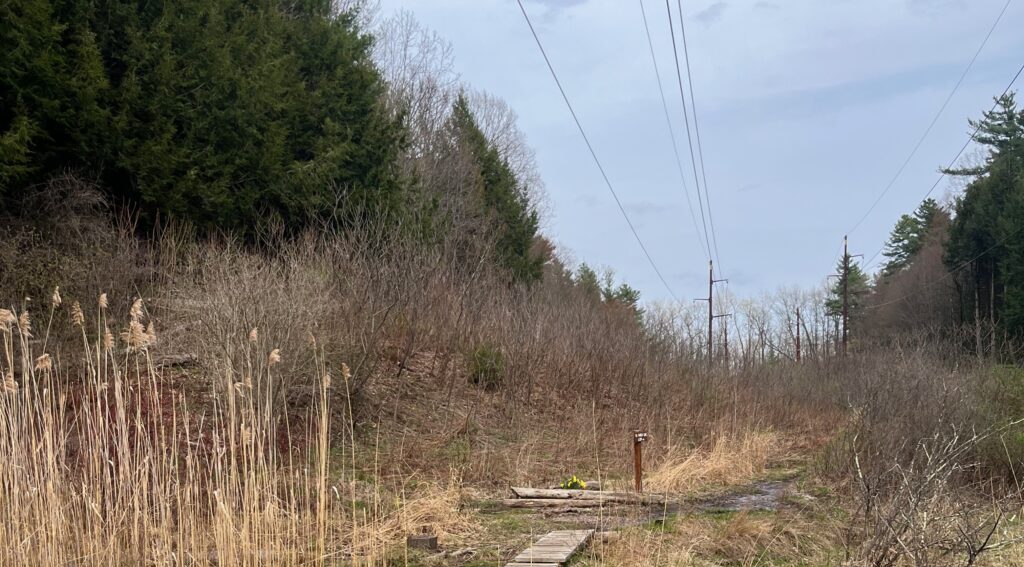
Though the small buds and early flowers of spring are a sight to see on their own, I’m so excited to see the green seep back into the trees and hear more birds call out through the canopy at the end of this summer. This site and all of its inhabitants have changed almost beyond recognition this past year, from lush verdant foliage to a stark white snowy cover with emerald cedars and tan reeds peeking through, and now to a dulled landscape slowly regaining its color. Until August! 💛