Feeds:
Posts
Comments

Though this will be my last entry for this blog, it certainly won’t be marking my last visit to Beaver Way. I’ve spent hours sitting on the trail, taking photos and sketching the woods around me, watching the water rush by, listening to the birds, and taking in the changes through the seasons. It’s also been the quiet background for my friendships with other Rubenstein students, and for that I could truly never forget it.

It’s undeniable to me that Beaver Way has become a part of me and my experiences. But I don’t think it’s quite right to say that I am a part of it. I may flit in and out of it every few weeks, and will continue to do so, but I don’t leave much of myself behind. I know the bridge and the brook, but it has no reason to know me.

I’ve slowly become very familiar with the muddy bank of the brook and the footpath that keeps my feet from sinking in, the dry reeds that burst out of the mud, and the line between the deciduous and coniferous trees in the distance. Though the climate and the cover may have changed, the foundation remains the same, and remains a solid memory in my mind.

That’s why I immediately noticed a few new changes, things that sprung up from the ground or zipped past me in the river, or chirped a little differently than I remember.

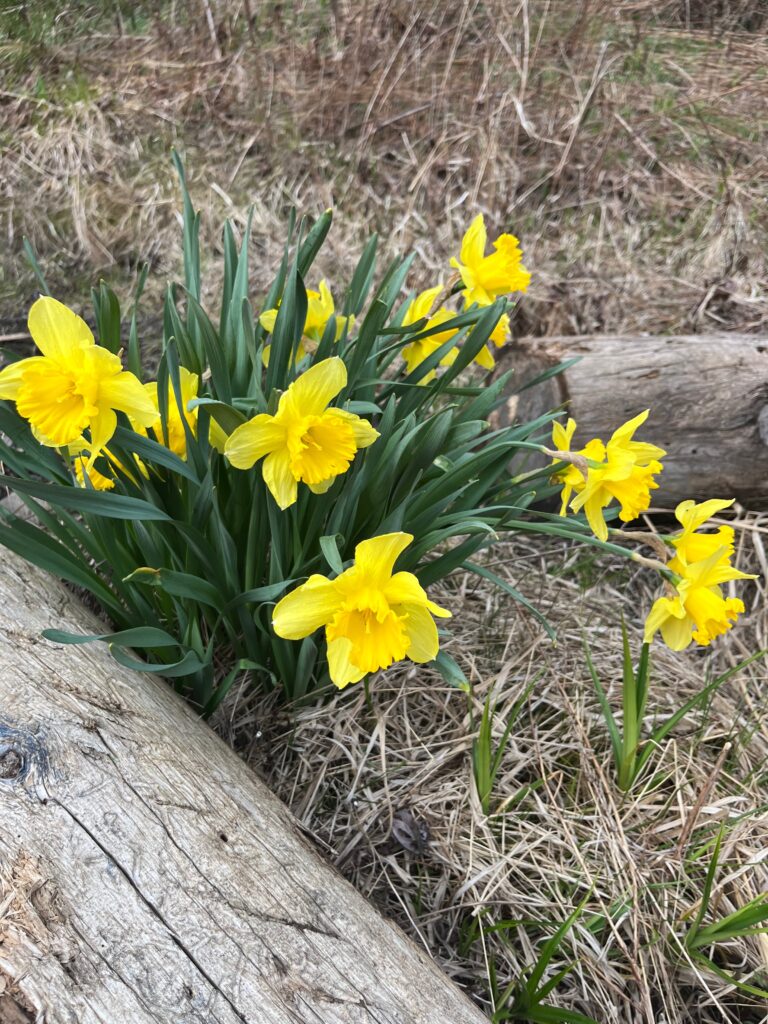
Most noticeably was the emergence of a small patch of Daffodils not too far from the water, bright yellow and demanding attention from the otherwise brown and green landscape.
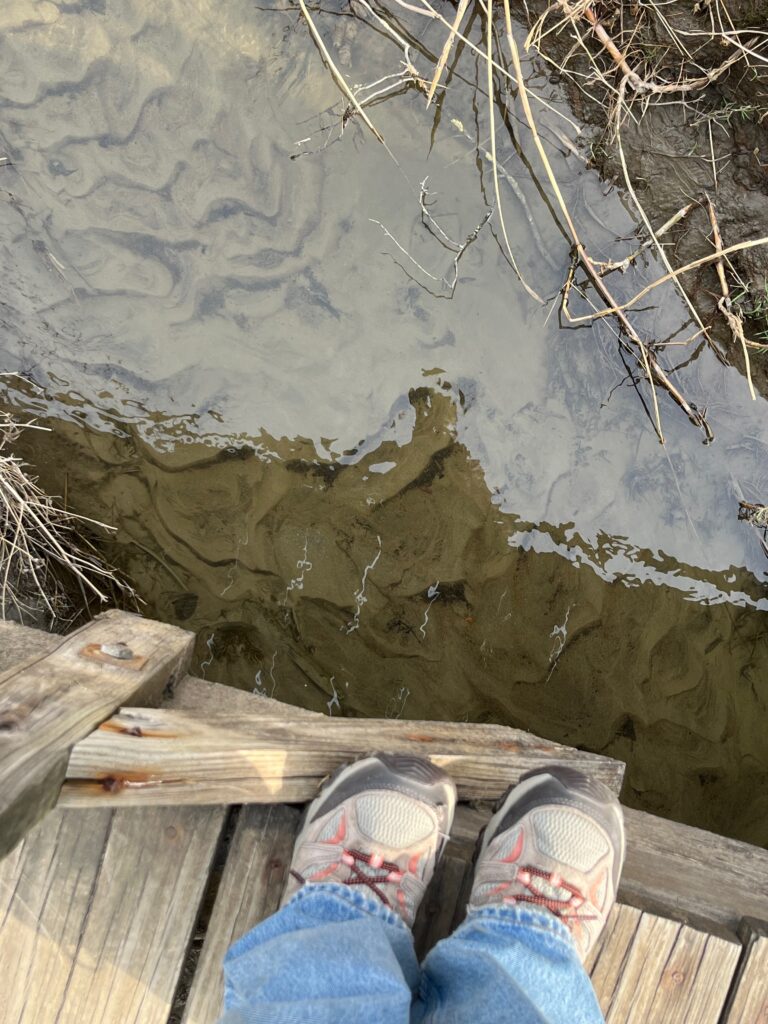
Shown here was a really exciting observation for me! A small shoal of fish were swimming in the brook, flitting around and slightly fighting the stream’s direction. Though I don’t know fish ID (really at all), a quick search of small fish in Northern Vermont streams in early spring indicates that these may be young Brook Trout.

Above is a clip of a Black-capped Chickadee (and my keys jingling). I’ve heard these birds around the woods before, but this was a new sound. As it turns out, this distinct two-note high-low song is specific to male birds in the spring and late winter, sometimes used to charm females.

This discovery reminded me of all the birds that I’d heard way back in October and been unable to identify. The three birds I’d heard then were actually a White-throated Sparrow, a Blue Jay, and another Black-capped Chickadee, according to the Merlin Bird ID app.
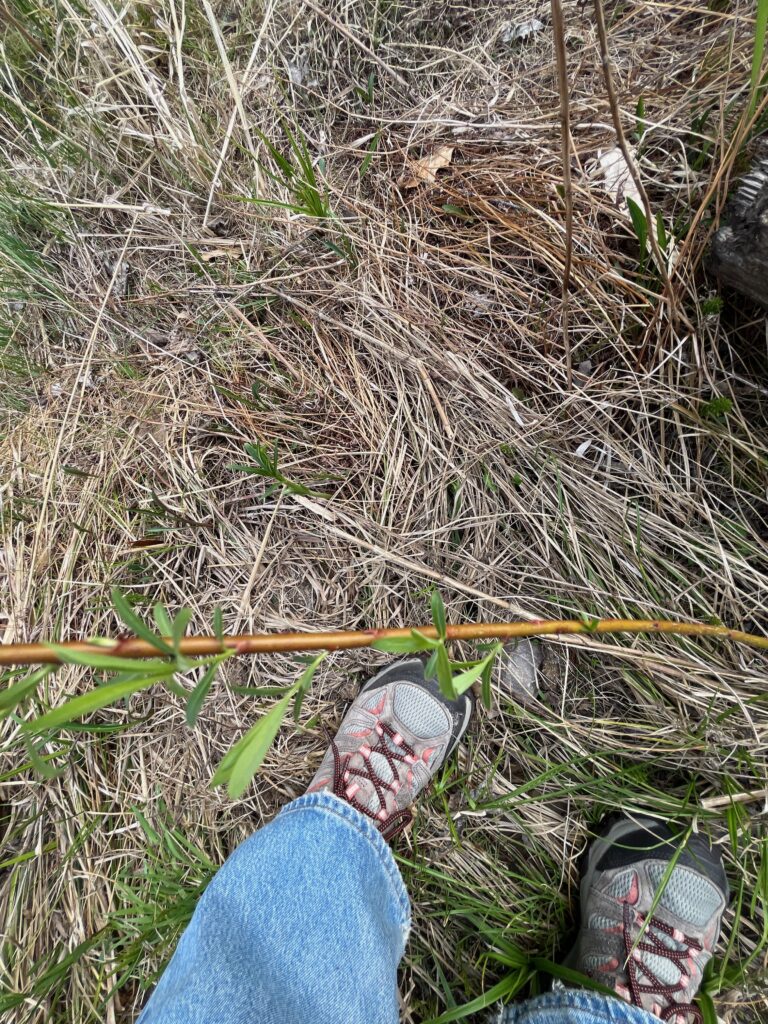
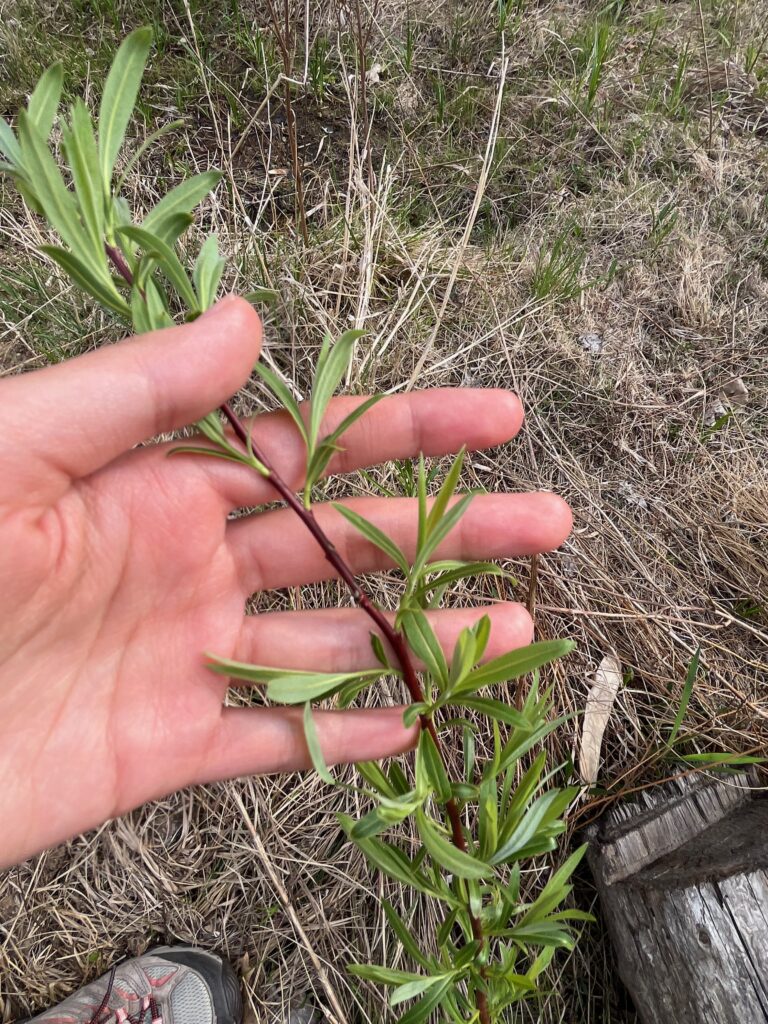
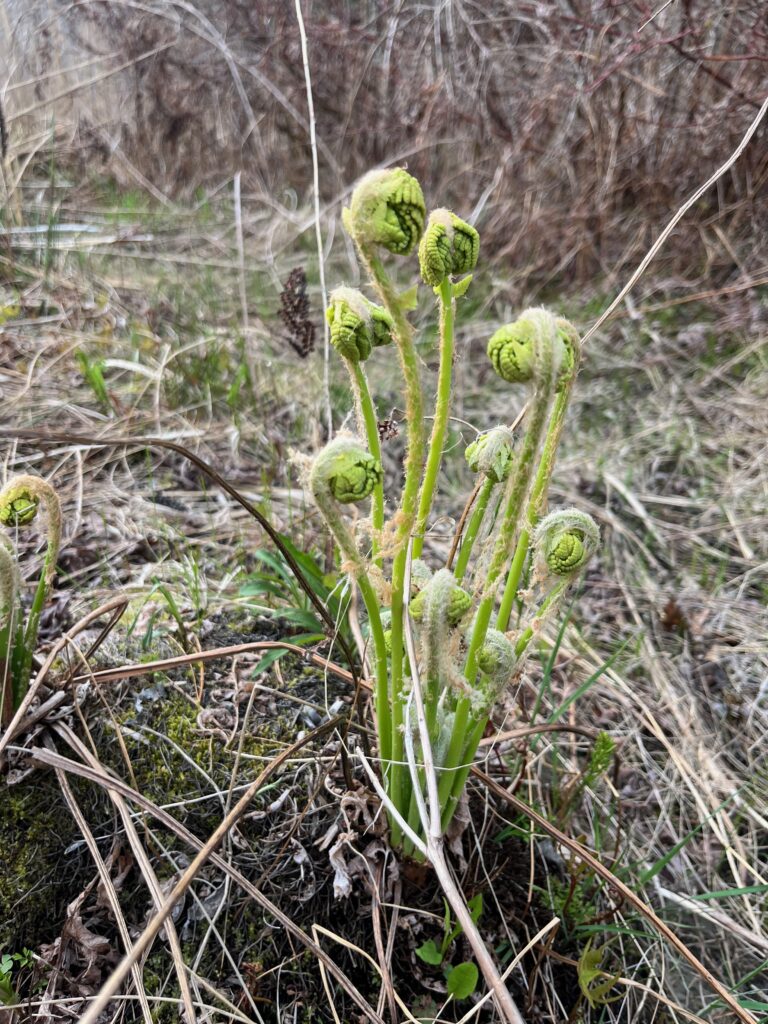
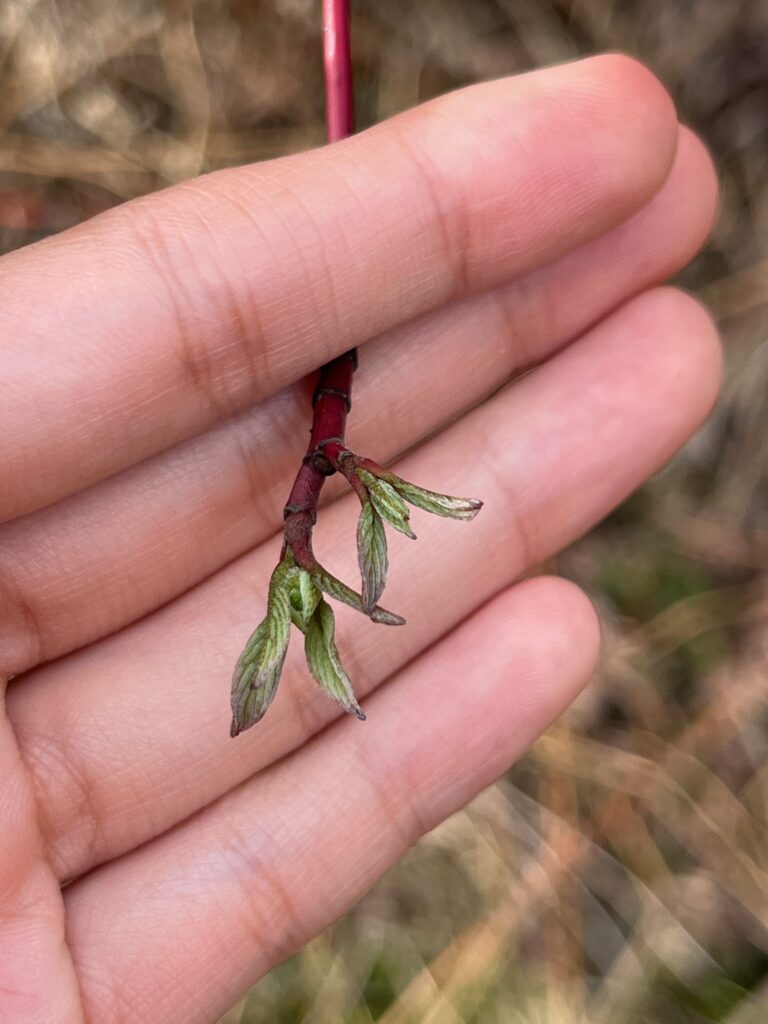
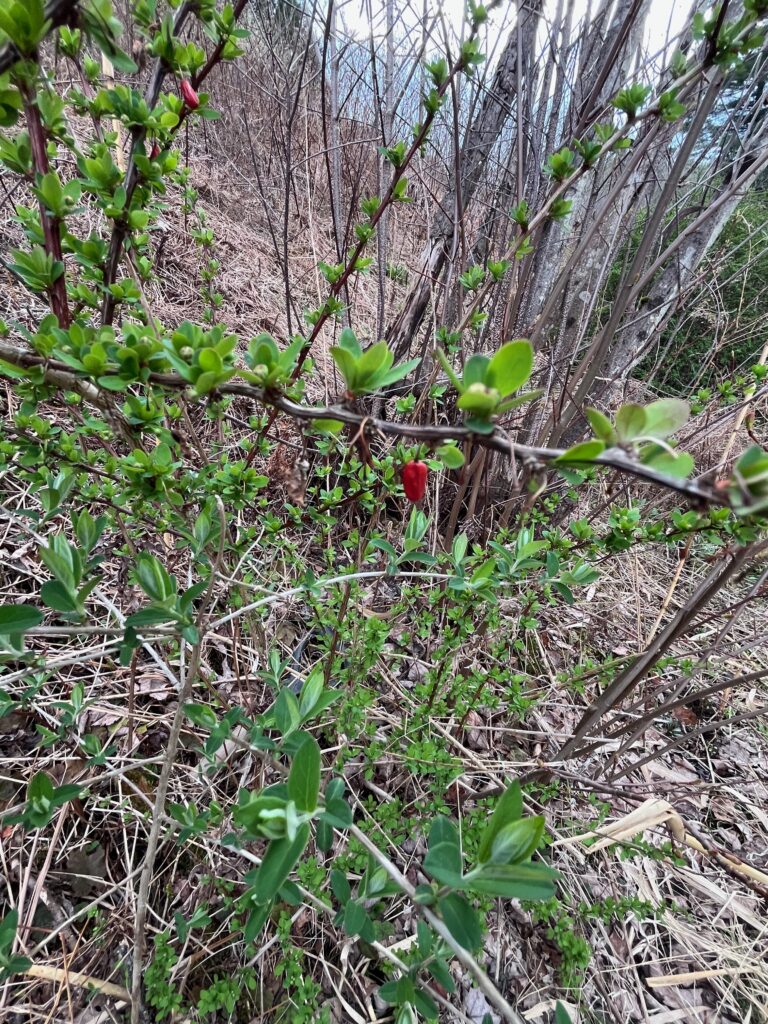
Some final photos as a little farewell to the comfort of Beaver Way (for now!). You can see some Ferns peeking through the soil, the young leaves of a Dogwood, and the branches of a Japanese Barberry and Willow plant.
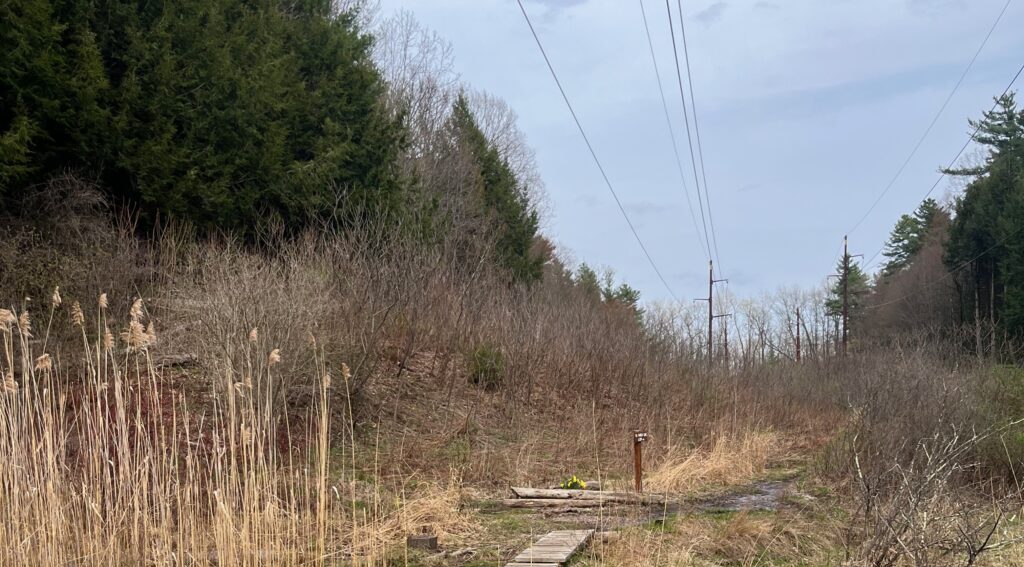
Though the small buds and early flowers of spring are a sight to see on their own, I’m so excited to see the green seep back into the trees and hear more birds call out through the canopy at the end of this summer. This site and all of its inhabitants have changed almost beyond recognition this past year, from lush verdant foliage to a stark white snowy cover with emerald cedars and tan reeds peeking through, and now to a dulled landscape slowly regaining its color. Until August! 💛
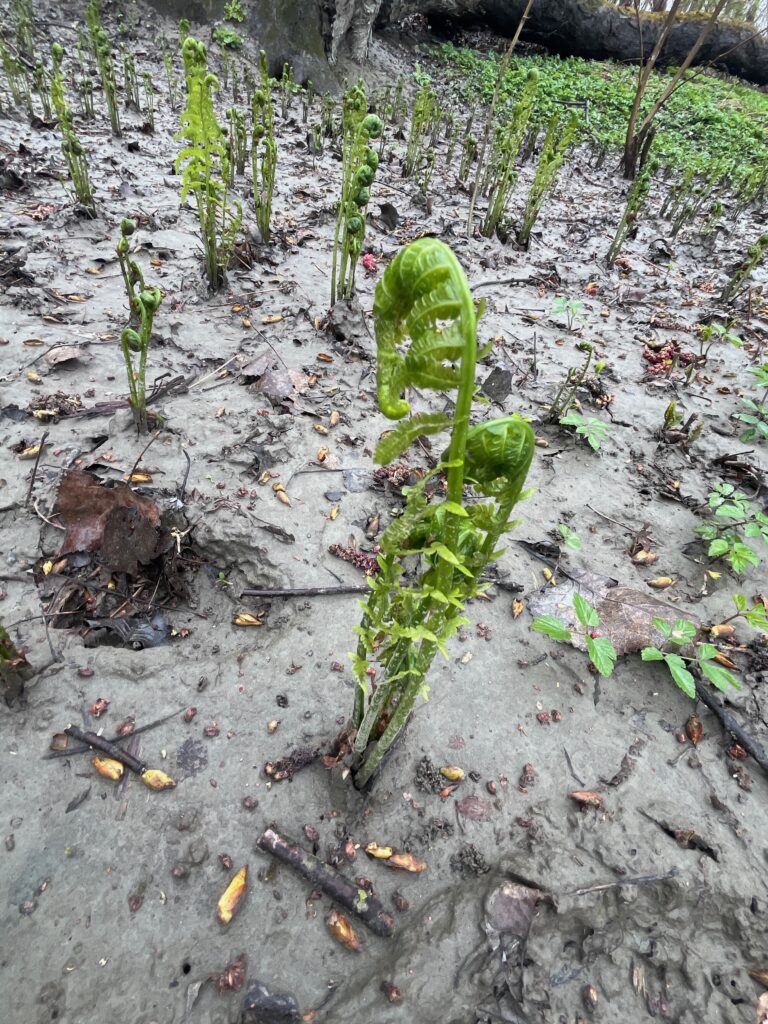
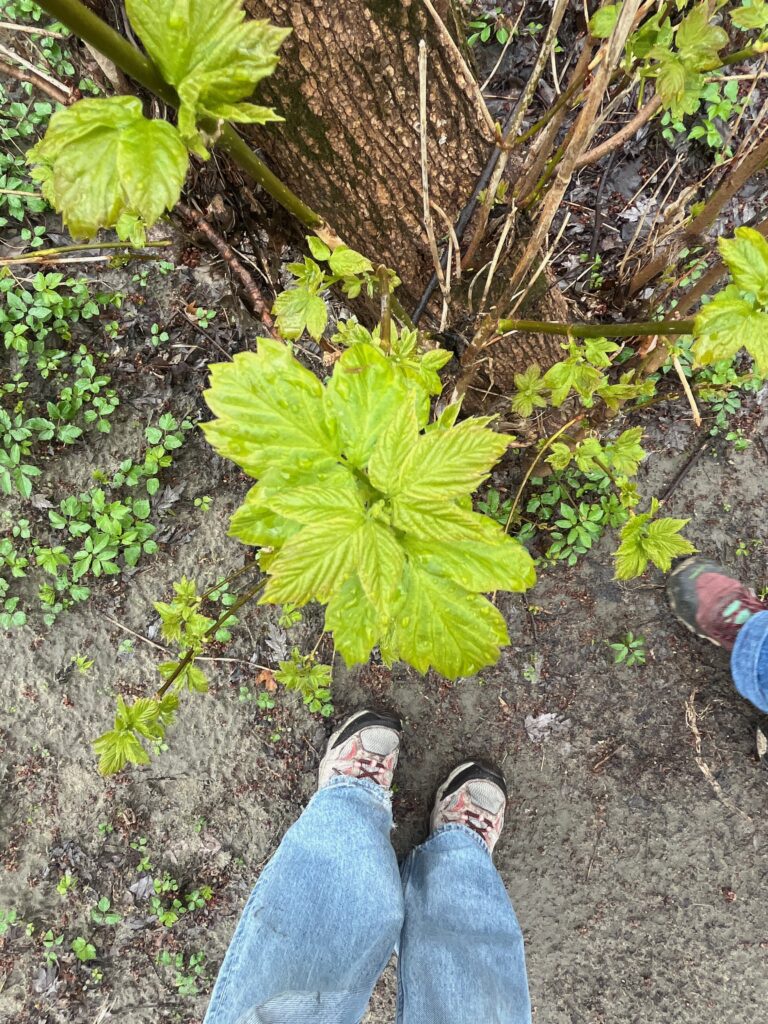
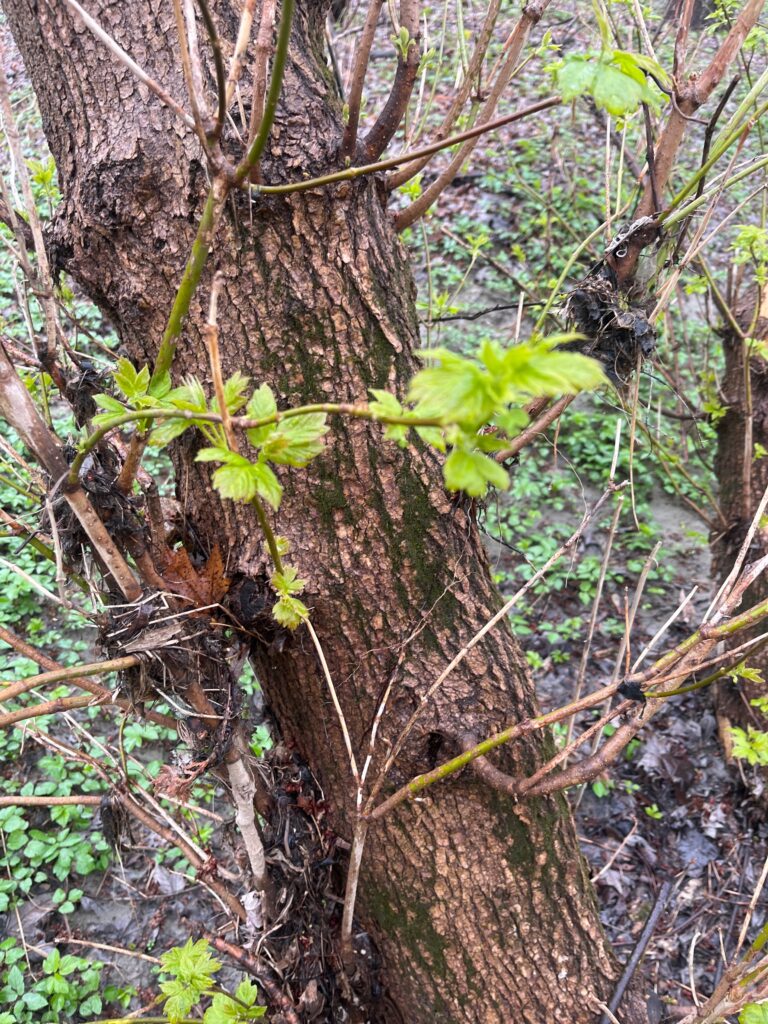
This is my first time participating in the City Nature Challenge, and I think Burlington is the best place I could’ve been introduced to it! For the bulk of my BioBlitzing, I went to the Intervale community event on Sunday the 27th and identified the plants I saw walking around. Here are some of the highlights:

I saw a lot of Ostrich Fern along the Calkins trail, and even planted some myself! The Intervale is trying to rehabilitate the Ostrich Fern population and improve the forest’s ground cover.

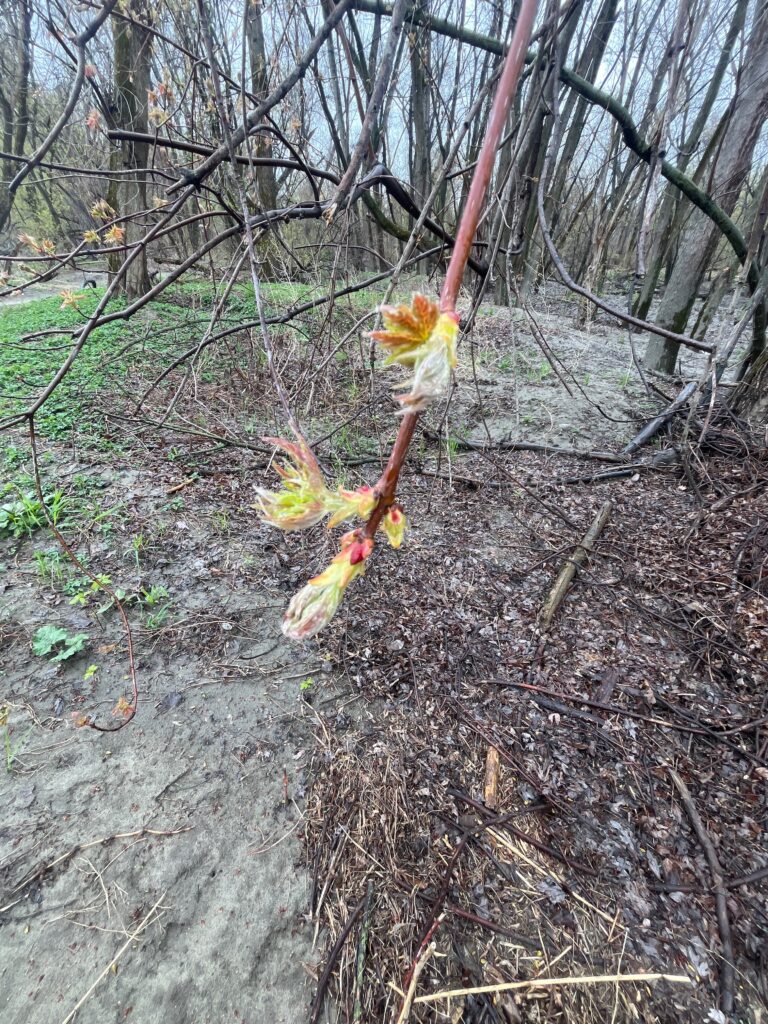
Above are a series of Maples; the first two are Boxelder Maples, but I’m not 100% sure what the last one is. I think it might be a Red.

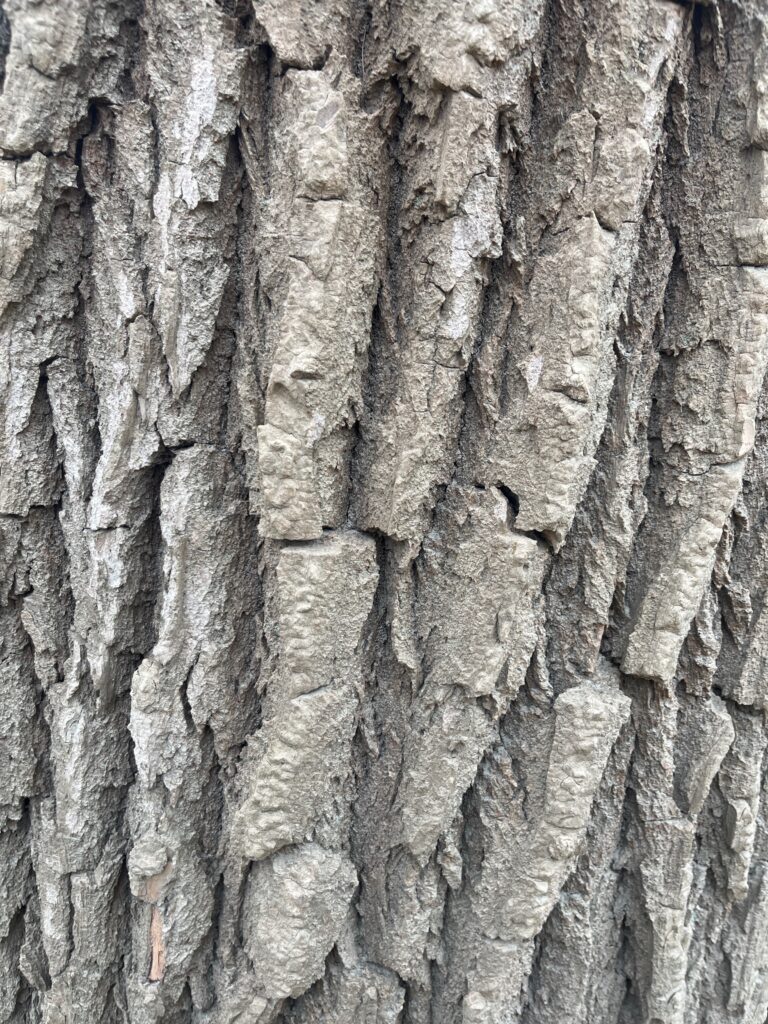
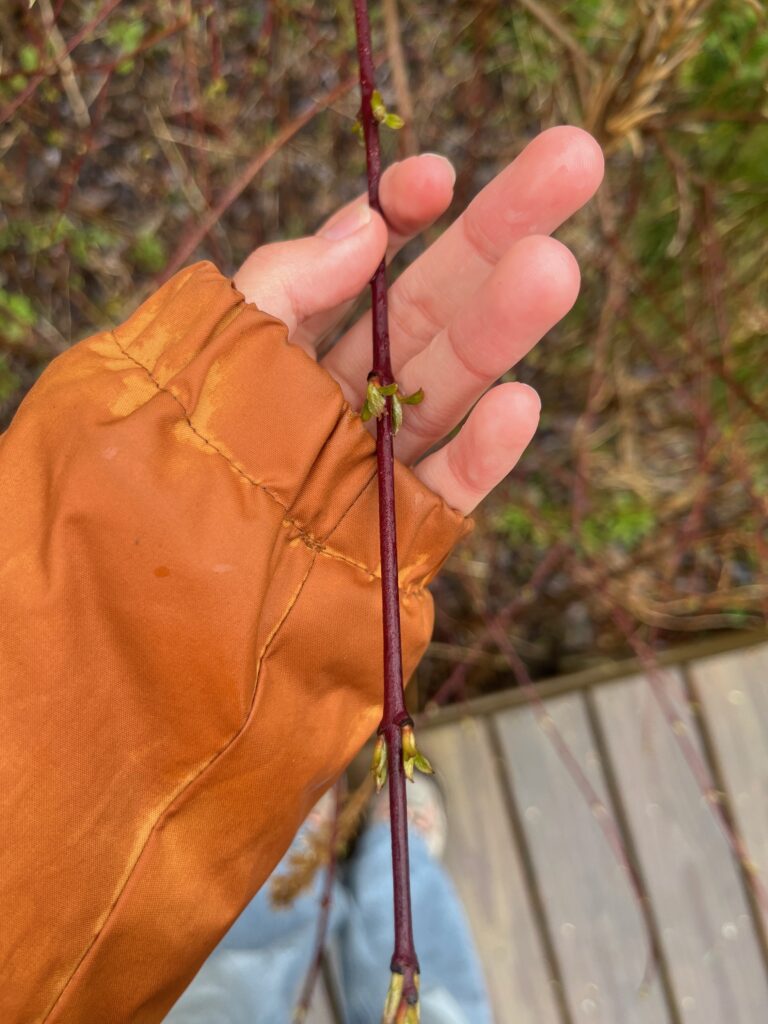
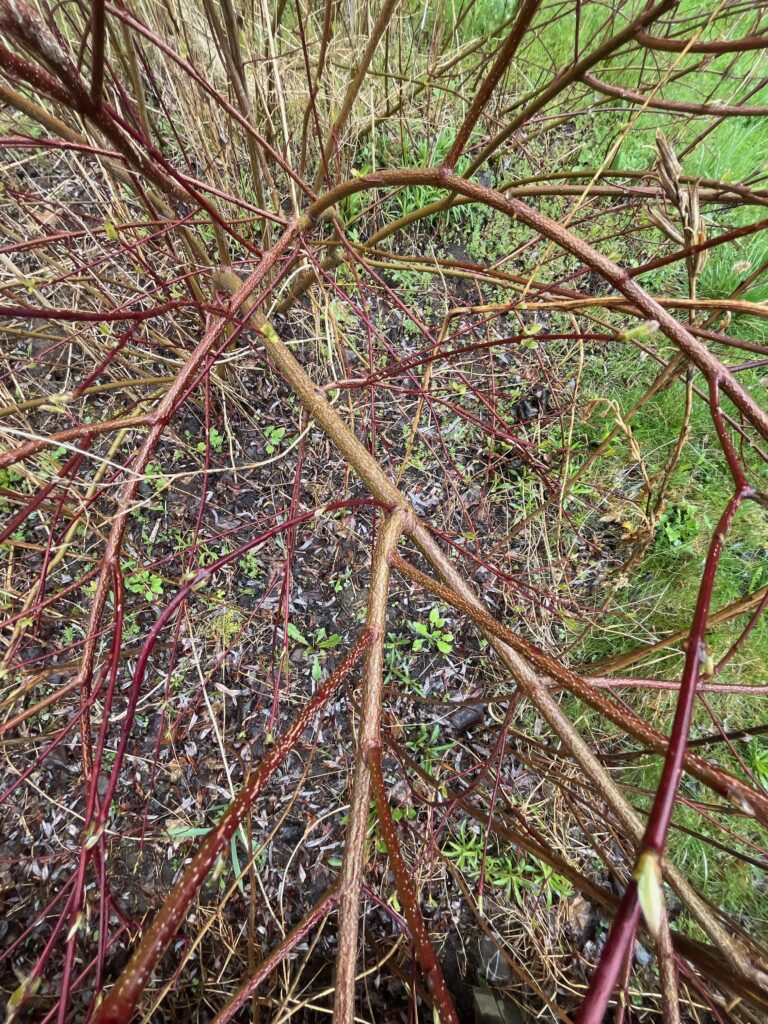
I also saw some lovely old Eastern Cottonwood (left) and what I think is a Dogwood (middle, right), perhaps Red Osier or Silky. Cottonwood has become one of my favorite trees lately, as the deep furrows make it easy to spot.

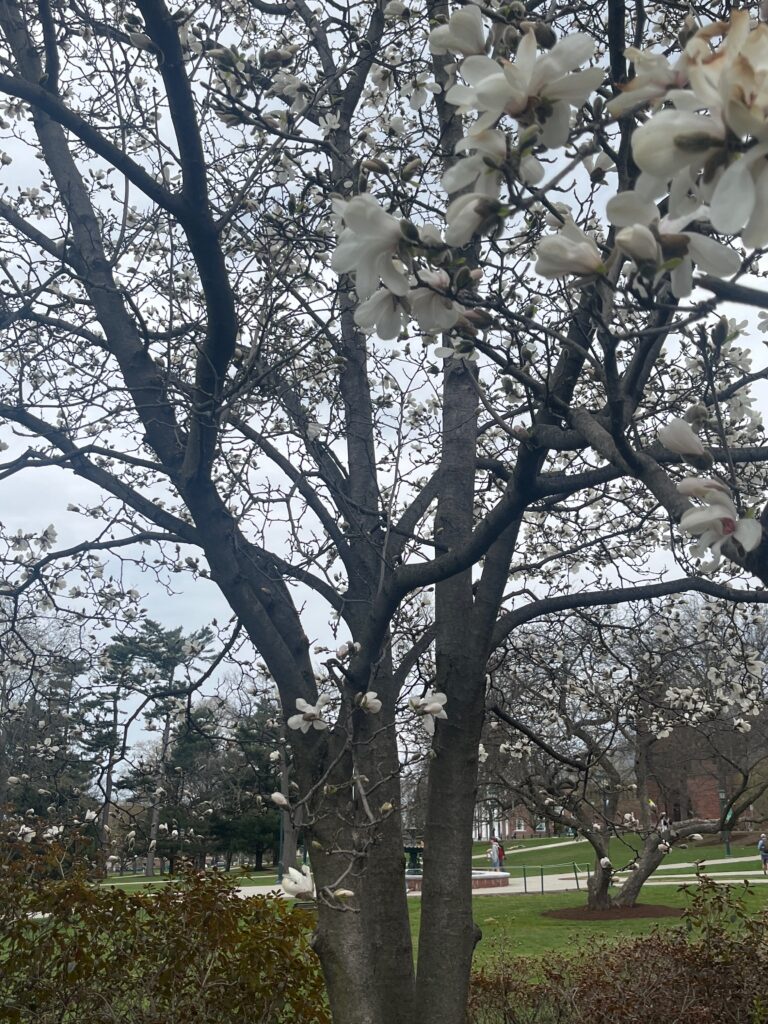
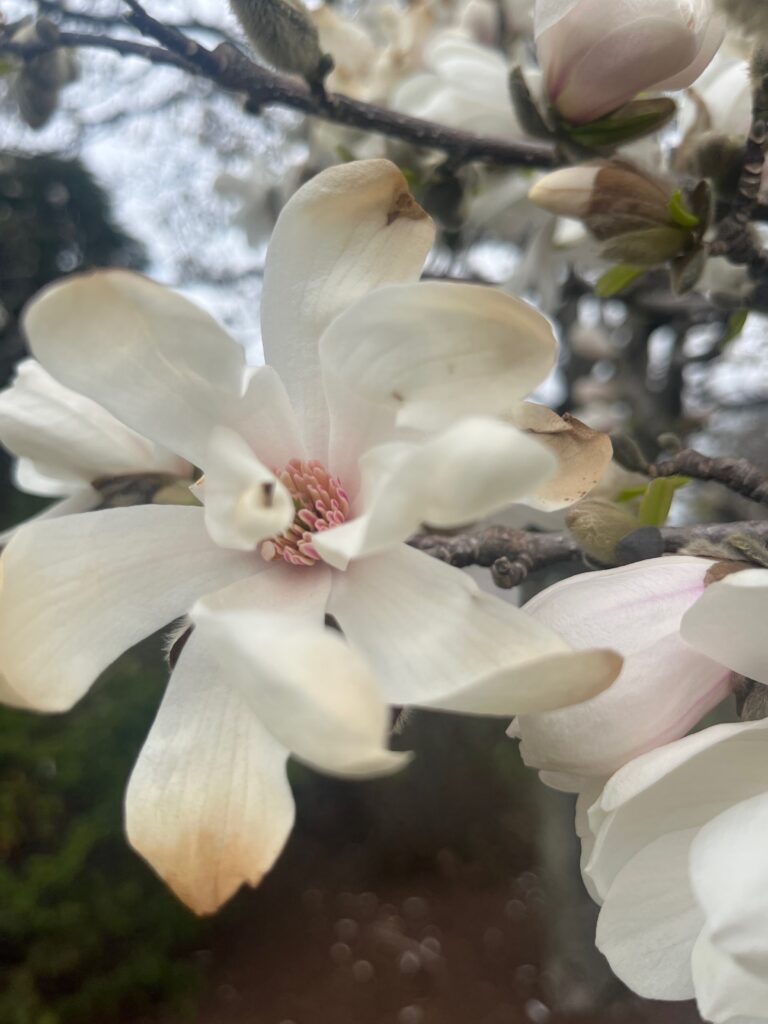
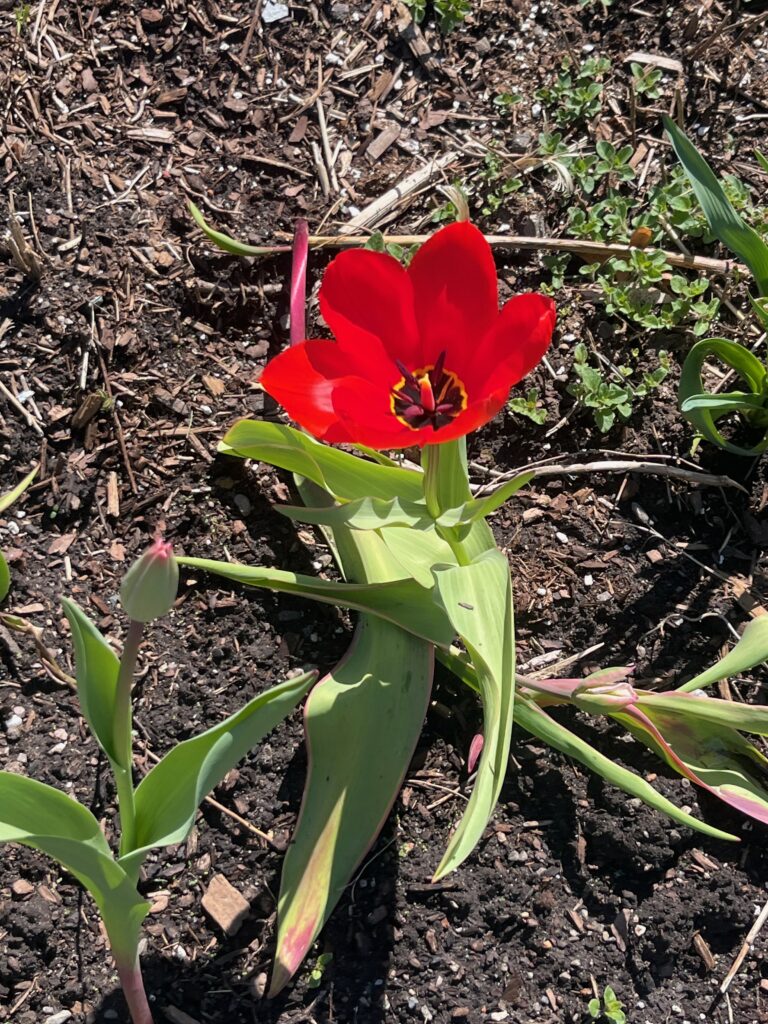
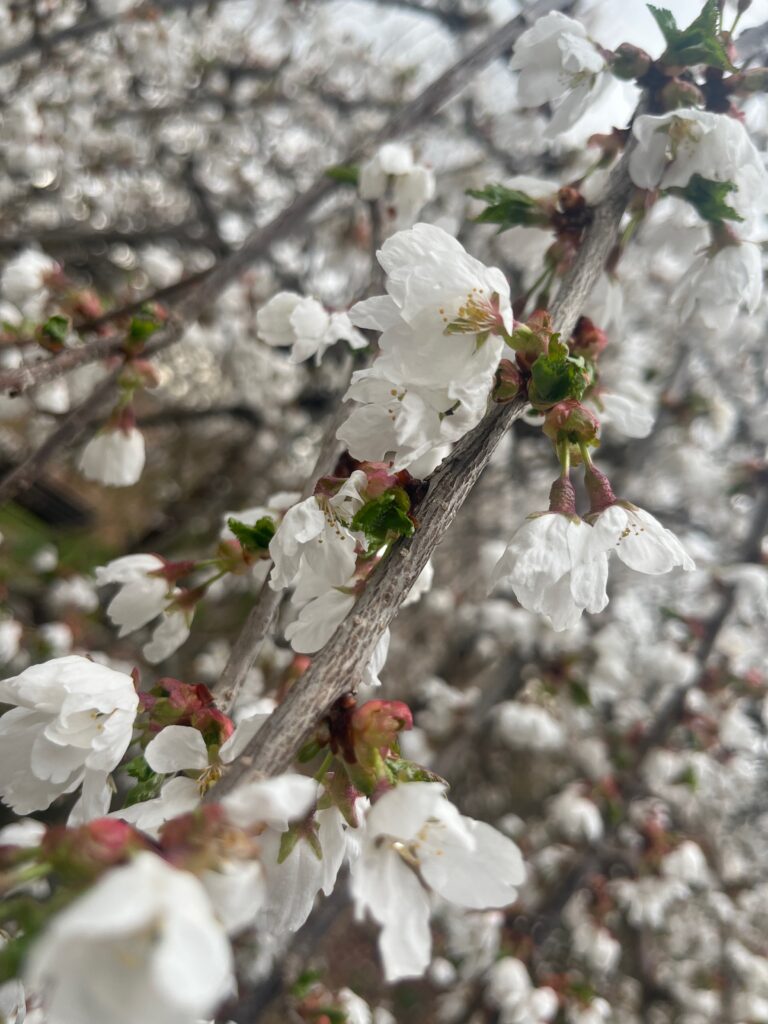
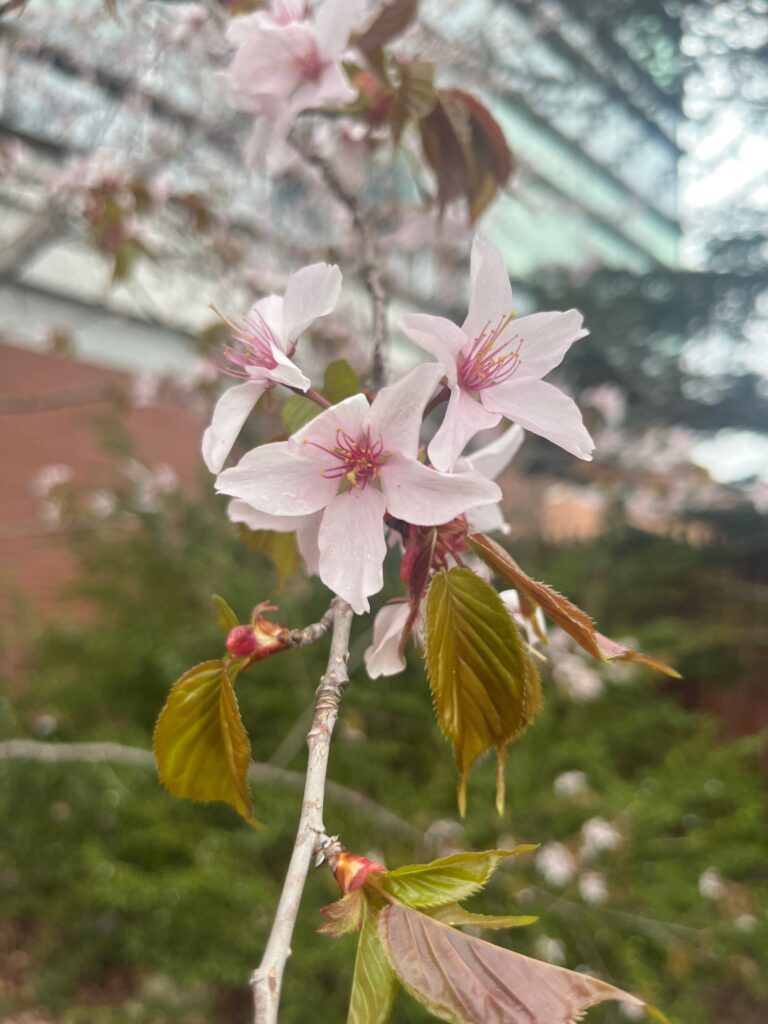
The challenge inspired me to do some ID-ing going about my day on campus as well, and I identified some of the cultivated plants that have started blooming in this warmer weather. In order from right to left and top to bottom, these are Magnolias, a Tulip, Weeping Cherry, and an Eastern Redbud.

In total, I identified 6 unique species and made 15 observations during the City Nature Challenge.

Exploring the iNaturalist site, I decided to look at my hometown’s input to the challenge. It was interesting to see that they had a lot of the same common species that we do in Burlington, like Garlic Mustard and Greater Celandine, though they didn’t have nearly as many birds observed. It makes sense, since there’s really only a handful of places where larger bird populations can live in NYC, but it’s not something I would’ve realized without looking at it for myself. I also looked at Hong Kong, where my dad is from. HK has a completely different climate, and its observed species clearly reflect that.

Above are a Chinese Hibiscus, Beautiful Bougainvillea and a Eurasian Tree Sparrow.


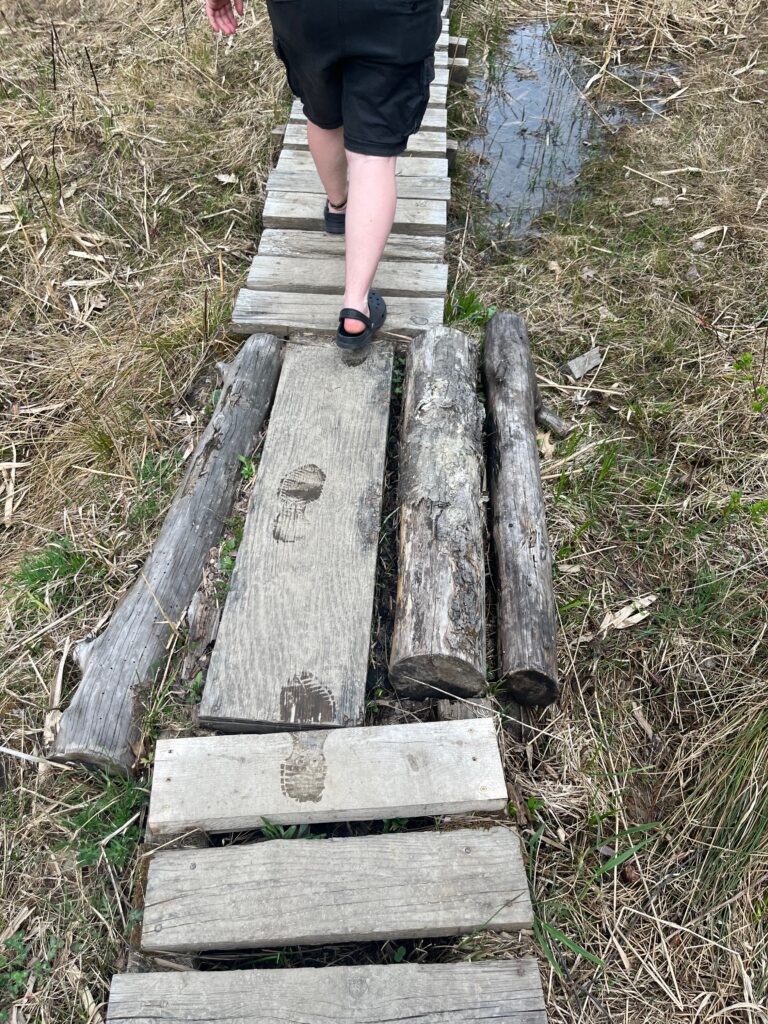
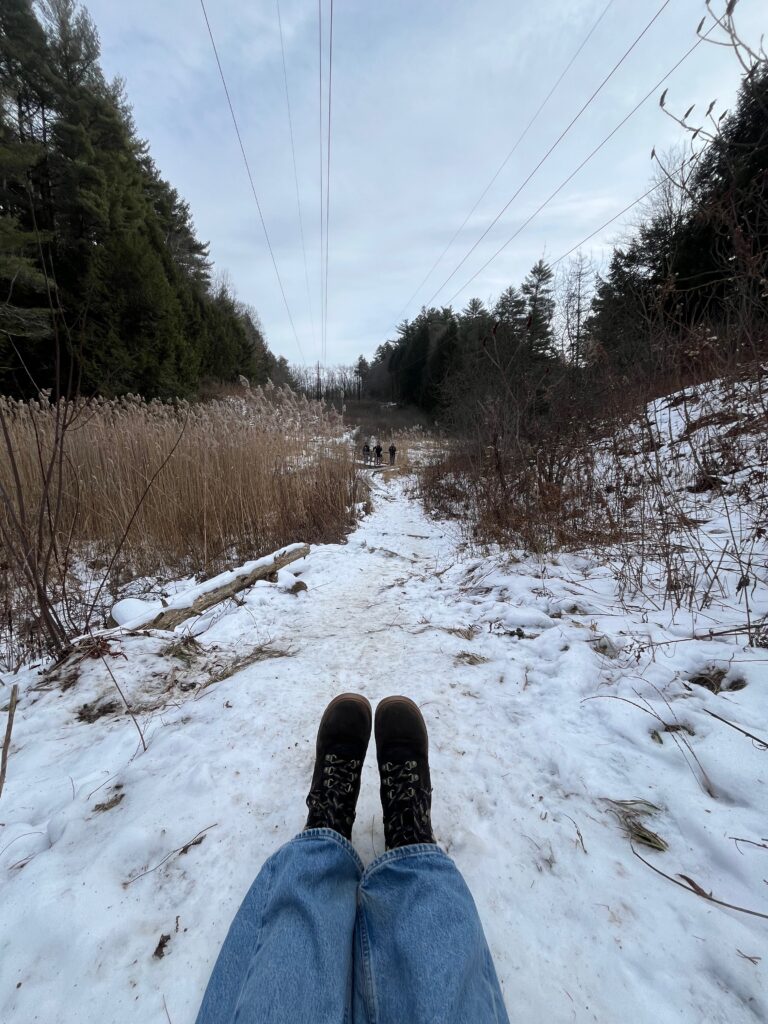
While there was a beautiful layer of snow on the ground at Beaver Way again this last visit, it had been sitting for a while and gotten quite difficult to traverse! The many slopes on the trail through Centennial were iced over and, as pictured above, I had to resort to some unconventional methods to get to my phenology spot.

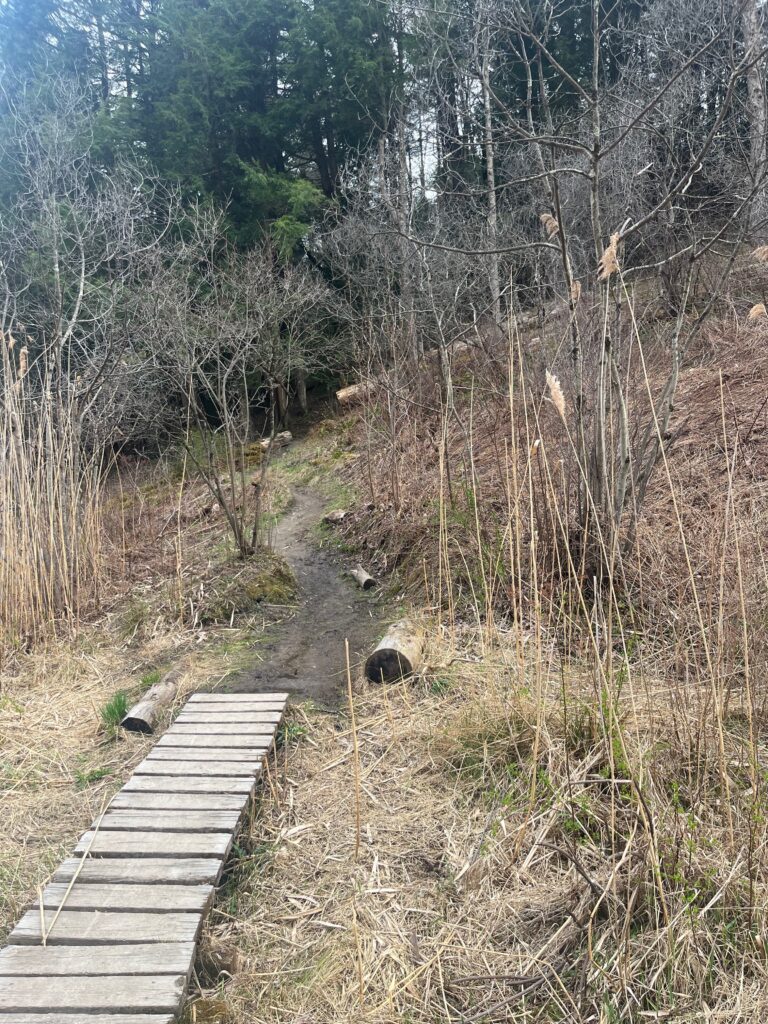
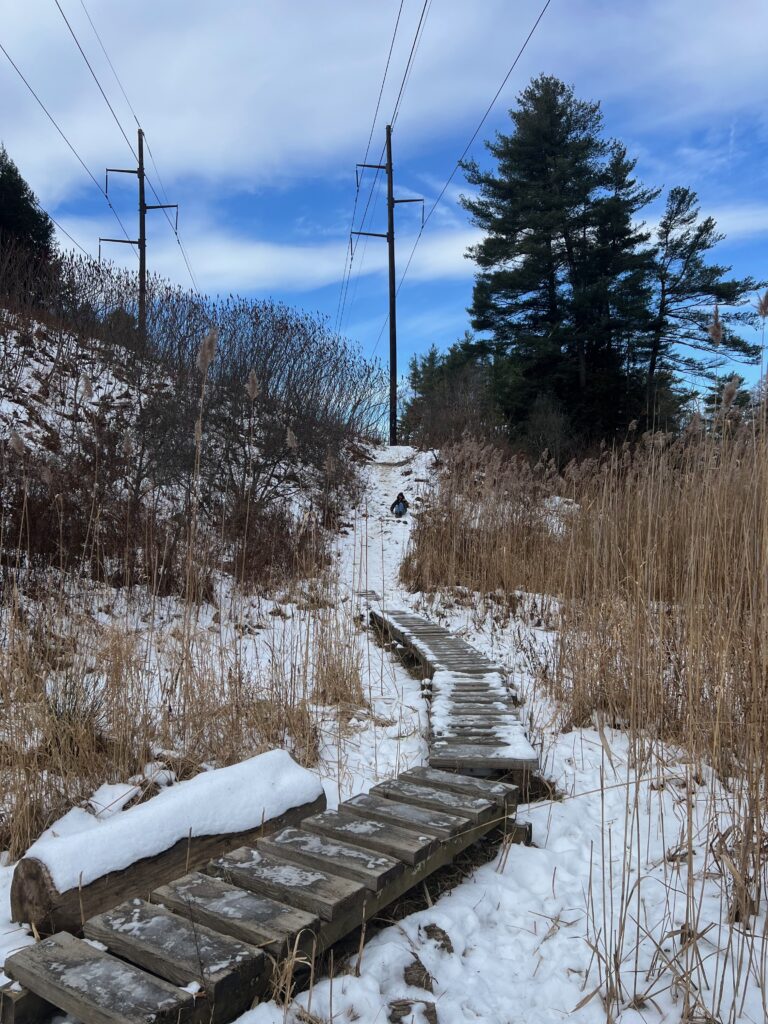
The defining intersection of the wooden paths at Beaver Way brought something to my attention: the condition of the surrounding reeds. Though they had been beige and dry for months already, they’d never been so damaged. I wonder only if their condition was due to heavy snow, wind, animals, or even humans.

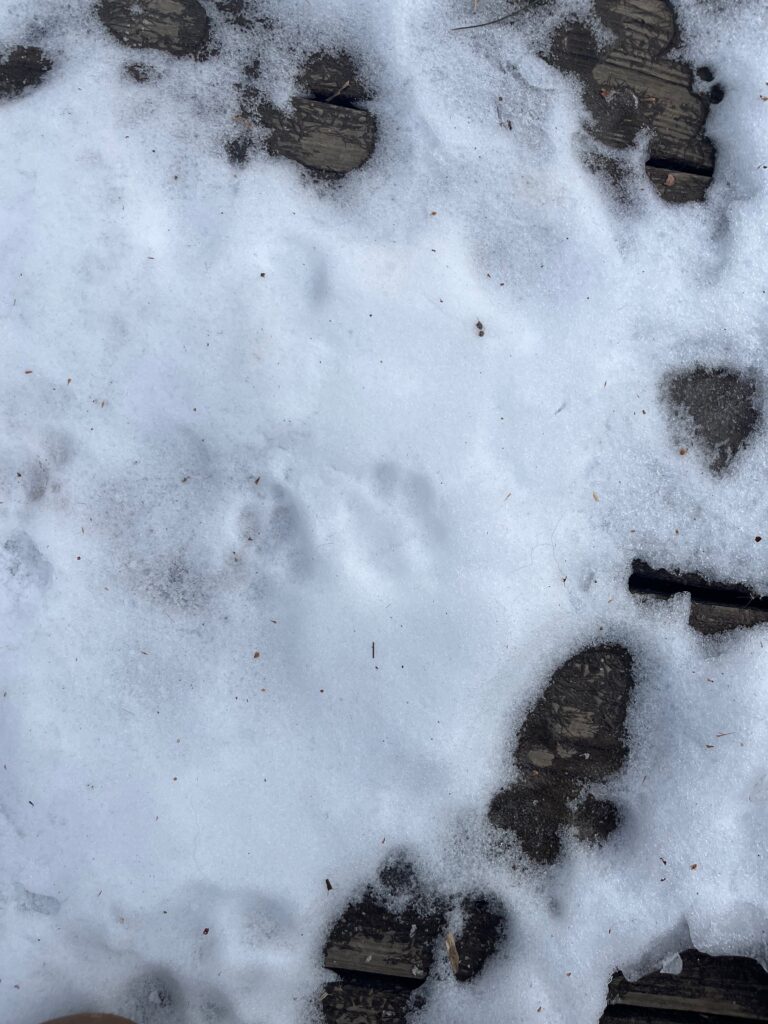
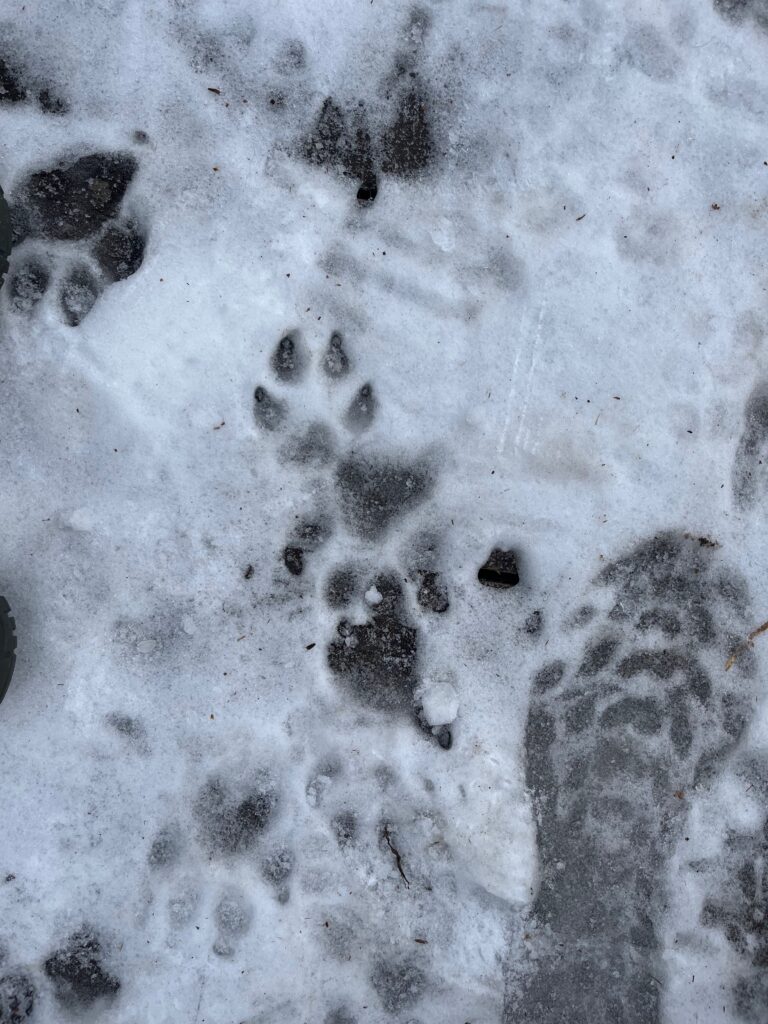
Despite the icy state of the snow, there were lots of tracks to be found littered around the bridge. While most seemed to belong to the dogs (and their humans) that frequent the trails of Centennial Woods, there were some that seemed a little more wild. The two smaller prints in the middle of the photo to the left and the nearly melted tracks going from the top right to the bottom middle, for example.


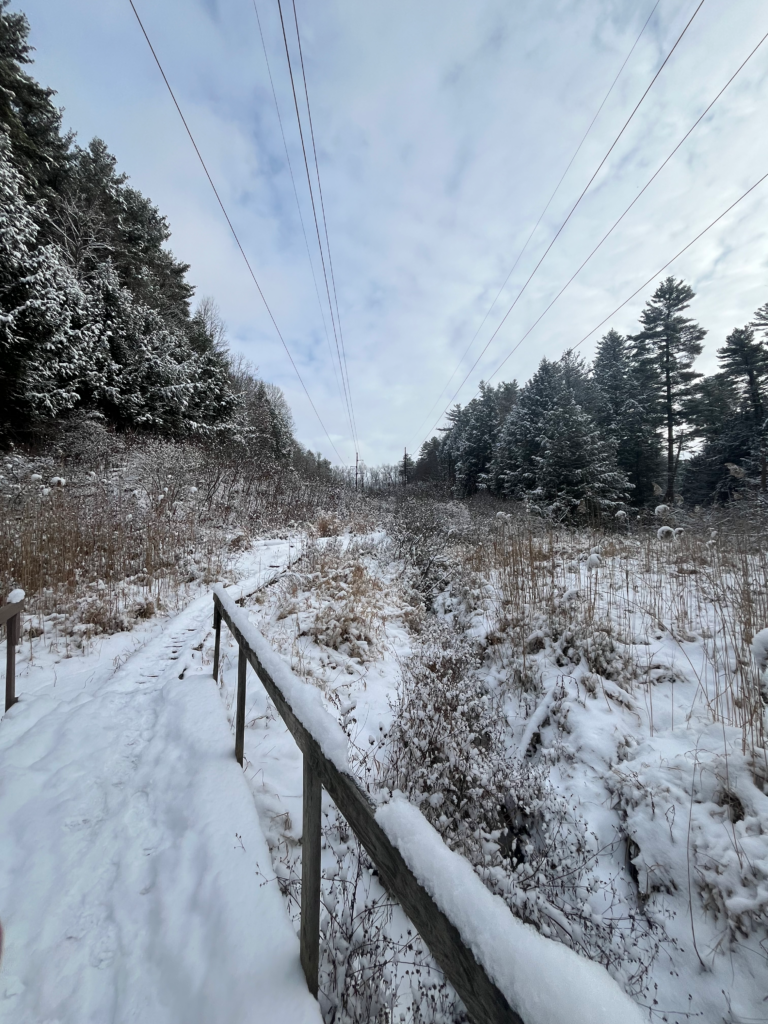
This latest visit to Beaver Way, I was lucky enough to experience a fresh coating of snow! With this winter weather came a slew of changes in the area’s foliage. The maples and barberries in the area had now dropped all of their leaves, though the bright red berries still clung to the otherwise bare branches on the barberry bushes. Meanwhile, the coniferous trees that line the very edges of the area were truly in their element, with snow atop each hunter green branch.

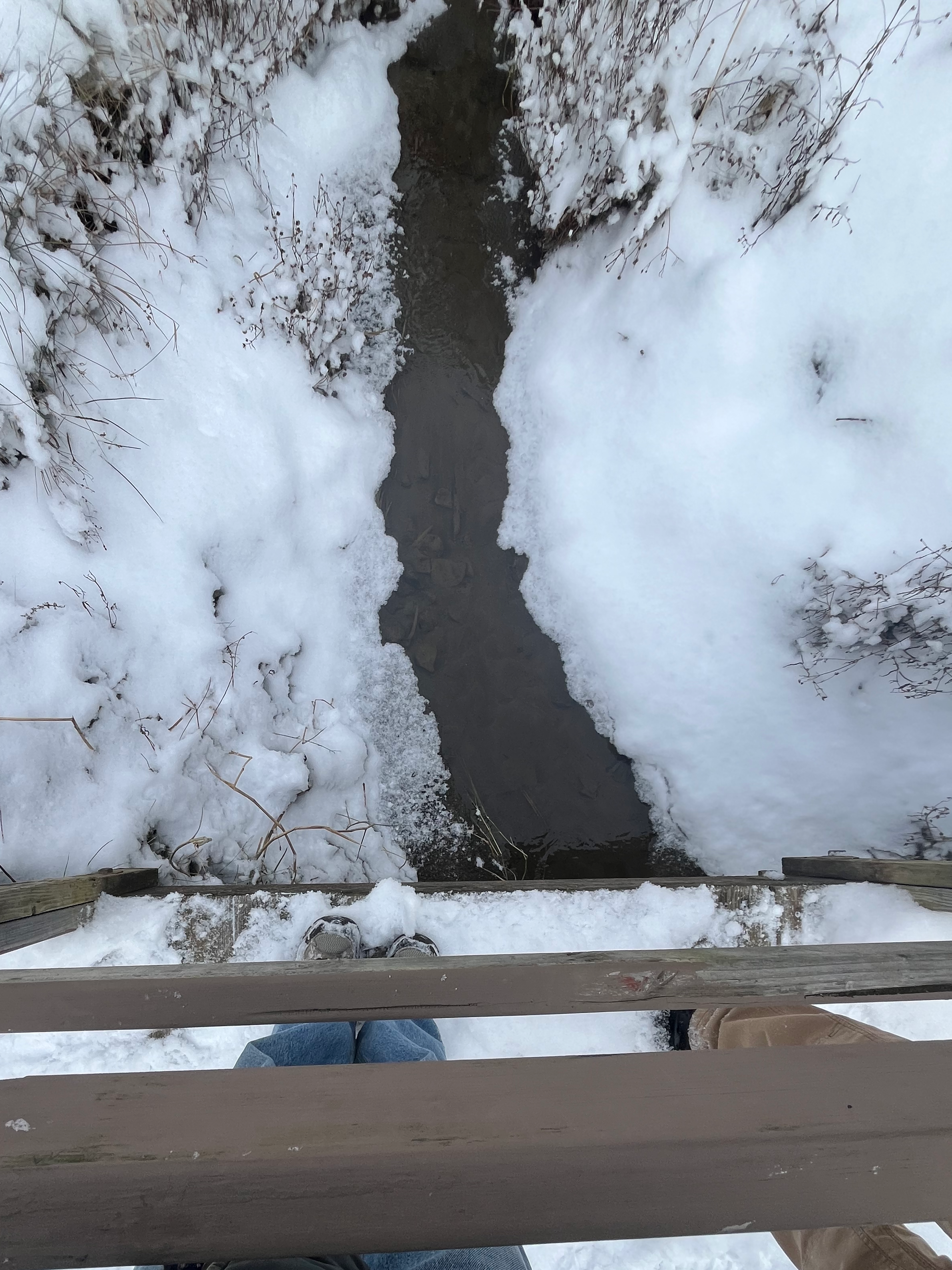
While the brook had not yet frozen over completely, it was interesting to see how the snowfall seemed to affect its meander. I assume that the water is significantly insulated by the snow, though not as much as it would be if it was covered by the ice.

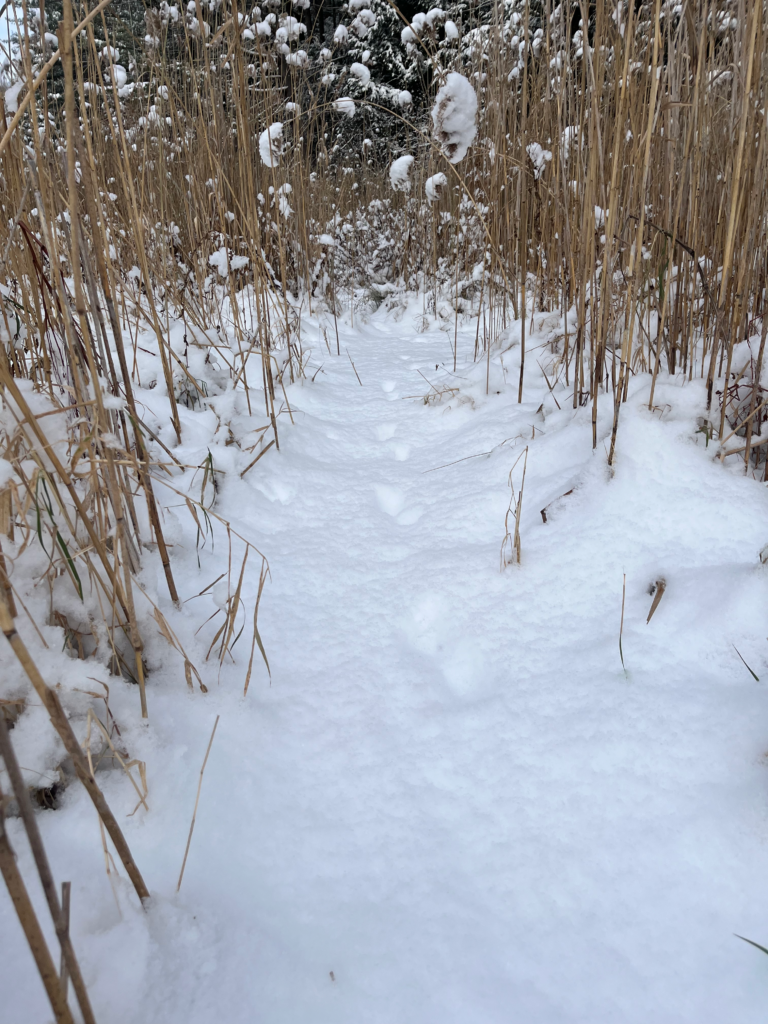
Along with the usual birdsong that filters through the trees, I noticed a small trail of prints. It was difficult to tell with the snow still coming down and covering up some of the fresh indentation, but I believe that these could be hare tracks.

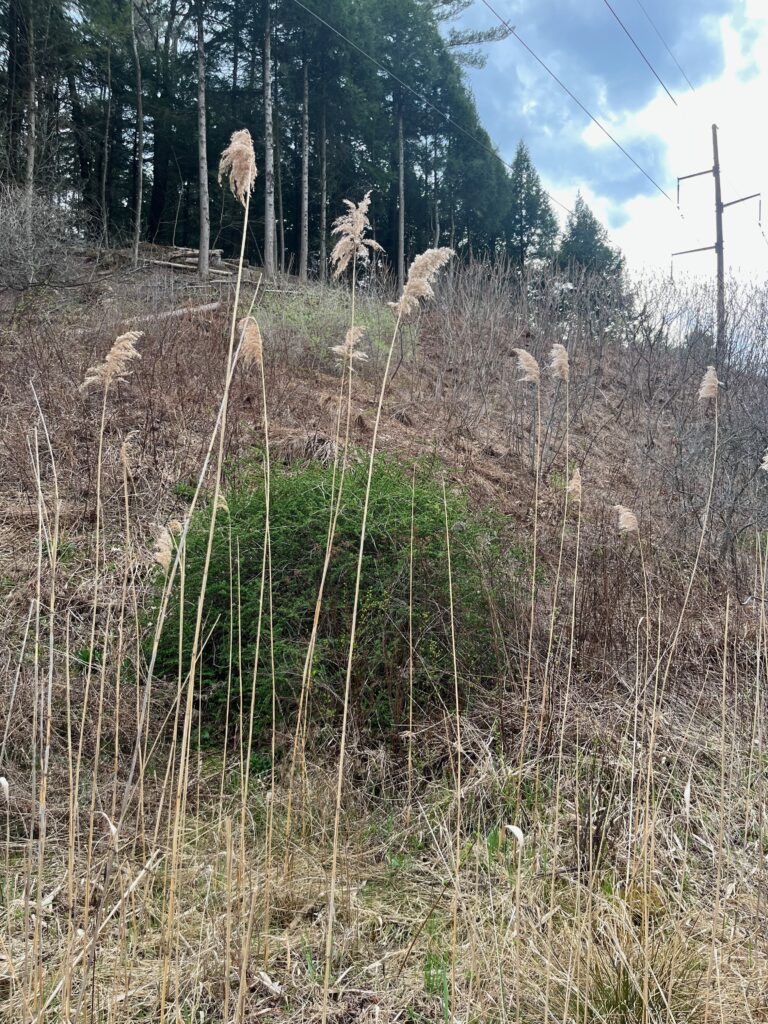
Visible in this photo to the right are also the above-ground remnants of the common reed that borders Centennial Brook. Every stalk has begun to dry out and decompose in the cold, but many will remain dormant under the soil until the Spring.

Beaver Way will now always be near and dear to me as a place to reflect and find comfort in nature so close to campus. Getting to see it change through Fall and Winter and getting to visit it both alone and with friends has been one of my favorite experiences this semester, and I’m truly looking forward to continuing it through all of freshman year. Next semester, I hope to be able to hone in on some more specific changes in the plants. The life cycle of the reeds—which a friend has recently informed me is the invasive phragmites australis—in particular would be interesting to see. I’d also love to find more evidence of the namesake beavers that are so essential to the area.


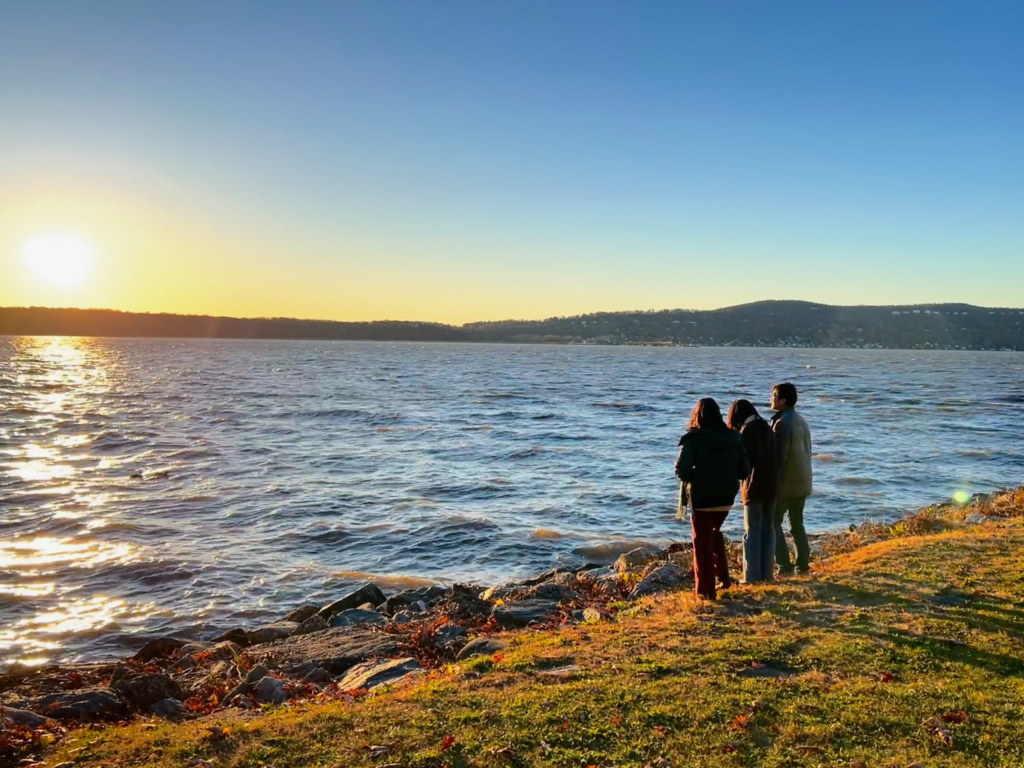
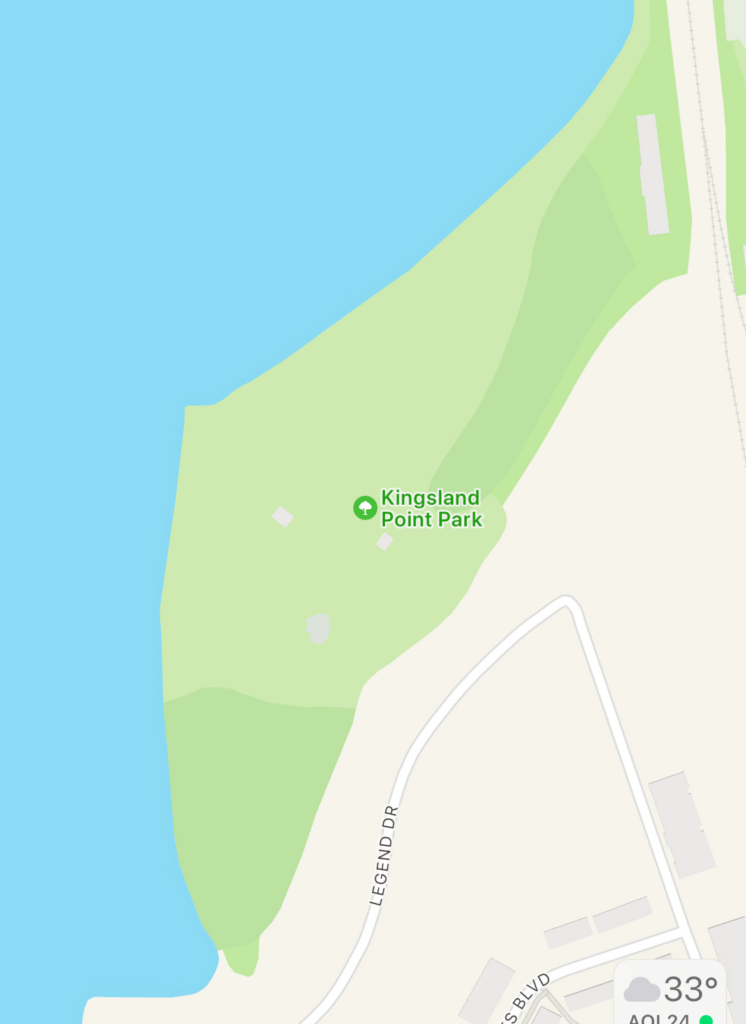
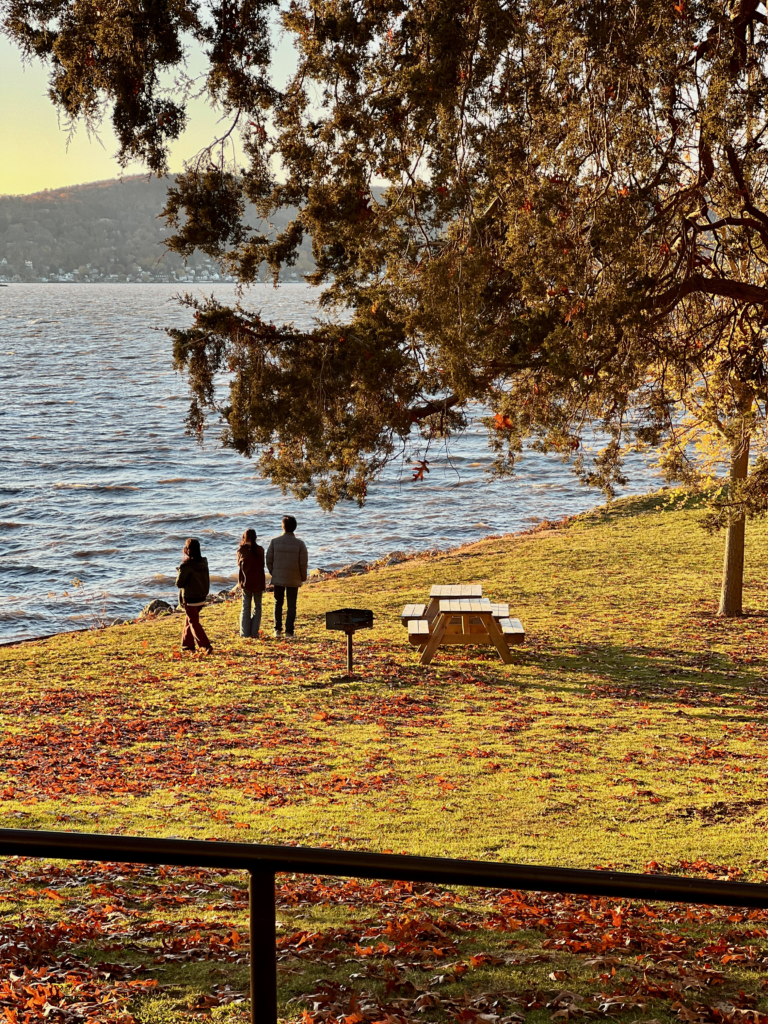
When I went home over Thanksgiving break, my family and I took a day trip to Tarrytown upstate and visited Kingsland Point Park. It’s not entirely natural, but the water and mountains in the distance gives it a sense of serenity and isolation amongst the developed town that houses it. The park is bordered by the Hudson River, which is shown in video to the left. The way the light reflected off the water as the waves lapped against the shore was stunning! Overall a wonderful reminder of the natural beauty in New York.

This park is hugely different from Beaver Way, which is part of why I chose it. First, Hudson River is considerably bigger than Centennial Brook. I would say that it is actually the main focus of the area, whereas the plants and trees of Beaver Way are the main focus. Kingsland is much more open with short, neat grasses dominating the land. As visible in the above images, there are oak and cedar trees scattered through the park, but they’re a little more sparse at the water’s edge. Meanwhile, Beaver Way is covered in tall reeds and a variety of trees.


On this visit to Beaver Way, the temperature had dropped almost 10° from the last time I’d been, and the flora in the area clearly reflected the change in weather. Most noticeably, the reeds bordering the brook lost a significant amount of the green coloring that made the water’s edge so colorful before. Many have dried into a light tan color. The trees along the path leading up and to the right have also began to change into a more distinct red color.

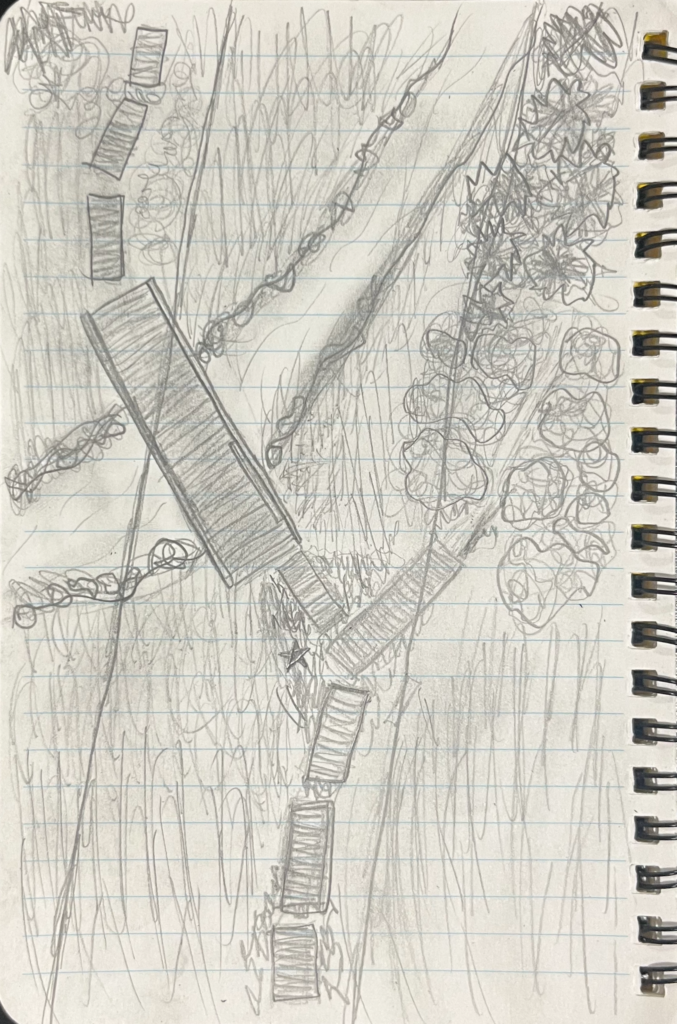
Drawing my spot from a bird’s eye view was a bit of a challenge for me, as there’s so many angles and details to capture on Beaver Way. Defining the areas where the changes from the common reed around the river bed to the deciduous trees a little farther down to the coniferous trees at the very edges of my area was particularly difficult, for example.

Interestingly, the most noticeable details on this map—the two wires that run top to bottom—are the least noticeable in person. I only remembered to add it in as I was walking away and the towering poles in the distance reminded me of the wires’ existence.


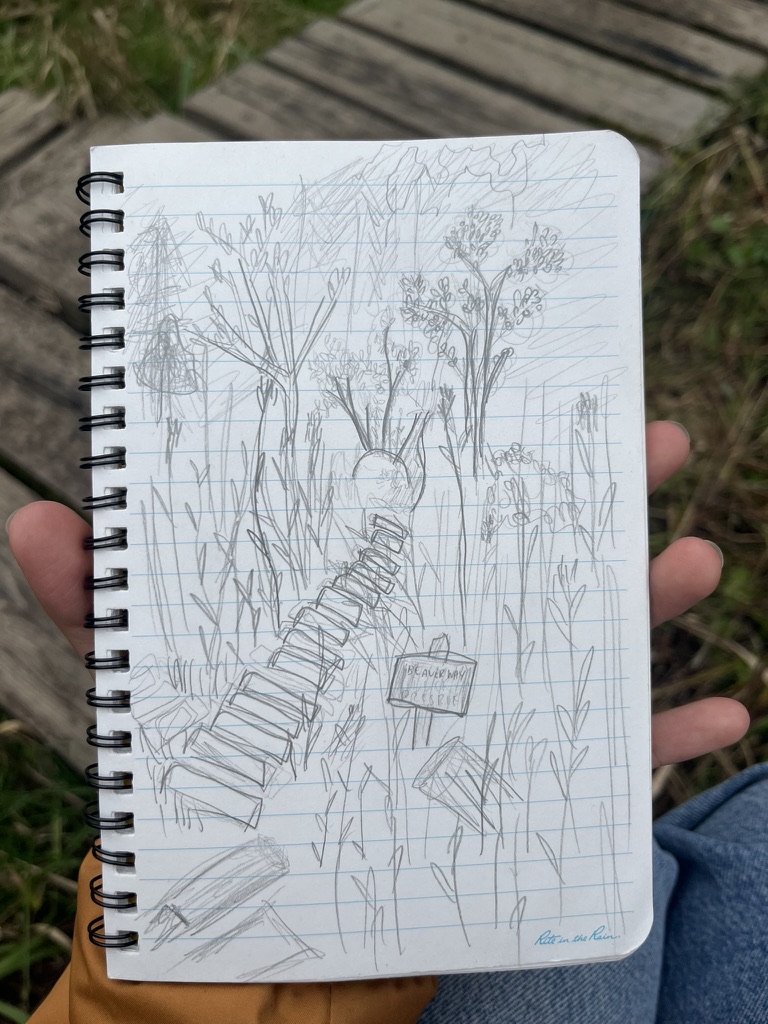
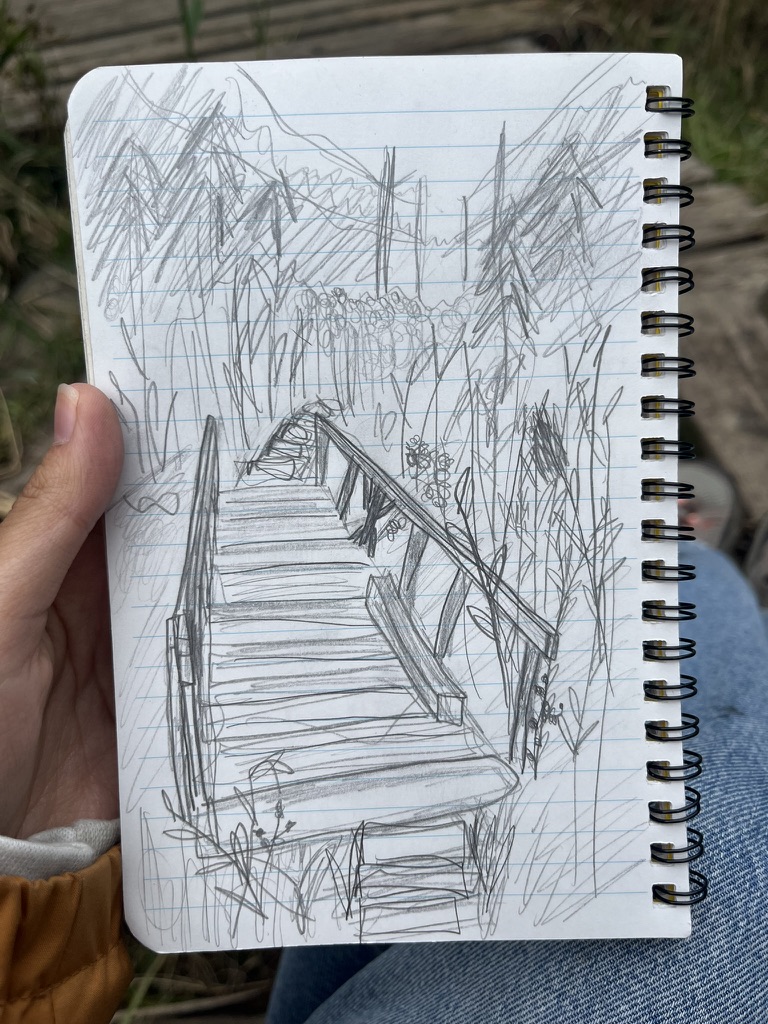
On my first visit to Beaver Way, I took some time to sit and draw the scenery, trying to internalize my surroundings by putting them to paper. I noticed details that I wouldn’t have without drawing it, like the parting of the forest around the telephone (or perhaps electrical) lines, or the change from deciduous to evergreen in the trees as you look far beyond the immediate vegetation.

Above is a short sample of audio from the area on 10/10/24, when it was lightly drizzling. Though I can not yet identify them, there are three distinct birdsongs audible!


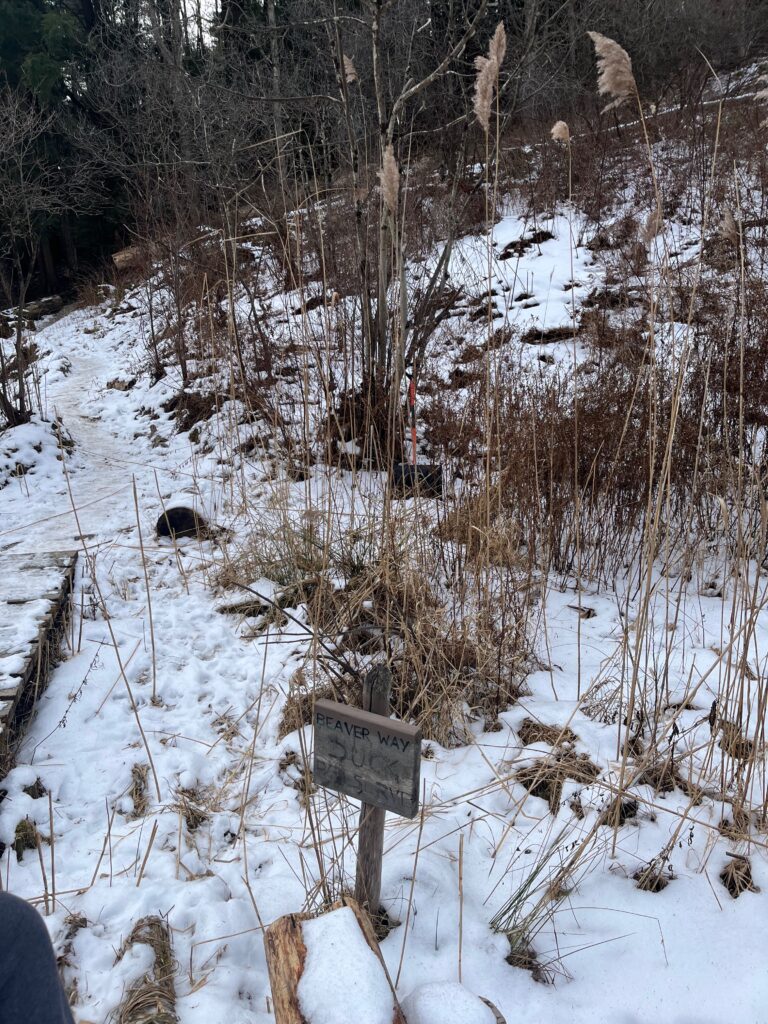
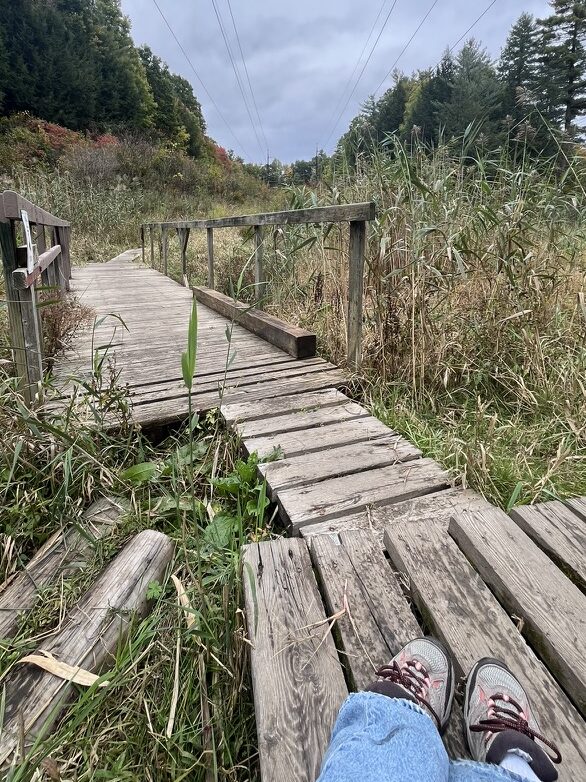
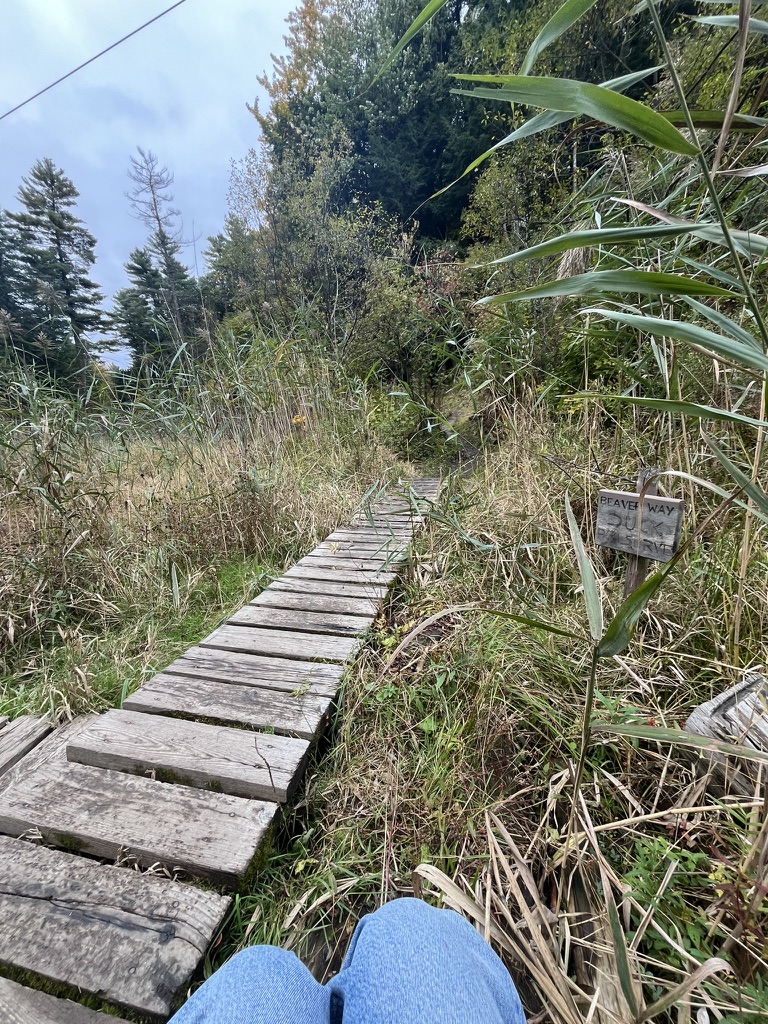
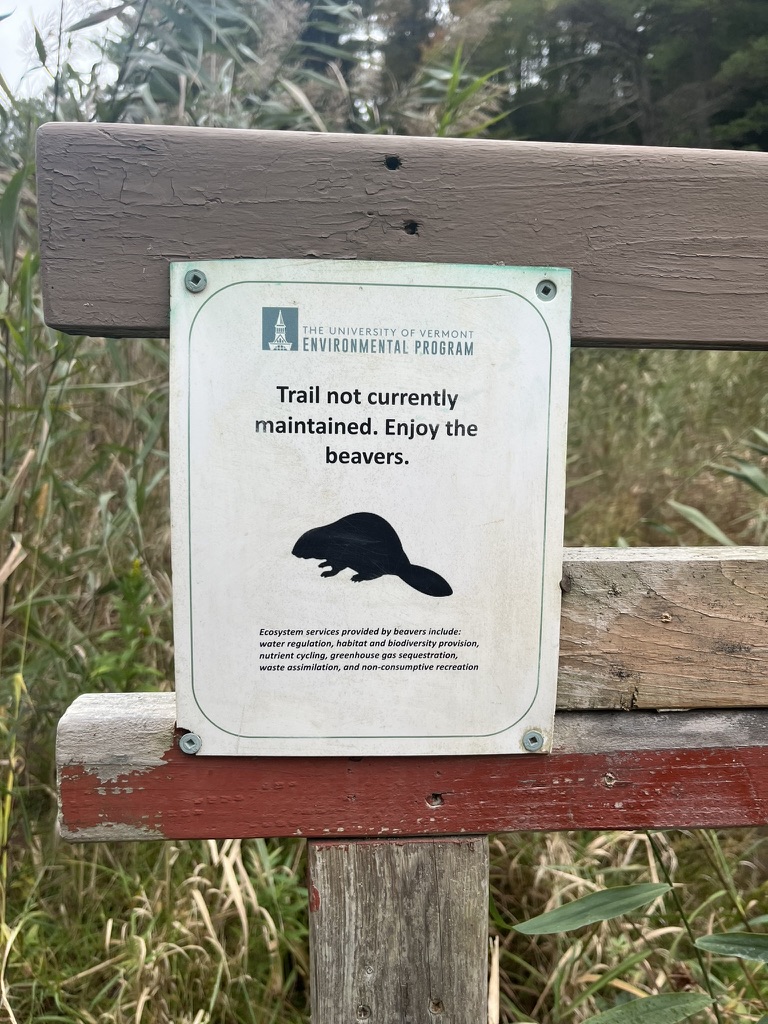
I chose ‘Beaver Way‘ in Centennial Woods for my Phenology project. I originally decided upon this location just by wandering the trails through the woods until I came upon an area that would be easy to identify again. The footbridge and “Beaver Way” sign immediately caught my attention as a site where there was visible human intervention. Upon further inspection, I noticed a sign (pictured on the right) that quite contradicted my original assumption. This bridge is supposedly not evidence of human intervention, but of yielding control to nature—beavers specifically. I’m interested in how the presence of beavers here will impact the stream and riparian zone surrounding it.

The path I took to the bridge is shown in orange, following a human-made trail through the woods.

Vegetation in the area:

Above is a short video showing the full landscape of ‘Beaver Way’.


Skip to toolbar