Click here to find the link to the google maps on my site!
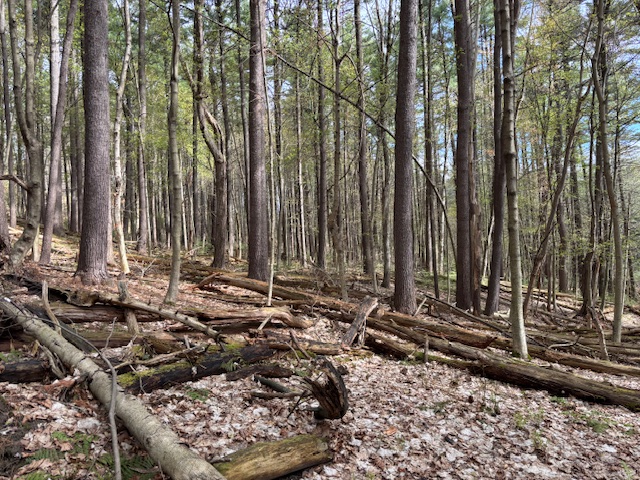
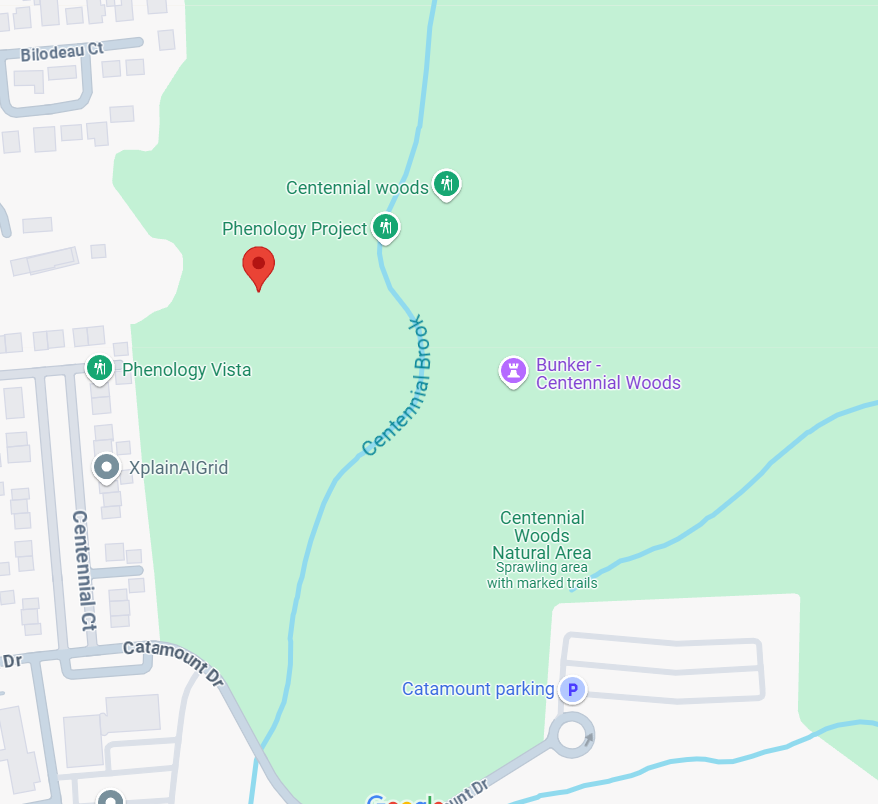
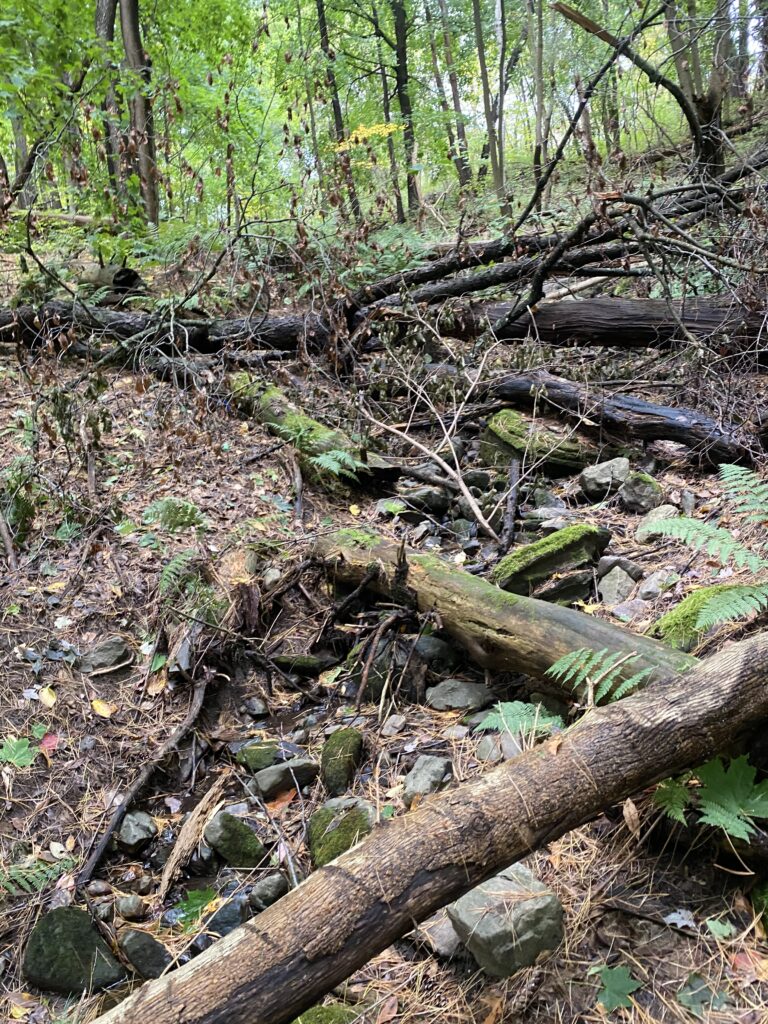
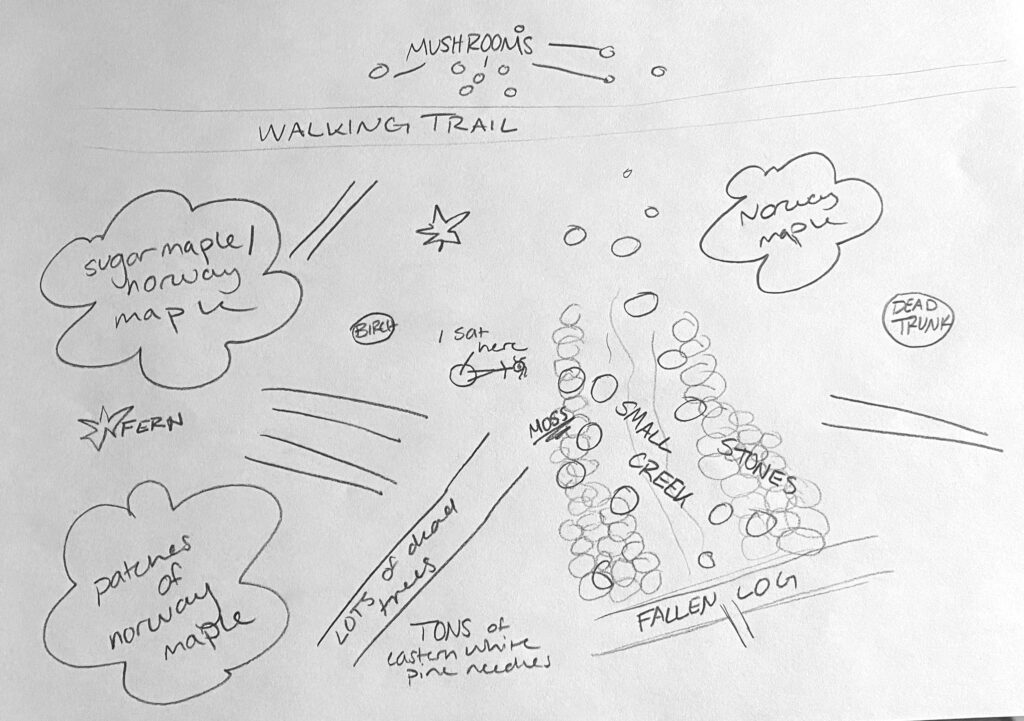
My site is in UVM’s very own Centennial Woods!! It is slightly offset from Centennial Brook, in hopes of finding lots of biodiversity, and only a ~20 minute walk into the main trail for accessibility in all seasons. It is slightly uphill with a fair number of tall trees, and besides a few fallen trees, a fairly clear ground with not much undergrowth. I assumed by the brook there would be a lot of mushrooms because of the moister environment, but there were actually less than I had observed on the original trail. This may have been because the downhill caused the water to fall away from my site more than I realized.
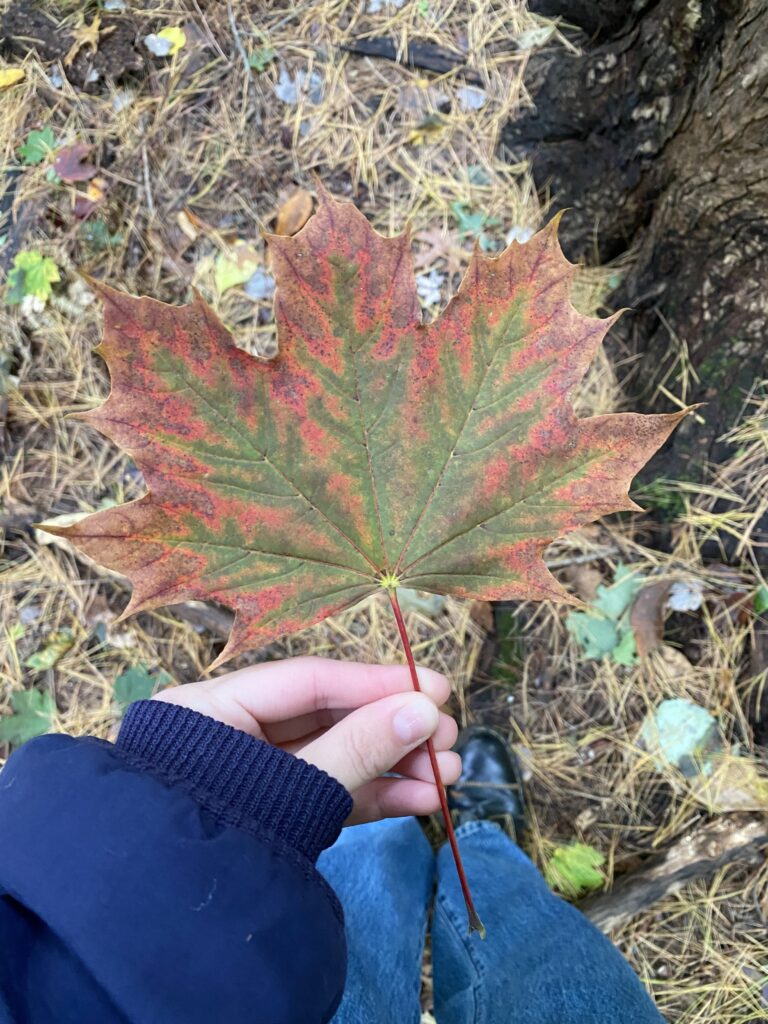
By far the most common tree species in my site were Sugar Maple and Norway Maple. There was an abundance of Eastern White Pine needles on the ground, but no big trees in my area. There were some ferns on the ground, but not nearly as many as some other places in Centennial Woods. There was the occasional Green Ash and Birch, but other than that, the area was dominated by Maples.
Beautiful Norway Maple Leaf!!!
Entry for 11/4
After visiting in early November, it was apparent that peak time for fall had passed as every tree had lost almost all of its leaves, causing there to be a thick layer of damp organic material across the ground. Although the trees had lost their leaves, most of the ferns were still there and I had seen a slight increase in the number of mushrooms. It had rained the previous night which would help explain the damp environment and slightly fuller brook than last time. When sitting, I could hear a very faint sound of water; rustling due to the stronger winds; and most noticeably, it was colder than the last time I was there. Similar to last time though, there was an abundance of Eastern White Pine needles on the ground: yellow in color and accompanied by their long pinecone counterparts.
Entry for 12/2
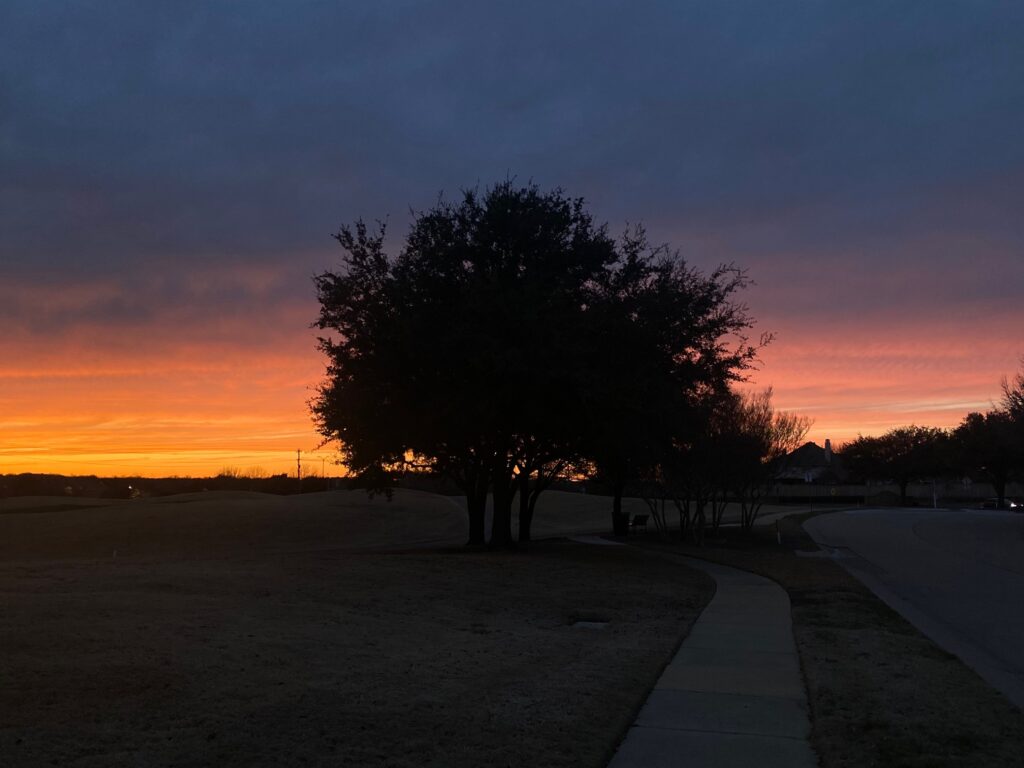
Over break I went back home to McKinney, Texas which is essentially the most suburban place there ever was located in Northeast Texas. There is not much accessible nature by where I am from, and absolutely none that is untouched. Everything is very highly regulated to be orderly and is geared to be comfortable for the people living there. Much of my city’s approach to nature- from my perspective at least- is that people come first and the nature is supposed to adapt to our desires. For example, the biggest “field” that’s even remotely near my house (and my Phenology site) is a golf course and, compared to my Centennial Woods Phenology site, it is so barren, has very low biodiversity, is not a good habitat for many animals to live, it is overrun with people, and the chemicals used there have very harsh impacts on ecosystems all around. The concrete ocean that surrounds it allows excess nutrients to run off for miles hurting every plant and animal it encounters.
Compared to Burlington, the trees are very few and far between and they are all the same species. The grass is cut very short and there is absolutely no O layer. On the other hand though, both locations are quite hilly, even though the hills on the golf course are manmade.
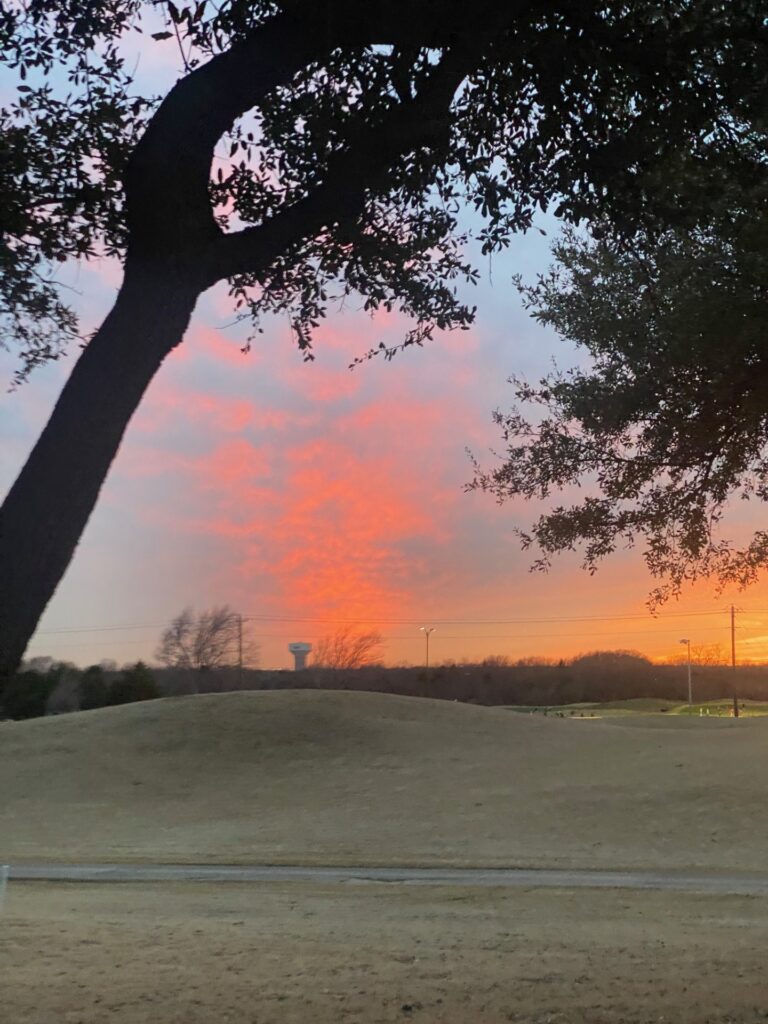
Entry for 12/8
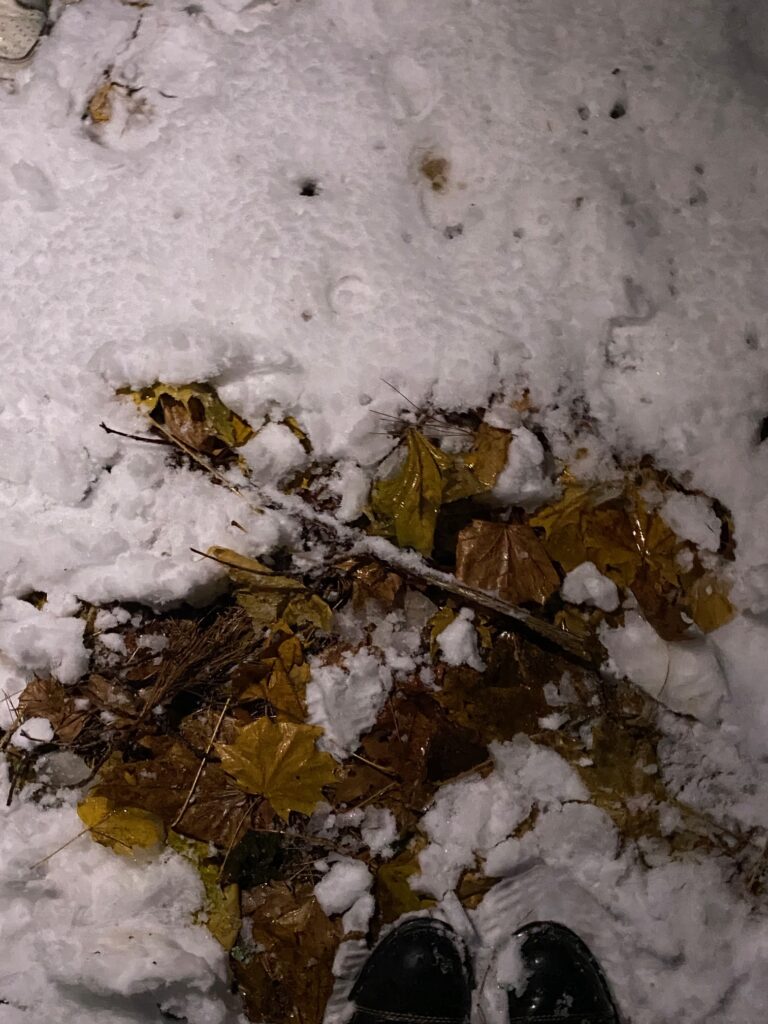
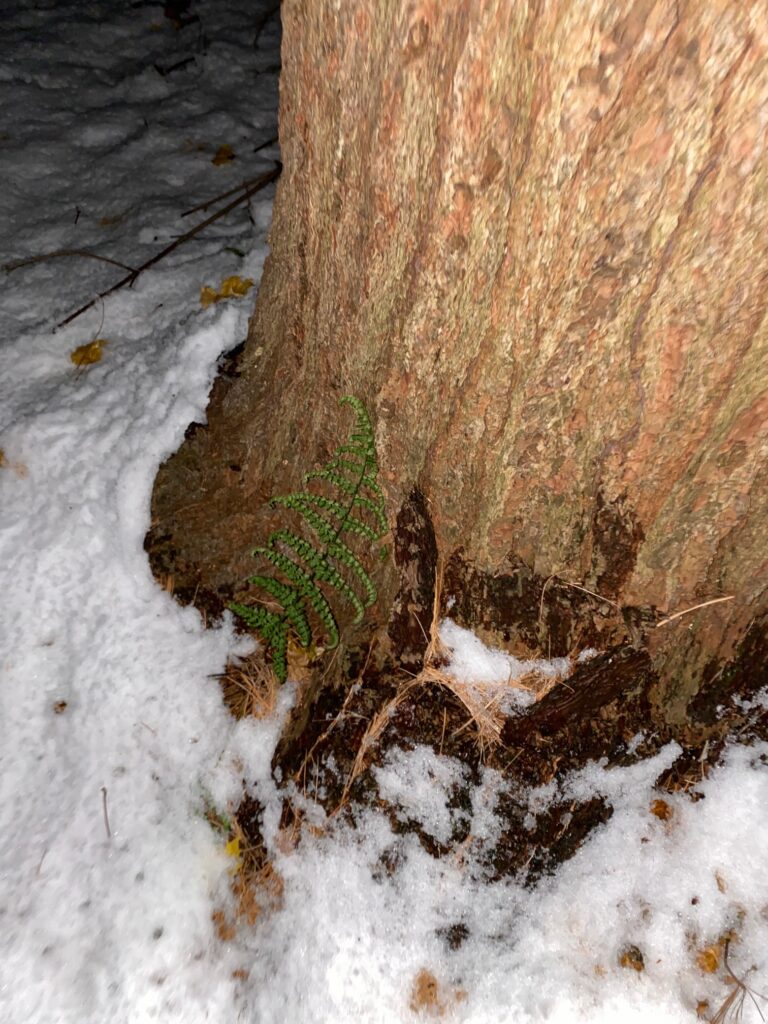
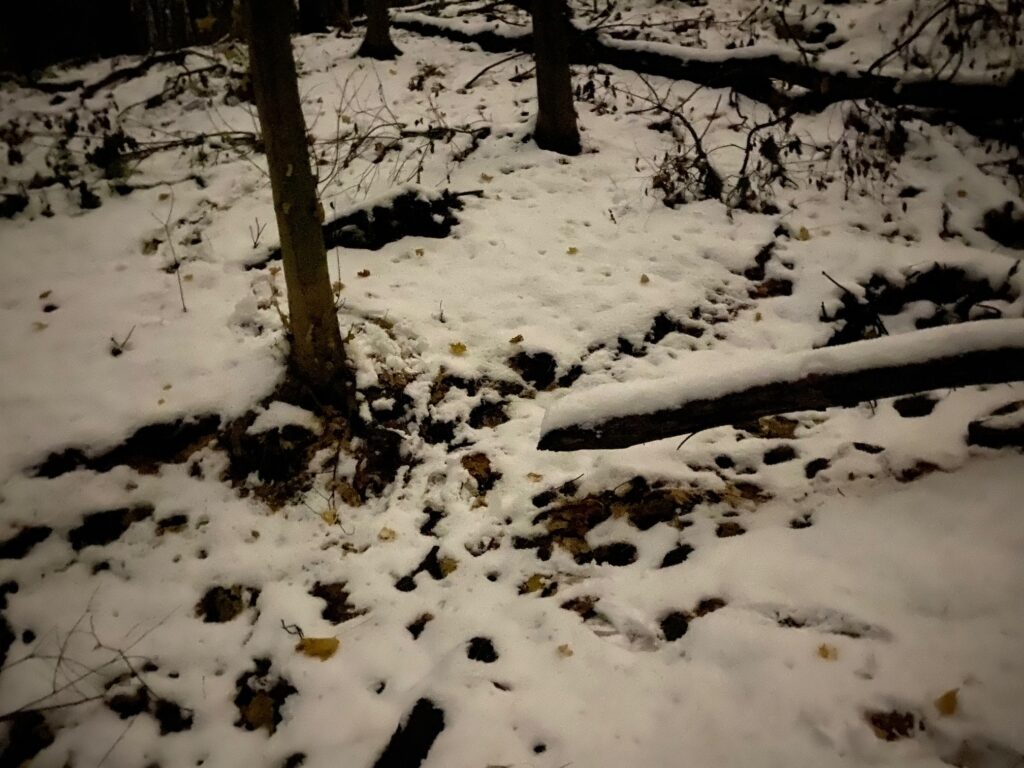
One of the most notable changes I observed since I was last at my spot in Burlington was the very-hard-to-miss layer of snow that covered everything. It was quite cold and dusk when I went, but if anything this only made my site more beautiful. There were some Eastern White Pines with their needles still attached, and another tree species that was so tall I could not tell what it was, but all in all, every maple and beech had lost all of its leaves due to the severity of the cold and wind. One interesting thing I had not first observed upon entering the woods (and one thing I didn’t know because I grew up in a place without any snow ever) was how when I kick the couple of inches of snow aside on the ground it reveals a perfect preserved O layer of damp leaves, needles, grasses, and decomposing matter. This was very cool to see the application of how decomposition freezes during winter pausing nutrient flow, and will likely pick up again once the snow melts.
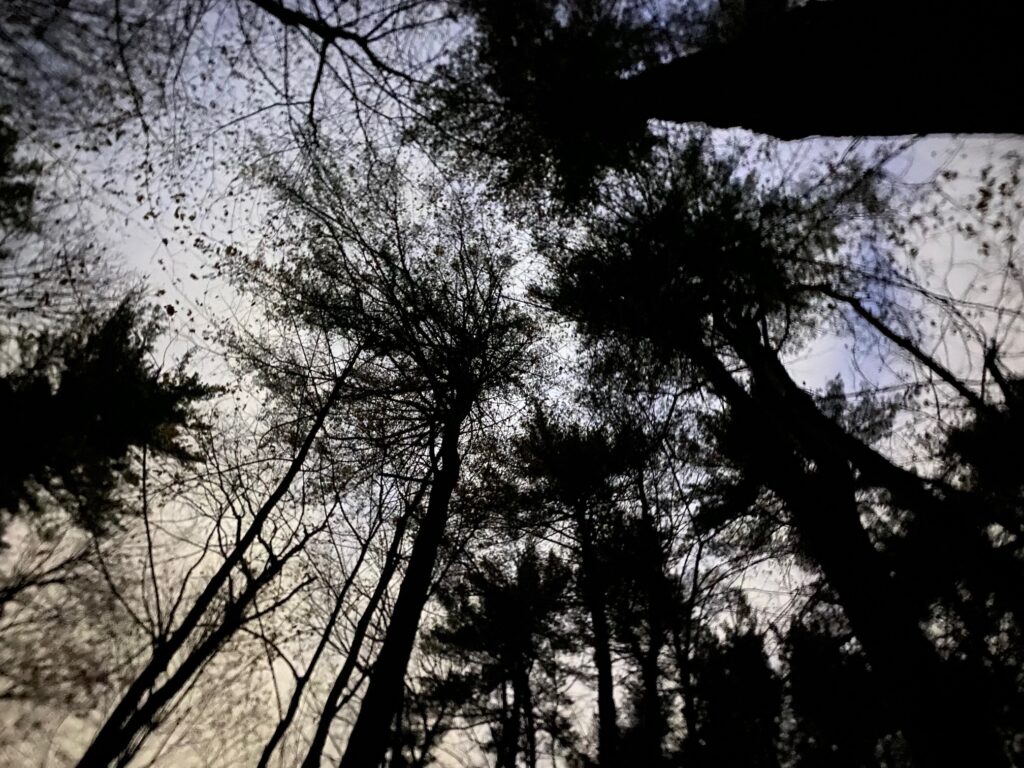
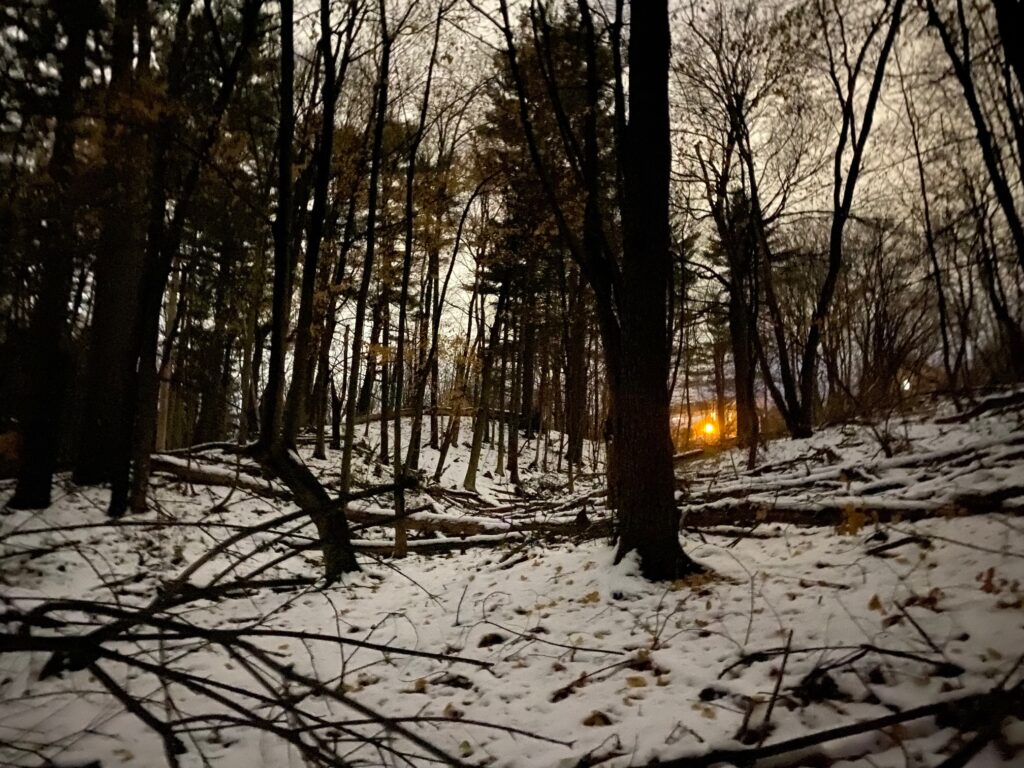
There were a significant number of trees that had fallen down since I had last been there which made me wonder if a storm had done that. I know there were strong winds with the first snow, but I was unable to tell. I also observed a birds nest!! So there were still signs of wildlife all though I saw no tracks for bigger animals. One thing that greatly surprised me was how many ferns I saw, many of them sporing and seemingly thriving in the freezing winter regardless of their fragile appearance.

As a whole, I enjoyed this assignment immensely! Seeing the changes within seasons was so beautiful and with the assignment requiring me to return to the same spot repeatedly, I became much more connected with it. I do know that exploring nature is beautiful and fun, but I sometimes forget how meaningful it is to establish a connection and routine with a place so intricate.
The New Year :))
Entry for 1/27
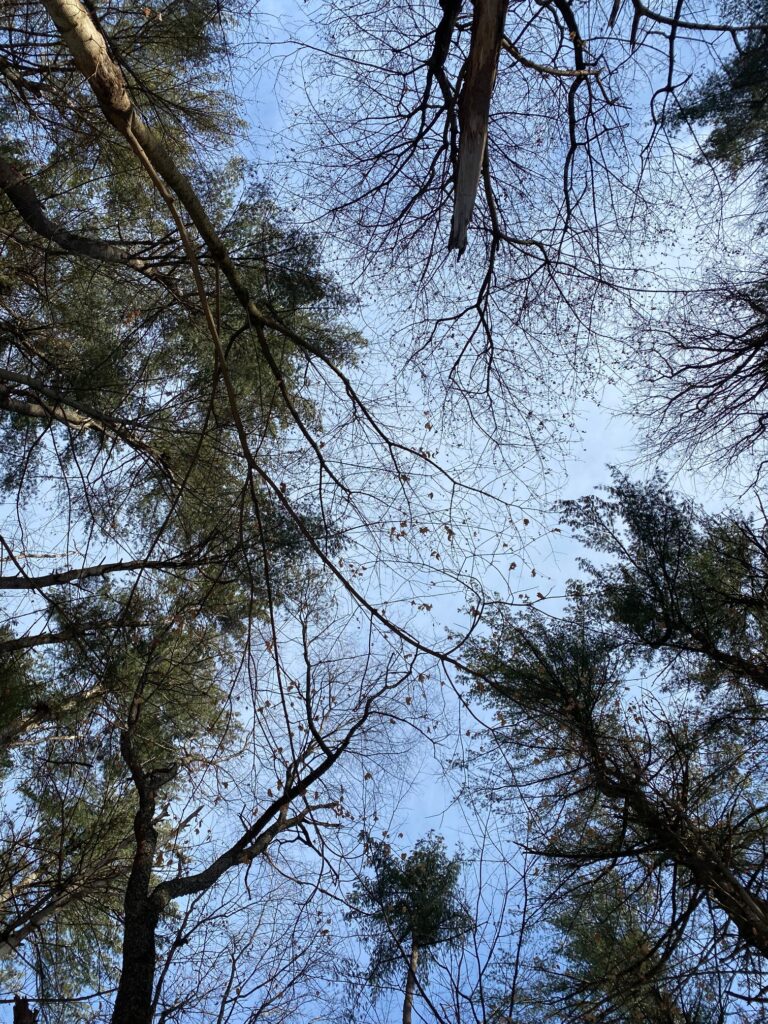
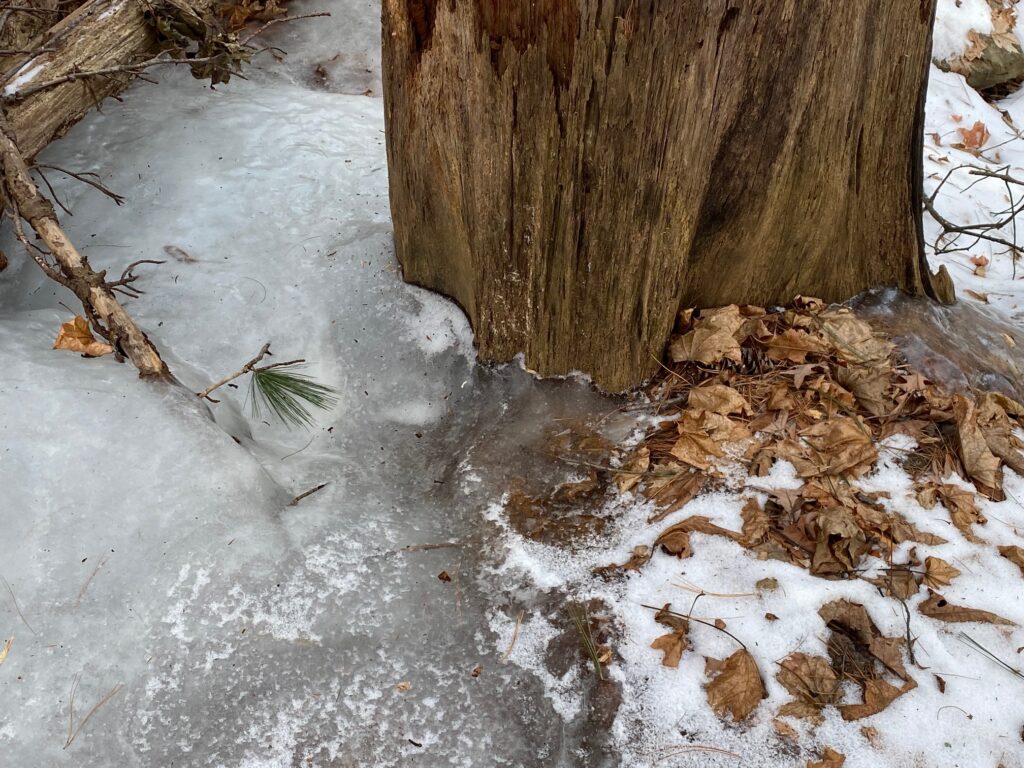
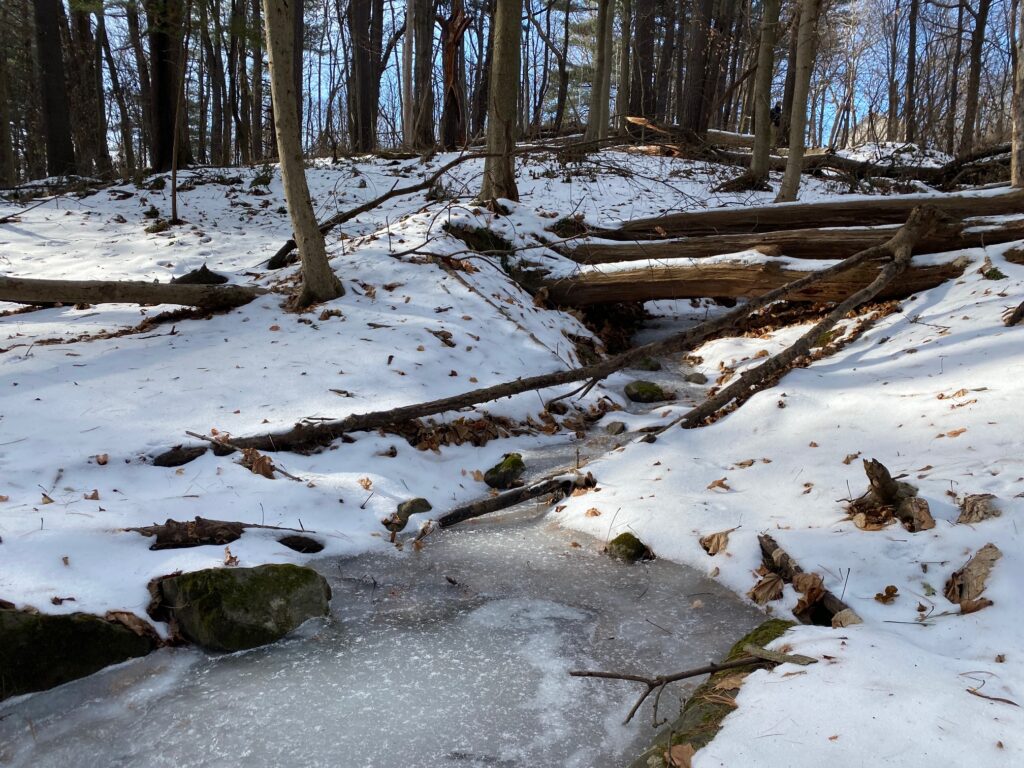
For the second semester of the Phenology assignment I decided to stick with my same location in Centennial Woods to be able to really get a feeling for the way nature is affected by the seasons. Last time I visited, in December, everything was wet as there hadn’t been much of a consistent freeze, just some snow, but due to the month long below-freeing temperatures since then, all moisture had solidified so it was surprisingly dry. As a major example, the Centennial Brook was completely frozen over in a beautiful fabric-like flow. All of the ferns that had been existing were now very dead and the only trees that had any green on them still were the very tall Eastern White Pines.
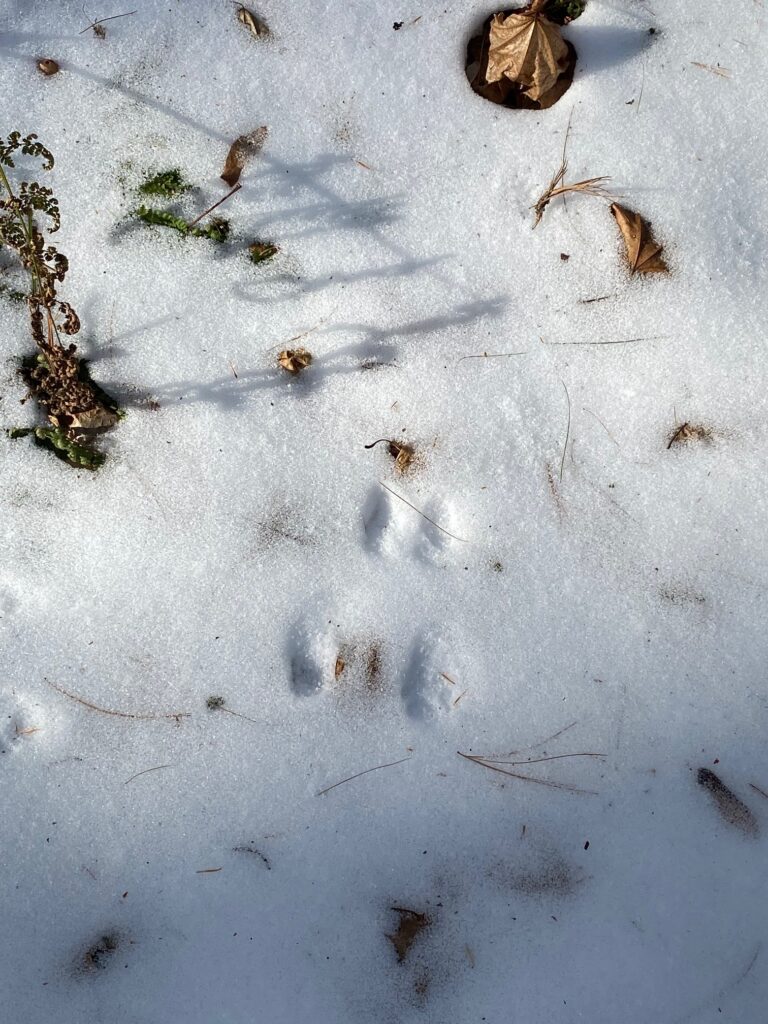
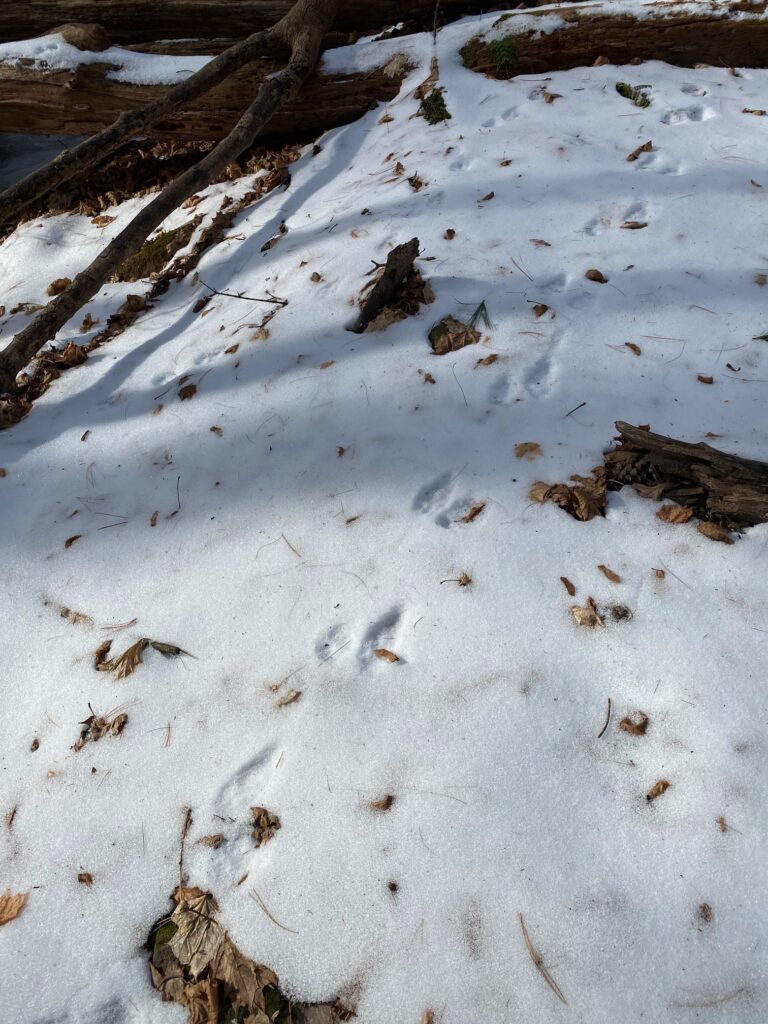
Another focus of this visit was observing the animal tracks left behind by wandering creatures. I was able to recognize the rabbit’s tracks, and I think I may have seen a dogs, but I was left stumped on a few others. It was very cool to be able to see where they came from and where they were going immortalized in the snow, a luxury we do not have during the other seasons.

Entry for 2/23
This was a cool phenology assignment because it allowed me to venture beyond my usual spot in Centennial Woods. It’s easy to picture all the animals that created the tracks I find in the woods, but its much different to picture them out and about in the middle of a walking path down by the water right near where hundreds of people spend their afternoons. I suppose I’d only have to be in the right place at the right time to see some of these magnificent creatures, which was a really beautiful thought and encouraged me to rethink about all the paths I take and those that have walked there before me; human and not.
I was exploring the waterfront of Burlington with Ben Deitrich (he posted half our sightings, and I posted half) and we suspect that we found a Bobcat, Jackrabbit, Moose, Crow, Deer, and a Mouse. I’ve gotten more used to the iNaturalist app as well, and have started looking at what other students have found around my area. It is a really great tool for documentation and bringing a community together under a common interest/passion. As for the tracks, we were a bit uncertain about the Moose in particular because it would be hard to imagine such a massive creature roaming such a populated part of Burlington so far from any true habitat, but the tracks look so similar that we were stumped.
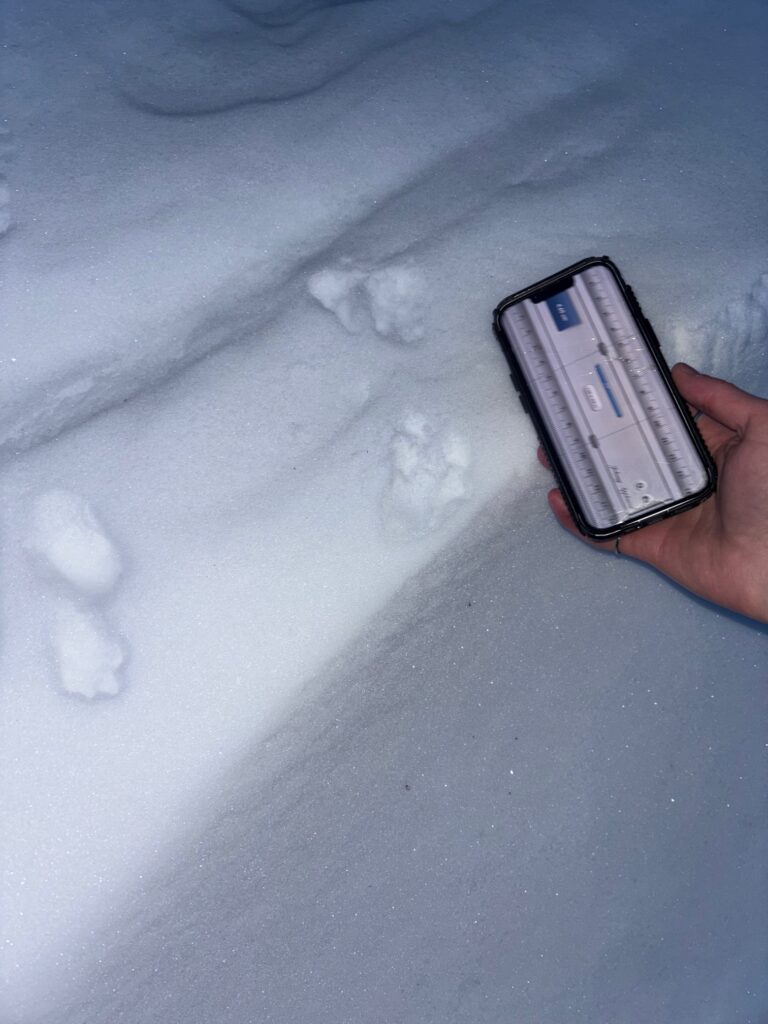
It was challenging to identify many of these tracks because they were so entangled with human footprints and covered with fresh powder that we did our best, but they were not all clear. This one appears to be a bobcat with the track being about 2 3/4ths inches and slight nail marks, though we couldn’t follow its path that much, as a lot of the surrounding now had been messed up.
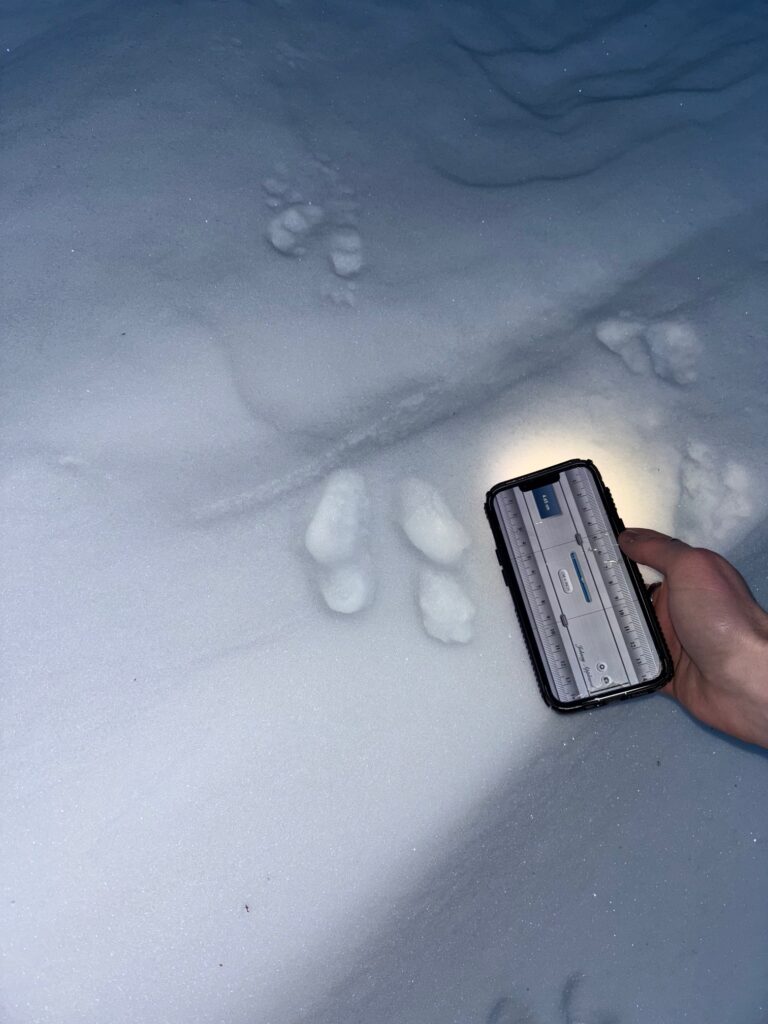
Jackrabbit!
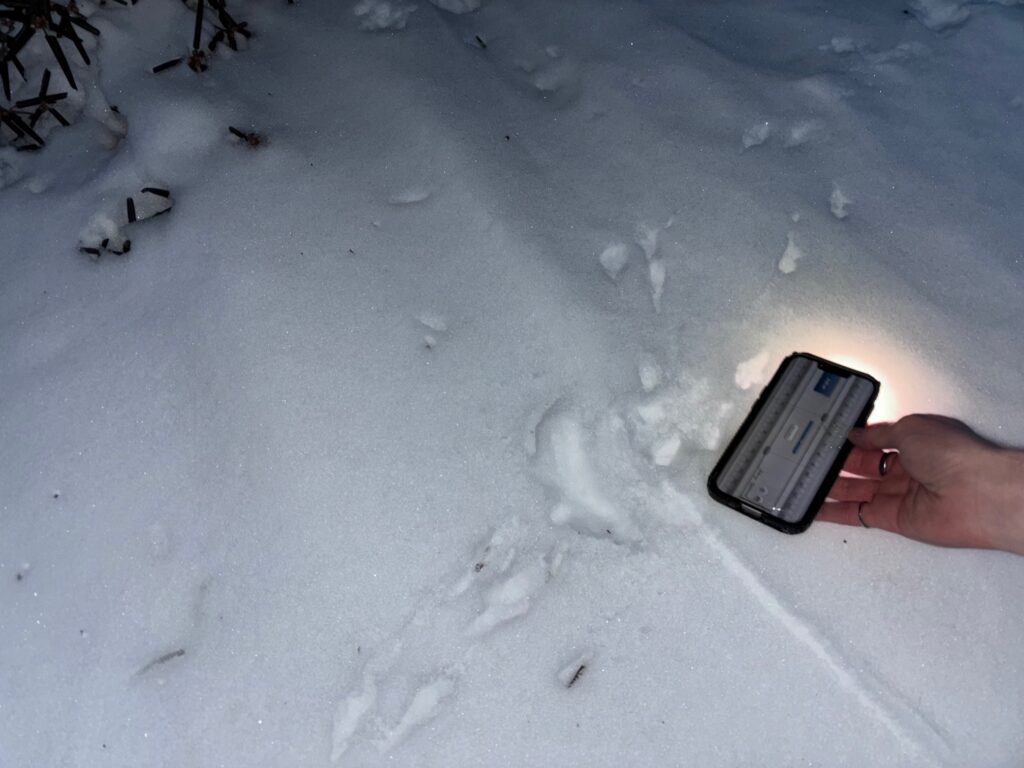
Initially, I couldn’t tell if these tracks were that of a vole or mouse, but I know that mouse tracks have a tail drag, whereas voles do not- so I concluded mouse. These tracks were also very interesting because there were so many and they were very messy and scattered. There also seemed to be bobcat tracks right by them which makes us wonder if this is what made them so frantic seeming. What happened between the bobcat and mouse; we can only guess.
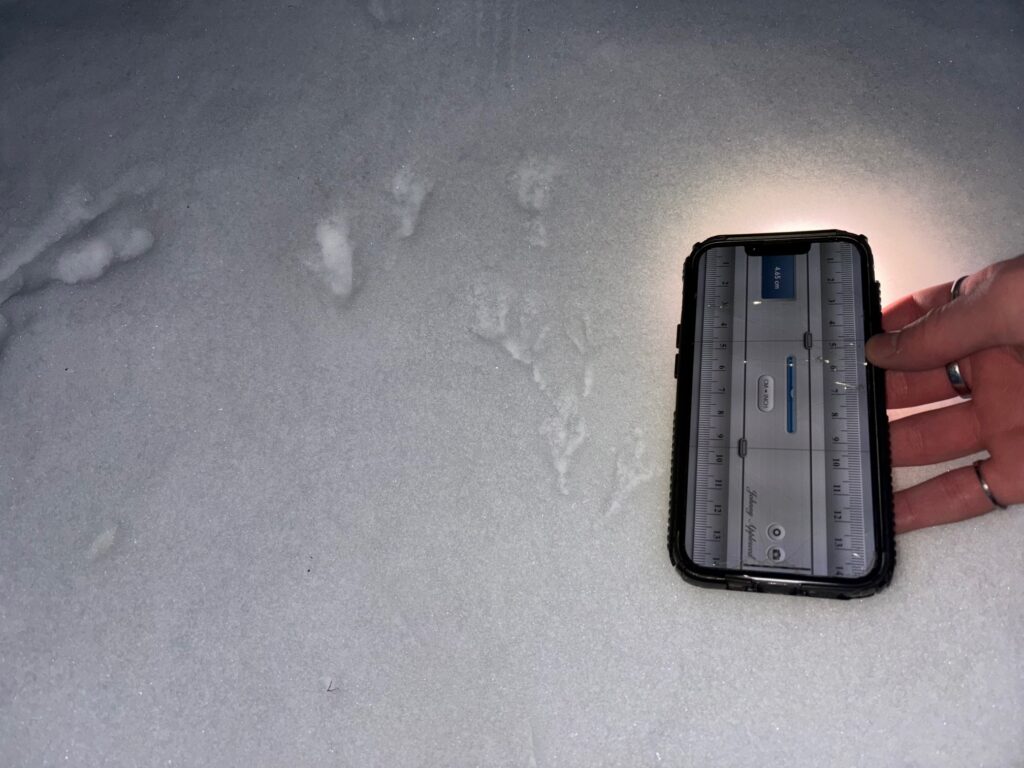
These were the first crow tracks I’ve found and they were so cute! I’m assuming the crow was flying and only briefly touched down as there are not many tracks at all before they disappear as fast as they initially appeared.
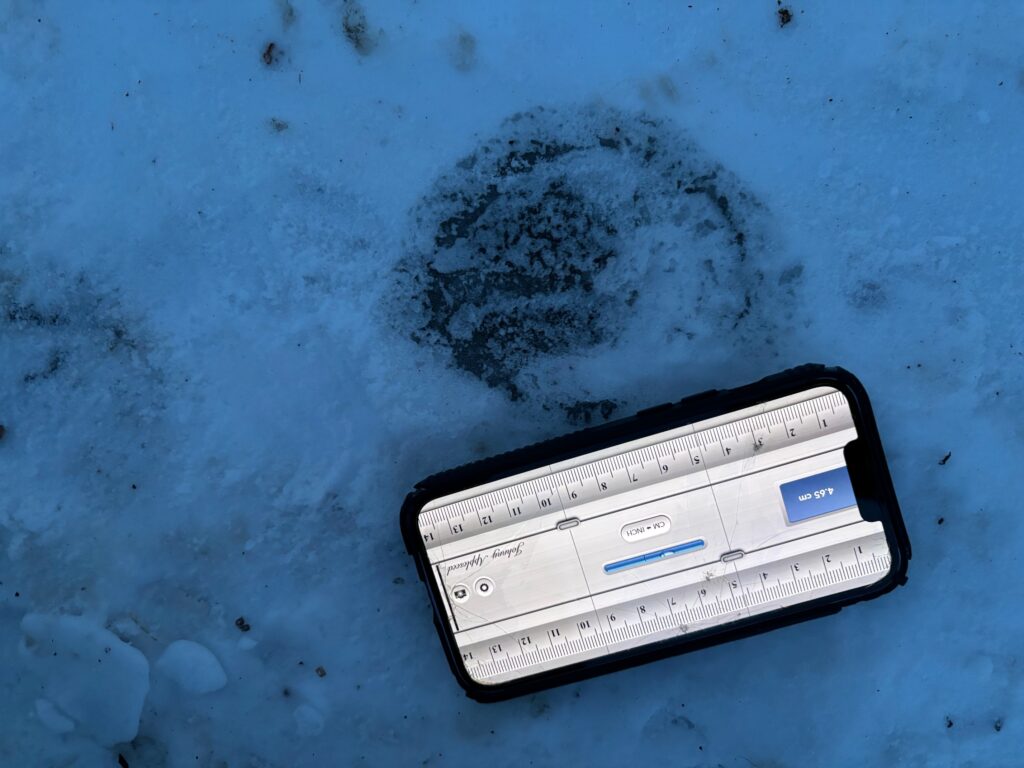
Here are the potential moose tracks in question. They sit at the right length, around 4 3/4 inches and seem to have two tips at the top of the track that would indicate the correct shape. It was hard to get a feel for any sort of walking pattern though because there were only 3 visible tracks and the rest were trampled with human shoe prints. As sad as it is that we cannot see all of the tracks perfectly undisturbed, it is very cool to realize how big a part of nature humans are and how we don’t just coexist with it, but we are thoroughly within it and an unremovable part.
Entry for Phenology Walk
I went on my phenology walk to collect data on 4/14 and because it was only halfway through April, following a particularly cold winter, none of the trees seemed too much in bloom. There were noticeable buds on almost every tree, but nothing was bloomed. Most of the trees were lacking leaves except one of them, but they were all dead from the winter. The next couple weeks when going out, I paid a lot more attention to buds and breaking leaves and noticed that it wasn’t long after that all of these signs of spring began, but during my walk day, there had been very minimal. All trees seemed to be in similar stages, with only a few ahead of the others like tree 761, the White Oak.
On the News and publications web site I saw many books or kits relating to phenology and it’s identifying factors. As someone who had never talked about phenology before coming to Vermont, I am not great with phenological identifiers yet, but all of these tools seem like they would be so beginner friendly and help tremendously. They are filled with picture examples, illustrations, full descriptions, etc. and would be very eye opening to all of the different ways researchers are able to identify phenological changes in ways I have probably never even heard of.
Entry for 4/24
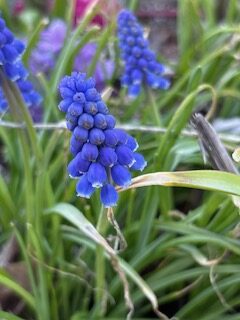
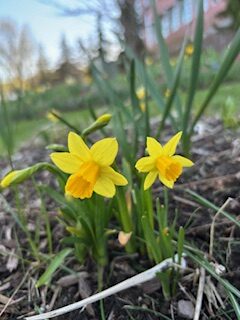
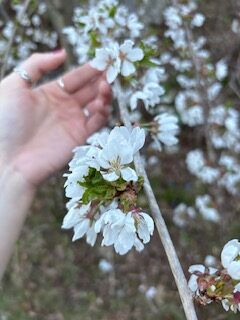
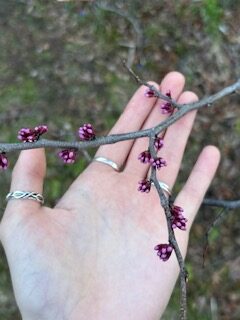
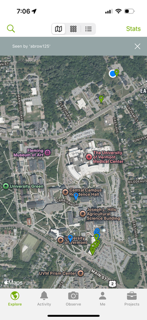
I chose to explore some on campus and some more surrounding my dorm around Trinity. My initial thought process was to think of areas with great biodiversity so I could observe a large variety of species that live in tandem with people. This caused me to start close to the back of Jeffords where there is an abundance of different flowers, shrubs, and trees. I even stumbled across some tulips I had planted a week prior!! My experience using iNaturalist was great! It has been getting easier each time and I was able to rapidly upload a ton of different observations and I am very new to plant identification, so the recommended IDs helped a lot. I encountered 14 different species including both plants and animals. One amazing thing to see when looking at the global submissions for the City Nature Challenge was the insane variety of different species. I saw one of the most beautiful photos of a Green Sea Turtle in Barbados and a Crowded Yellow butterfly in Spain, and getting to think that everyone is experiencing all of this over this past weekend is so amazing. It makes me feel like I am a part of something really big and its very inspiring to see how people all over the world are caring for the beauty of nature.
Entry for 5/4
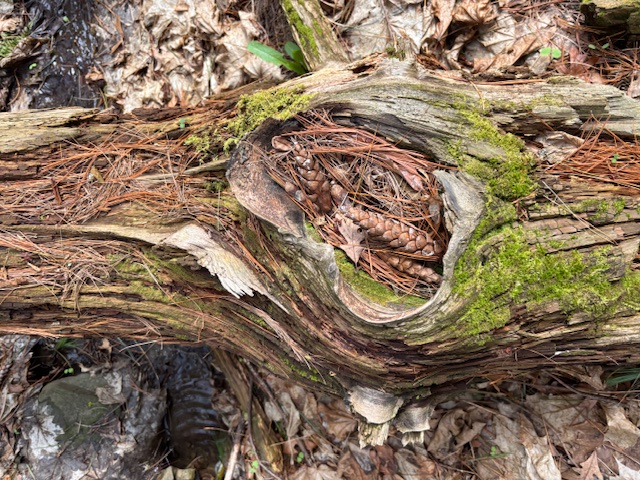
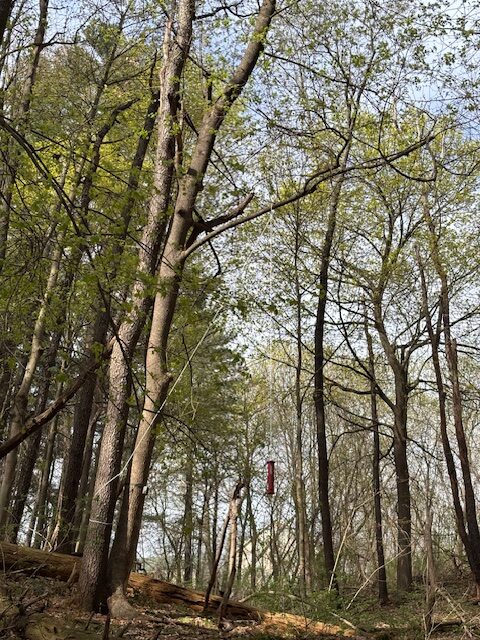
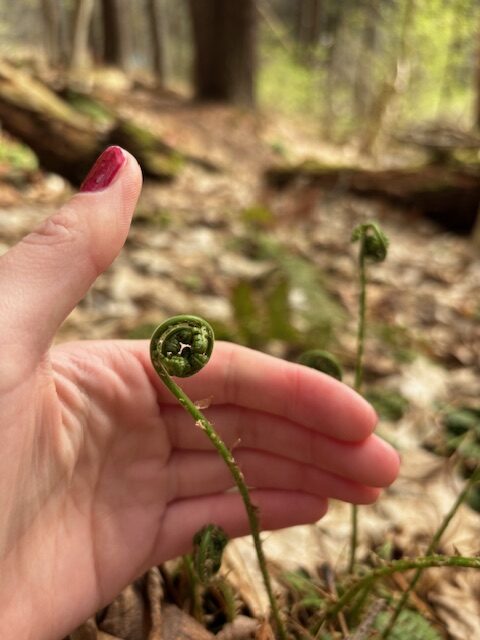
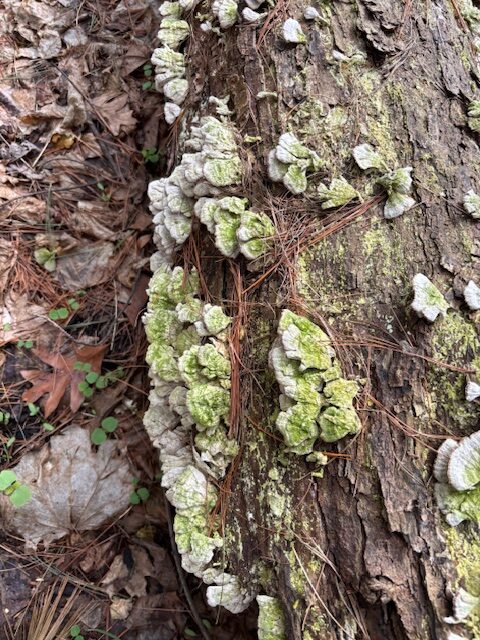
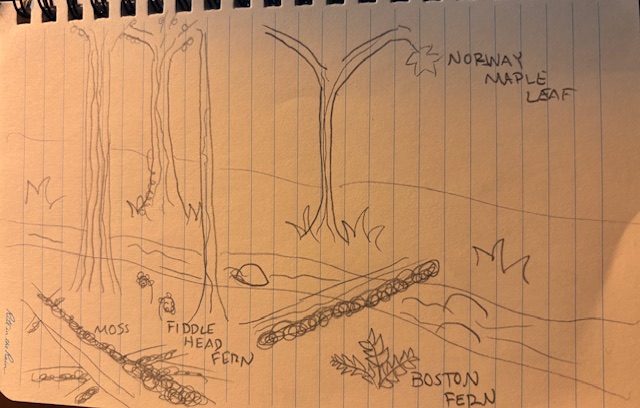
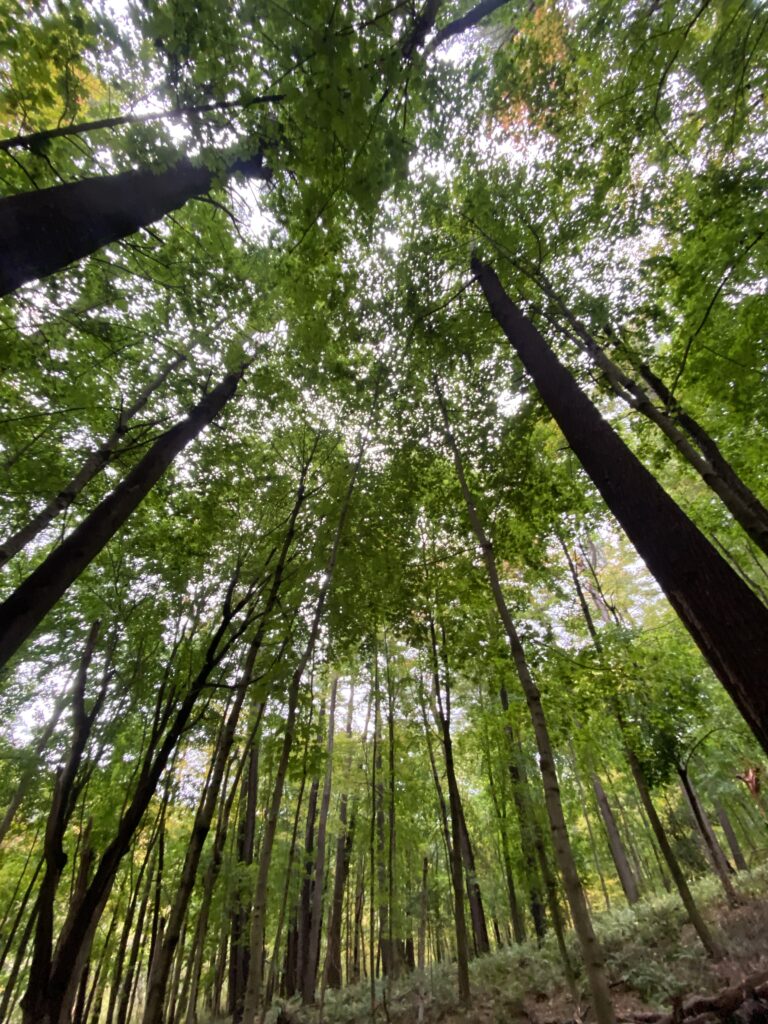
Being the first Spring I’ve spent here, this is not only the first time I’ve seen my site in bloom, but all of Vermont and it has not disappointed. When I visited my site for the first time, the leaves were already turning and fall was beginning. It was green when we arrived, but seeing it after such a long winter feels like I am seeing it all for the first time. From fall to winter to now spring, my site is blooming for the first time. I saw buds on every tree, mosses, grass, full Norway maple leaves, and even fiddlehead ferns! My site was also crawling with bugs again. One new thing I noticed was the addition of a hummingbird feeder! It appears my site has other regular visitors, though I wasn’t able to see any hummingbirds when I was there. I was able to look up and see a dense canopy with a gorgeous example of crown shyness. The biggest indicator of my site is the beautiful creek that runs down the middle of it and across the trail, which always tells me I have arrived. There is also a beautiful old tree trunk and excess of fallen trees that have withstood all the seasons.
The hummingbird feeder I saw was a prime example of nature and culture intertwined. Without even meeting the person that did that, I feel closer to them. It shows how people can come together over nature under a common love for the outdoors. Nature is not one to discriminate and can unify any group of people. To me, Centennial Woods as a whole has become a representation of what can happen if a culture prioritizes nature. It seems like the whole city of Burlington values preservation and knows the importance of being able to have an outdoor space. My whole life I have despised running, but having an outdoor space that is beautiful and promotes observation has inspired me to go on runs to the woods to sit in the morning stillness and observe what the natural world is doing. To me, having a space like this that is so easily accessible means connection and rejuvenation. I absolutely consider myself a part of this space now, which I wasn’t expecting after my first visit, and because of that, I will continue to come here next semester.