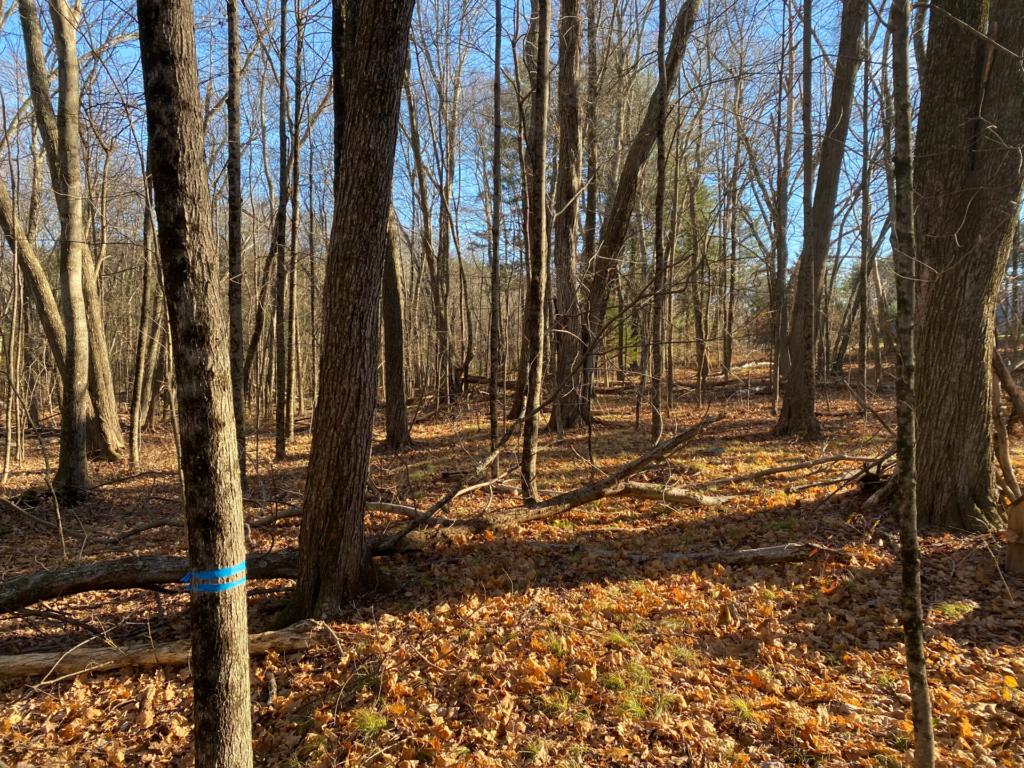
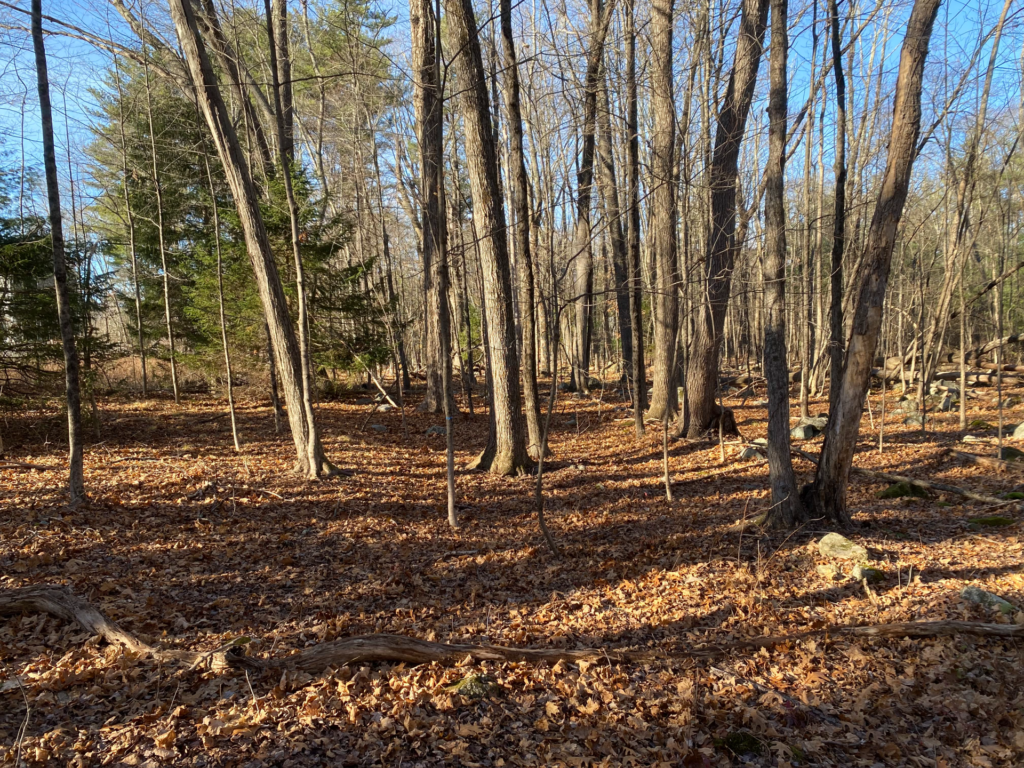
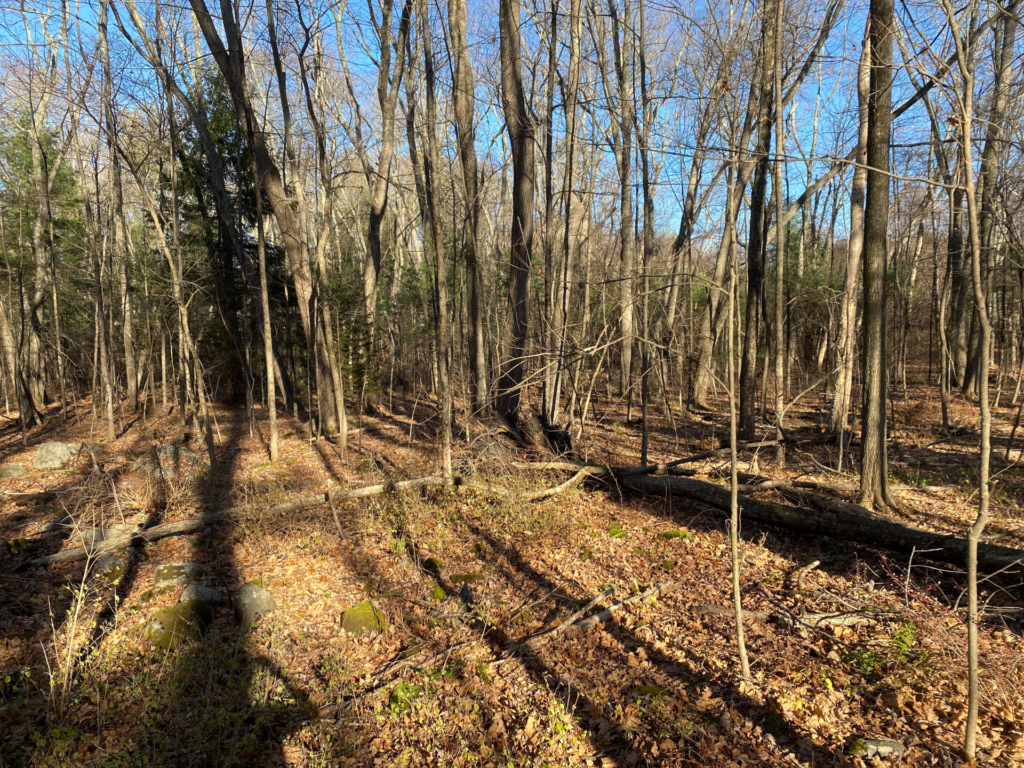
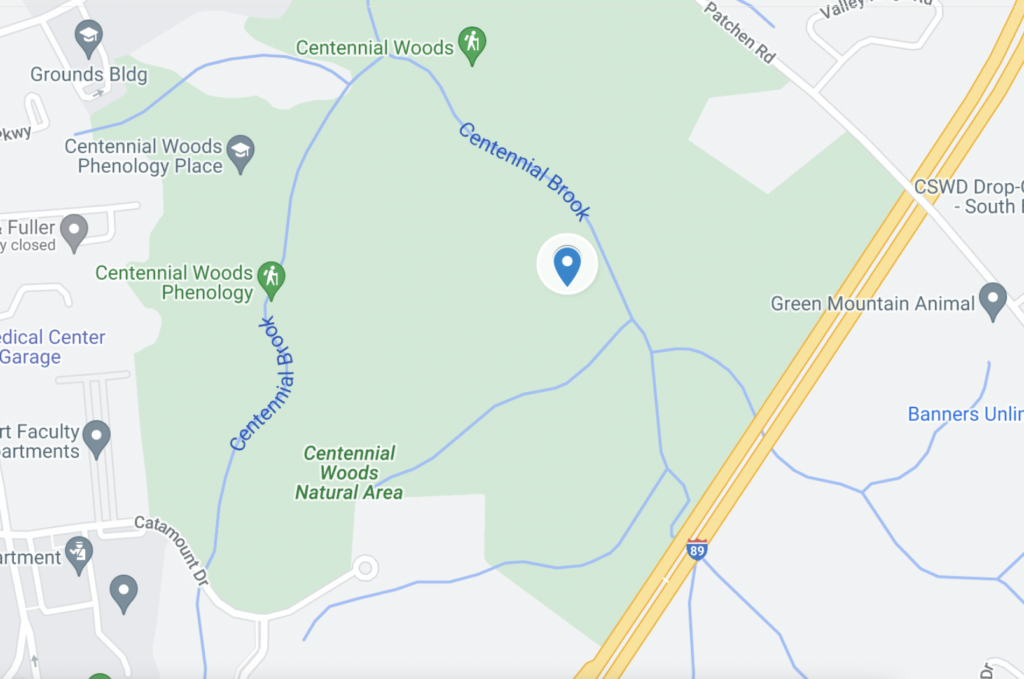
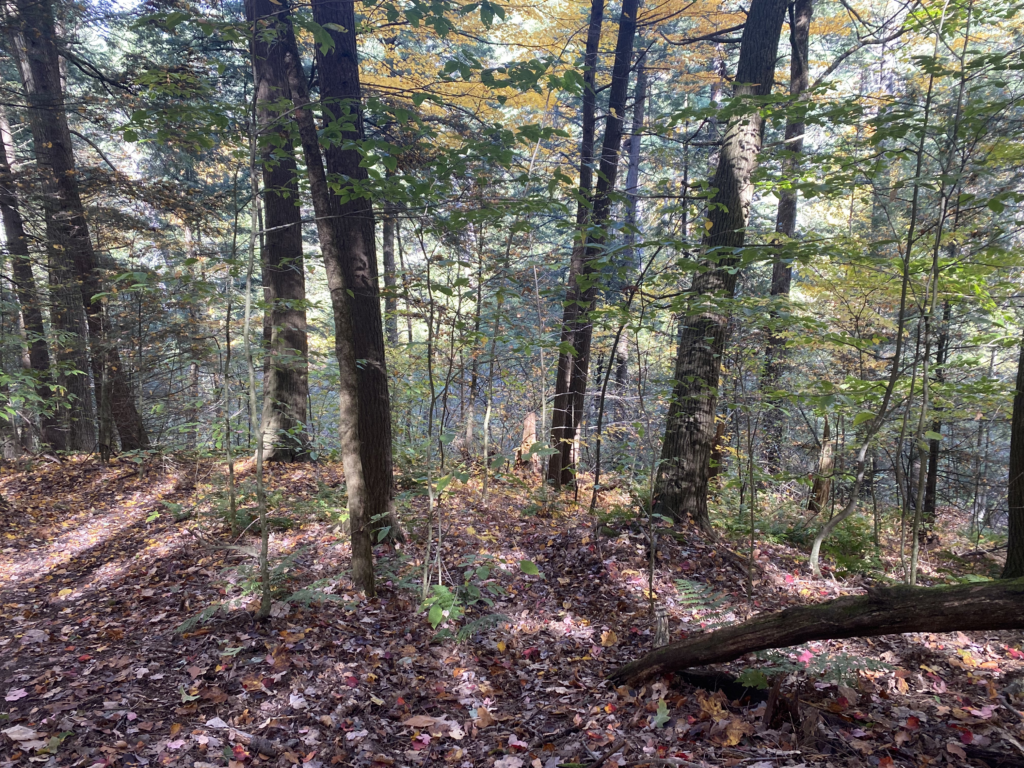
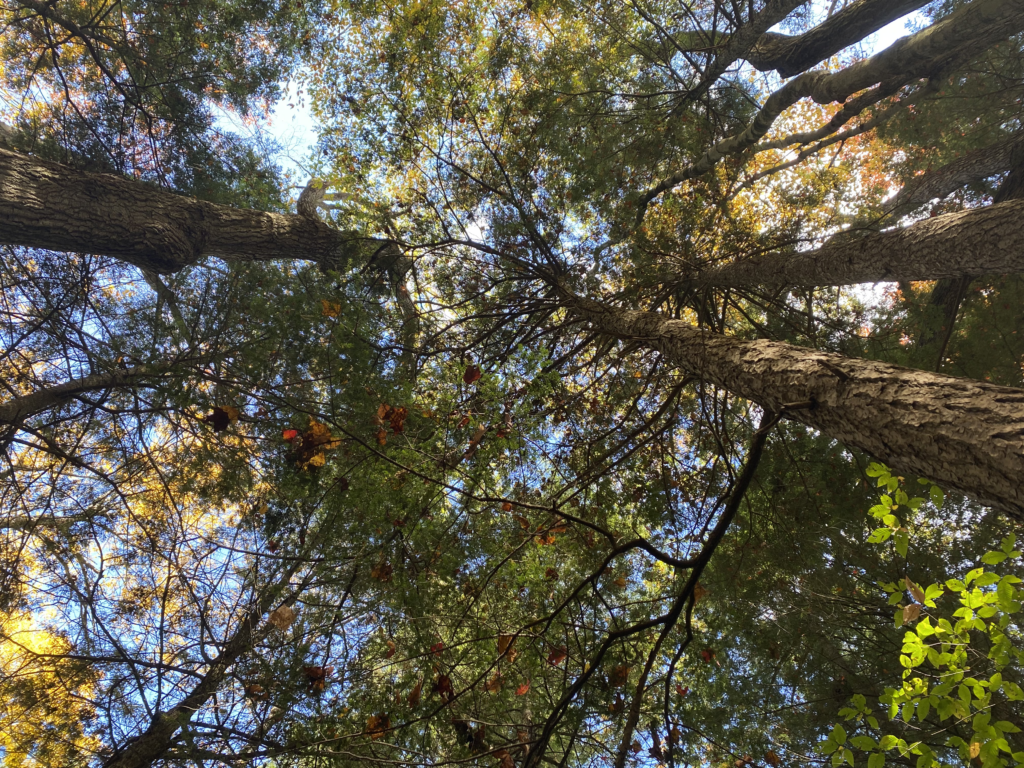
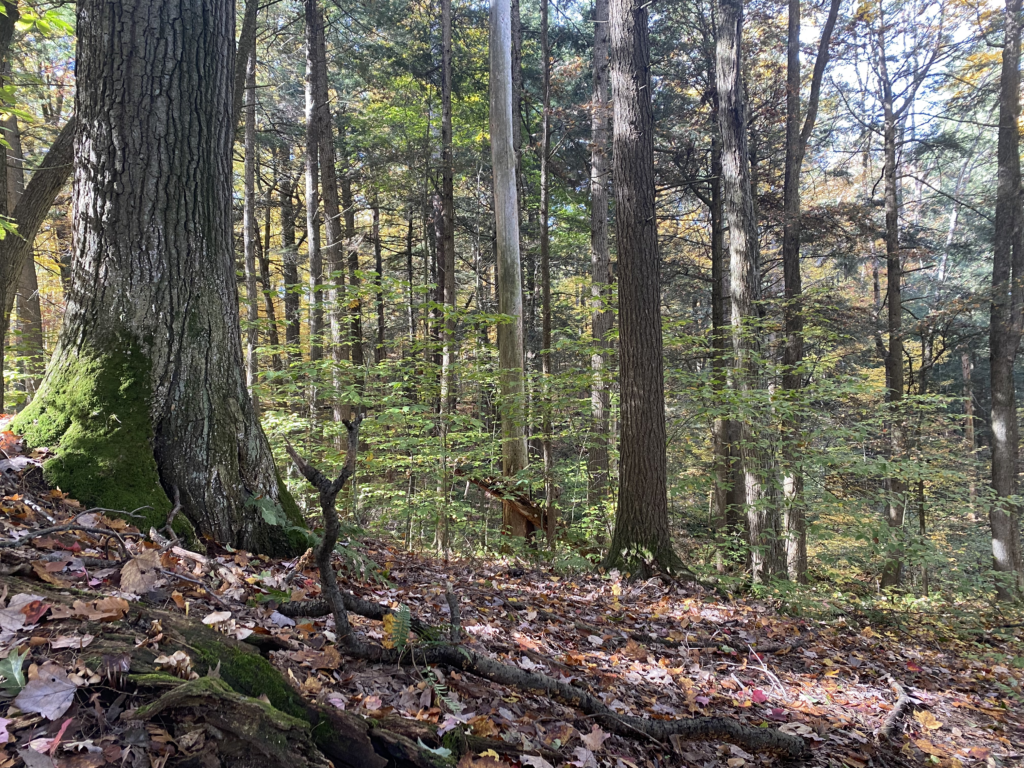
Visiting my site again, I was asked to take note of the phenological changes, specifically signs of animals, decomposers, and remaining leaves and vegetation. I immediately spotted signs of the decomposition of leaves on the ground.
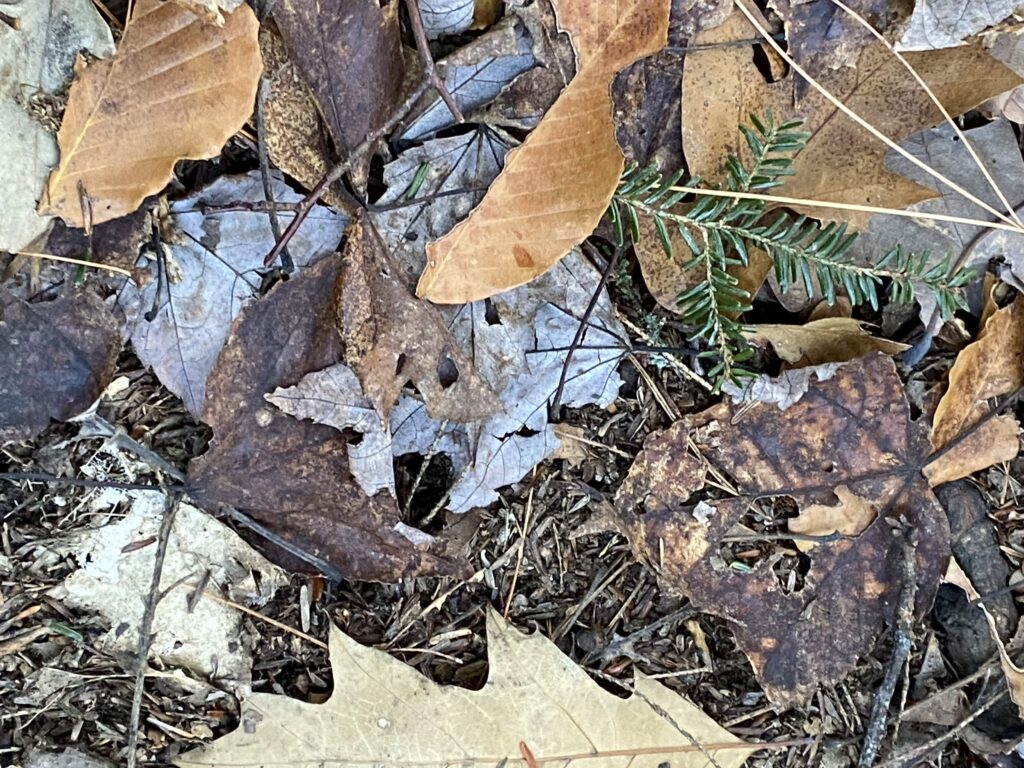
Leaves that were once vibrant and crisp had become black, like mush, and full of holes. There had been decomposer activity here as the bacteria, worms, fungi, etc. had clearly left an impact on the leaves that were once safe high above the ground. There were also clear signs of fungi and animals in the are that were either new or new to me.
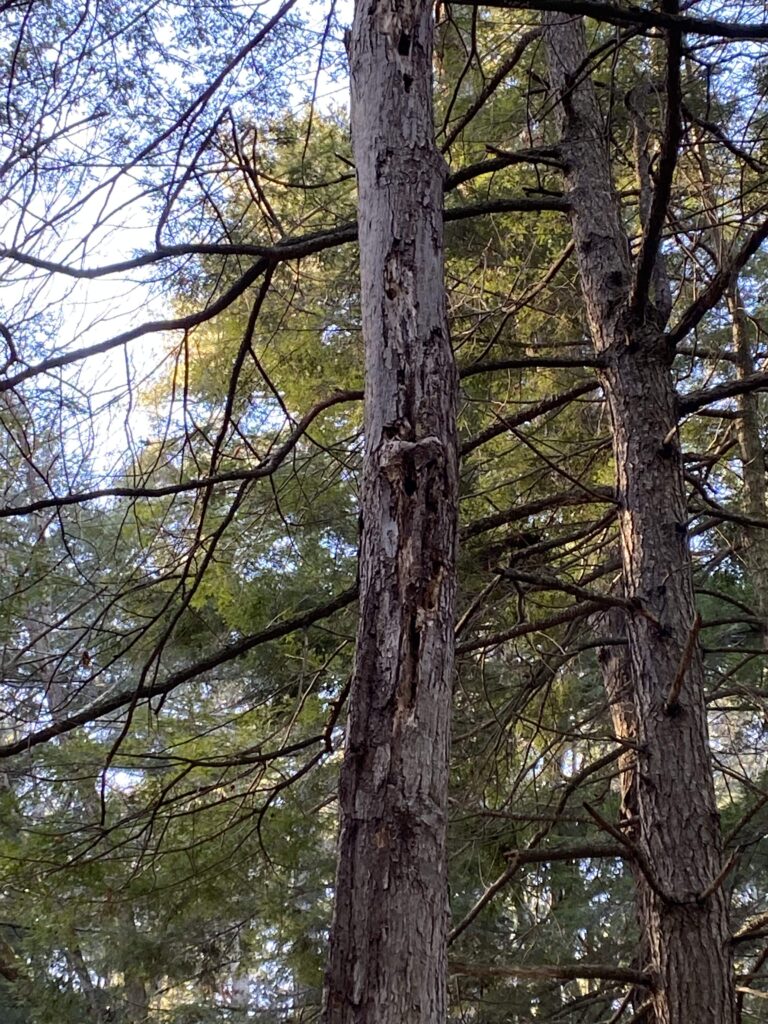
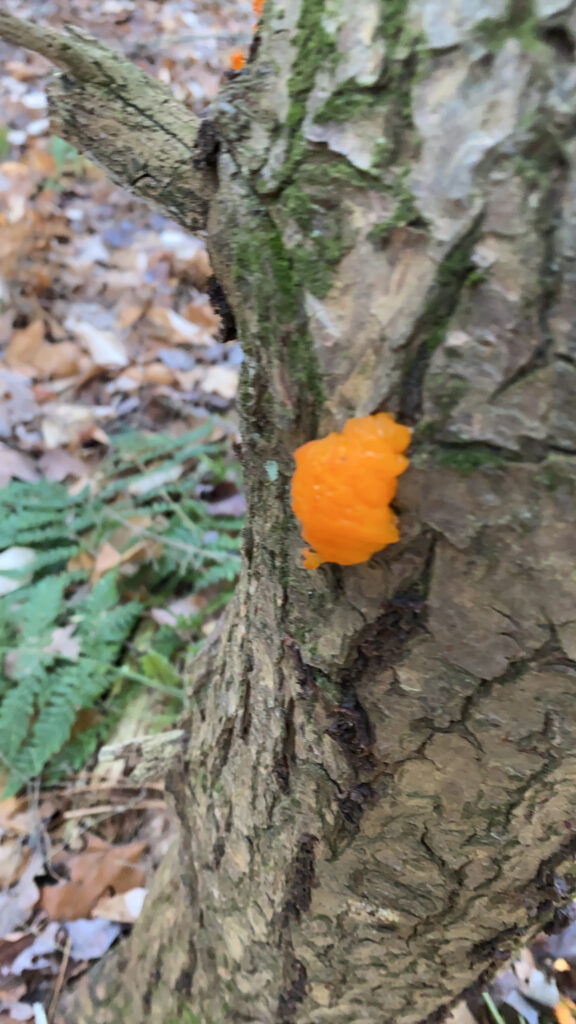
Noticing a jelly-like growth from the cracks in the bark of this tree I was confused. I had never seen anything like it before and so I pulled out Inaturalist to find out more about it. This species is the orange jelly spot and it is allegedly edible, though I had no interest in eating it. It grows in cracks in bark and de-barked trees and fruits from spring to early winter but this particular orange jelly spot began fruiting quite recently. I also noticed what I believe to be woodpecker holes in a snag that likely houses bark beetles or a similar infestation of woodpecker prey. They were not likely new, however they were clear signs of life I had previously missed. Other than these pieces of evidence, there was little trace of what life used to be here, with the birds that could once be heard constantly overhead now completely gone and even the highway having a quiet day. In terms of remaining vegetation, almost all of the vegetation was still alive, however it did not appear as though it would be for long.
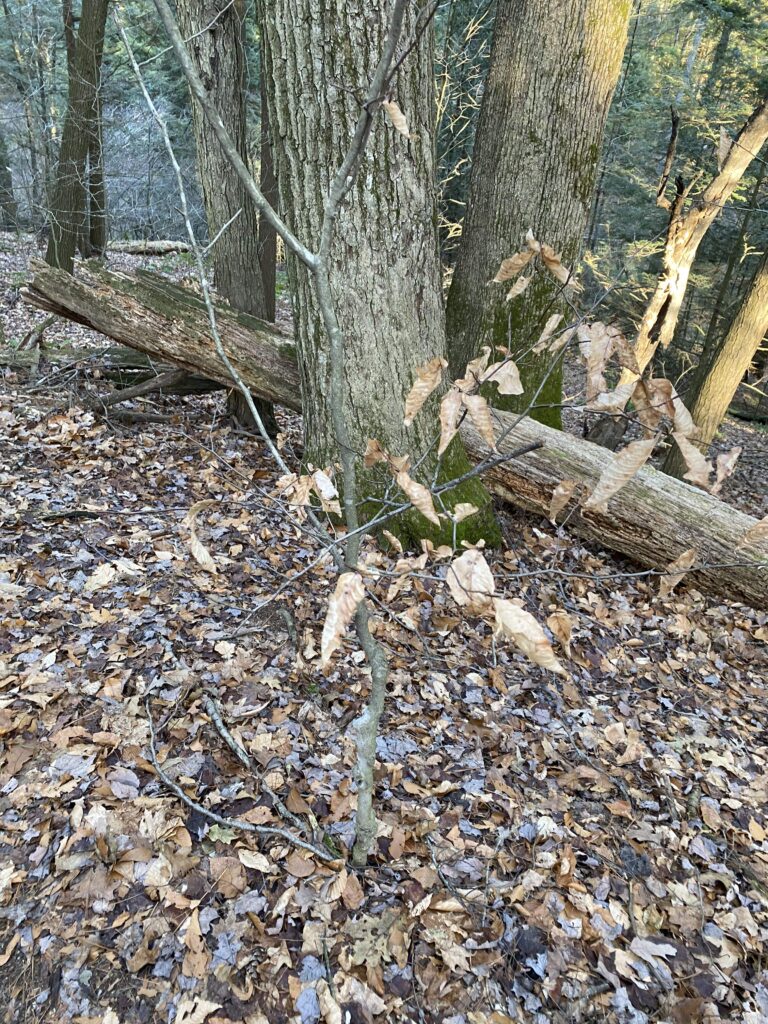
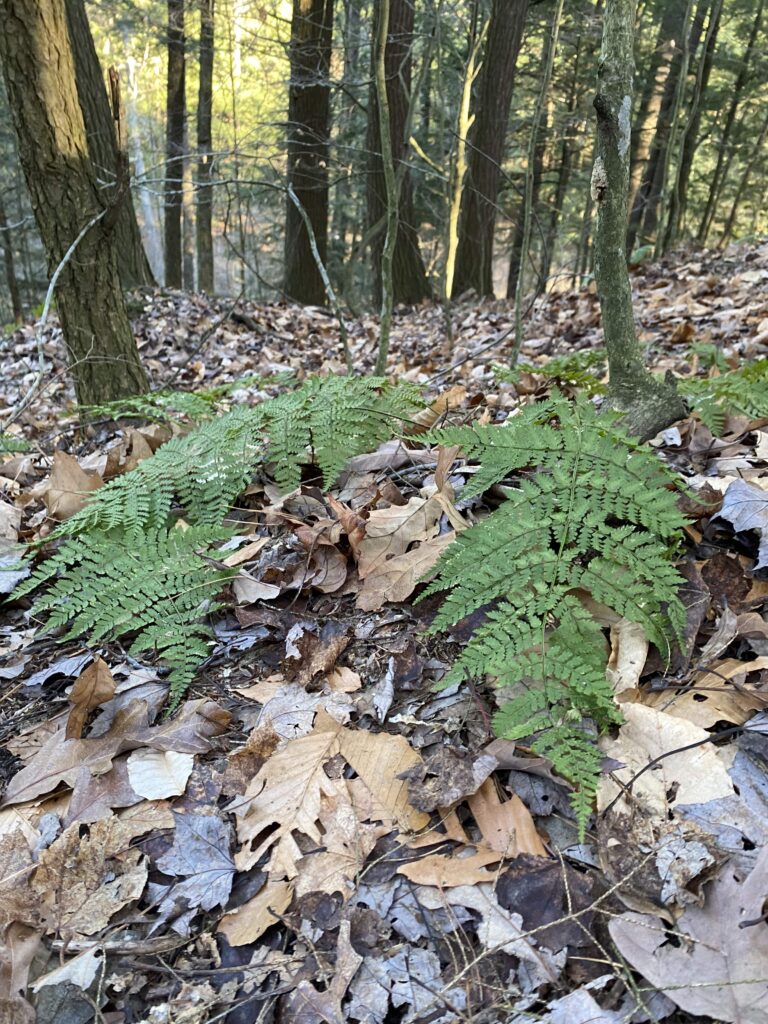
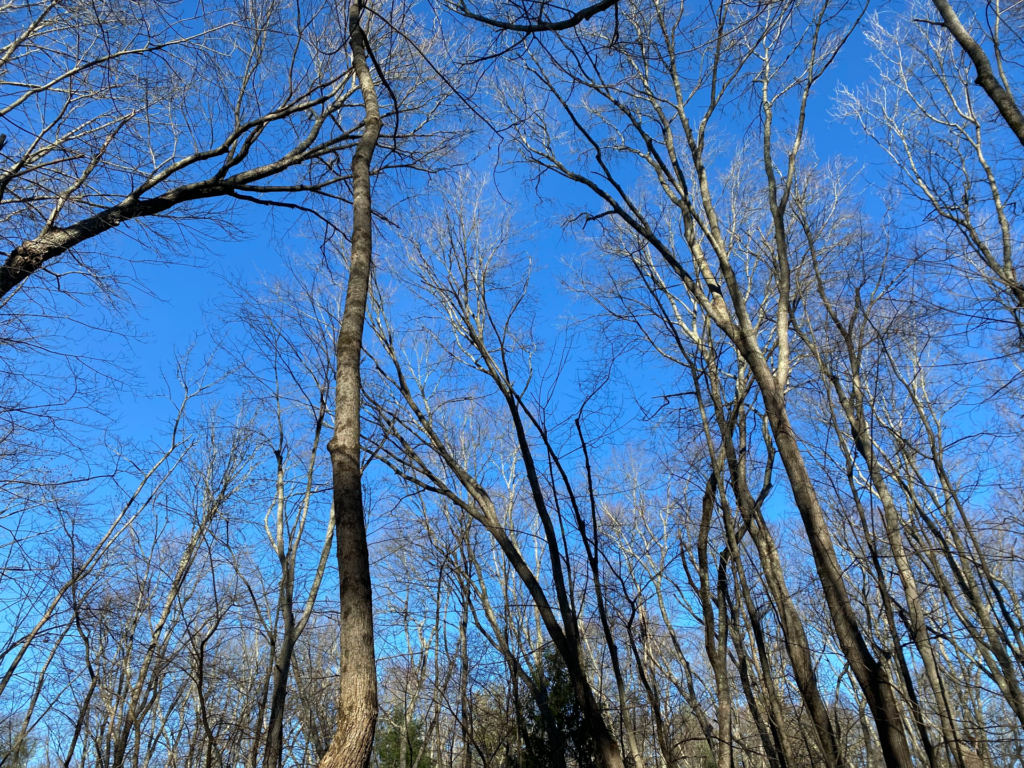
These ferns once stood proud, but now droop to the point of laying flat to the ground. These are complemented by the only remaining leaves which cling to some of the American Beech trees that have the strongest grip.
This was my last visit to this phenology spot for this semester and I really enjoyed visiting it while I did. The brook overlook is beautiful and I just enjoyed exploring a new place with its own distinct characteristics. I also enjoyed exploring it as a place I had already explored coming back to it later in the phenological calendar to find differences that I might not have noticed exploring different parts of UVM’s natural areas. I particularly enjoy the topography of the area, as my hometown is a very flat area and we don’t even get large hills. This topography also creates opportunities for interesting root formations that I enjoyed studying.
Goodnight everyone!
Song of the day: