
I visited on June 24th at around 6:30PM. The weather was partly cloudy, 66 degrees with moderate humidity. Most of the forest was damp after a day of rain showers.
Today when I visited the gap, the sun and the clouds decided my focal point for me. A small portion of bedrock outcropping was lit up by a stream of sunlight filtering down through the dense hemlock canopy. As I crouched down to view this spot closer, I noticed small, vividly green islands of moss growing on the reddish bedrock. Although the rain had stopped more than an hour before, the rock still had a film of moisture clinging to its surface and it became clearer why algae, moss, and lichen so often colonize exposed bedrock. The moss islands were speckled with some kind of fruiting body attached to the end of stalks that were just taller than the green photosynthesizing structure of the moss. Looking closer at the outcropping, I noticed nearly every crack and pit in the rock had a network of spider silk with needles, insects, water droplets, and even a hemlock cone caught in the webs. I didn’t see any spiders while I sat there but I knew they couldn’t be far away. The deeper cracks were filled with the roots of rock polypody’s which provided most of the canopy for this micro-ecosystem. Growing on the small ledges of the rock were hemlock seedlings that looked so fragile they could be knocked down by a mouse’s foot. All the way down on the forest floor (about 1ft) was a honey mushroom emerging from the duff layer. This small area of interest was teeming with organisms.
A picture and some sketched of the plant I identified is shown below and is known as Herb Robert (Germanium robertianum). I tried to use some of the resource linked in the wonderblog PDF but wasn’t able to find this species through those methods – likely because my plant biology is a little rusty and I wasn’t able to narrow down the choices far enough. I turned to Wetlands, Woodlands and Wildlands and found the section for Limestone Bluff Cedar-Pine Forest. Although I don’t think my location is truly within this natural community, it shows many characteristics consistent with it: shallow bedrock, calcareous bedrock, dominantly coniferous canopy and close to the lakeshore. In reality, I think the gap is somewhere between this natural community and a Dry Oak-Maple Limestone Forest. In any case, as I was looking through the herbs associated with the cedar-pine forest, I noticed herb Robert and it made me think of how much the flowers of the plant I had seen resembled those of geraniums, so I looked up a picture and it looked just like it! Doing some more research on the plant I found that it is an invasive (sad) that has mostly naturalized in the northeast and prefers “rocky forests, talus slopes, trail edges, [and] ledges” which described exactly where I found it (https://gobotany.nativeplanttrust.org/species/geranium/robertianum/). This herb is said to smell like burnt tires when crushed and will repel insects if rubbed on the skin.
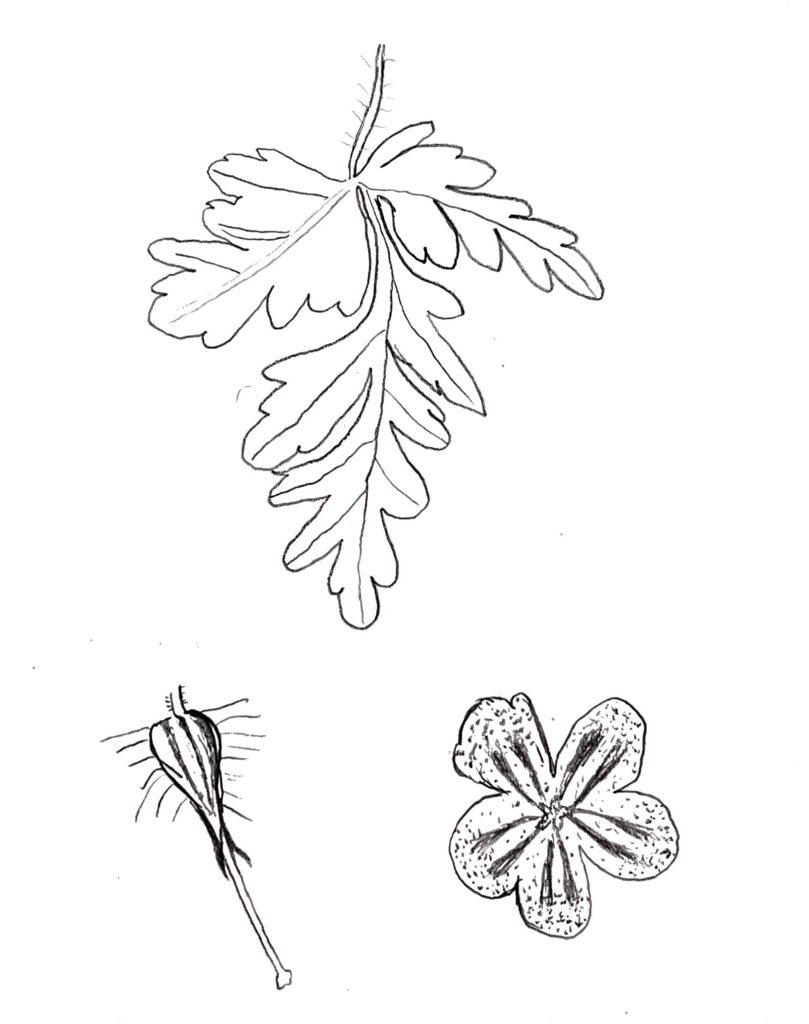
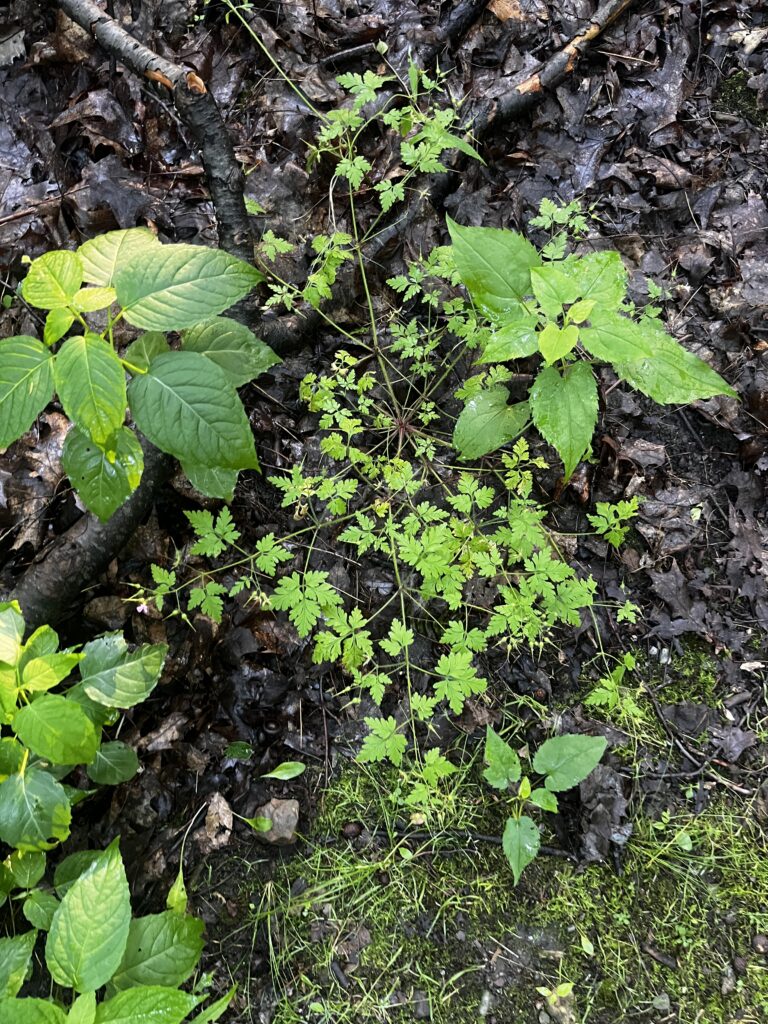
Below are some sketches of plants and fungi I found at the gap:
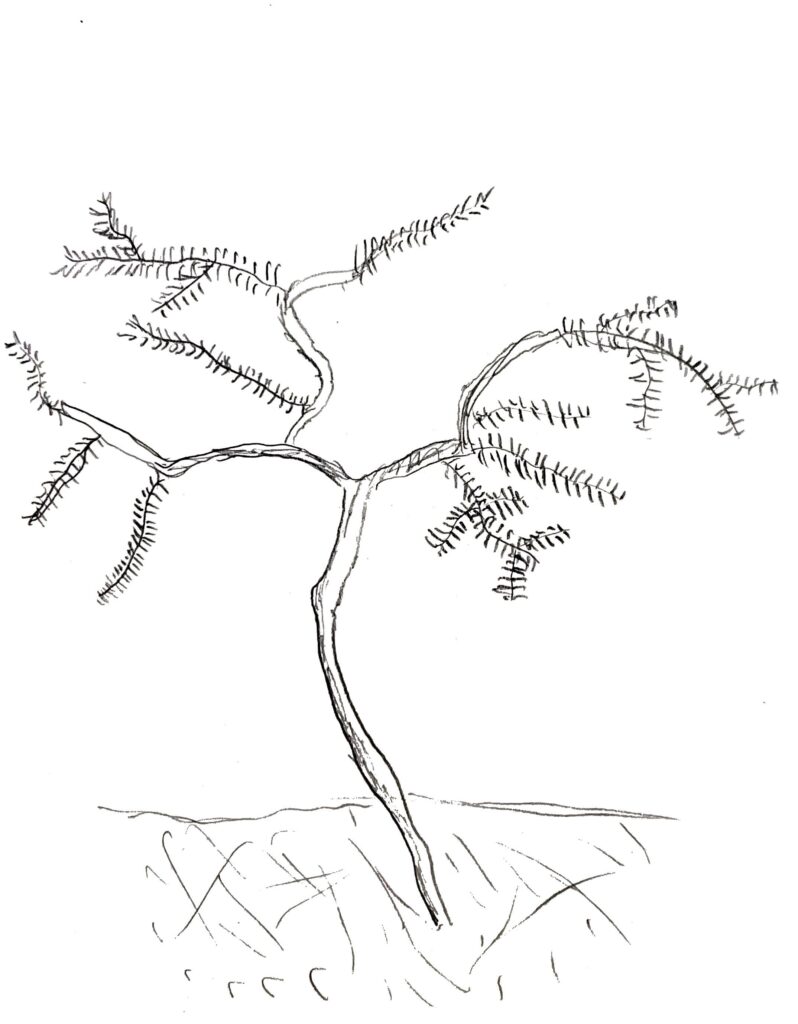
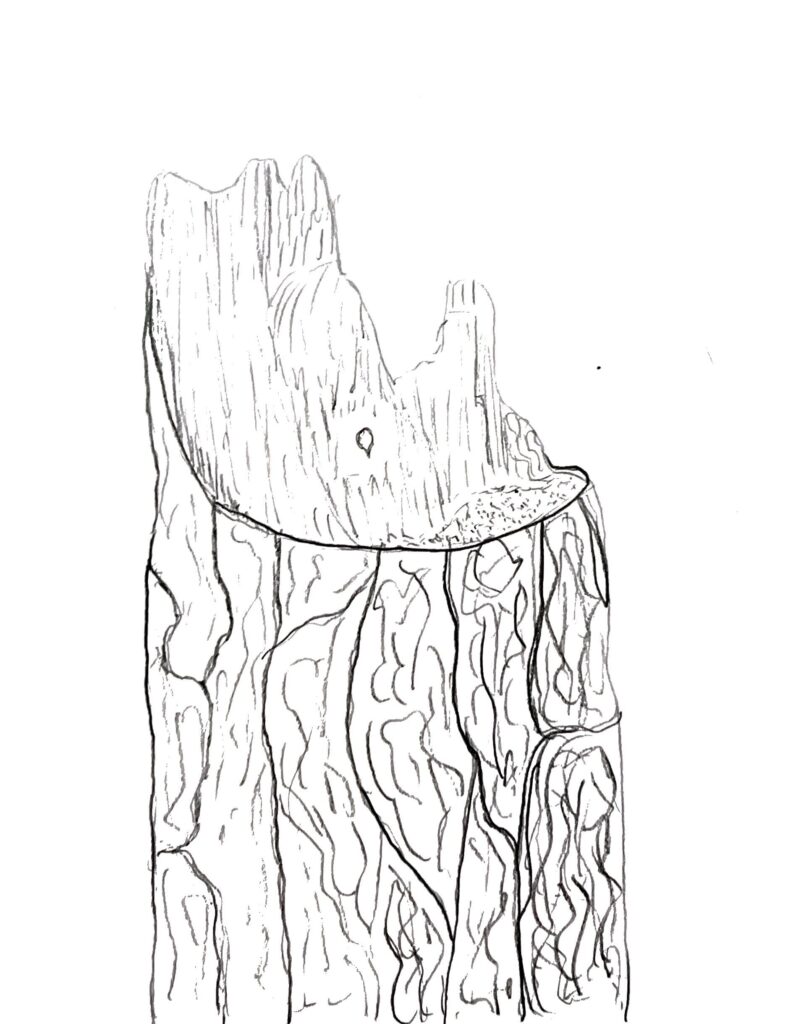
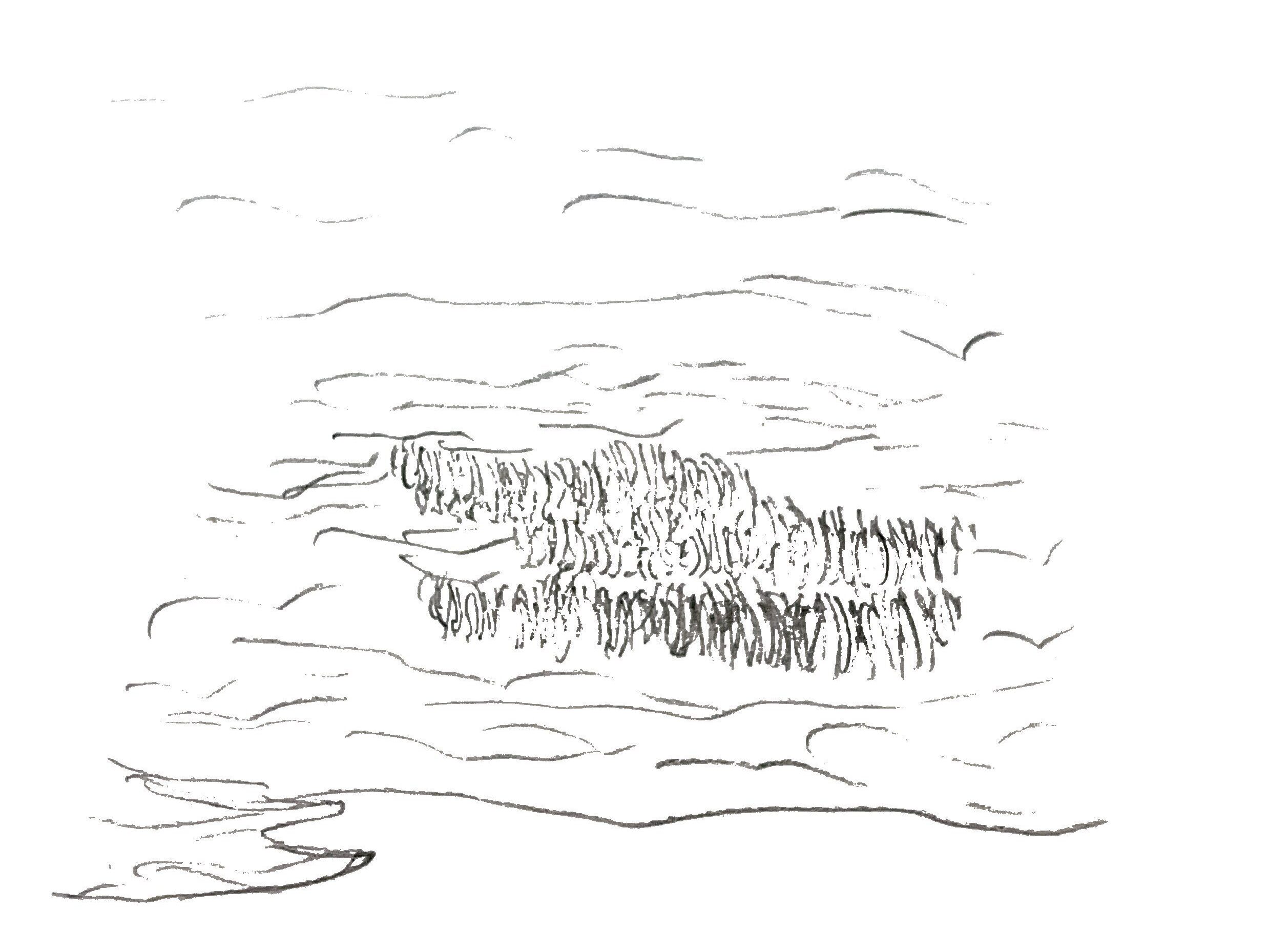
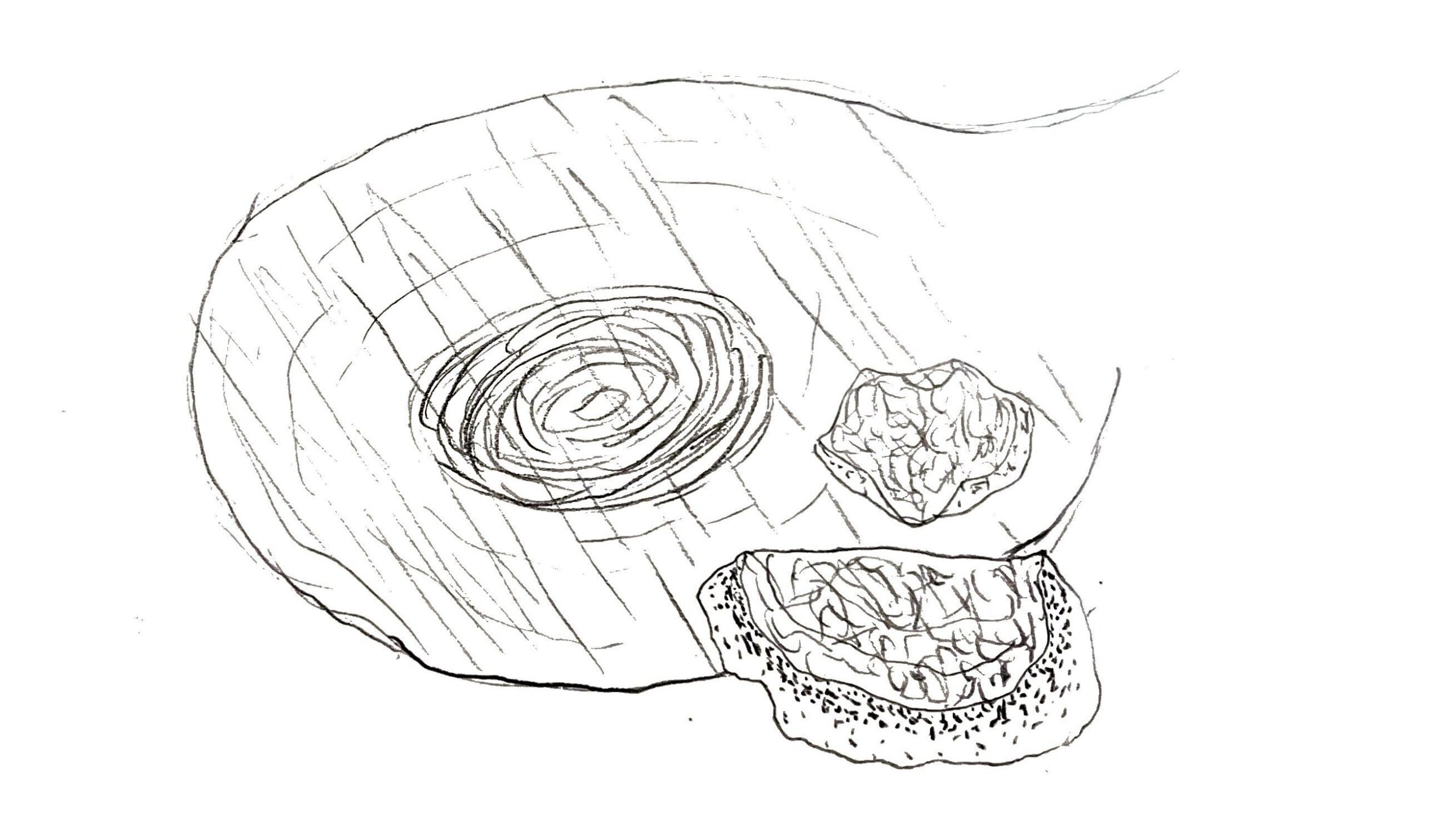
I found sketching at my site a little daunting and frustrating at first. I know I am a perfectionist so it was tough to grapple with the fact that my sketches are not at all an exact representation of the object I see in the field and rather my own perspective and experience with the object. Stippling takes a lot of patience and I found myself coming back to it to represent color and hue. It is cool now that they’re done that I can look back and remember the objects so well just because I have the sketches. I’m excited to follow up on the Herb Robert and see how many of the buds turned into flowers by the next time I visit the gap.