Posts

May 7 Posting

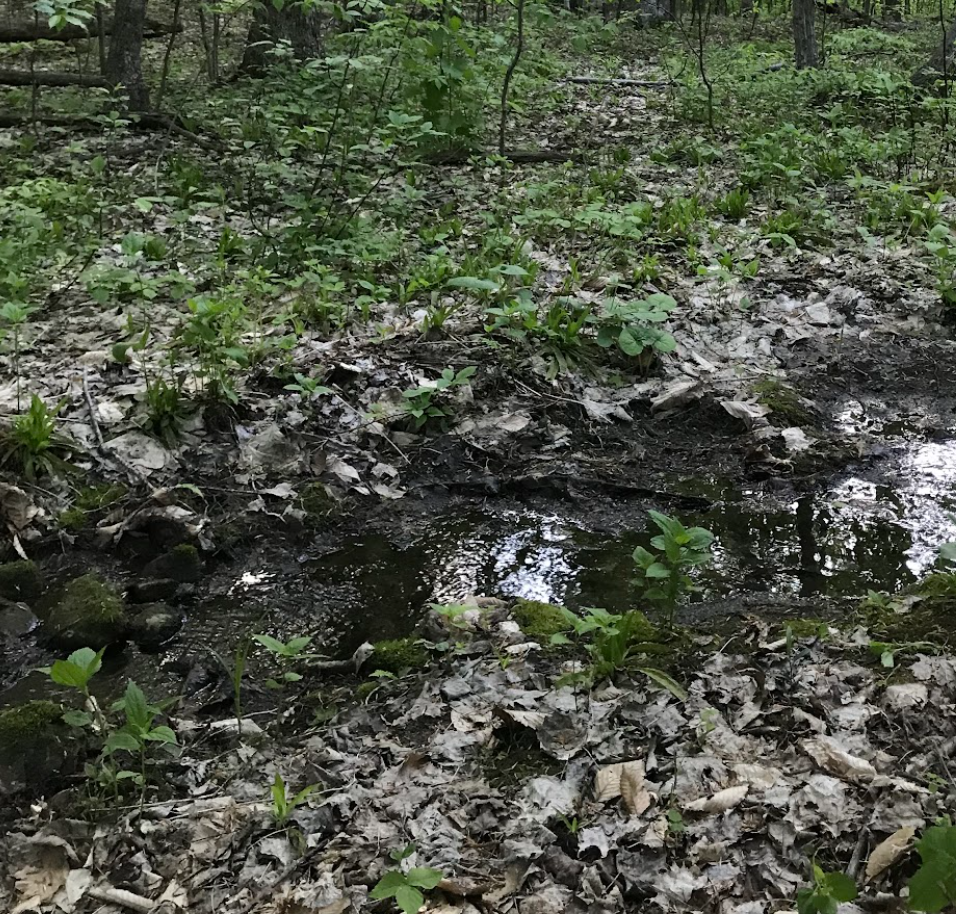
The most obvious way my site has changed is that leaves are now growing on all the trees. Also, the river, while still flowing with water, has begun to dry up in some places. The moss on the rocks also looks a lot greener and healthier than it did after the snow started melting.
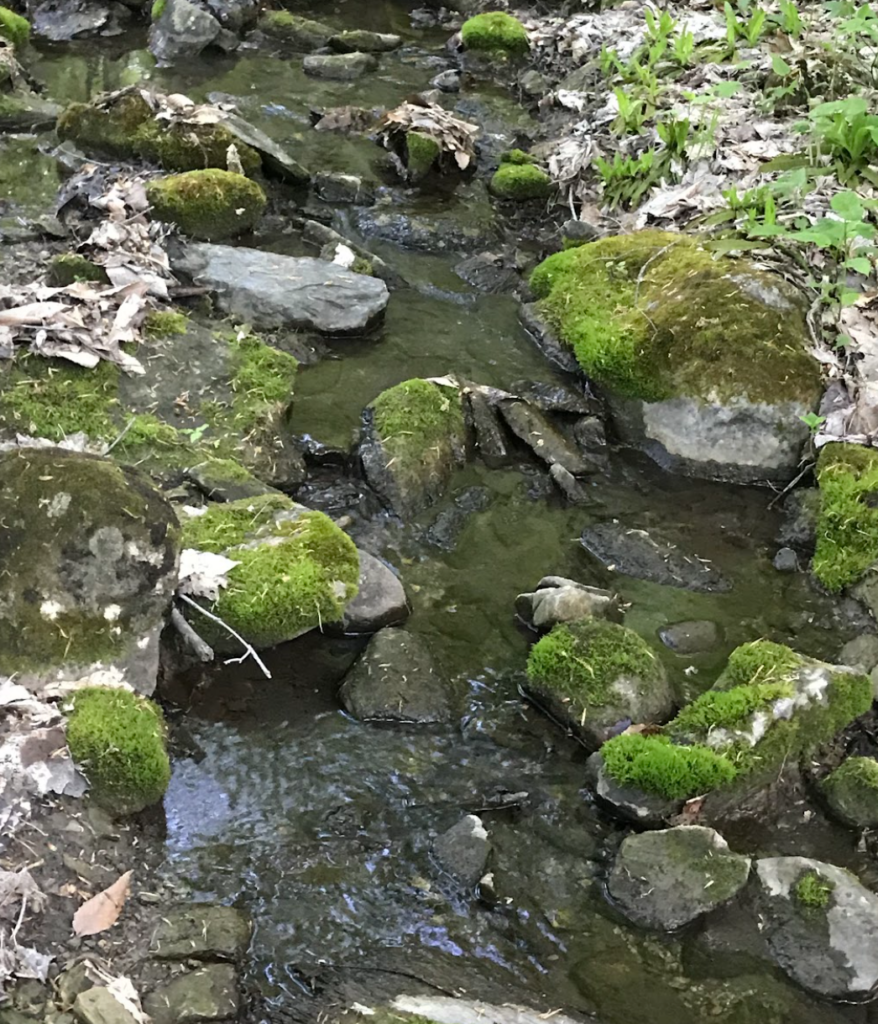
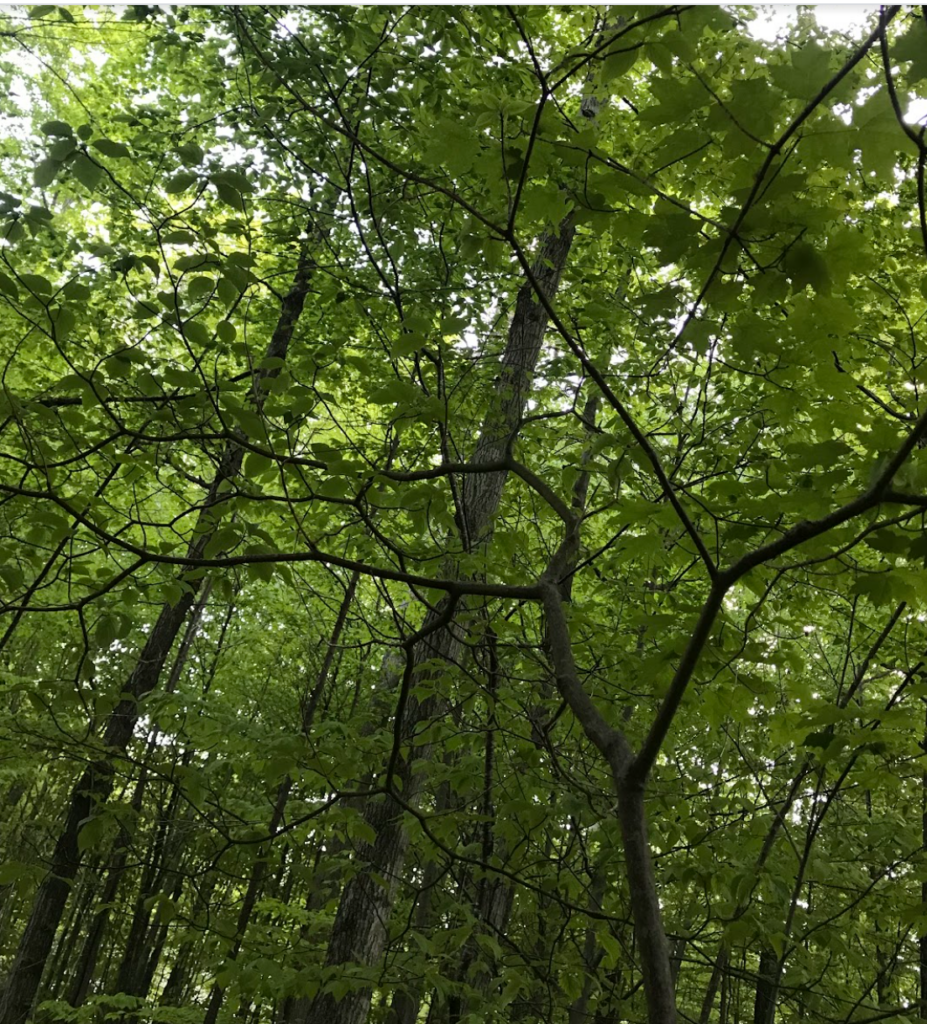
Though centennial woods have gone through many changes: being an airport, an orchard, and most importantly being stolen Abenaki land. Being in this natural space means accepting the culture that once thrived there, and analyzing and coming to terms with the culture that is there now.

I do consider myself a part of this place, since I’ve been so connected to it for the past semester and even a little bit before. I don’t feel like I have any ownership over this land, but I feel in some ways like a part of the land because of how connected i now am to it. It’s very special to watch a place change and grow over the seasons.
May 2 Posting

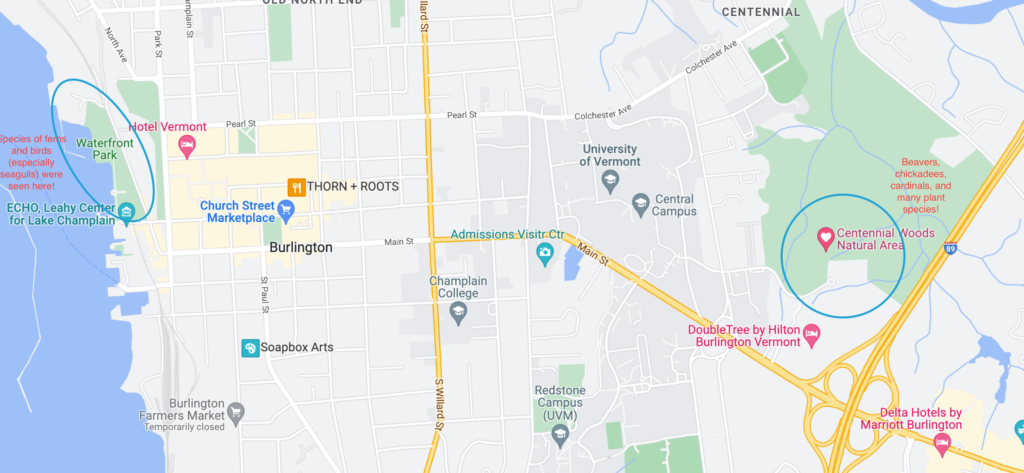
I went mostly to the waterfront and to Battery Park as well as several parts of Centennial Woods. I love iNaturalist as a program and I have been using it for years, so it was a great aid in figuring out what species were around me.

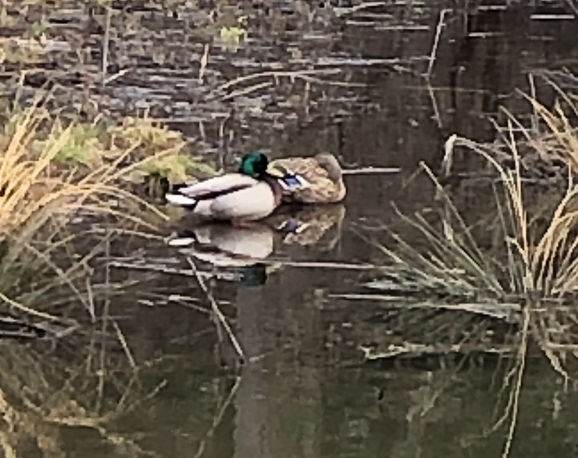
I saw a breeding pair of ducks in Centennial Woods
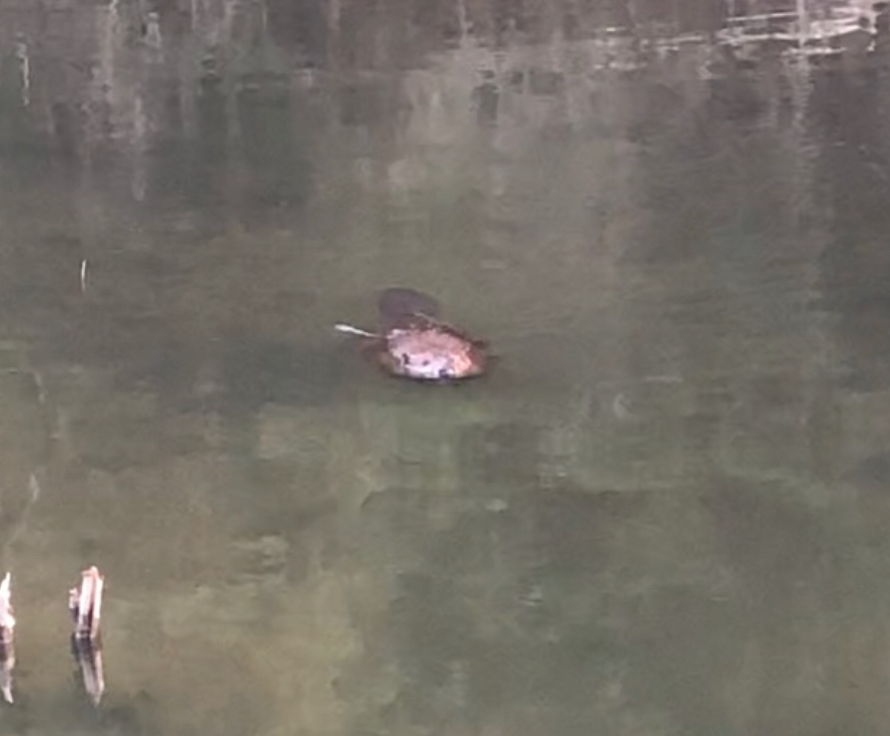
A beaver! in Centennial
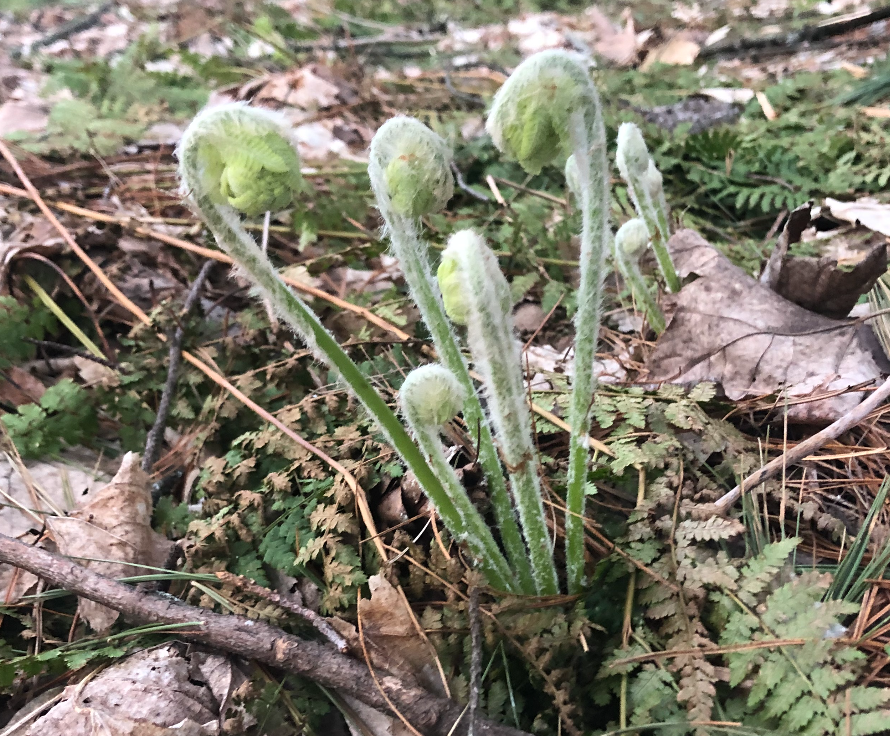
Fiddlehead Ferns!

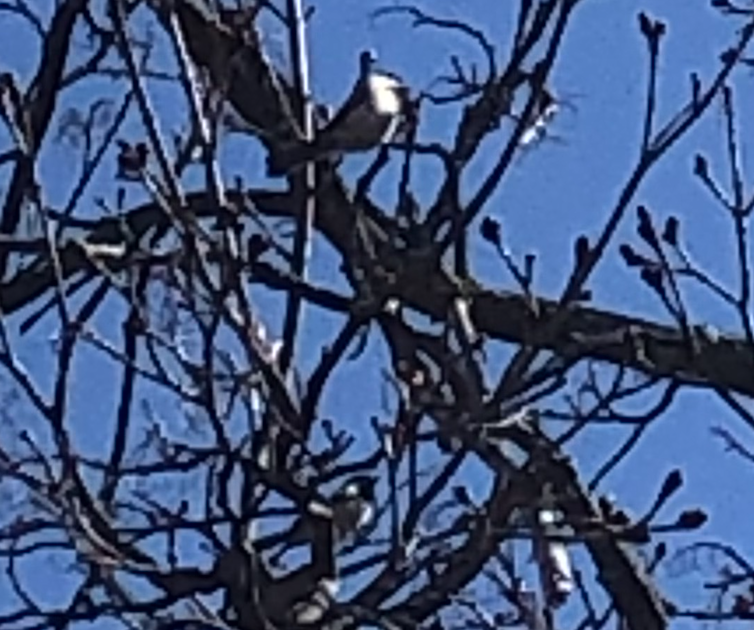
Two chickadees!

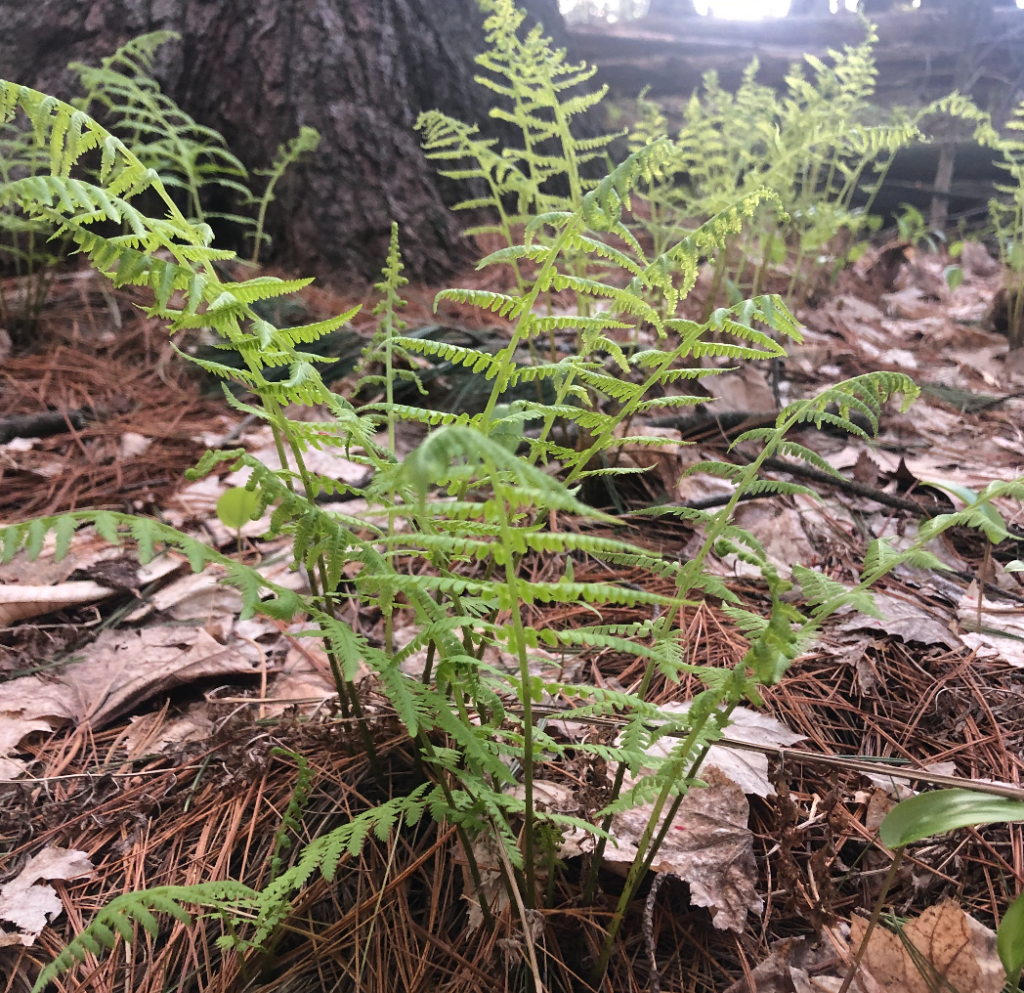
Ferns!
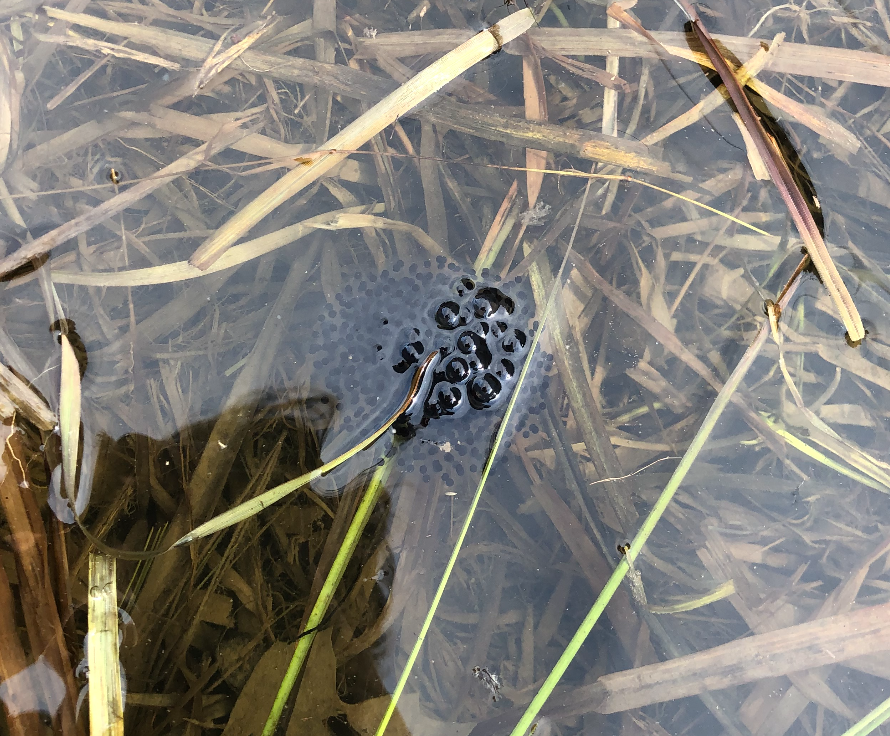
Frog eggs

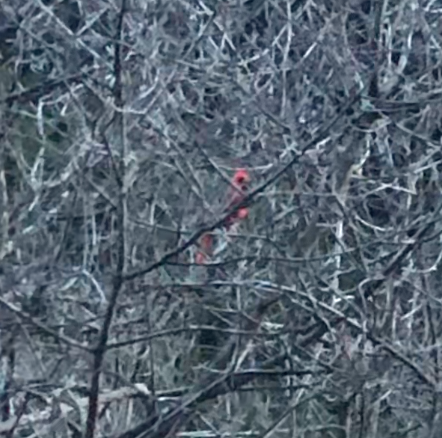
Cardinal!

It was interesting to see the variety of different species, especially in cities on other continents. In looking at the reports from Veracruz, Mexico, it’s so interesting to see all the Indian mango, lizards, red-bellied squirrels, and other species that I obviously can’t observe in Burlington. I think this challenge makes the observation of different species accessible and interactive. As a wildlife biology major, that’s something I appreciate a lot.

March Posting

I definitely misunderstood the assignment at the time because I went to the same place at the time. Hopefully I can still get points for this!

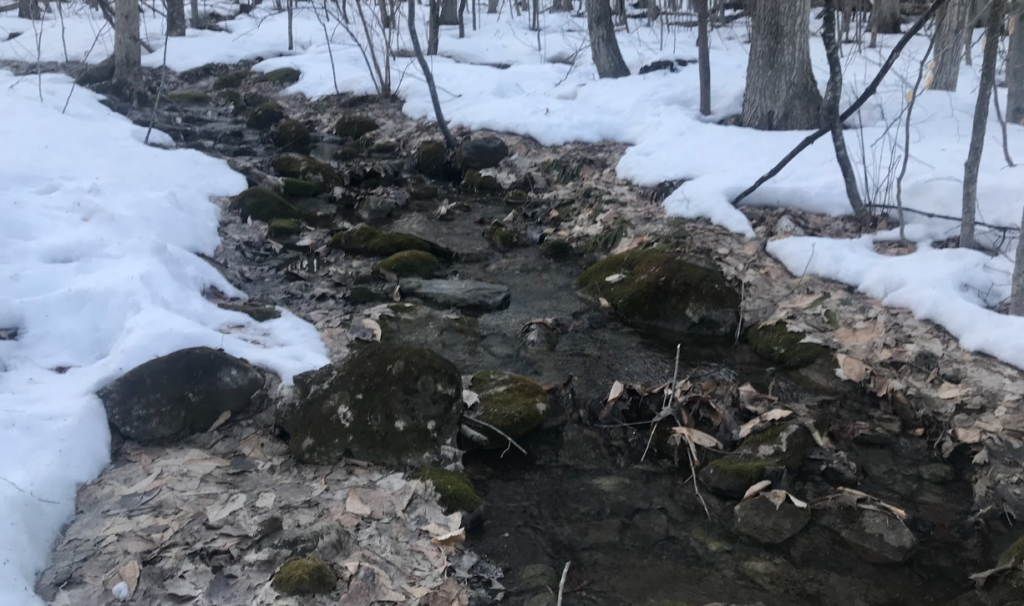
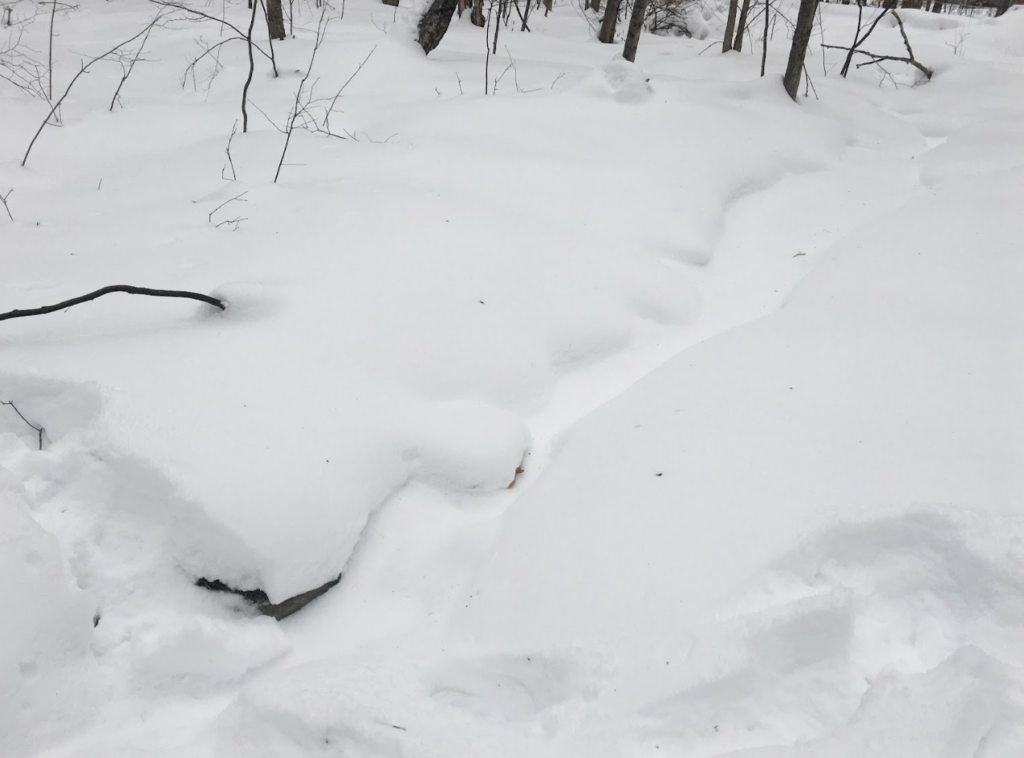
The snow seemed to be melting around the stream before it melts anywhere else. It’s also evidently a stream now instead of just an indent in the snow. The moss and dead leaves from the fall are being uncovered by the snowmelt.

Dried up moss on the uncovered rocks!

During my time in my phenology spot, I didn’t see many birds that I could photograph, but I did hear several calls that I tried to identify. Firstly, I heard several chickadees and what i thought might be a downy woodpecker. It’s difficult to identify woodpecker sounds but the pattern seemed more like a downy than any other.

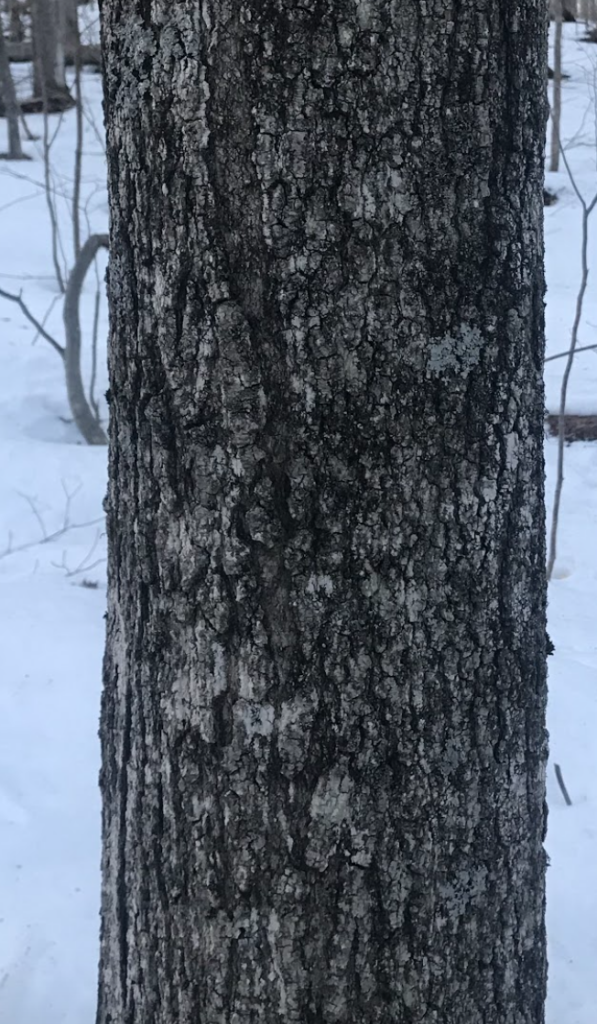
Sugar Maple tree!
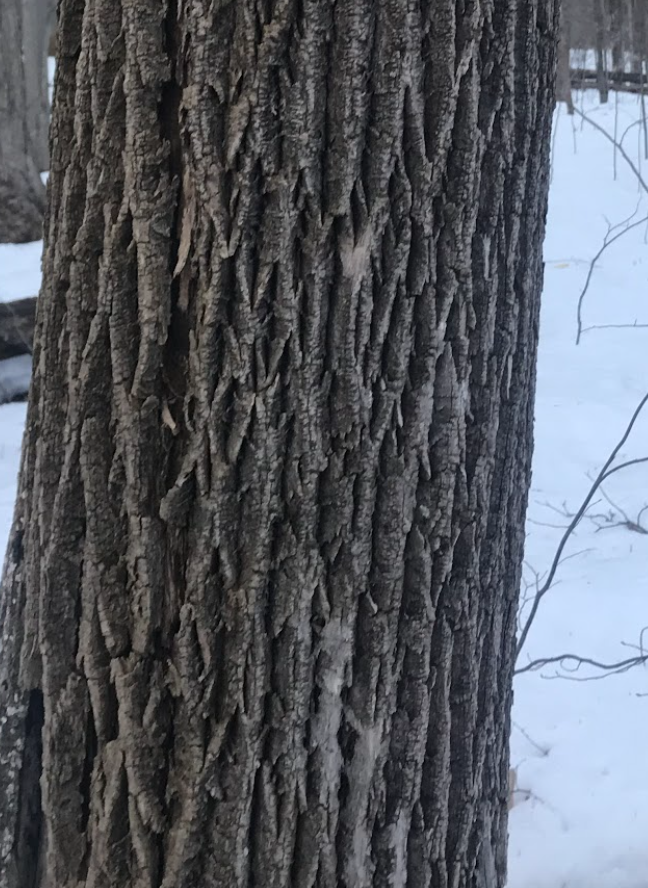
Ash tree!
Beech tree!

I was only able to identify the trees by their bark since they were not budding and only the beech tree had leaves still.

February Posting

Please see the note in my January posting for an explanation of why this is coming so late. Thank you 🙂

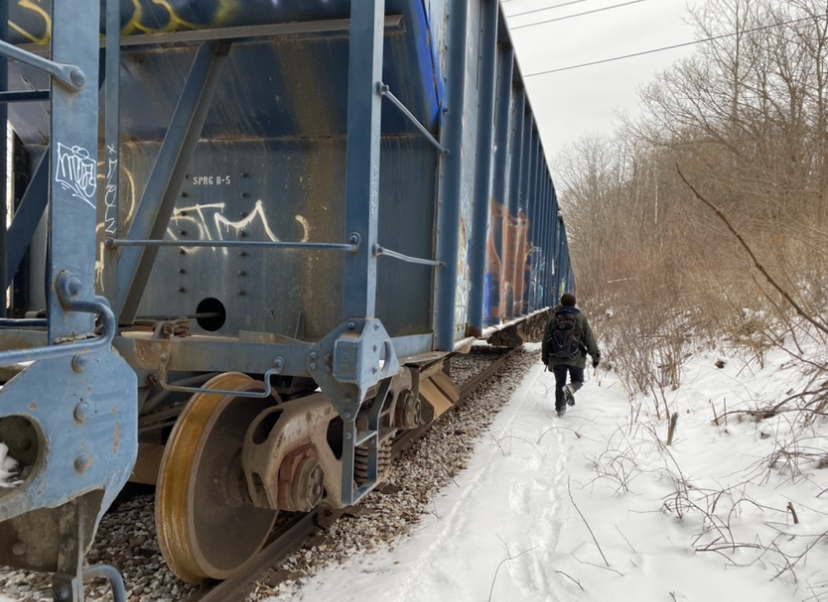
Me and a few friends went on a walk from central campus almost to North Beach, going through the waterfront and through the trail near the Rock Point School. On the way, we encountered a stream of train cars that were not currently in use. I don’t believe the train was abandoned, from what I have heard from long-time Burlington residence, these cars just were not necessary for the traveling they were doing.

On our walk, we encountered several tracks and deer beds. We didn’t, however, encounter many animals or plants directly that we investigated and therefore did not use iNaturalist very much on this expedition, though I am a regular iNaturalist user and I love the application very much.

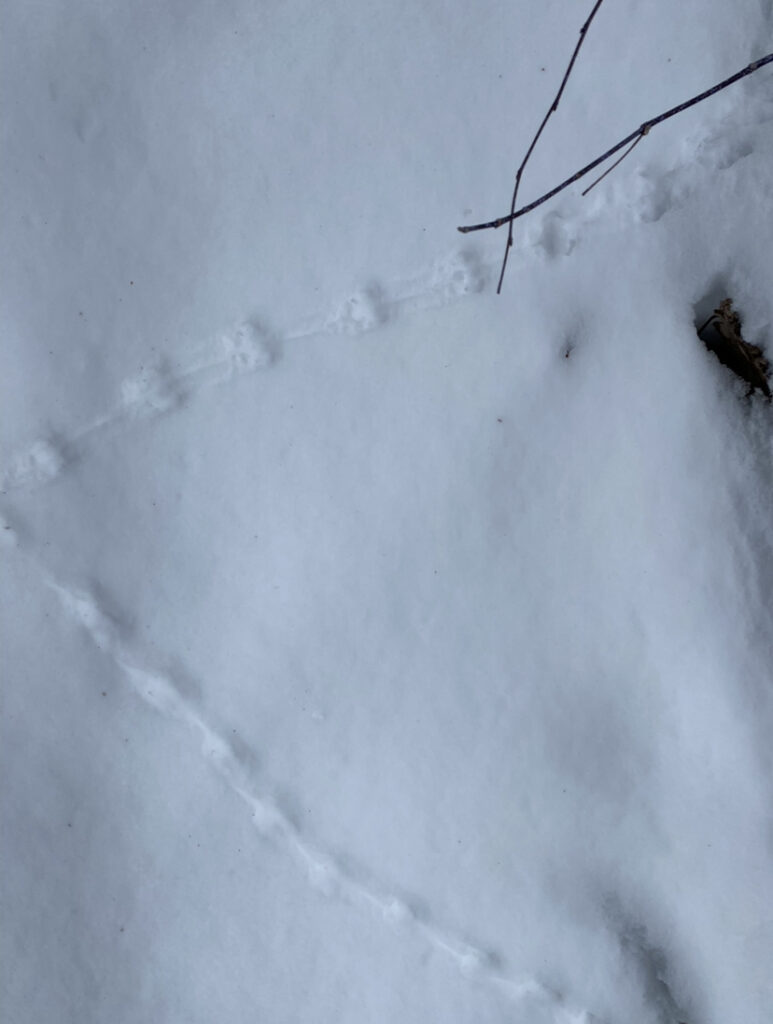
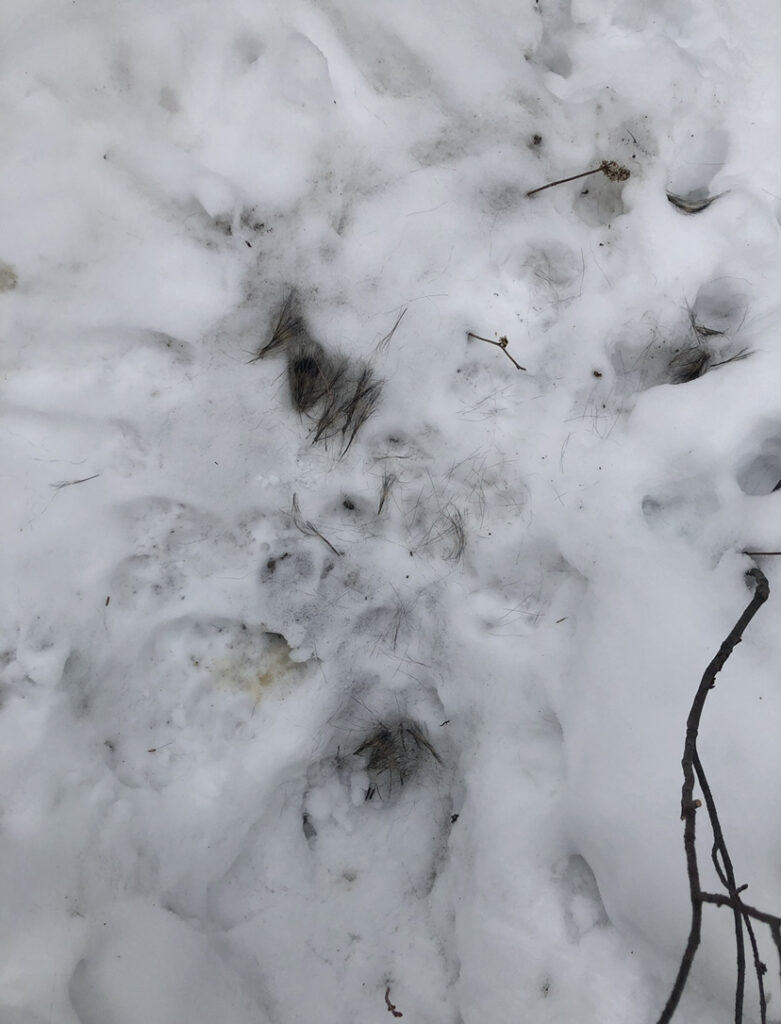
Possibly Mouse Tracks
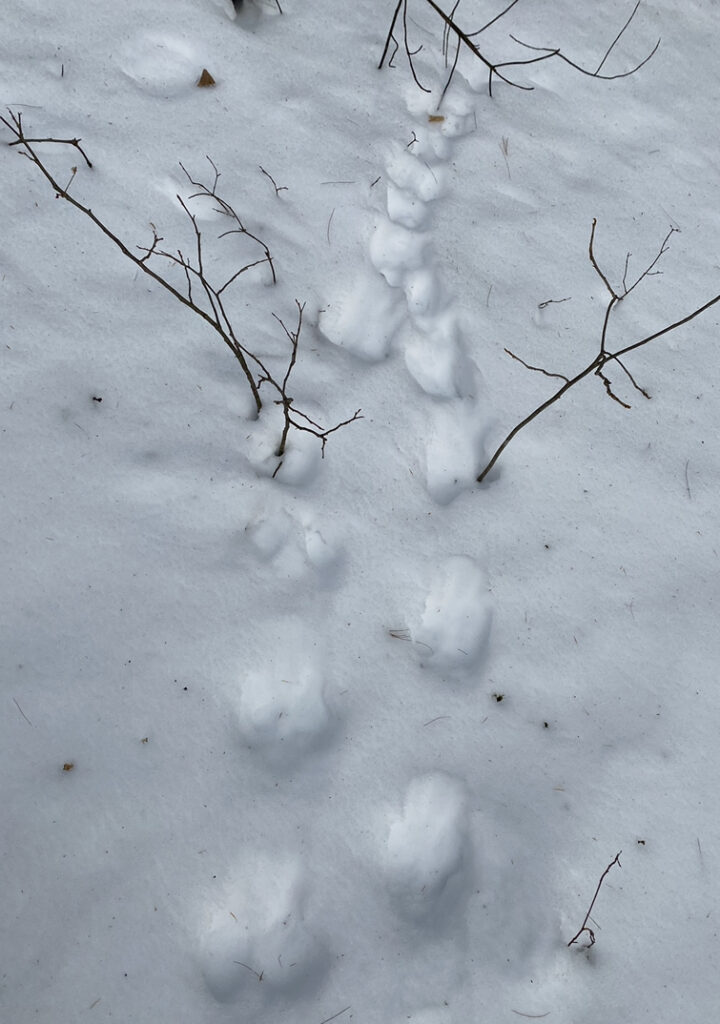
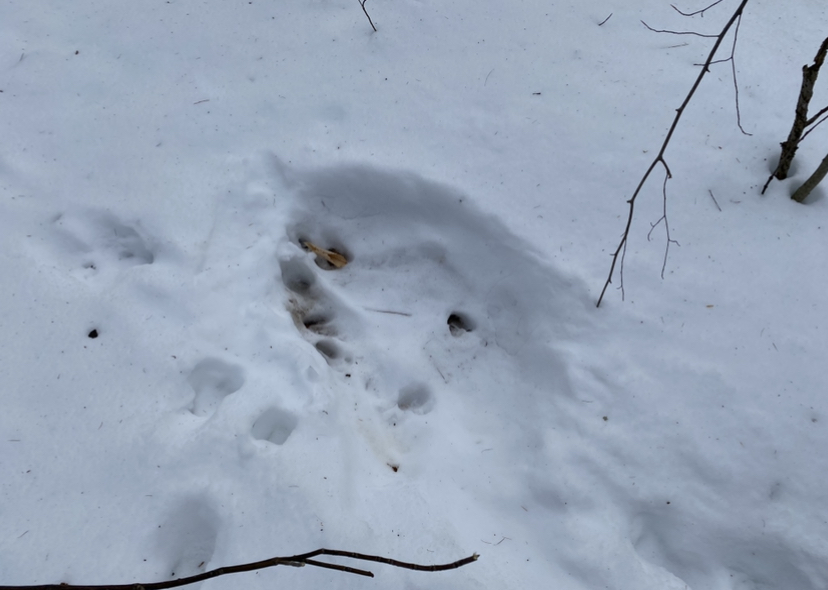
Perhaps two deer?
Possibly from a coyote

We had a difficult time identifying these tracks. The mouse tracks seemed the most apparent, as they were very small and it’s easy to see the tail dragging along behind it. The tracks that we thought may be from a coyote have hair on them, which we thought could mean that it was either scratching itself or holding some kind of prey in its mouth that may have been shedding while being eaten. We also originally had thought it may have been a rabbit that was killed there, but we thought they may be more evidence of blood if that were the case. There were also canine-looking tracks leading up to this site, which you can’t see very well in the photo. The last photo was difficult to identify, but I guessed that it may be two perfect-stepping animals that were originally walking one behind the other, and then next to each other, which is why the one path seems to diverge into two. I guessed that they were deer due to the fact that it looks like hoof prints and they were roughly the size of a deer track.

Deer bed
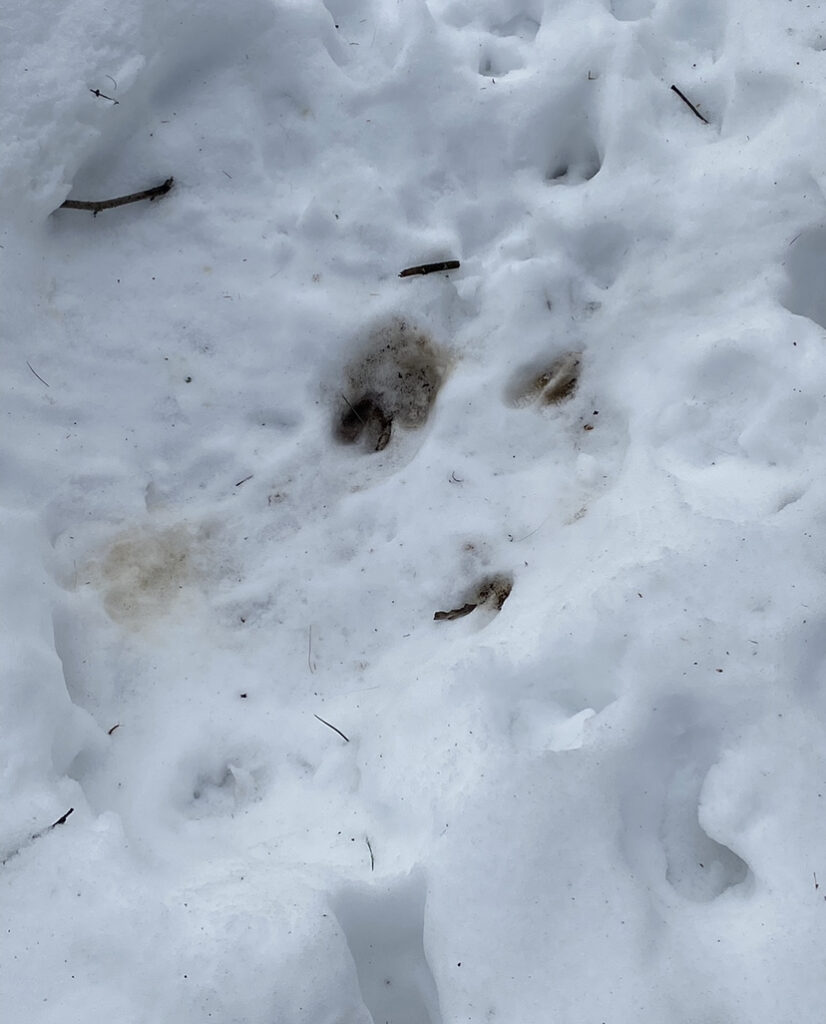
Muddy deer track in deer bed

These two photos show a deer bed that we encountered on our trip. You can see the outline of a deer’s body, as well as several hoof tracks near it. It’s likely that a deer stopped to lay down here for a short time before continuing to move.

It was very fascinating to me to see this deer bed, as it is a really nice insight into the life of another animal. Upon seeing this, it’s easier to imagine the activity that happens every day in the woods and how the animals function on their own. We also saw a large bird fly overhead that I could not get a photo of, but we couldn’t identify it. It looked like an eagle of some kind, or a large hawk, which was so fascinating to see in Burlington in the middle of winter. This trip was a very enriching experience, and it was so great to get outside in the winter and see all of the things that I was missing out on that week while I was mostly staying indoors.

January Phenology Posting

Hello!
I want to apologize for how late these blogs are coming. During January and February I got really sick and was dealing with several health issues including COVID and issues with my heart and blood iron, as well as mental issues that I am working through professionally now. I did go out into Centennial Woods and observe it/take photos during these months, but I never posted the actual blogs, which I will be doing throughout the next week. I understand if this is not accepted but I thought it would be helpful to submit either way. I would have reached out about this sooner but I actually do not know who grades these. If you see this you can email me at kaia.hansen@uvm.edu and we can talk about grading if you would like!

I’m sorry again, thank you for your understanding.

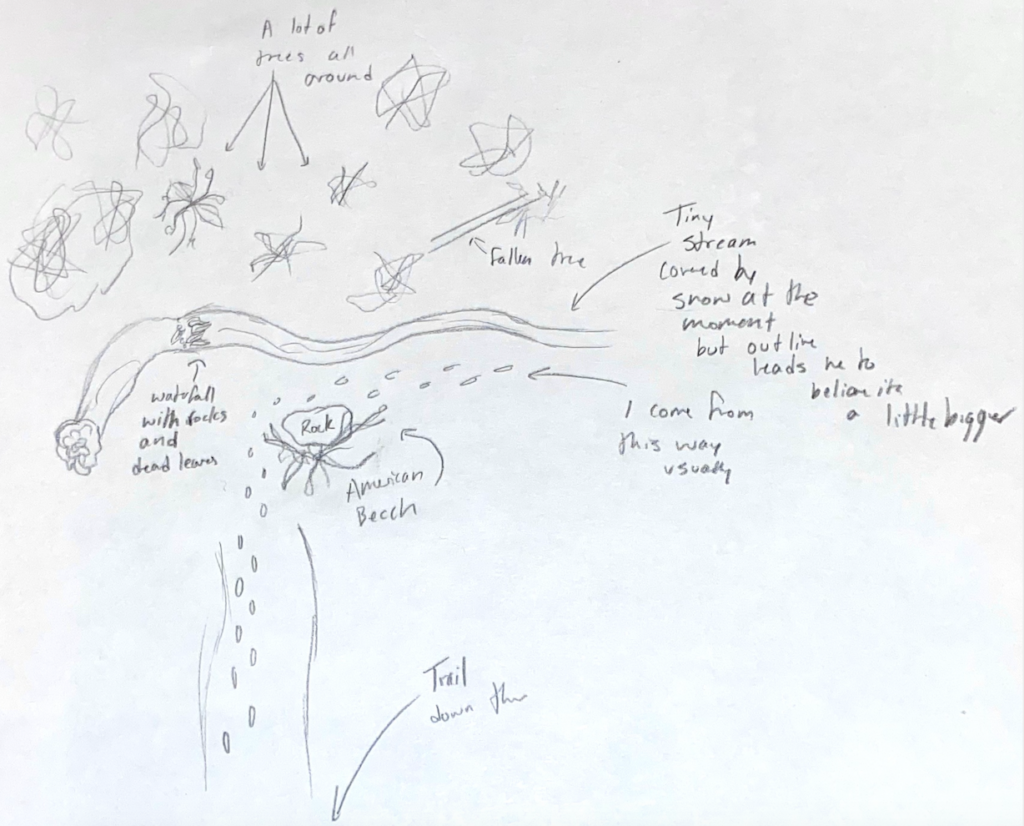
Aerial View of My Spot

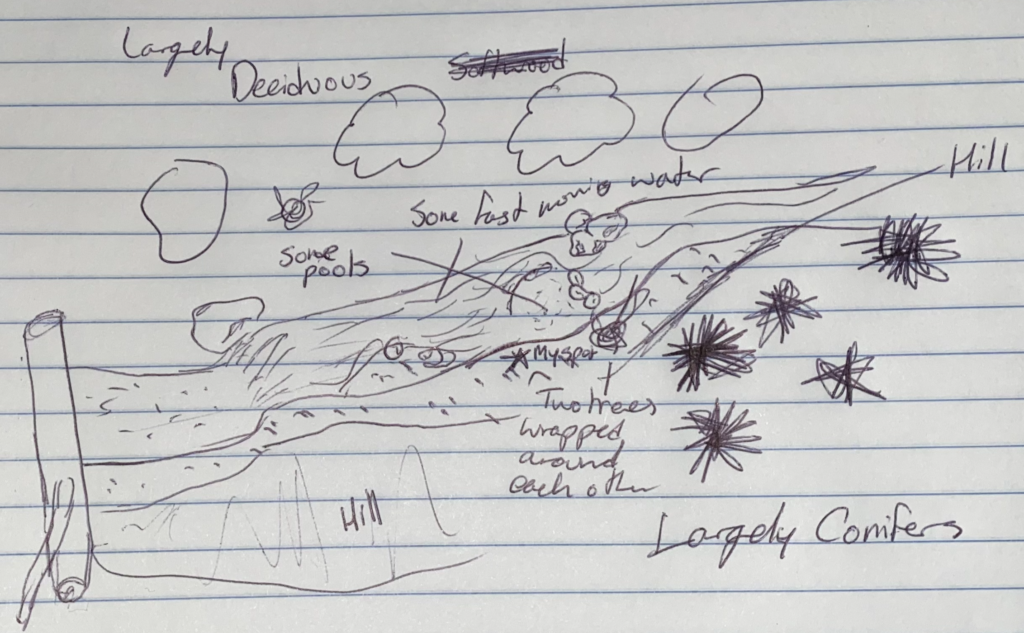
My new spot is still in centennial but a different spot. This is a very rough map of my location. I enter the Centennial Woods through the East Avenue entrance and walk through the woods until I reach the spot in where the trail branches off in multiple directions. I go straight the whole way through, and when you pass the bridge and get to the next clear spot, go towards the river and keep following it to the left until theres a little fork in the river to a smaller stream. There’s a little piece of the stream that has a large rock near it and that is where I sit to record the phenology posts.
My phenology spot was freshly covered in snow, making it difficult to spot wildlife at the spot at the time, but I did see footprints around my spot on the walk in the more densely packed woods.

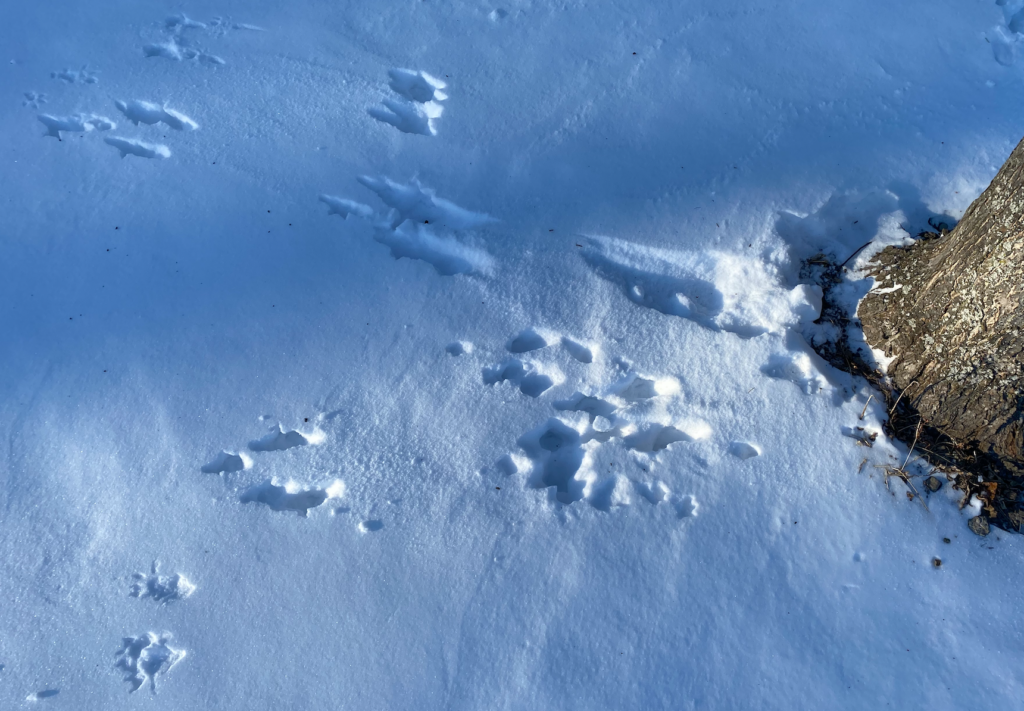
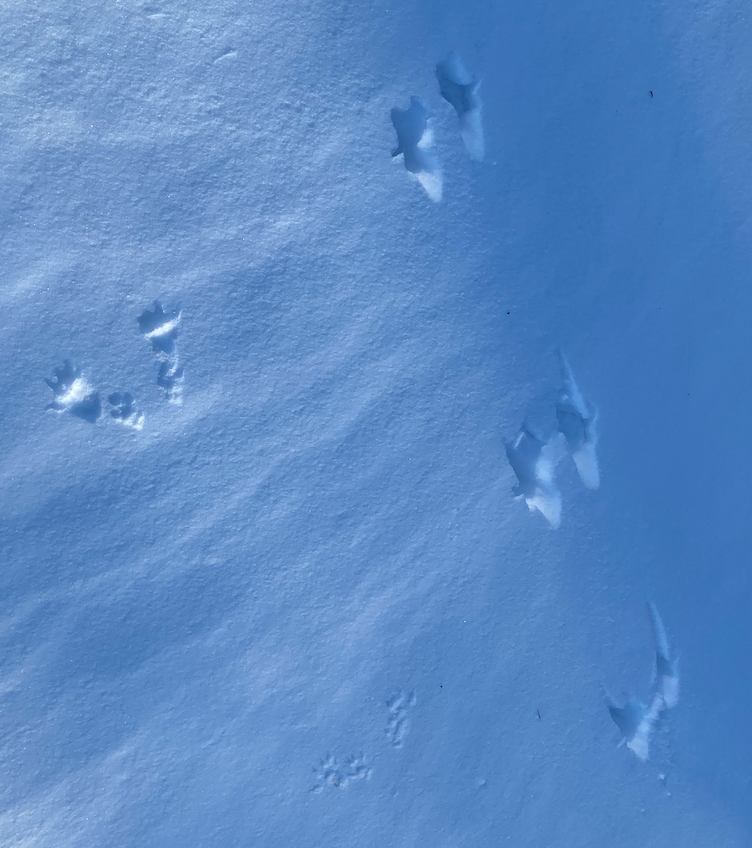
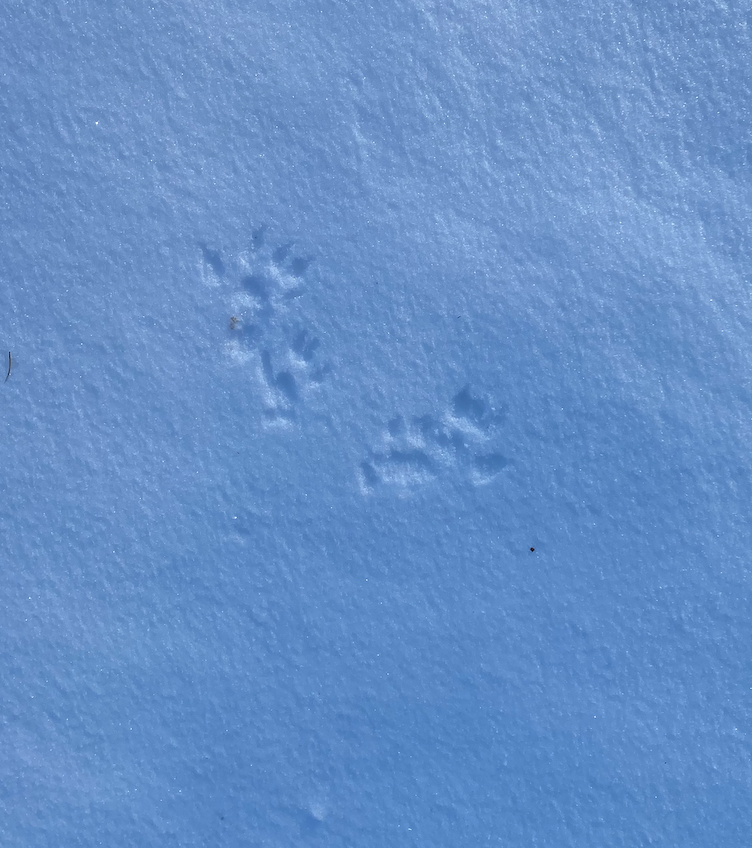
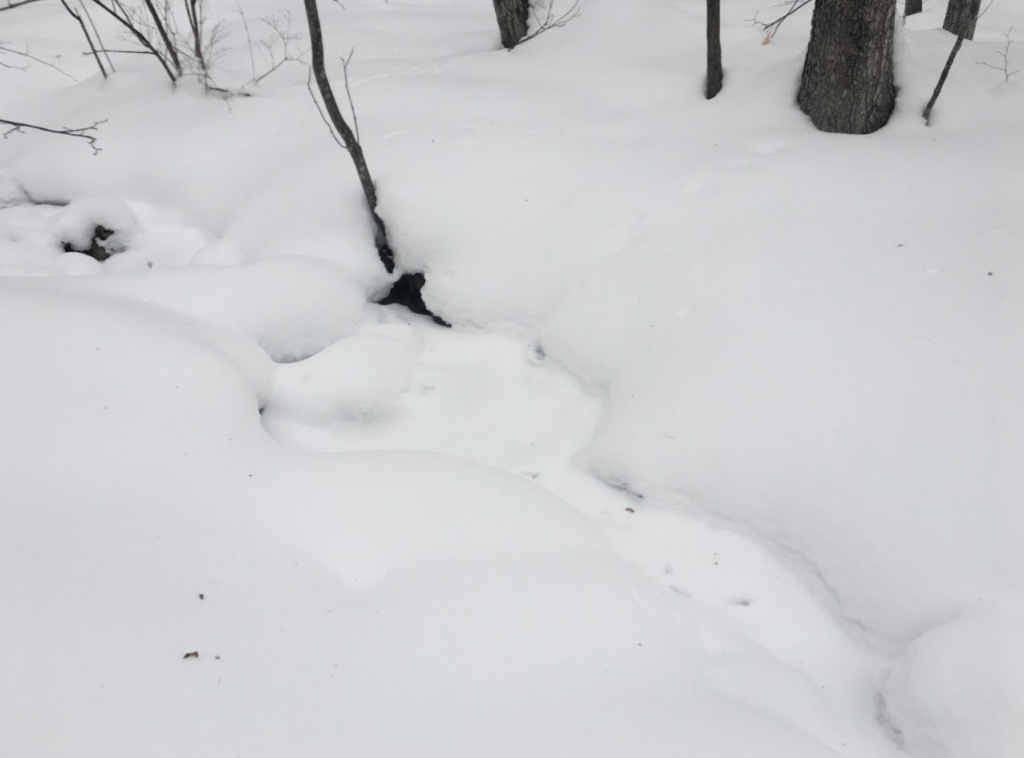
It looks at though there were multiple animals running around this area. There are very clear tracks in the snow, though I am having trouble identifying them. The small, defined tracks seem to have come from the tree, since there are no tracks past the tree. They look the most similar to gray squirrel tracks, which also makes sense with their size.

The other tracks are more difficult to identify. They seem to have come from the tree as well, but they’re sunken into the snow. I can’t identify them because of how distorted they are but it must be a tree-dweller or just an animal that can climb trees.

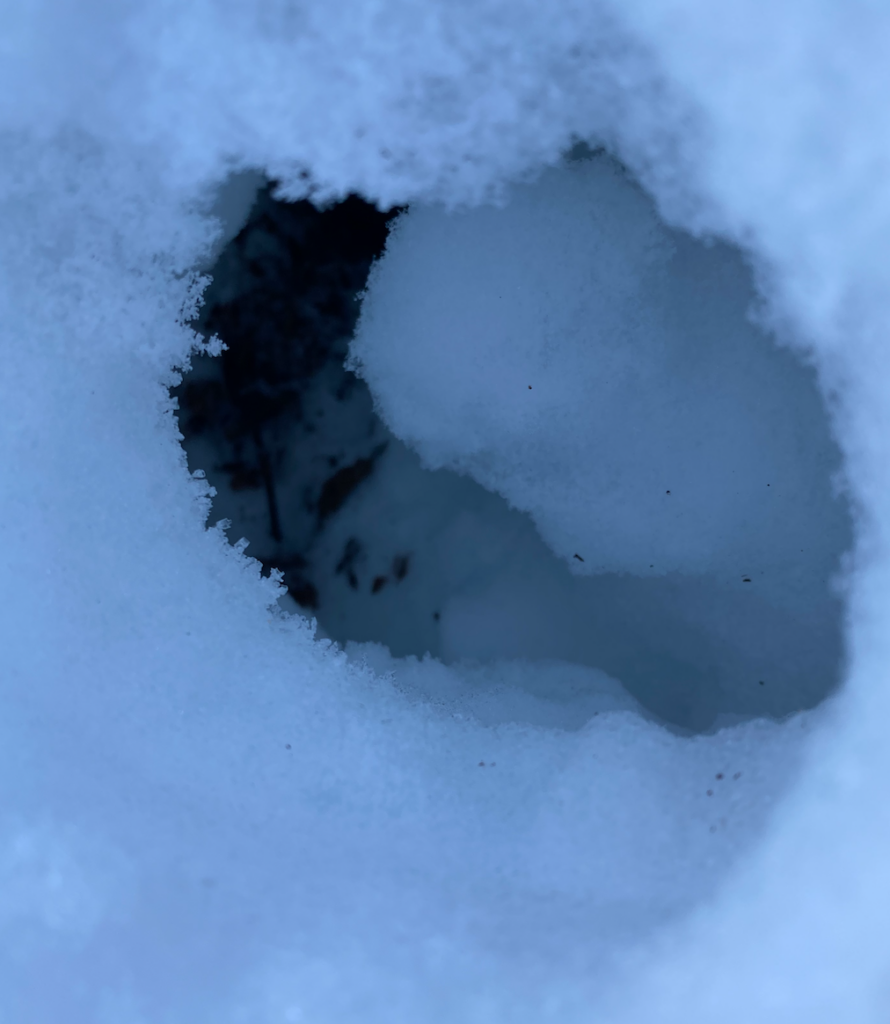
I also found a hole in the snow. I’m not sure what it’s from. It’s possible that it is a hole into the subnivean zone or just a strange area of snowmelt, but it seems to have leaves and dirt visible inside of it, which might indicate an animal living there.

Stream Through My Spot!

November 12

Fun times around Burlington


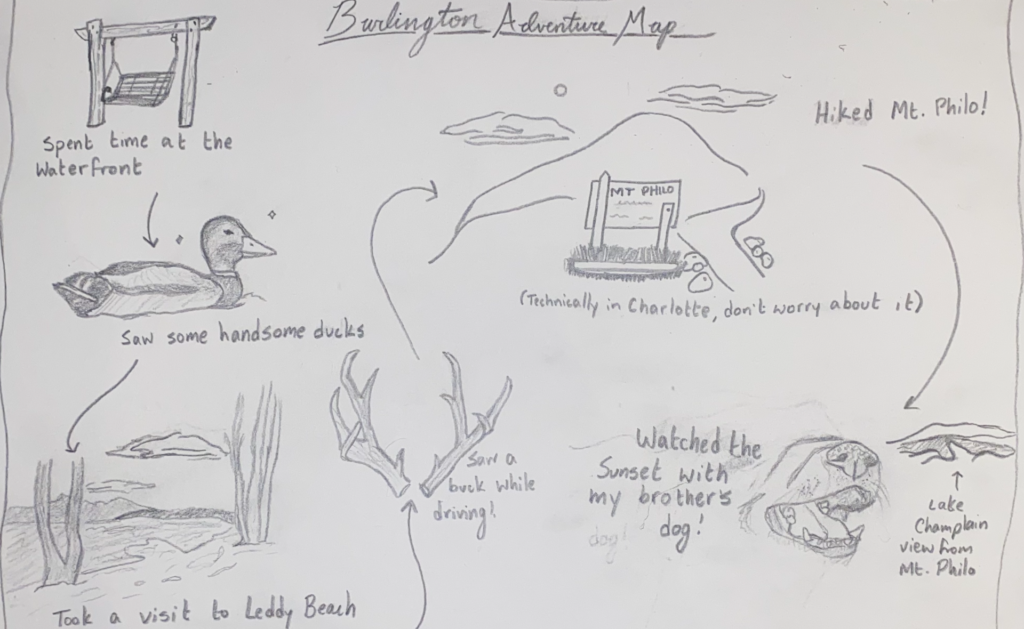
On my Burlington adventure, I began at the waterfront and hung out with my friends. We sat on the rocks and watched some of the mallard ducks swimming around, which was nice since we knew they’d be migrating soon. We then went to Leddy Beach. We had visited here during summer, so seeing it in the fall was a really cool change of pace. Not a lot of people were there, and the water was very beautiful on a windy day. While we were driving to Mount Philo to hike, we saw a buck with large antlers run near the road. We hiked Mount Philo with my sister in law and her dog and watched the sunset together. On our hike, I saw many pioneer species and deciduous trees. The mountain is not quite elevated enough to have a conifer-dominated near the top. We saw Lake Champlain during sunset, and it was very beautiful. A great end to a great day.


Nov 1 Phenology

Lots of little mushrooms ! I’m not sure what kind.

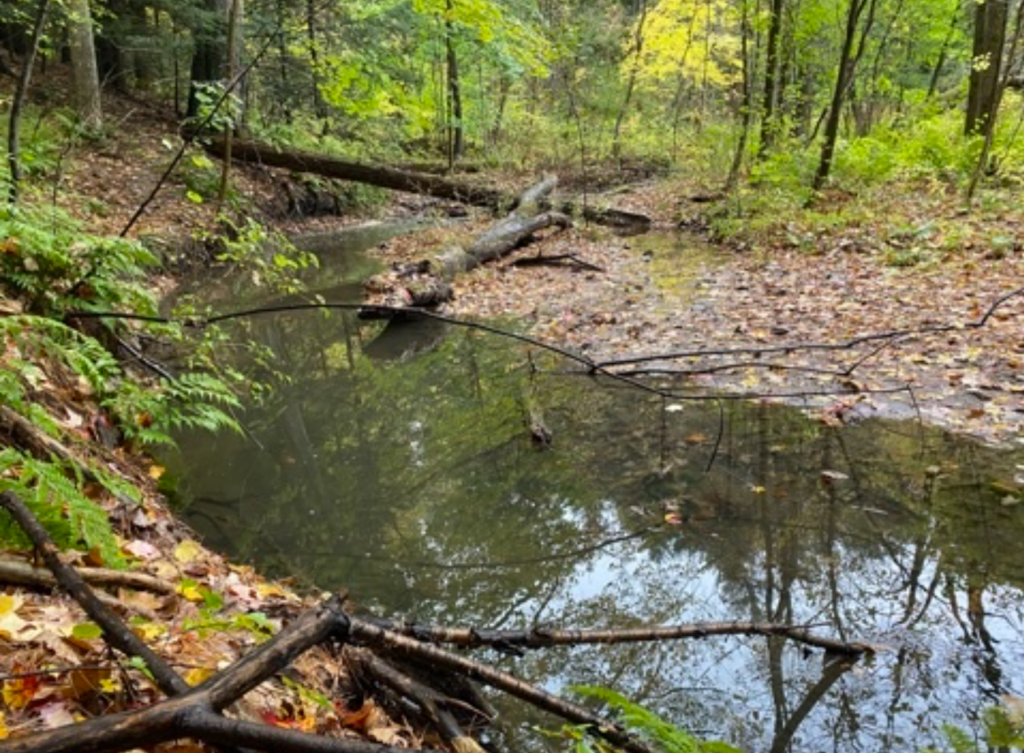
In my experience sitting quietly at my spot, I felt the slight drizzling. The water level was higher, and the brook was moving faster than normal since it had been raining for most of the day. The water here is deeper than I originally thought. It’s not as fast moving in parts that are deep, they seem flat compared to where different angles of the stream combine. I don’t see the fish in the stream today. It’s possible they’re just hiding. There was an occasional songbird, but they’re few and far between.

Overfull brook

It’s very quiet in the woods today. One side of the river is a hemlock grove, the other is a hardwood stand. The rain made the soil very muddy and slippery, but it’s still dense in a lot of places.

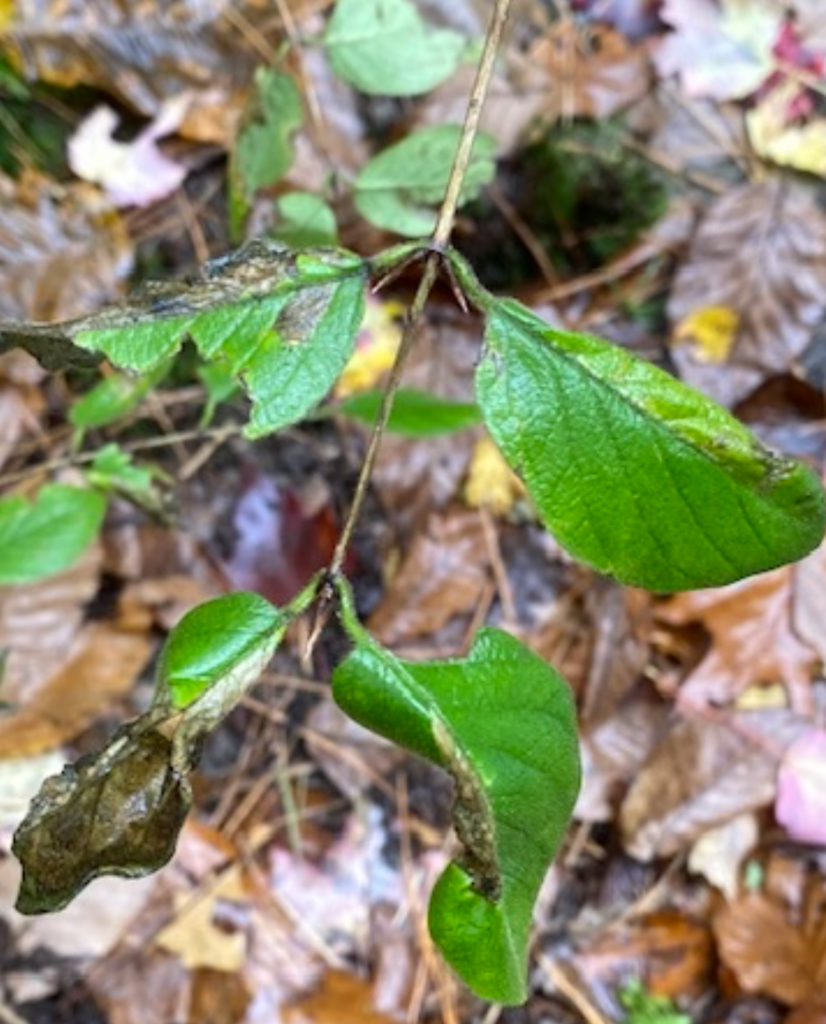
The species I’ve observed are: Hemlocks, buckthorns, ferns, and honeysuckle. Many red maple leaves are scattered on the ground. There are also occasional beech trees and other pioneer species.

My Map! (excuse the chicken scratch)
Buckthorn leaves

I don’t notice any stark changes in the vegetation, except that the leave on the trees are nearly all gone. Not all of them, but many of them.

Home Town Phenology: Manchester Vermont

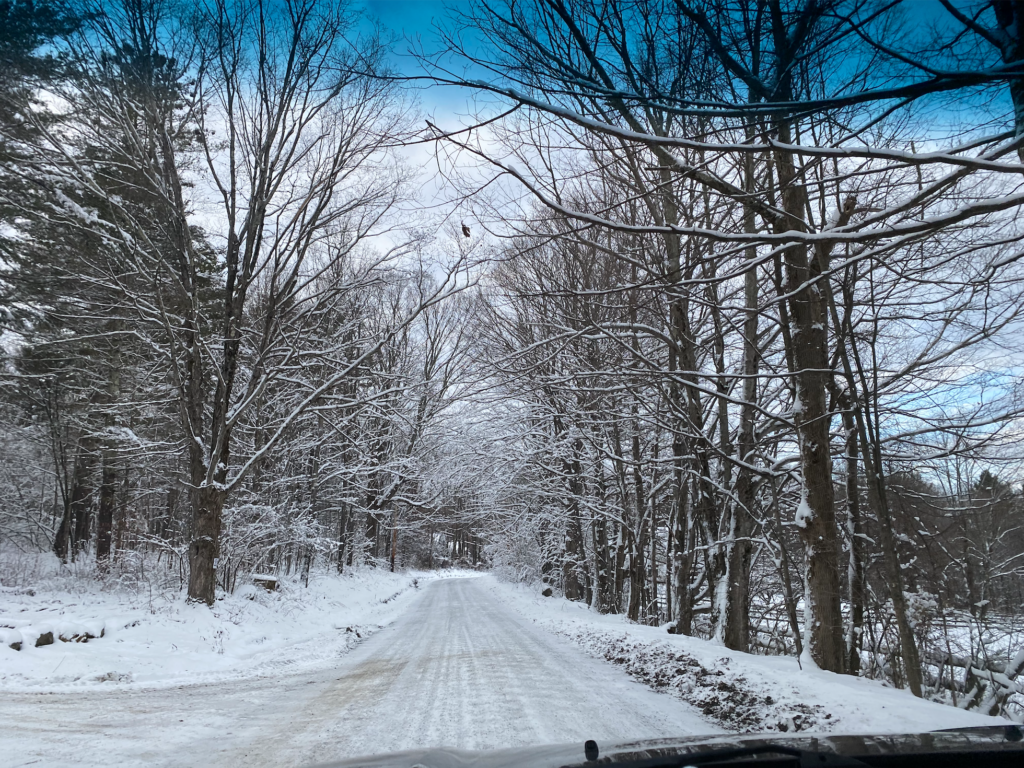
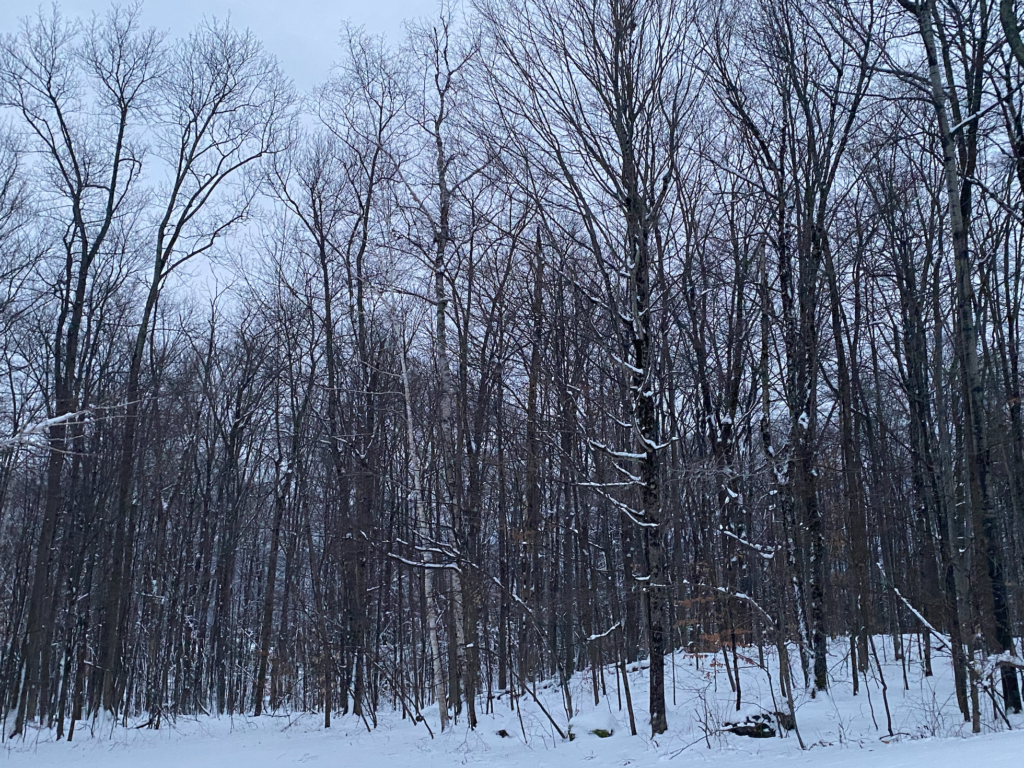
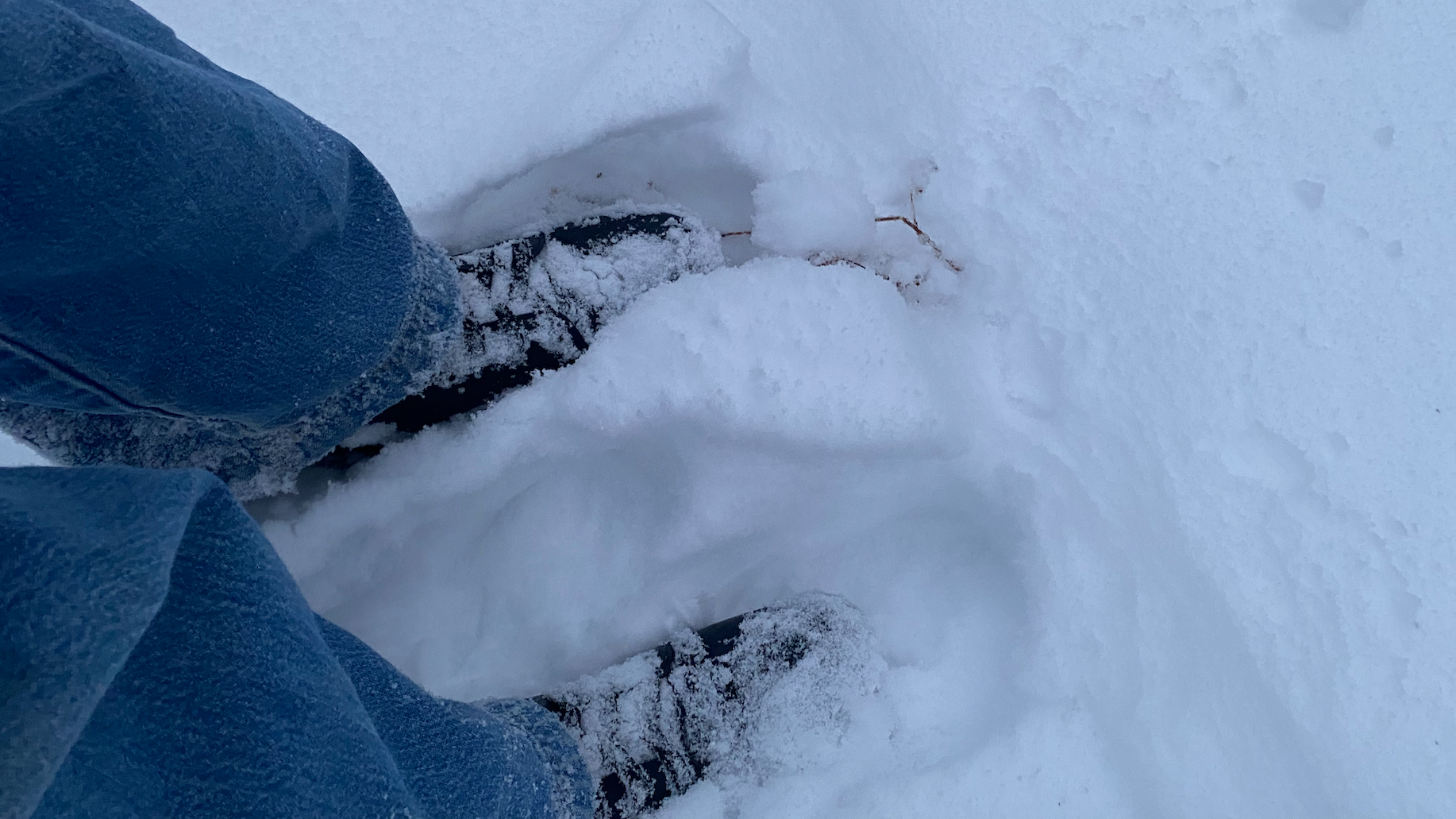
One thing that’s special about my hometown compared to Burlington and a lot of other places in New England is that it snowed a significant amount over the past three days. The trees are coated in fresh, white snow. Unfortunately, there was too much fresh snow to make out animal tracks in the woods, which is what i was excited to write about for this blog. I’m pretty sure one of the reasons it’s not snowing as much in Burlington right now is because of Lake Champlain.

I also noticed that where I live is forest made almost entirely of deciduous trees. At my phenology spot in Centennial woods, it’s very similar. There’s also a small brook in the woods near my home which is the spot I used for my phenology blog last year when I did Mountain Campus at Burr and Burton Academy. My current phenology site in Burlington is also near a stream. I’m wondering whether the abundance of deciduous trees and the presence of the streams are correlated, since I know that certain trees grow better in wet conditions.

I’m still a little bit confused on how the google maps location works, but my location is 5WW9+6XV Dorset, Vermont. It’s my backyard.

Lots of snow!

Kaia Hansen Phenology 1

Sunday, October 17, 2021

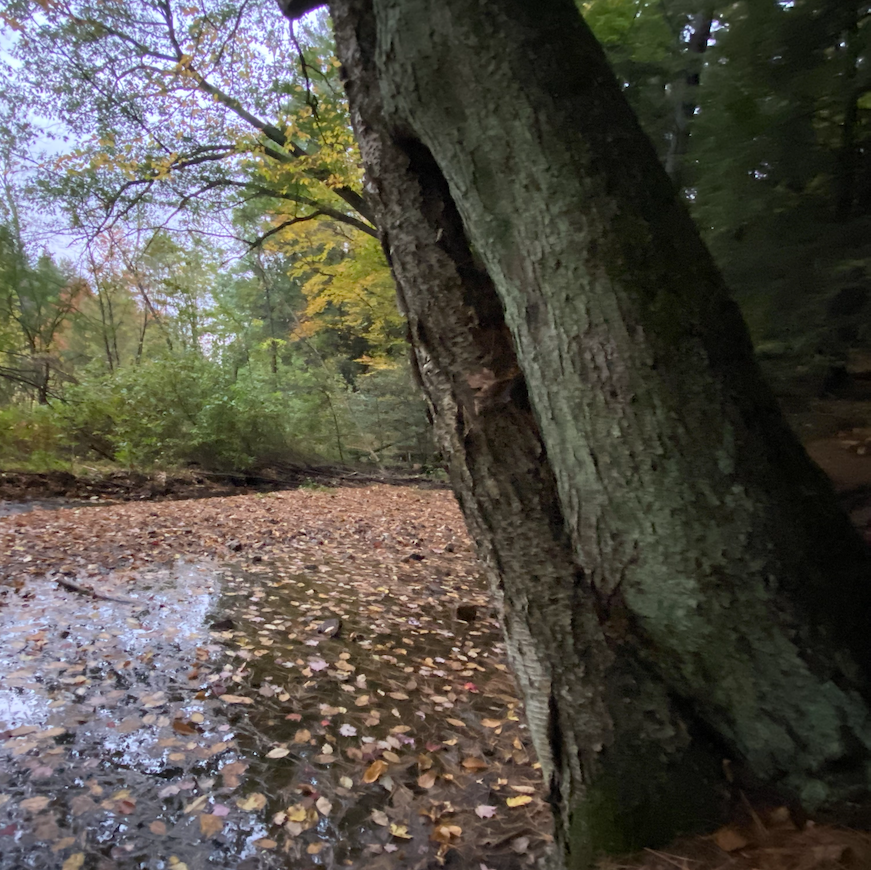
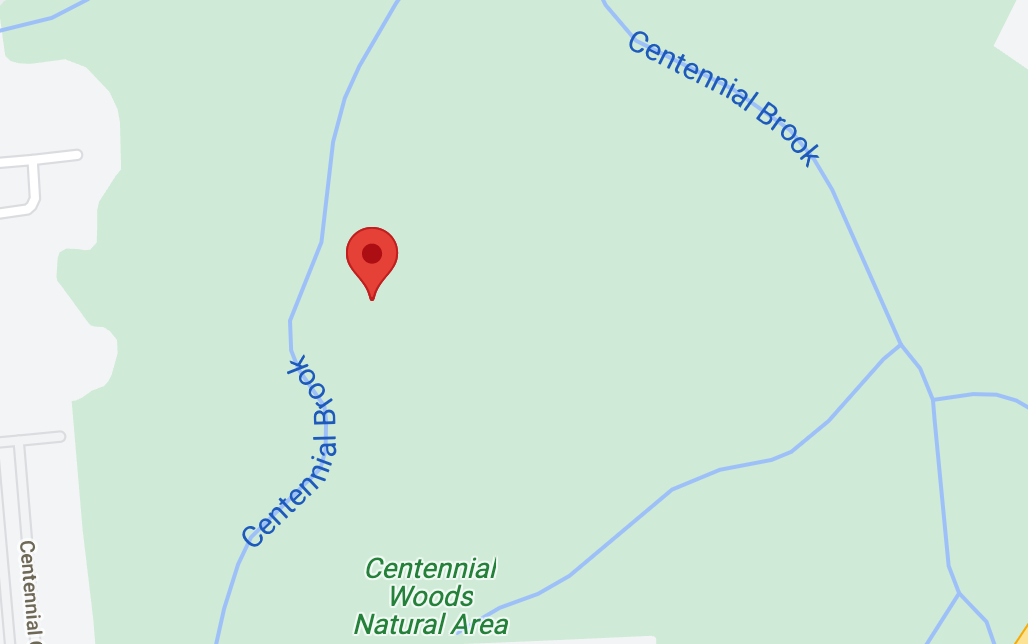
My phenology spot is located in Centennial Woods, just off the trail when you reach one of the large clearings. I chose this spot because I wanted to be near a wetland, and my spot is part of Centennial Brook.
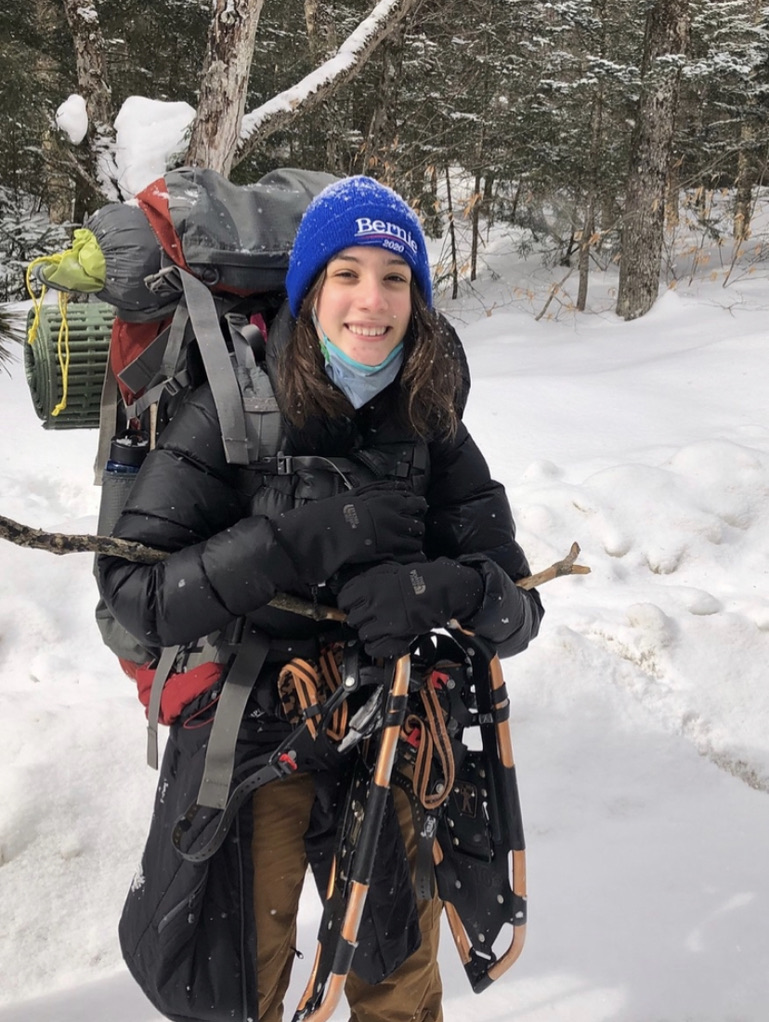
Me during Mountain Campus.

During my time at a different nature program called Mountain Campus, I did a phenology blog at a small stream near my house, and seeing how the stream housed and aided so many plants and wildlife was incredible. I’m especially looking forward to seeing animal tracks in the snow during winter so I can get a sense of what kind of wildlife lives in and around Burlington and our campus.

Two trees are best friends.

My spot is defined by two trees of different species that have somehow molded together and share a trunk. One of the trees is a yellow birch and the other is a

The most common woody plant species that I saw are American beech, sugar and red maple, and yellow birch. There are also assortments of different shrubs and shorter plants surrounding the water bank.

Centennial Brook

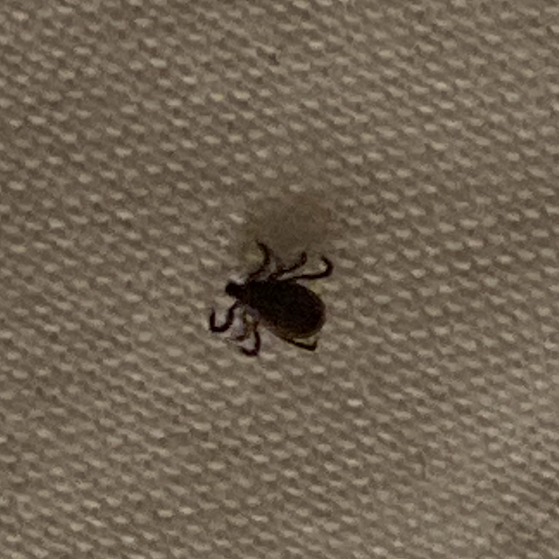
I saw a lot of wildlife at the stream including frogs, toads, large and small spiders, mosquitos, and small fish. Hopefully soon I can identify these animals more specifically by species. I also found a little tick on me when I got home, which is less fun news, but still valuable information.

New friend alert !!

My site is located at 44°28’39.8″N 73°11’10.0″W.

Skip to toolbar