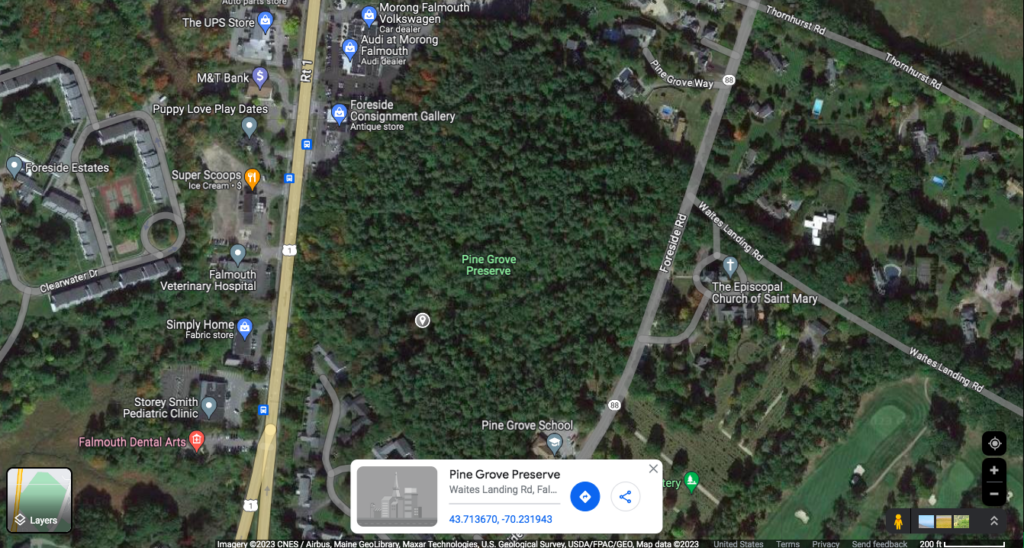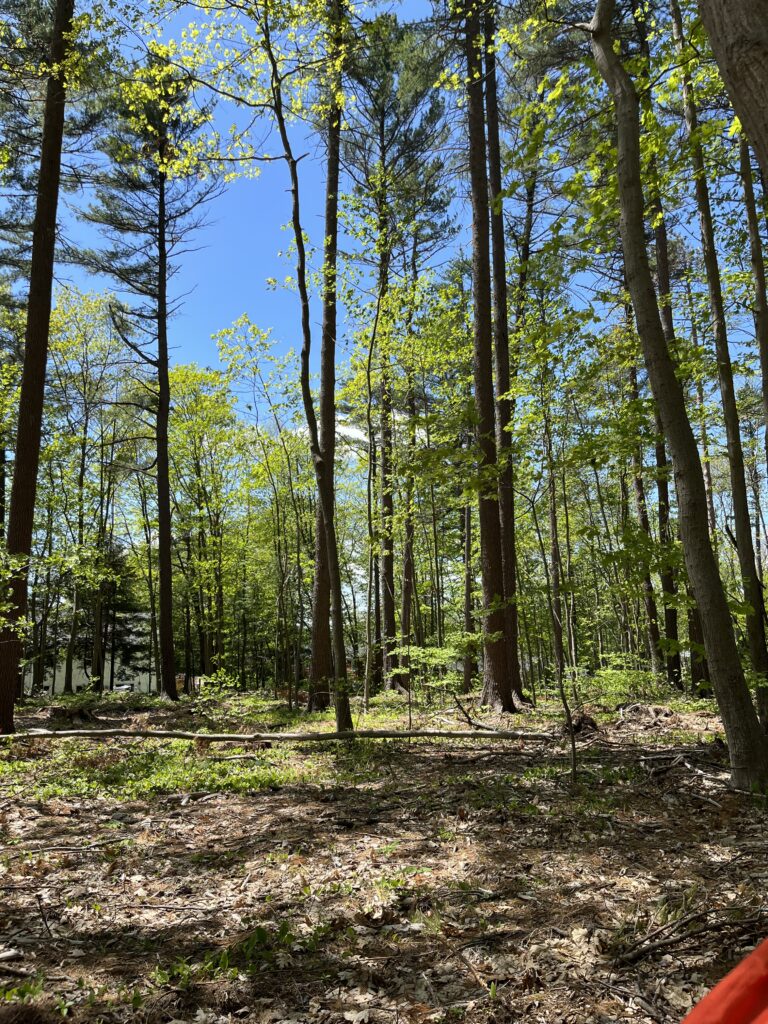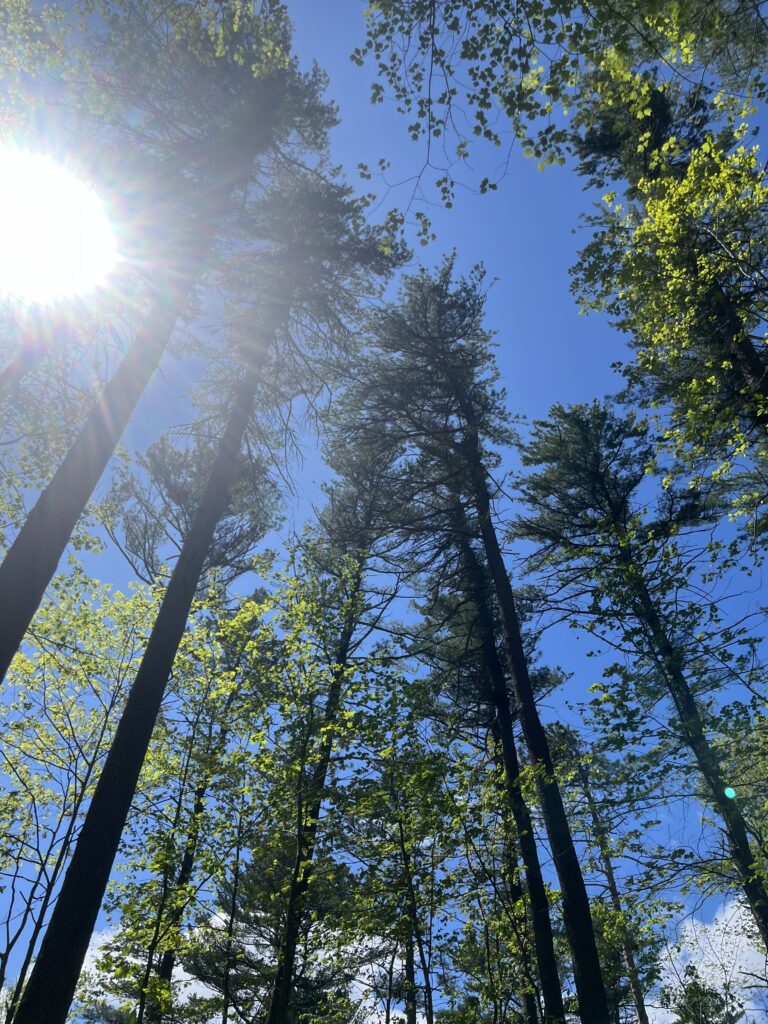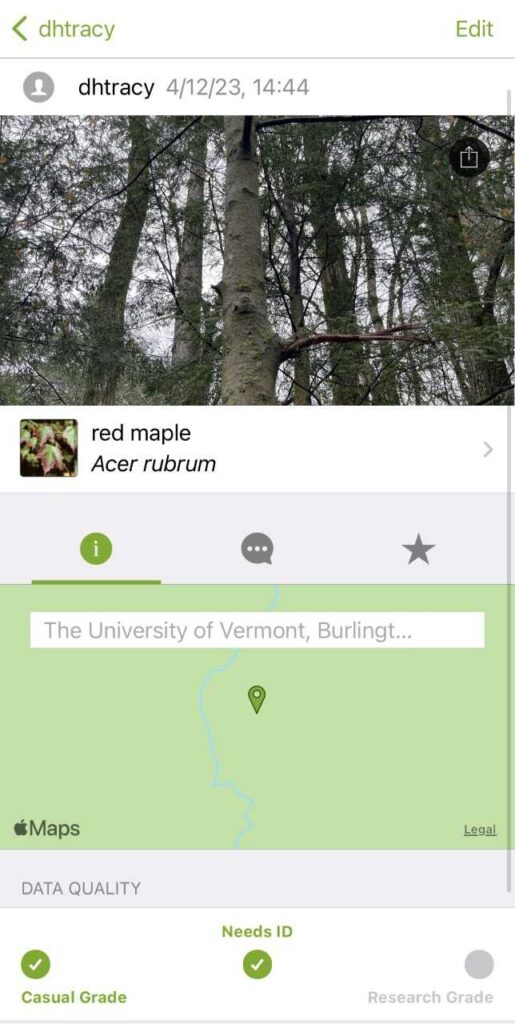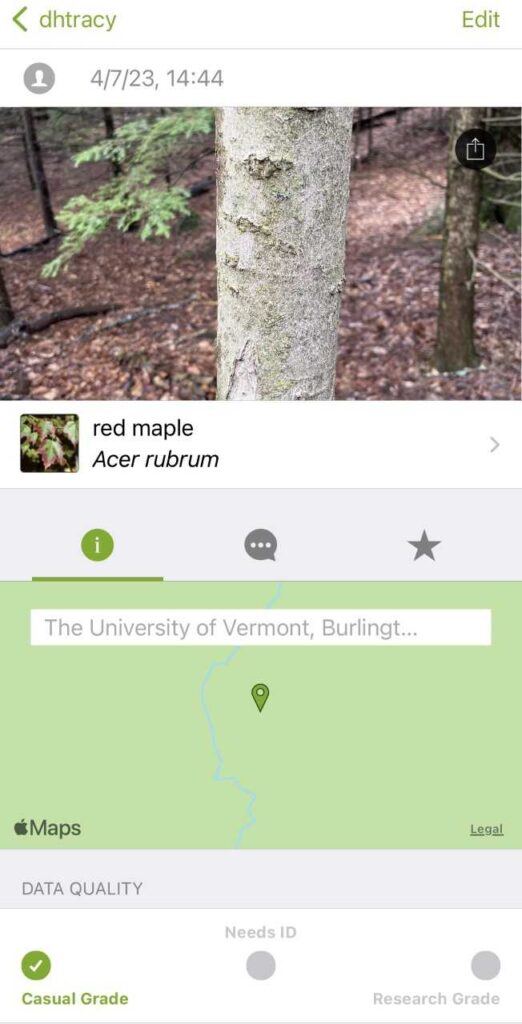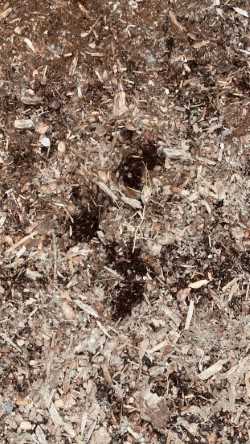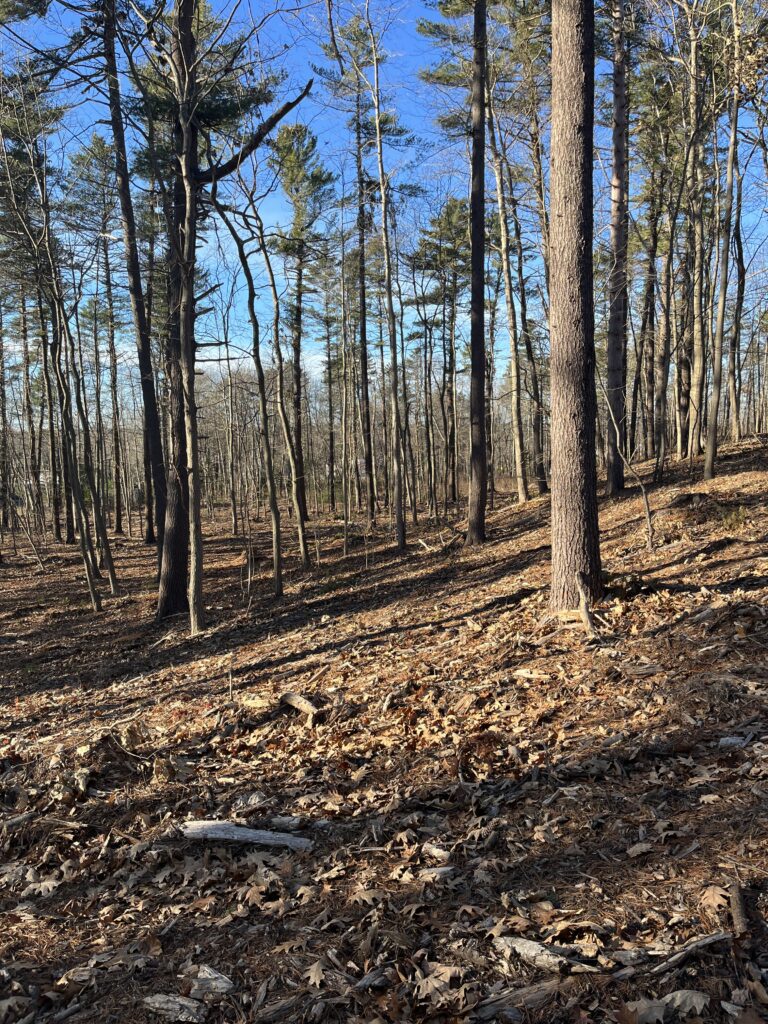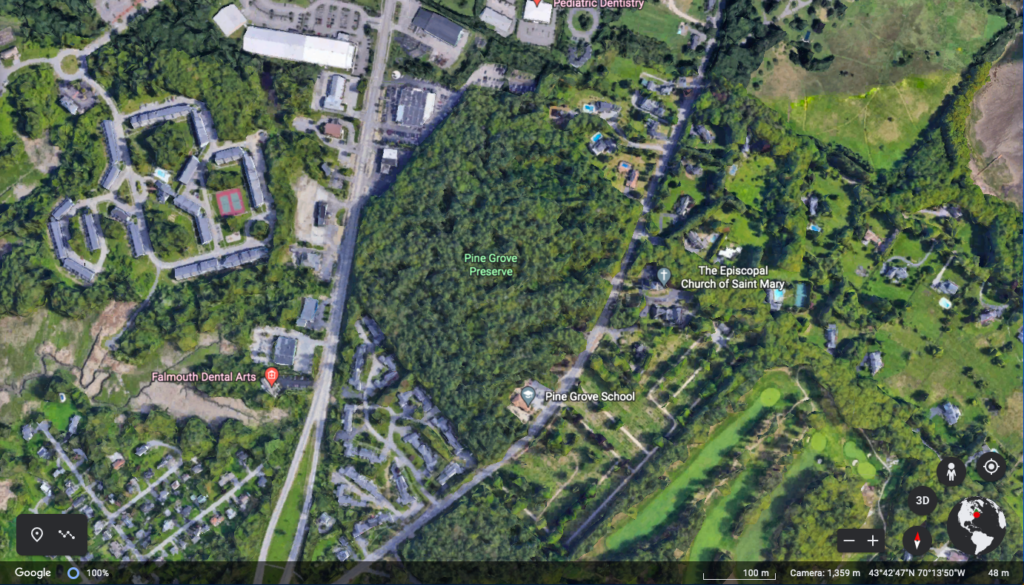
Near to my house is a small forest park called Pine Grove, this is a small wooded area sandwiched on all sides by roads and houses. I have been riding my bike, walking, and exploring the woods of pine grove for over 10 years. For many years I have wandered the forest balancing on fallen trees or cutting trails to ride my bike with friends. Just last summer however a new initiative was taken on in pine grove, being town owned they brought in a logging company that cleaned out and chipped nearly all the fallen lumber and cut down many trees. All this forest devastation in an effort to nurture healthier more resistant trees, left standing now are mature red maples and towering eastern white pines. With the new plan executed every time I now walk through the trials there is new vegetation and brush popping up all over the park.
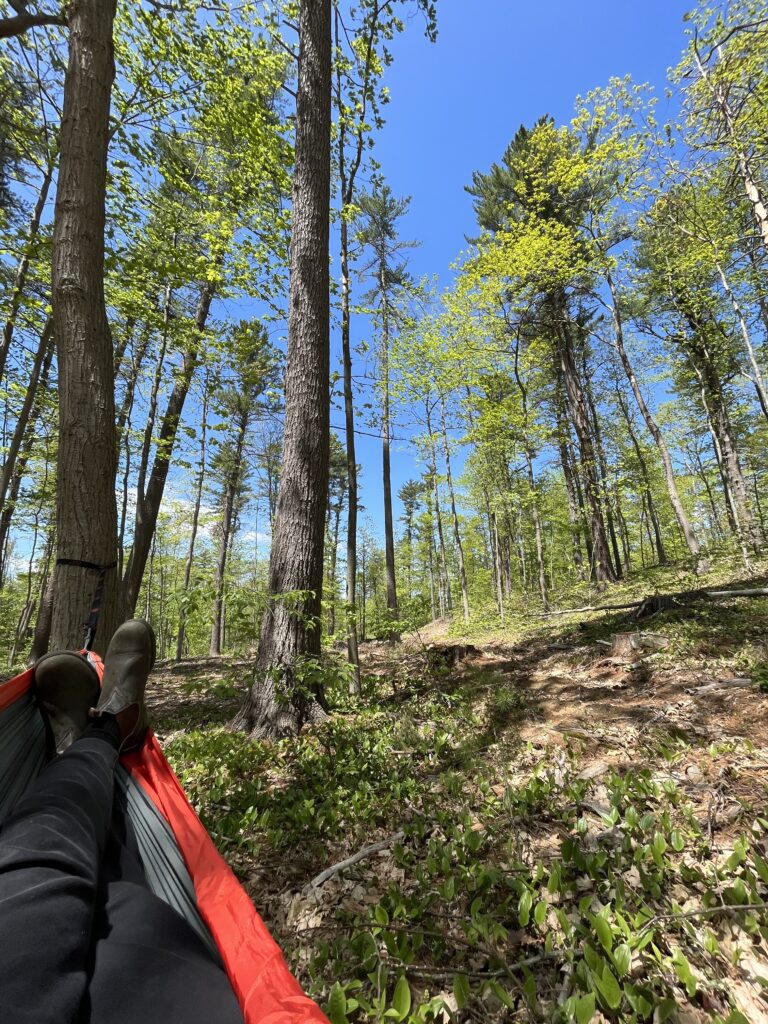
Finding a sunny clear spot between two trees I set up my hammock and laid back watching the trees sway in the wind and the ravens flying overhead, stopping in the canopy of trees all around me to squawk at other birds. While most dead wood was cleared out, some standing dead remained, riddled with holes from many different species of woodpecker present in southern Maine. A few of these woodpecker species include the downy woodpecker, the pileated woodpecker, and the yellow-bellied woodpecker.
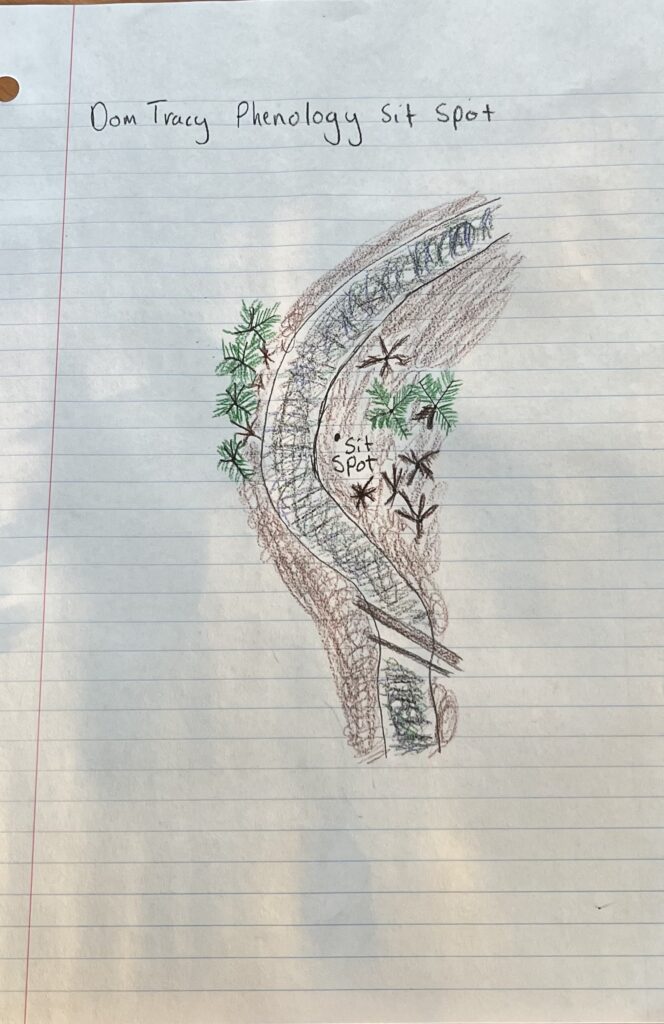
Comparing pine grove to my phenology spot in centennial woods has become much more interesting since pine grove was combed out. Centennial very much reminds me of how pine grove used to be, wide multi-use trails running through dense woods with streams and species a-plenty. Now juxtaposing the two I wonder if centennial woods would ever receive the same treatment that pine grove received, with a much larger size it could be very difficult and costly to do such a process. Another argument is depending on how people feel, whether to leave the woods completely natural and let dead wood rot everywhere or to clean the forest up and allow for new life to come through the understory.