• A-Z
  • Directory
  • myUVM
  • Loading search...

UVM Extension Building Capacity Blog

Leading Groups Can Be Easy!

Posted: January 31st, 2013 by capacity

Have you ever been in a group and then were asked to lead it – and product results?  Have you ever wanted to learn how to lead successful groups? People get frustrated and discouraged when groups aren’t effective.  And more and more, people are asked to team up to get things done on the job, in their towns, for schools and in their communities.  It makes a big difference when you know how to work with a group and lead meetings to get great results.  But this isn’t always easy.

Strengthening Your Facilitation Skills (SYFS), Level 1, is a five-part Training Series designed to help local citizens learn how to get work done more effectively and efficiently in group meetings.  The UVM Extension is offering the Training Series simultaneously in five locations beginning Tuesday March 12, 2013.  Pre-registration by March 1st is necessary for the workshop curriculum to be designed to meet the needs of the group.  Early bird registration deadline is February 15th.  Each session will begin at 12:30pm and conclude no later than 4:30pm.

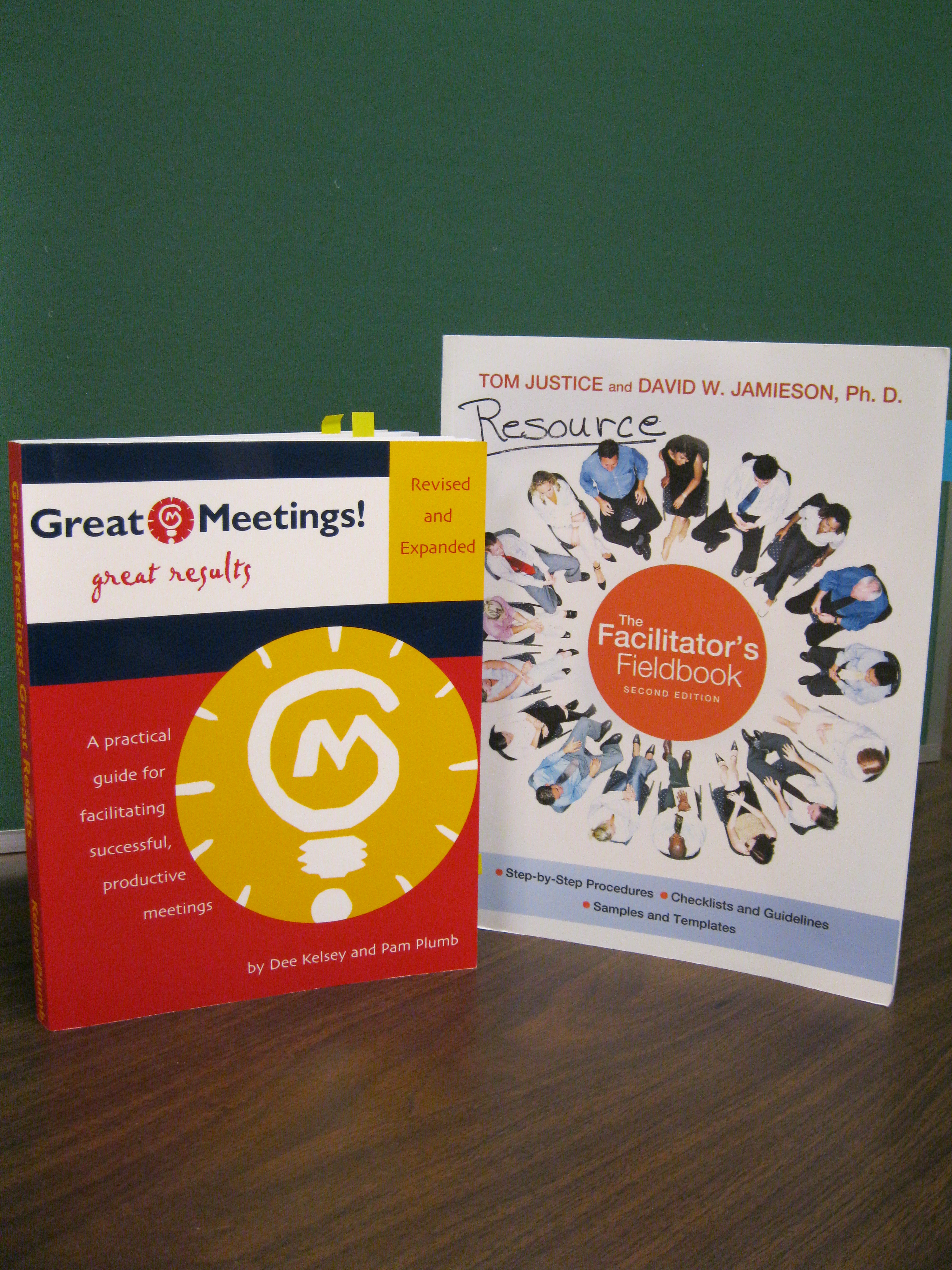
SYFS will help you learn and practice facilitation skills in an experiential setting.  You’ll also get a chance to observe facilitation challenges and receive feedback in a safe environment. To maximize the group’s learning experience, commitment to all sessions is highly encouraged.  The cost to participate in SYFS is $100. (early bird registration is $75.00), which includes a resource notebook and a couple of resource texts.  Workshop size is limited, so register early.

For more information, visit our website for brochure and online registration.  Checks are made payable to UVM Extension and should be mailed to Lisa McCrae at UVM Extension; 374 Emerson Falls Rd., Suite 1; St. Johnsbury, VT 05819.


Leading Change

Posted: July 24th, 2012 by capacity

I’m often reminded that leading change is not for the faint at heart. Having a plan for change is a good start. Spend some time identifying the potential ramifications that may result.  Open your mind to thinking across the organization and about how others may view the proposed change.  Anticipate the unexpected and prepare yourself with some answers and strategies so you can act with grace and diplomacy.  When things go wrong, and they will, you need to be ready to take the heat and accept the responsibility as the leader.  When things go right, share that success with as many colleagues as possible.  It will help to position you in a Win-Win situation.


When we think about some barriers that may prevent change from happening, I’m sure your list would look something like this:

  • Lack of a clear vision for successful change
  • Insufficient information about how the change will address the problem we are facing
  • Limited management support for the change process
  • Lack of communication about the change (need for, plans for, process for, etc.)
  • Organizational complacency (contentment with the status quo)
  • Lack of change leadership experience
  • Lack of planning for resistance
  • Lack of time
  • Insufficient resources allocated to implement and maintain the change (structure, personnel, etc.)
  • Policies not aligned to the change
  • Poor follow-through
  • Lack of rewards for change or consequences for not changing (carrots or sticks in place)


Planning is a key to successful organizational change, so where do we start with planning?

You might begin by identifying a team of staff to engage with leadership in the implementation of change right from the beginning planning stages.  Think about including individuals representing the various demographics of your organization (years of service, level of employment, and all departments that will be affected).


Call the implementation team together and share a worksheet created with the bulleted list above and begin discussion on the first barrier with the full large group.  The goal is to identify both the root cause of the barrier as well as the approach or strategy the implementation team might take to overcome or eliminate the barrier.  Once the team experiences what you are looking for from the discussion, divide the team into smaller groups and assign several of the barriers in the list to each small group.


Pull the small groups back together and draw in contributions for the entire group to discuss the responses and ways of overcoming barriers.  Unfortunately we don’t have a crystal ball to project which barriers we will confront, but the team brings a breadth of experience and knowledge about the organization and will be able to identify the most likely barriers ahead.  Invite an active and open discussion about those barriers that are likely to become a reality.  Addressing those, what could be put in place immediately to promote successful navigation of the barrier?


Leading change is never easy.  Being proactive with planning and implementation will surely help.  What other ideas do you have that may assist others in leading a successful change initiative.

Ethical Leadership

Posted: May 8th, 2012 by capacity

What is ethical leadership?  What does it mean day-to-day in a nonprofit organization?

All organizations, nonprofits, for-profits and governmental can face ethical challenges.  Some result in criminal violations.  The news is full of stories ranging from a large corporations misappropriation of retirement assets to a town clerk who has embezzled tax payments.  Most ethical problems, however, fall into gray areas – activities that are on the fringes of fraud such as conflict of interest, misallocation of resources and/or a lack of accountability and transparency.

For example, a nonprofit organization in your town has raised a million dollars through a capital campaign to build a new clinic.  One of the largest donors to the campaign sits on the board of directors and in exchange for her donation she requires that her spouse’s construction firm be awarded the contract to build the building.  The nonprofit agrees.  This is a clear conflict of interest and by accepting the conditions of the donation the organization’s leadership demonstrates questionable ethics.

Another example, which is a frequent occurrence in human service nonprofits concerns donated goods.  Imagine a large retailer donating brand new fashionable clothes to an organization that serves people who are homeless.  The director decides that since her staff works hard they should be given first pick of the clothes, clearly not what the retailer intended.  The result is questionable moral and ethical leadership which, if known by the public will discourage future donations.

Leaders are the ones who uphold the shared values of the organization and set the cultural tone.   Ethical leaders have a high capacity for moral judgment, meaning that they are more able to recognize and analyze moral issues, and in prioritizing moral values for the organization.

Organizations, led by their leaders signal their priorities in multiple ways, including the content and enforcement of ethical standards; the criteria for hiring, promotion, and compensation; and the fairness and respect with which they treat their employees. People care deeply about “organizational justice” and perform better when they believe that their workplace is treating them with dignity and is rewarding ethical conduct.

A strong organizational culture that supports high ethical standards will have tremendous influence – in the community and on employee behavior.  Although no set of rules or organizational structures can guarantee ethical conduct, nonprofits can take steps that will make it more likely.

1. Be a Visible Role Model:  employees will look to the behavior of top management as a benchmark for defining appropriate behavior. When senior management is seen as taking the ethical high road, it provides a positive message for all employees.


2.  Communicate Ethical Expectations: develop adequate ethical codes and effective compliance programs. It should state the organizations primary values and the ethical rules that employees are expected to follow. If widely accepted and enforced, codes can also reinforce core values, deter misconduct, promote trust, and reduce the organization’s risks of conflicting interests and legal liability.


3.  Promote Effective Financial Management: use resources in a socially responsible way, and be transparent about how you allocate your resources.


4.  Provide Ethical Trainings:  set up seminars, workshops and similar ethical training programs.  Use these training  sessions to reinforce the organization’s standards of conduct, to clarify what practices are and are not permissible, and to address possible ethical dilemmas.


5.  Institutionalize an Ethical Culture:  nonprofit executives and board members should be willing to ask uncomfortable questions: Not just “Is it legal?” but also “Is it fair?” “Is it honest?” “Does it advance societal interests or pose unreasonable risks?” and “How would it feel to defend the decision on the evening news?” Not only do leaders need to ask those questions of themselves, they also need to invite unwelcome answers from others.


6.  Provide Protective Mechanisms:  The organization needs to provide formal mechanisms so that employees can discuss ethical dilemmas and report unethical behavior without fear of reprimand.  This might include creation of ethical officers, counselors or ombudsmen.

Remember, as leaders you set the moral tone for the organization, and regardless of your style of leadership you can create an ethical culture.

Team Excellence

Posted: April 20th, 2012 by capacity

Teams are organizational groups made up of individuals who function interdependently, coordinating activities to accomplish common goals.  Does your organization use work teams, like project management teams, task forces, work units, or standing committees, to accomplish goals?  If yes, read on and join a conversation.

Just what makes an excellent team?  What do excellent teams have in common?  Studies show that regardless of the type of team, eight characteristics were regularly identified.

These Eight Characteristics of Highly Effective Teams include:

  • Clear, Elevating Goal
  • Results-Driven Structure
  • Competent Team Members
  • Unified Commitment
  • Collaborative Climate
  • Standards of Excellence
  • External Support and Recognition
  • Leadership
Think about a team where you participate and answer these questions focused on the eight characteristics.

Does the team have clear, elevating goals?  Are they clear enough to everyone can tell when the performance objective is achieved?  Are the goals motivating so that all members believe them to be worthy of their active participation?

Does the team have a structure to support their results-driven goals? Is it a structure that will help the team to accomplish their goals?  If the goals of your team focus is on problem-solving, does the structure focus on building trust so that everyone feels free to contribute to the dialogue?  If the goals of your team focus is on strategic or tactical work, does the structure provide clarity to everyone knows just what to do and when?  Teams have different work content and therefore will need a structure to support their successful achievement of goals.

Are the team members competent, with technical competence to address tasks as well as interpersonal and teamwork skills? Do you have the right number and mix of skill competency to achieve the goals?

Is there a shared commitment to the work group or team? Have you involved team members in all aspects of the work to build a team spirit?


Is there a climate of collaboration within the team? Do team members stay focused on the problem/work?  Are they open with each other as they work through tasks?  Do they listen to each other?  Are they free to take risks?  Are they willing to compensate for each other to achieve the best possible results?

Does the organization or the team itself have a standard of excellence identified? Are they clear and concrete, easy to understand by all members?  Are they useful in applying some pressure for members to perform at the highest levels?  

Does the organization support the work and accomplishments of the team?  Is the team supported with funding, equipment and supplies to accomplish their work?  Are teams rewarded for accomplishing difficult assignments?  Recognized for their hard work?

Does the team function with the guidance of an effective, principled leader? Does the leader help the team to understand problems that confront the team?  Does the leader help the team become a cohesive unit, set high performance standards and facilitate achievement of the work goals?  Does the leader address stressful issues by providing clear goals, distribution of tasks and strategies for accomplishing the tasks?  Does the leader take care in matching skills of members to the roles that need to be done?  Does the leader monitor feedback and progress?  Is the leader adaptable to environmental changes, internal and external?

 Share your reflections and let’s join in a lively discussion on these eight characteristics of Team Excellence.


Links of interest related to Team Leadership:

Hill’s Model for Effective Team Leadership: 7 minute video

Team Leadership: .PDF document of the Team Leadership Model, by Frank LaFasto and Carl Larson

On the path to civility

Posted: April 9th, 2012 by capacity

I have been troubled for some time now about the number of instances I’ve observed of adults, in leadership positions, behaving in ways that seem unacceptable. These events raise in my mind a question of when and where we lost our way when it comes to common-sense civility.

My first lessons in civility came from my parents – be polite, show respect, and mind your manners. In school I was taught that it is possible to critique an idea and still show respect to the individual(s) promoting that idea. From conversations with colleagues and friends I know that these lessons were not unique to me.

So how is it that we seem to have arrived at a place in our society where civility counts for so little?

Dr P.M. Forni, a noted author in the field of civility, suggests that there are four major causes of incivility – stress, anonymity, lack of time, and lack of restraint.

Stress increases during times of scarcity. As our communities face diminishing resources we must anticipate that the stress levels of individuals will increase. Preparing for this by learning to be empathetic in the face of other’s pain can help moderate the effects of stress.

Strong community networks are a cure for anonymity. People need opportunities to tell their stories. Community members who are well-networked need to step forward and create spaces where everyone has a voice and where community members are mentored in how to contribute to civil discourse. Do not wait until an emotional issue presents itself — reach out during periods of calm. Identify yourself to those you don’t recognize and invite them to participate in community events.

Lack of time is the number one excuse provided for just about everything. “Why don’t you spend more time with your family? No time. Why don’t you volunteer more in your community? No time. Why don’t you eat better? No time.”  Few of us would argue that life today is hectic but, the truth is that we all make time for what we value. If we value civil discourse then we must make time for it. And we must be good role models for the young people that are watching our behavior.

Lack of restraint may be the most challenging threat to civility. How do we instill in ourselves, and others, the understanding that the need for a personal win may have to be set aside in order to achieve the bigger objective of a win for the community? Some strategies include learning to separate the issue from the individual, avoiding escalation and avoiding personal misunderstandings.  There are other strategies that will move us toward a more civil society but taking the first steps will be up to each of us.

We are not born civil. Civility is a code of behavior acquired by learning from others and by constant practicing. For the sake of our communities and ourselves, let us teach, let us learn, and let us practice. Dr. P.M. Forni

We would love to hear your thoughts on strategies for maintaining civility in public conversations. How does your community keeps emotional discussions civil?

Contact Us ©2010 The University of Vermont – Burlington, VT 05405 – (802) 656-3131